Do Bears Hibernate? What Really Happens Inside the Den
Do bears hibernate? Yes, but not the way a ground squirrel does. A denning black bear (Ursus americanus) drops its heart rate from about 50 beats per minute to as few as 8, yet its body temperature falls only a few degrees. That single difference is why biologists spent decades arguing about what to call it.
The modern answer is that bears are hibernators, and very good ones. They simply solved the winter problem with a strategy no rodent uses: they stay warm enough to wake up and defend themselves, and they do it for five months without eating, drinking, urinating, or defecating.
Bears hibernate, but in a shallow form that biologists once called winter lethargy or torpor. Body temperature drops only 7 to 12 F below normal, heart rate falls to 8 to 19 beats per minute, and metabolism runs at roughly 25 percent of summer levels. A denning bear can wake within minutes.
| Measure | Active bear | Denning bear |
|---|---|---|
| Heart rate | 40 to 50 bpm | 8 to 19 bpm |
| Body temperature | 100 to 101 F (38 C) | 88 to 93 F (31 to 34 C) |
| Breaths per minute | 6 to 10 | 1 to 2 |
| Metabolic rate | 100 percent | about 25 percent |
| Arousal time | n/a | minutes |
| Den length | n/a | 3 to 7 months |
Do Bears Hibernate or Just Enter Torpor?
Both labels describe the same animal, and the field has settled on hibernation. The old objection was temperature: true hibernators such as the chipmunk let their bodies cool almost to the temperature of the den, sometimes near freezing. A bear stays close to 90 F (32 C).
What changed the verdict was metabolism. Research at the USGS Alaska Science Center and at the University of Alaska showed that black bears cut metabolic rate to about a quarter of normal while cooling only slightly, which is a deeper suppression than temperature alone predicts. By that measure bears are more efficient than the small hibernators, not less.
Bears also differ from animals in daily torpor, such as hummingbirds, because the state lasts months rather than hours. For comparison, see how bats handle winter with true deep hibernation and repeated arousals.
Do Bears Wake Up at All During Hibernation?
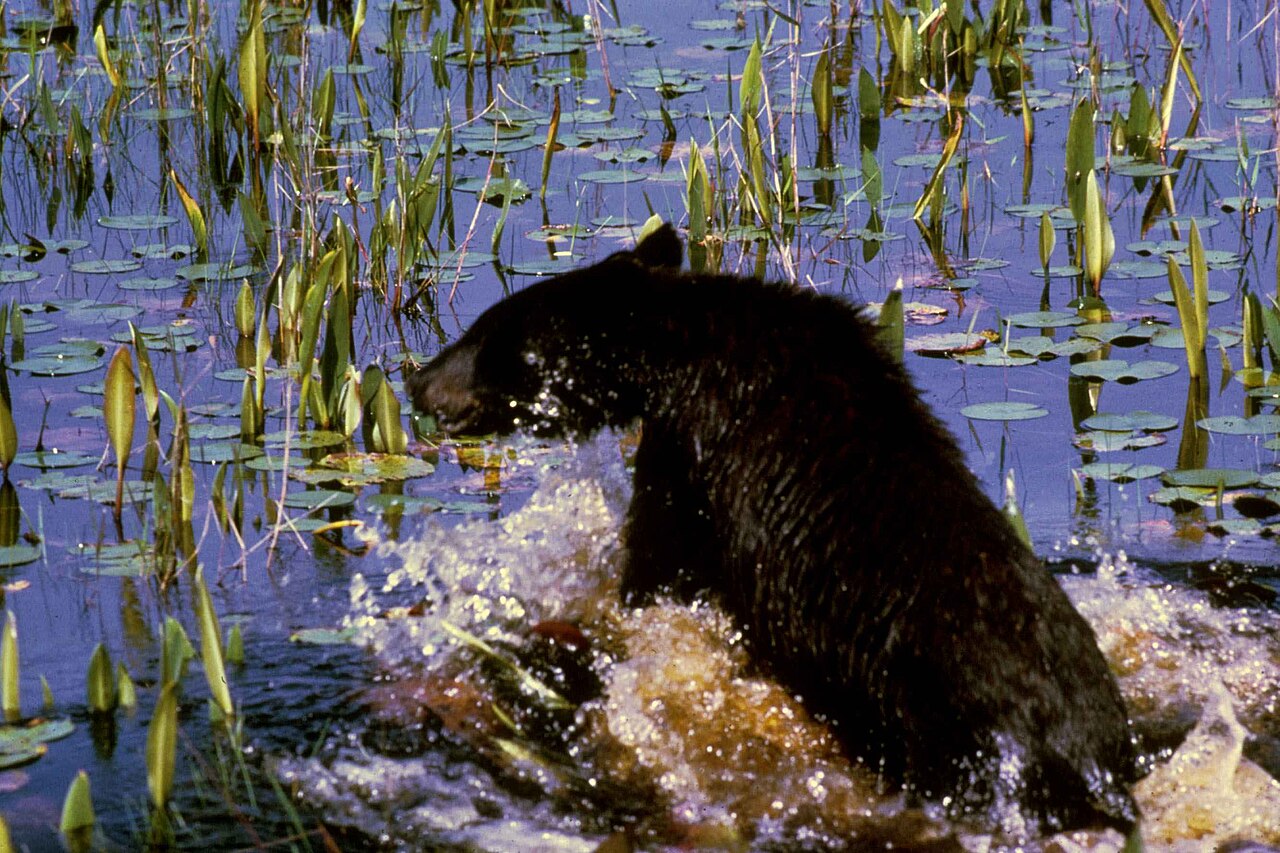
Yes. A denning bear can lift its head, shift position, and walk out of the den within minutes if it is disturbed. Females give birth in January and nurse cubs through the rest of the winter, which requires them to be alert enough to clean and reposition newborns.
Warm spells pull bears out too, especially in the southern part of the range. In Florida and coastal North Carolina some bears den for only a few weeks or skip denning altogether when food remains available. Sows with cubs stay in longest.
Do Bears Urinate or Defecate in the Den?
Neither, and that is the most remarkable part. A hibernating bear recycles urea into protein instead of excreting it, so it loses no water and no muscle mass across five months of fasting. A human immobilized that long would lose roughly a quarter of their muscle and risk kidney failure.
The gut forms a fecal plug, a firm mass of hair, bedding, and shed intestinal cells that seals the lower colon. It is passed within a day or two of emergence. The difference between that plug and normal droppings is obvious once you know what to look for in bear scat.
When Do Bears Den and When Do They Emerge?
Most North American black bears enter dens between late October and early December and come out between March and early May, with latitude and food supply setting the dates. Before denning they spend up to 20 hours a day feeding in a phase called hyperphagia, adding 2 to 4 lb (1 to 2 kg) per day.
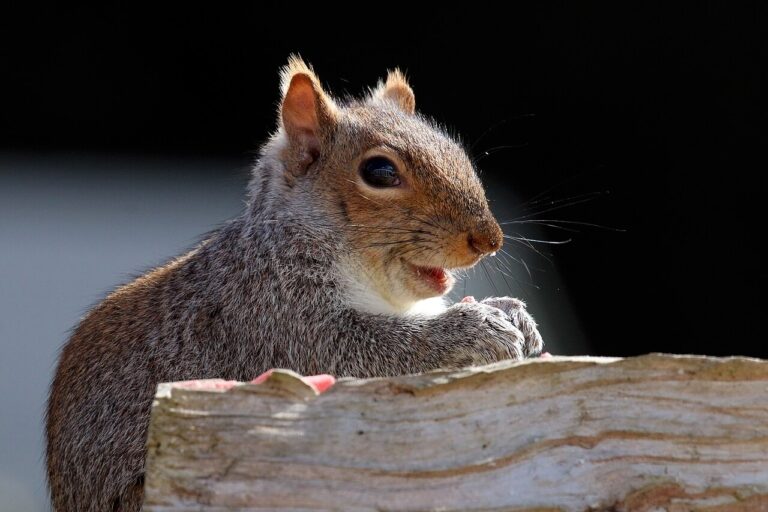
Emergence order is consistent: adult males first, then subadults, then females with yearlings, then sows with new cubs. Other den-users follow their own clocks, from raccoons that only doze through cold snaps to squirrels that stay active all winter. Even polar bears split the difference, with only pregnant females denning.
Frequently Asked Questions
What animals are true hibernators?
Ground squirrels, marmots, jumping mice, hedgehogs, and most bats qualify under the strict definition, because their body temperature falls close to ambient and they cannot wake quickly. Arctic ground squirrels drop below freezing. Bears are now included under the modern metabolic definition, but they remain the warm outlier.
What happens if you accidentally wake a hibernating bear?
It usually leaves. Disturbed bears often abandon the den entirely, which is costly in midwinter and can cause a sow to lose her cubs. Back away quietly and do not return. Report den disturbance on public land to the managing agency so biologists can check the site.
Do bears urinate when they’re hibernating?
No. Kidney function nearly stops and the small amount of urine produced is reabsorbed through the bladder wall. The nitrogen is recycled into new protein, which is why a denning bear emerges with its muscle largely intact after months without food or water.
Do bears have fecal plugs during hibernation?
Yes. The plug forms from swallowed hair, bedding material, and shed cells from the intestinal lining as the gut slows. It is 6 to 12 in (15 to 30 cm) long, dry, and odorless, and the bear passes it shortly after leaving the den in spring.
Field guidance on bear behavior and den disturbance is maintained by the National Park Service, which tracks denning dates across park units from Alaska to the Smokies.