Hognose Snake Lifespan: 15 to 20 Years, and What Cuts It Short
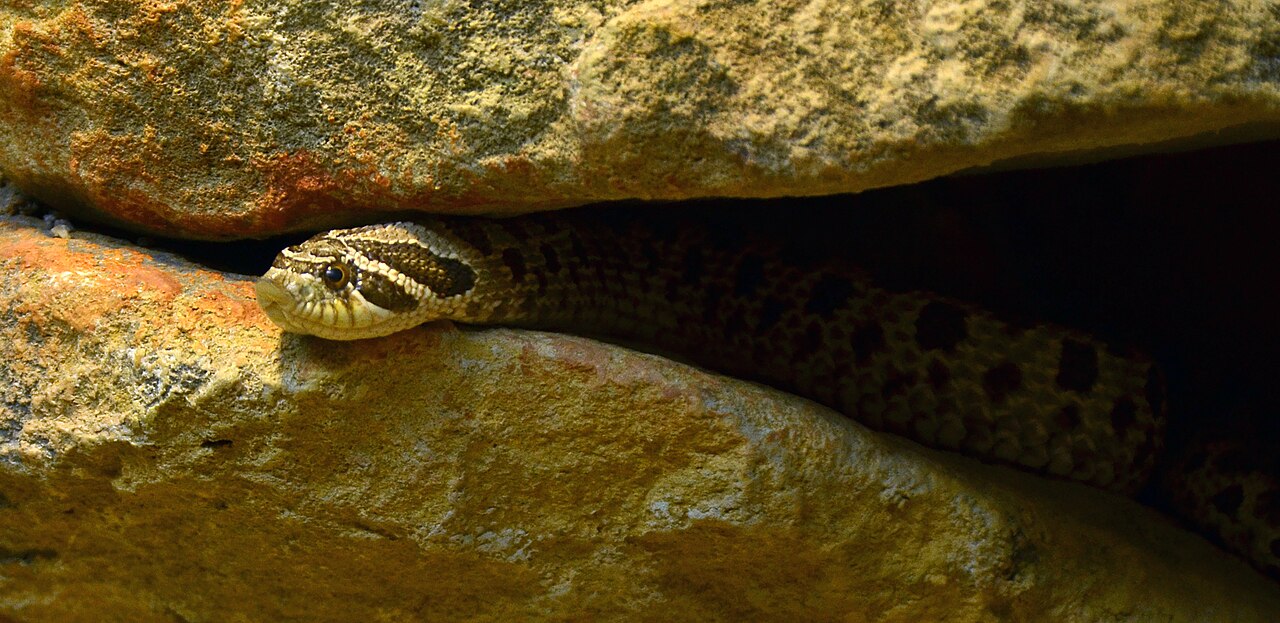
A hognose snake lifespan runs 15 to 20 years in captivity and closer to 6 to 10 years in the wild, and the gap between those two numbers is almost entirely husbandry. The figure most keepers quote, 18 years, comes from captive western hognose snakes (Heterodon nasicus), the species that fills the US pet trade.
The eastern hognose (Heterodon platirhinos) is the other snake people mean by the name, and it does not do as well behind glass. It is a toad specialist, and that narrow diet drags its captive average down to 8 to 12 years.
Western hognose snakes live 15 to 20 years in captivity, with 18 years typical and records past 20. Wild animals average 6 to 10 years because of predation and road mortality. Eastern hognose snakes average 8 to 12 years captive. Obesity from overfeeding and respiratory infection from a cold, damp enclosure are the two biggest lifespan killers.
| Species or stage | Typical lifespan | Notes |
|---|---|---|
| Western hognose, captive | 15 to 20 years | 18 is the working average, records past 20 |
| Western hognose, wild | 6 to 10 years | Predation and roads cap most animals |
| Eastern hognose, captive | 8 to 12 years | Toad-dependent diet, harder to keep |
| Female western hognose | Often 1 to 3 years less if bred yearly | Egg production costs body condition |
| Hatchlings, first year | High loss rate | Feeding refusal is the main cause |
| Full adult size reached | 2 to 3 years | Growth slows sharply after that |
How Long Do Hognose Snakes Live?
Captive western hognose snakes reliably reach their mid-teens, and 18 years is the number breeders treat as a normal full life. Animals past 20 exist and are not freak cases, but they are always snakes that were fed conservatively, kept warm and dry, and bred either not at all or only occasionally. Anything under 10 years in captivity points to a husbandry failure rather than to the species.
Wild longevity is shorter and harder to measure, since these snakes are small, burrowing and rarely recaptured. Field estimates land near 6 to 10 years, with hawks, king snakes and cars taking most animals before old age does. For a comparison, see chipmunk lifespan.
What Shortens a Hognose Snake’s Lifespan?
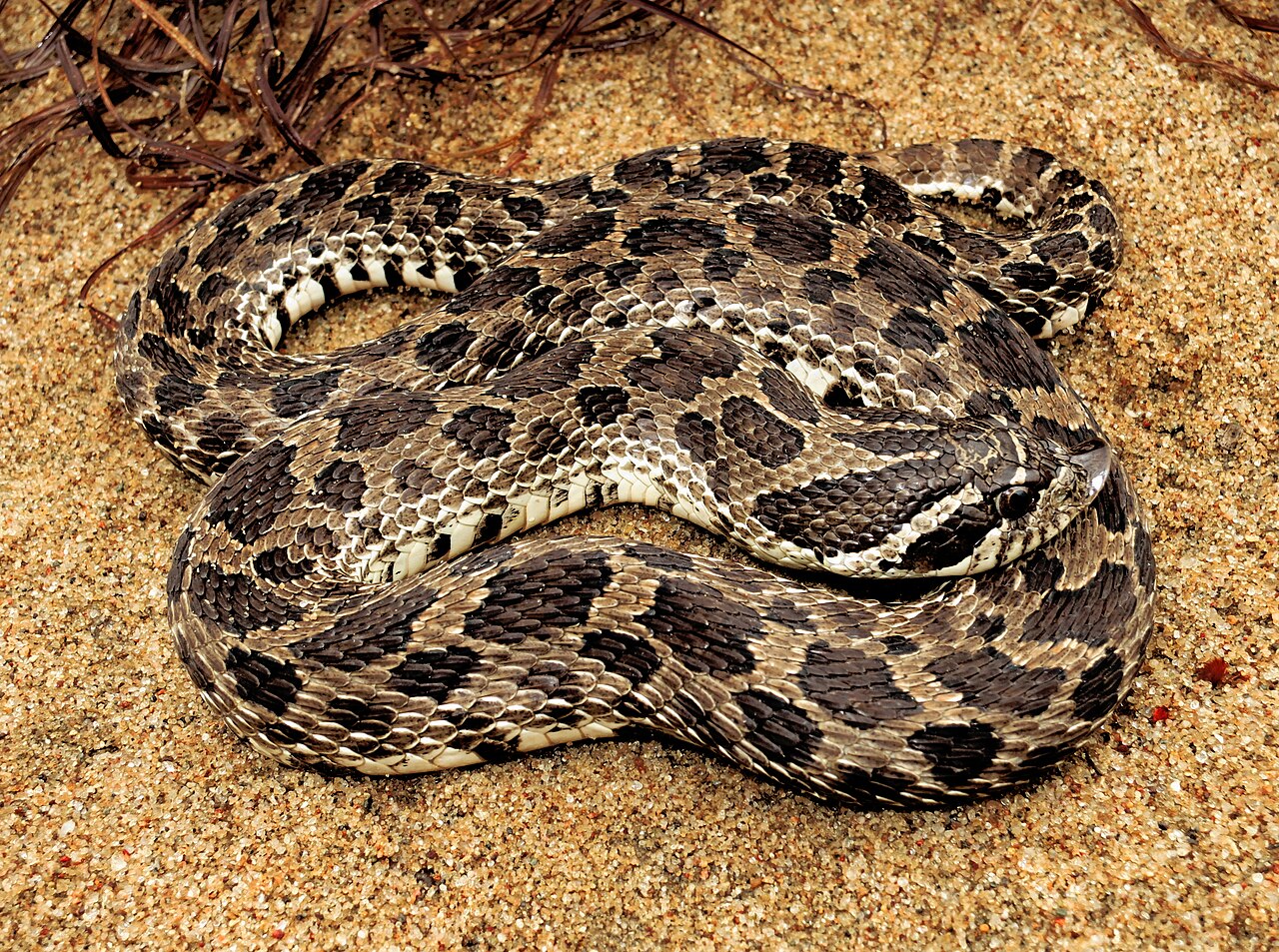
Overfeeding is the leading cause of early death in captivity. Hognose snakes are aggressive feeders that will take food every few days if offered, and keepers who oblige end up with an obese snake carrying fat around the liver and heart. An adult needs one appropriately sized mouse every 7 to 10 days, and a visible lengthwise crease or a body wider than tall means the schedule is too generous.
The second killer is a cold, damp enclosure, which produces respiratory infection and shed problems. These are dry-grassland and sandy-soil snakes, and they need a warm side near 90 F (32 C), a cool side near 75 F (24 C) and ambient humidity of 30 to 50 percent. Hatchling losses are a separate category: newborns that refuse food in their first weeks account for most first-year deaths, which is covered in baby hognose snake care.
How Old Is a Full Grown Hognose Snake?
A western hognose reaches adult length at 2 to 3 years. Males top out at 14 to 24 in (35 to 60 cm) and females at 20 to 36 in (50 to 90 cm), and after the third year the snake gains bulk rather than length. Sexual maturity comes earlier than full size: males can breed at about a year, females are usually held back to 2 or 3 years and a body weight near 300 g.
Size is not a good age guess, because a heavily fed yearling looks like a three-year-old. Proportion works better: an older adult has a blunt, heavy head and worn belly scales, while a young adult still looks long for its girth. The same trick works on the corn snake.
Does Sex Change the Lifespan?
Females are the larger sex and, left unbred, they tend to live as long as males or slightly longer. Bred every season, they lose ground: each clutch of 4 to 20 eggs costs substantial body condition, and a female cycled yearly for a decade frequently dies earlier than a same-age male. Breeders who skip a season between clutches see noticeably better long-term survival.
Males carry their own risk. Many stop eating for weeks during breeding season, and a small male that starts that fast underweight loses a dangerous share of its mass. Weigh males before cooling and skip the season for any animal in poor condition.
The Care That Actually Adds Years
Four things separate a 10-year hognose from a 19-year one: a controlled feeding schedule, a correct thermal gradient on a thermostat, dry substrate deep enough to burrow in at 3 to 4 in (8 to 10 cm), and a yearly weight log. That log is the single most useful tool a keeper has, because slow steady gain in an adult is the earliest sign of overfeeding, and sudden loss is the earliest sign of illness.
Two habits do harm. Handling during shed or digestion causes regurgitation, and defensive bluffing costs energy every time, as in hognose snake playing dead. Species background sits in the hognose snake profile, and the ID rules in coral snake vs king snake keep people from grabbing the wrong snake.
Frequently Asked Questions
Why are hognoses so expensive?
Supply, not longevity. Females produce one small clutch a year, hatchlings often need scented or assist feeding before they take frozen thawed mice, and that labor is priced in. A normal western hognose runs 100 to 250 USD, while designer morphs such as superconda and lavender reach 500 to 1,500 USD or more because only a few breeders hold the lines.
How much do hognose snakes cost at Petco?
Big-box stores are not a reliable source for this species. Petco lists western hognose snakes only at some locations and only sometimes, generally in the 150 to 250 USD range, and PetSmart does not normally stock them at all. Reptile expos and dedicated breeders offer better prices, better feeding records and morph documentation.
Is a hognose a beginner snake?
Yes, with one caveat. Adults are hardy, small enough for a 20 gallon long enclosure, rarely bite and are famous for bluffing instead of striking. The caveat is the hatchling stage, which frustrates new keepers more than any other part of the hobby. Buy a well-started juvenile already eating frozen thawed mice and the species is genuinely easy. A corn snake is the gentler alternative for a first snake.
In what states is it illegal to own a hognose snake?
Hawaii bans all snakes outright. Elsewhere the restrictions cover the native eastern hognose, listed as endangered, threatened or of special concern in several northeastern and midwestern states, so taking one from the wild is illegal even where a captive-bred western hognose is fine. Confirm the rule with your state agency and the US Fish and Wildlife Service.