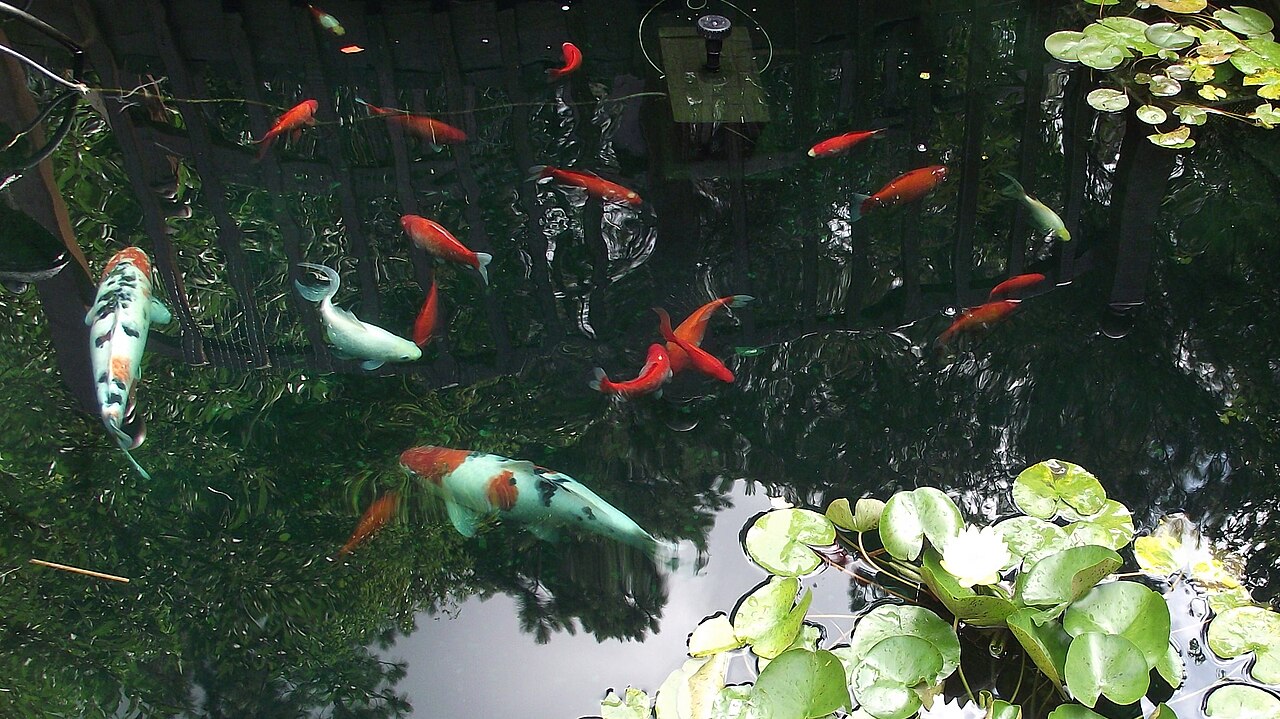
Koi Fish Pond: The Depth, Size and Cost That Keep Koi Alive
A koi fish pond needs to be at least 3 ft (0.9 m) deep and hold roughly 1,000 gallons (3,800 L) before it can keep koi healthy through a full year. Anything shallower swings too fast in temperature, freezes too deep in winter, and leaves the fish nowhere to hide from herons. Depth and volume are the two numbers that decide whether a koi pond thrives or turns into a summer algae problem.
Most backyard koi ponds fail for the same three reasons: too little water, too little filtration, and too many fish. Get those right and the rest of the build is landscaping. This guide covers the depth, size, cost, filtration turnover, and seasonal care that a US backyard koi pond actually requires, plus the predator and maintenance questions that come up once the water is in.
A koi pond should be a minimum of 3 ft deep, hold 1,000 gallons or more, and turn its entire volume through the filter once every hour. Allow about 250 gallons per adult koi. Expect 4,000 to 15,000 USD for a professionally built pond, or 1,500 to 4,000 USD for a careful DIY build.
| Specification | Minimum | Recommended |
|---|---|---|
| Depth | 3 ft (0.9 m) | 4 to 6 ft (1.2 to 1.8 m) |
| Volume | 1,000 gallons | 2,500 gallons or more |
| Water per adult koi | 150 gallons | 250 gallons |
| Filter turnover | Full volume every 2 hours | Full volume every hour |
| Daily sun | 4 hours | 4 to 6 hours, shaded at midday |
| Build cost | 1,500 USD DIY | 6,000 to 15,000 USD installed |
How deep does a pond need to be for koi?
Three feet is the working minimum, and 4 to 6 ft (1.2 to 1.8 m) is where koi keepers in cold states end up. Depth buys thermal stability. A 3 ft column of water changes temperature slowly enough that a 90 degree F afternoon does not cook the fish, and it holds a layer of 39 degree F water at the bottom when the surface ices over.
In USDA zones 6 and colder, add a foot for every zone step down. A pond in Minnesota that freezes 18 inches deep still leaves a koi 2 ft of liquid water under the ice at 4 ft total depth. In Florida and the Gulf Coast, depth matters less for cold and more for heat, since shallow water above 86 degrees F holds very little dissolved oxygen.
Depth also protects the fish. A great blue heron wades to about 10 inches. Steep sides that drop straight to 3 ft give koi a refuge no wading bird can reach, which is why shelf-and-slope designs meant for water lilies often end up as heron feeding stations.
How big should a koi pond be?
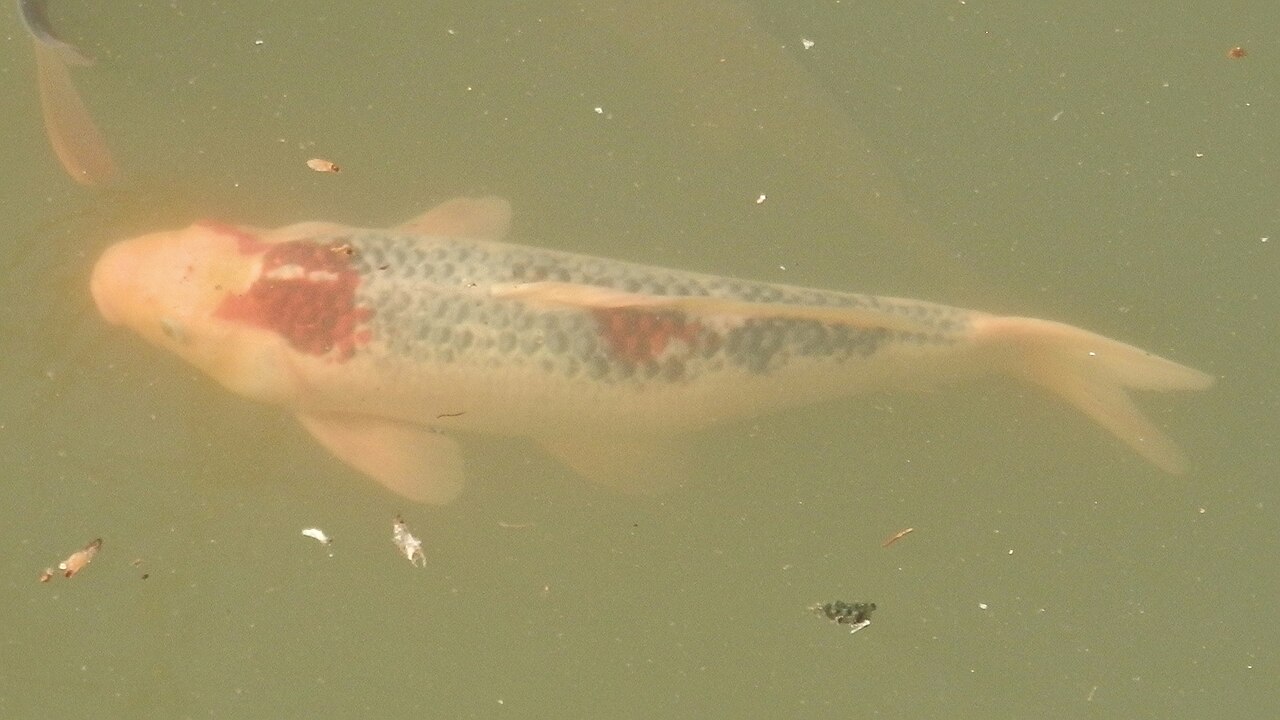
Volume, not surface area, is the number that counts. One thousand gallons is the practical floor for koi, and that is a pond roughly 8 ft by 6 ft by 3 ft deep. Below that, waste concentrates faster than any filter can process it, and ammonia spikes after a warm week become routine.
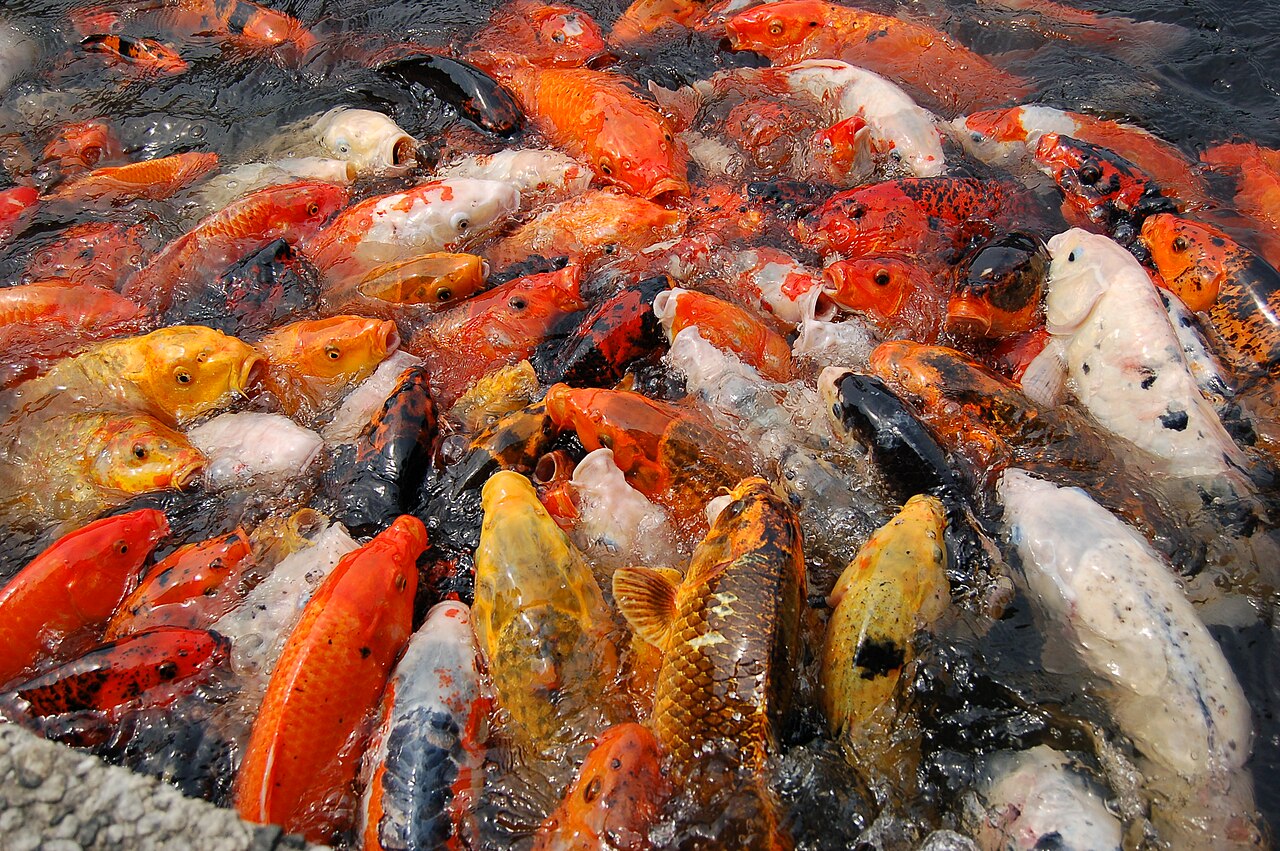
Stocking is where most owners overshoot. An adult koi reaches 24 to 36 inches (60 to 90 cm) and produces waste in proportion to its body mass, so 250 gallons per adult fish is the honest figure. A 1,000 gallon pond holds four adults comfortably, not the dozen juveniles the garden center will happily sell. Those juveniles grow. Read our guide to koi fish biology and adult size before you buy.
Length matters for koi in a way it does not for goldfish. Koi are strong swimmers that cruise in straight lines, and a pond under 8 ft on its long axis leaves them turning constantly. If the yard forces a choice, take length and depth over width.
What is the typical cost of a koi pond?
A professionally installed koi pond in the US runs 4,000 to 15,000 USD for a 1,000 to 3,000 gallon build, with 6,000 to 9,000 USD being the common middle. A DIY build with an EPDM liner, a pump, and a prefabricated filter lands between 1,500 and 4,000 USD depending on how much excavation you do yourself.
The cost is not in the hole. Excavation is cheap labor; filtration, plumbing, and the liner are where the money goes. A quality bottom drain with a 4 inch gravity line to an external filter adds 800 to 1,500 USD to a build and removes more solid waste than any amount of surface skimming.
Running costs are modest but permanent. A 4,000 gallon per hour pump drawing 200 watts costs roughly 20 to 25 USD per month at the US average electricity rate, and it runs year round. Add food, salt, test kits, and the occasional UV bulb, and budget 400 to 600 USD per year.
Are koi ponds hard to maintain?
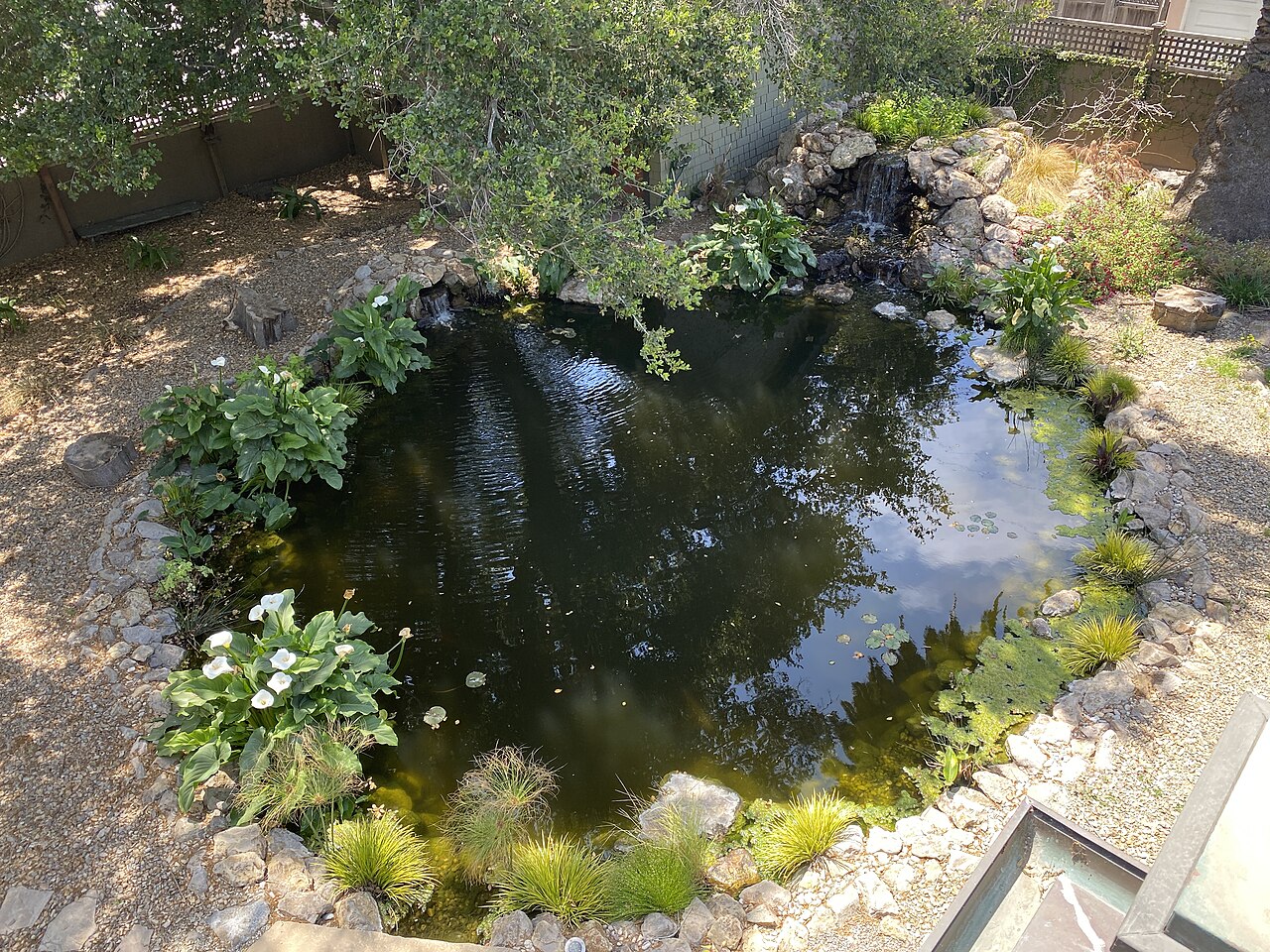
A correctly built koi pond takes about 20 minutes per week. An undersized one can take an hour a day and still lose fish. The difficulty is set almost entirely at the design stage, which is why experienced keepers spend their money on filtration rather than waterfalls.
The weekly routine is short: empty the skimmer basket, rinse or backflush the mechanical stage, test ammonia and nitrite, and top off evaporation with dechlorinated water. Twice a year, in spring and late autumn, the filter media gets a deeper clean in pond water, never tap water, which would kill the nitrifying bacteria colony.
The part that surprises new owners is that koi ponds need no water changes in the sense aquariums do. A 10 percent change monthly is plenty when the biofilter is sized correctly. Filtration is the same principle that governs any closed system, and the reasoning behind why even a small tank needs filtration scales directly up to 2,000 gallons.
How often should koi pond water be turned over?

The whole pond volume should pass through the filter once per hour. A 2,000 gallon pond therefore needs a pump moving 2,000 gallons per hour after head loss, not the 2,000 GPH printed on the box at zero lift.
Head loss is the number DIY builds get wrong. Every foot of vertical lift to a waterfall, every 90 degree elbow, and every foot of undersized tubing costs flow. A pump rated at 3,000 GPH may deliver 1,900 GPH at 6 ft of head through 1.5 inch pipe. Size the pump from the manufacturer’s flow curve at your actual lift, then add 20 percent.
Two hours per turnover is the absolute ceiling and only works in lightly stocked ponds with heavy plant cover. Below that rate, ammonia processing falls behind the fish load in midsummer, when koi eat most and water holds least oxygen.
How do I keep my koi pond water clear?
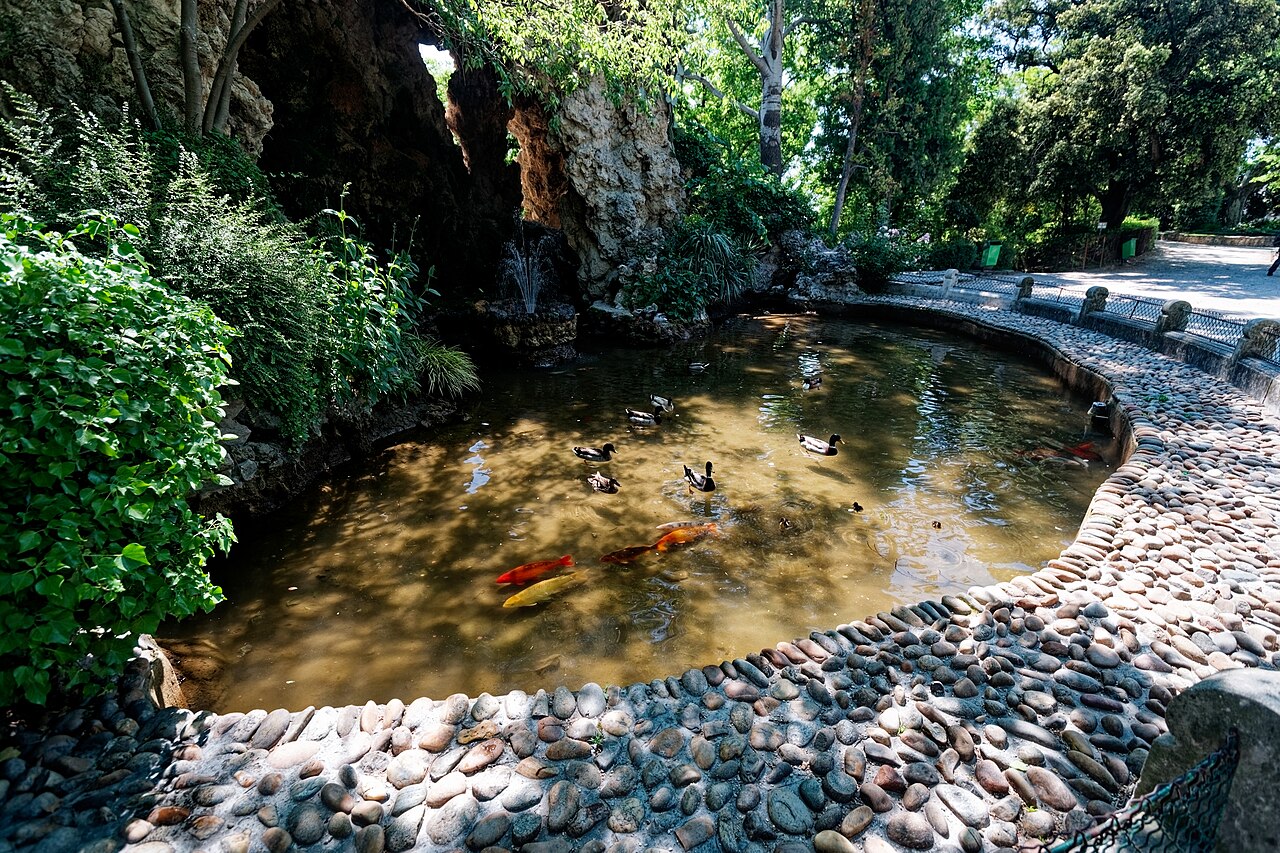
Clear water comes from three things working together: mechanical removal of solids, a mature biofilter, and control of the nutrients that feed algae. A UV clarifier handles the fourth problem, suspended single-celled algae, which is what green water actually is.
Green water is a nutrient problem wearing a light costume. It blooms when nitrate and phosphate accumulate from overfeeding and decaying leaves, and full sun then does the rest. A properly sized UV unit, 10 watts per 1,000 gallons with a contact time the manufacturer specifies, clears a green pond in five to seven days and keeps it clear.
String algae is a different organism and UV does nothing to it. Barley straw extract, manual removal, and beneficial bacteria dosing keep it in check. A pond that stays persistently green despite UV almost always has a hidden nutrient source: a decomposing leaf layer on the bottom, or simply too much food going in.
Should a koi pond be in the sun or shade?
Four to six hours of direct sun with shade over the hottest part of the afternoon is the target. Koi need some sun to develop and hold their colors, and aquatic plants need it to grow, but a pond in full unbroken sun from dawn to dusk runs hot and grows algae faster than any filter can compensate.
Color depends on it more than most owners realize. The reds and oranges in Kohaku and Sanke varieties deepen with moderate UV exposure and fade in permanent shade. The tradeoff is that the same light drives algae, which is why floating plants covering 30 to 50 percent of the surface are the standard compromise. Our breakdown of koi color varieties and how they develop explains which patterns are most light-sensitive.
Avoid placing a pond directly under deciduous trees. Leaf fall in autumn dumps organic matter straight into the water, oak and walnut leaves release tannins and juglone respectively, and the root systems complicate excavation. A tree to the southwest that shades from 2 pm onward is ideal; a tree directly overhead is not.
Do koi need to be fed every day?
In summer, feed once or twice daily. In spring and autumn, feed every other day with a wheat germ formula. Below 50 degrees F, stop completely, because koi digestion effectively shuts down and undigested food rots in the gut.
A mature koi in a planted pond can go a week without food and lose nothing, since it grazes on algae, insect larvae, and detritus continuously. This is worth knowing before a vacation: skipping a week is far safer than leaving a neighbor with an open bag of pellets.
Feed by water temperature, not by calendar. Buy a cheap pond thermometer and use these thresholds: above 68 degrees F, high protein growth food twice daily; 50 to 68 degrees F, wheat germ every other day; below 50 degrees F, nothing at all until spring brings the pond back over that line.
How do koi handle rain, heat, and winter ice?
Koi become visibly active in rain, and the reason is oxygen. Rainfall aerates the surface, cools the water, and washes insects in, so the fish rise and feed. Barometric pressure changes may also play a role, though the oxygen effect is the measurable one.
Heat is the real danger. Water at 86 degrees F holds about 20 percent less dissolved oxygen than at 68 degrees F, and koi metabolism is running at its fastest exactly then. Midsummer losses in shallow ponds almost always trace back to low oxygen at dawn, after a still, hot night. An air pump running a diffuser stone around the clock costs little and removes the risk.
In winter, the goal is a single hole in the ice for gas exchange, not an ice-free pond. A floating de-icer or an air stone placed at mid depth does this. Never break ice with a hammer; the shock wave carries through the water and can injure fish holding torpid near the bottom.
Do koi ponds attract snakes and other predators?
Koi ponds do attract snakes, but rarely the kind people fear. Common watersnakes (Nerodia sipedon) and garter snakes come for frogs and small fish, not for a 24 inch koi that outweighs them. They are non-venomous and generally leave once the amphibians move on.
The serious predators are birds and mammals. Great blue herons (Ardea herodias) take koi up to about 15 inches and visit at dawn. Raccoons (Procyon lotor) work the shallow edges at night. Kingfishers and, in some regions, river otters round out the list. Steep sides, a depth of 3 ft or more, and a shaded cave or pipe refuge cut losses sharply.
Netting works but looks bad. Motion-activated sprinklers are the most effective compromise for herons, which are cautious birds and abandon a pond after two or three surprises. Fishing line strung 12 inches above the water at the pond edge is the cheapest deterrent and is nearly invisible.
Which plants belong in a koi pond?
Plants that koi cannot eat or uproot. This is the constraint that separates a koi pond from a garden pond: koi are omnivorous diggers that will shred most soft-stemmed aquatics within a season and pull plants out of pots looking for insect larvae.
The reliable choices are water lilies (Nymphaea species) in heavy pots with a gravel cap, water hyacinth and water lettuce as floaters in protected baskets, and marginal plants like pickerelweed and iris in a separate bog filter where the fish cannot reach them. Aim for 30 to 50 percent surface coverage in summer.
A bog or wetland filter is the elegant solution: a gravel bed planted with marginals through which pond water percolates, consuming the same nitrate that would otherwise feed algae. It doubles as biological filtration and needs no cleaning for several years.
Butterfly koi, standard koi, or a mixed pond?
Both do well in the same water, but they use it differently. Butterfly koi, with their long trailing fins, swim more slowly and are easier to see from above, which suits deeper ponds viewed from a deck. Standard koi are faster and better at competing for food.
Mixed ponds work as long as the stocking math holds. A butterfly koi reaches a similar body length to a standard koi, so it counts as a full adult at 250 gallons regardless of how ornamental the fins look. The fins themselves are more vulnerable to fin rot in poor water and to heron strikes near the surface.
Whatever the variety, buy from a dealer who quarantines. Koi herpesvirus and parasite introductions from untreated new fish are the single most common cause of losing an established pond, and a 3 week quarantine tank costs less than one good fish. Beyond the practical, koi carry centuries of cultural symbolism that is part of why the pond is there at all, and keeping a few well is better than crowding many. For a smaller water feature, hardier species such as black mollies handle beginner mistakes far better than koi do.
Frequently Asked Questions
How deep does a pond need to be for koi?
Three feet (0.9 m) is the minimum anywhere in the US, and 4 to 6 ft is better in zones 6 and colder. That depth keeps a layer of liquid water below the ice in winter, stabilizes summer temperature swings, and puts the fish out of reach of wading herons.
Are koi ponds hard to maintain?
A properly sized pond with hourly filter turnover takes about 20 minutes per week: clean the skimmer, rinse the mechanical filter, test the water, and top off evaporation. Ponds that are too small or underfiltered take far more work and still lose fish.
What is the typical cost of a koi pond?
Professional installation of a 1,000 to 3,000 gallon pond runs 4,000 to 15,000 USD, commonly 6,000 to 9,000 USD. A DIY build with liner, pump, and filter costs 1,500 to 4,000 USD. Running costs are roughly 400 to 600 USD per year including power and food.
Do koi ponds attract snakes?
Yes, though usually harmless ones. Watersnakes and garter snakes come for frogs and very small fish, not for adult koi, and they are non-venomous. Herons and raccoons are the predators that actually take koi, and steep sides plus 3 ft of depth deter both.
Do koi fish like when it rains?
Koi become noticeably more active during rain. Rainfall raises dissolved oxygen at the surface, cools the water on hot days, and washes insects into the pond, so the fish rise and feed. It is a reliable sign of healthy behavior rather than distress.
How much does a koi pond cost to run each month?
A pump moving 2,000 to 4,000 gallons per hour draws 100 to 250 watts and costs roughly 12 to 30 USD per month at average US electricity rates. Add food, dechlorinator, and test supplies, and most owners spend 35 to 50 USD monthly in summer and less in winter.
For regional guidance on pond construction, water quality, and stocking rates, the cooperative extension services publish free and locally calibrated material; Penn State Extension maintains a particularly good set of pond management resources for the northeastern and midwestern US.