Lizard Poop vs Mouse Poop: The White Tip Settles It
Lizard droppings and mouse droppings are almost the same size, but one detail separates them in a second: lizard poop carries a chalky white tip, and mouse poop never does. That white cap is dried uric acid, the way reptiles get rid of nitrogen waste, and no rodent produces it.
Both show up in the same places, which is why so many homeowners misread them. Geckos and anoles hunt insects around porch lights and window frames, and house mice run the same baseboards looking for crumbs. Knowing which animal left the pellets decides whether you need a trap or simply a better door sweep.
Lizard droppings are dark pellets 1/8 to 1/4 in (3 to 6 mm) long with a distinct white tip at one end and shiny insect fragments inside. Mouse droppings are the same length but uniformly dark brown to black, pointed at both ends, with no white cap and no insect parts.
| Feature | Lizard droppings | Mouse droppings |
|---|---|---|
| Length | 1/8 to 1/4 in (3 to 6 mm) | 1/8 to 1/4 in (3 to 6 mm) |
| White tip | Yes, chalky urate cap | Never |
| Shape | Blunt or slightly twisted, one rounded end | Grain of rice, tapered at both ends |
| Contents | Glossy insect wings, legs, beetle shells | Ground food particles, fine and uniform |
| Placement | Stacked in one repeat spot, walls and sills | Scattered along runways, 50 to 75 per night |
| Texture when dry | Crumbles into powder | Stays hard and brittle |
Do lizards leave poop droppings?
Yes, and in a house with geckos you will usually find them before you find the lizard. The Mediterranean house gecko (Hemidactylus turcicus) and the common house gecko (Hemidactylus frenatus) both defecate in fixed spots, a habit biologists call latrine behavior, so droppings pile up at the top of a door frame or behind a wall-mounted picture.
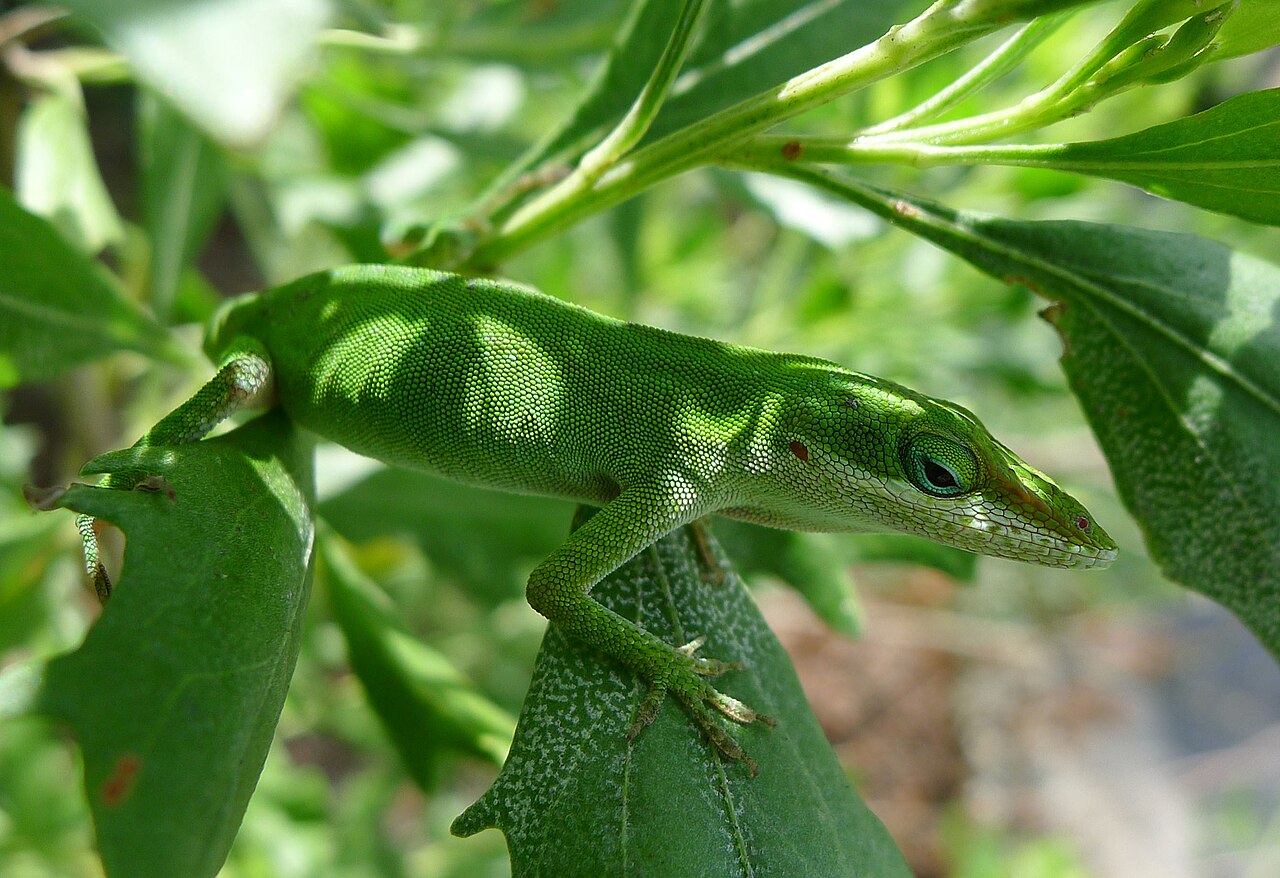
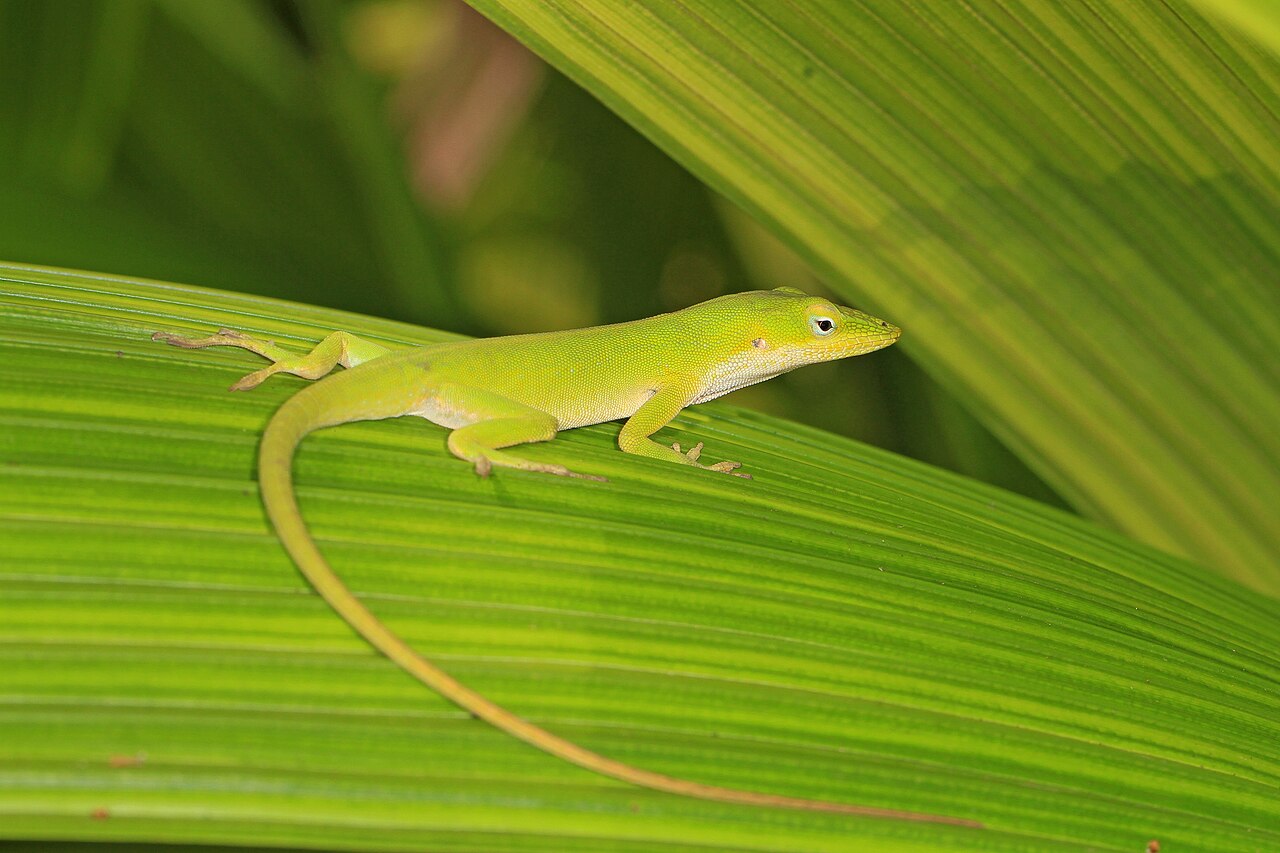
Green anoles (Anolis carolinensis) are less tidy and leave single pellets on patio furniture, screens and leaf litter. In either case the volume is small. A gecko that weighs 4 g produces a few pellets a day, not the trail of dozens that a mouse leaves overnight.
What does my mouse poop look like?
A house mouse (Mus musculus) pellet looks like a dark grain of rice, 1/8 to 1/4 in (3 to 6 mm) long, tapered to a point at both ends and solid black-brown all the way through. Fresh droppings are soft, moist and glossy. After two to three days they dry hard and turn dull, which is how you judge whether an infestation is active.
The giveaway is quantity. One mouse produces 50 to 75 droppings in 24 hours, so you find them scattered in lines along baseboards, inside silverware drawers, under the sink and behind the refrigerator. If you see three pellets in a corner and nothing else, a mouse is the less likely explanation. For the full size and texture breakdown see our guide to identifying mouse droppings.
Do lizard poop look like mouse poop?
At arm’s length, yes. Both are dark, both are pellet shaped and both fall in the same 1/8 to 1/4 in (3 to 6 mm) range, which is why the two get confused constantly in garages and laundry rooms. Under a flashlight the resemblance collapses.
Look at the ends. A mouse pellet comes to a point at both ends and is the same color throughout. A lizard pellet has one blunt end capped in white or cream, and the dark part often shows a faint twist where it was extruded. Crush one with a stick: lizard droppings break into powder with glittering insect fragments, mouse droppings break into dry crumbs of chewed food.
What animal droppings have a white tip?
Reptiles and birds, not mammals. Both excrete nitrogen as uric acid rather than urea, and that paste dries into the white or cream cap you see attached to the dark fecal portion. Lizards, snakes, turtles and every songbird on your roof produce it.
That single feature rules out all rodents at once. No mouse, rat, squirrel or chipmunk dropping has a white tip, regardless of diet. If you find a pellet with one, you are looking at a lizard, a snake or a bird. Our overview of lizard droppings shows how the urate cap varies between species and how fast it weathers away outdoors.
Where you find them: garages, drawers and window sills
Placement is the second strongest clue after the white tip. Geckos follow insects to light, so their droppings collect on window sills, above porch lights, on the top edge of door frames, on garage walls near a bulb and on outdoor furniture. The pellets sit high, often above waist level, because lizards climb.
Mice work the ground. Their droppings appear inside drawers, in pantry corners, along the junction of wall and floor, in insulation and inside appliance housings. A pellet found inside a closed cutlery drawer is rodent until proven otherwise, because a gecko has no reason to be there.
What the droppings contain
Break the pellet apart and the diet tells you the animal. Lizard droppings are packed with chitin: iridescent beetle wing cases, moth scales, ant heads, cricket legs. The fragments catch light, and in a dry pellet they are often still recognizable as body parts.
Mouse droppings contain finely ground plant and grain material with no shine at all. Occasionally you find fiber from packaging or insulation. If a pellet holds visible insect armor, it did not come from a mouse, even in a house where mice eat pantry moths.
Lizard poop vs rat poop
Rat droppings are the easiest of the three to rule out, because size does the work. Norway rat (Rattus norvegicus) pellets run 1/2 to 3/4 in (12 to 19 mm) with blunt ends, and roof rat (Rattus rattus) pellets run 1/4 to 1/2 in (6 to 13 mm) with a curved, spindle shape. Both are two to three times the length of any house lizard dropping.
Rats also leave greasy rub marks along walls and gnaw damage on wood and plastic, neither of which a lizard can produce. We cover the full comparison in lizard droppings vs rat droppings.
Roach poop vs mouse poop
Cockroach droppings are the other common misread in kitchens. German cockroach frass looks like coarse black pepper or coffee grounds, under 1/16 in (1.5 mm), and larger species leave ridged cylindrical pellets with blunt ends that still stay well under mouse size.
The ridges are diagnostic. Roach droppings have lengthwise grooves; mouse droppings are smooth. Roach frass also smears when wet and often collects inside cabinet hinges and behind the dishwasher. See roach droppings vs mouse droppings for photographs of both at scale.
Squirrel poop vs mouse poop
Squirrel droppings turn up in attics and crawl spaces, the same places you check for mice, and people size them wrong because they are only slightly bigger. Eastern gray squirrel pellets run 3/8 in (8 to 10 mm), barrel shaped with rounded ends rather than points, and they lighten from dark brown to tan as they age.
Mouse droppings keep their color. A scatter of pale, rounded, oversized pellets in attic insulation points to squirrels, and the noise overhead will be daytime rather than nighttime. The side-by-side is in squirrel droppings vs mouse droppings.
Health risks and how to clean up safely
Both animals matter here, for different reasons. Lizards carry Salmonella on their skin and in their feces, and the CDC treats reptile contact as a recognized source of human salmonellosis. Mouse droppings and urine can carry Salmonella, lymphocytic choriomeningitis virus, and in the case of deer mice (Peromyscus maniculatus) the hantavirus that causes hantavirus pulmonary syndrome.
Never sweep or vacuum dry droppings. That aerosolizes the particles and is the route by which hantavirus reaches human lungs. Spray the area with disinfectant or a mix of 1 part bleach to 10 parts water, let it soak for five minutes, pick everything up with paper towels while wearing disposable gloves, bag it, and wash your hands afterward.
What are the key differences between a mouse and a rat?
Beyond the droppings, body shape separates them. A house mouse weighs about 0.7 oz (20 g), has a thin tail roughly as long as its body, large ears relative to its head and a pointed snout. A Norway rat weighs 7 to 18 oz (200 to 500 g), has a thick scaly tail shorter than its body, small ears and a blunt nose.
Behavior differs too. Mice are curious and investigate new objects within hours, which makes them easy to trap. Rats avoid anything unfamiliar for several days, a caution called neophobia, so traps often need to sit unset before they work. The dropping comparison is in rat droppings vs mouse droppings.
Frequently Asked Questions
Is house lizard poop dangerous?
The droppings themselves are not toxic, but they can carry Salmonella bacteria. The risk comes from touching contaminated surfaces and then your mouth, not from being in the same room. Wear gloves, disinfect the surface, and wash your hands. Healthy adults rarely get sick, while infants and immunocompromised people need more caution.
Will house lizards crawl in your bed?
Almost never. Geckos stay on vertical surfaces near insect activity, which means walls, ceilings and window frames, and they avoid open horizontal ground where they feel exposed. A lizard found in bedding usually fell from the ceiling or was chased there by a pet, and it will leave as soon as it can.
How long will a lizard stay in your room?
As long as the room supplies insects and a dark crevice, which can mean weeks. Geckos hold small territories and return to the same hiding spot every day. Turn off the light that draws moths, seal the gap behind the trim, and the lizard moves on within a few days because its food supply left first.
What is a lizard’s favorite food?
Soft-bodied insects. House geckos take moths, crickets, small roaches, mosquitoes and spiders, and green anoles add ants, beetles and grubs. None of them eat grain or pet kibble, which is exactly why their droppings look different: insect exoskeleton instead of ground plant matter.
Lizard poop without white tip, what is it?
Either the urate cap broke off, which happens easily once the pellet dries and gets knocked around, or the pellet is not from a lizard. Check contents instead: glossy insect fragments point to a lizard or a frog, uniformly ground material points to a rodent. Frog droppings vs lizard droppings covers the other insect eater.
In which month do lizards lay eggs?
Across the southern United States, house geckos and anoles lay from roughly April through September, with the peak in May to August. Geckos produce a clutch of two eggs every few weeks through the season, which is why a single pair can turn into a noticeable population around one house in a year.