Black Ant Identification: 5 Common US Species and Which Bite
A black ant in your kitchen is almost never a single species. In the United States “black ant” covers at least five common insects, and the one on your counter is most likely the little black ant (Monomorium minimum), a shiny 1/16 inch nuisance that nests under slabs and sidewalks.
Telling them apart matters because the risk and the fix differ. A little black ant trail is a food storage problem. A black carpenter ant indoors in spring usually means water damage somewhere in the structure. Here are the five black ants you are most likely to meet and whether any of them can hurt you.
Most black ants in US homes are little black ants (Monomorium minimum), about 1/16 inch long, shiny and harmless. The large black ants, 1/4 to 1/2 inch, are black carpenter ants, which bite but carry no dangerous venom. No black ant in North America is medically significant; the painful stingers here are reddish fire ants.
| Species | Size | Look | Where | Risk |
|---|---|---|---|---|
| Little black ant | 1/16 in (1.5 mm) | Shiny jet black, two node waist | Nationwide | Harmless |
| Black carpenter ant | 1/4 to 1/2 in (6 to 13 mm) | Dull black, even arched back | East of the Rockies | Bites, no venom |
| Black garden ant | 1/8 to 3/16 in (3 to 5 mm) | Matte brown black | Urban Northeast | Harmless |
| Odorous house ant | 1/8 in (3 mm) | Brown black, coconut smell | Nationwide | Harmless |
| Pavement ant | 1/8 in (3 mm) | Grooved head, two spines | Northern US | Weak sting |
Are Any Black Ants Poisonous?
No black ant in the United States is poisonous, and none carries venom strong enough to matter to a healthy adult. Pavement ants and some field ants can sting, but the stinger is short and the dose tiny. Black carpenter ants do not sting at all: they bite with large mandibles, break the skin, then spray formic acid into the wound, which is why the bite burns for a minute or two.
The real medical risk here is red, not black. Imported fire ants and harvester ants sting repeatedly and leave white pustules a day later. Swelling that spreads well beyond the bite warrants a call to a doctor; a brief sting from a dark ant does not.
Little Black Ant (Monomorium minimum)

This is the default black ant of American homes. Workers are uniform at roughly 1/16 inch (1.5 mm), glossy jet black, with a two segment waist and a nearly hairless, polished body. Nests sit in soil under stones, in cracked concrete, in wall voids and in rotting wood, and foragers follow baseboards in long thin lines.
Colonies are large and keep multiple queens, which is why a trail you wipe up in the morning is back by evening. They take honeydew, grease, seeds and dead insects, the mix that keeps most of our household ants returning to the same spots. Sprays kill foragers and leave the queens laying, so baits are the only approach that ends a trail.
What Are the Big Black Ants? Black Carpenter Ant
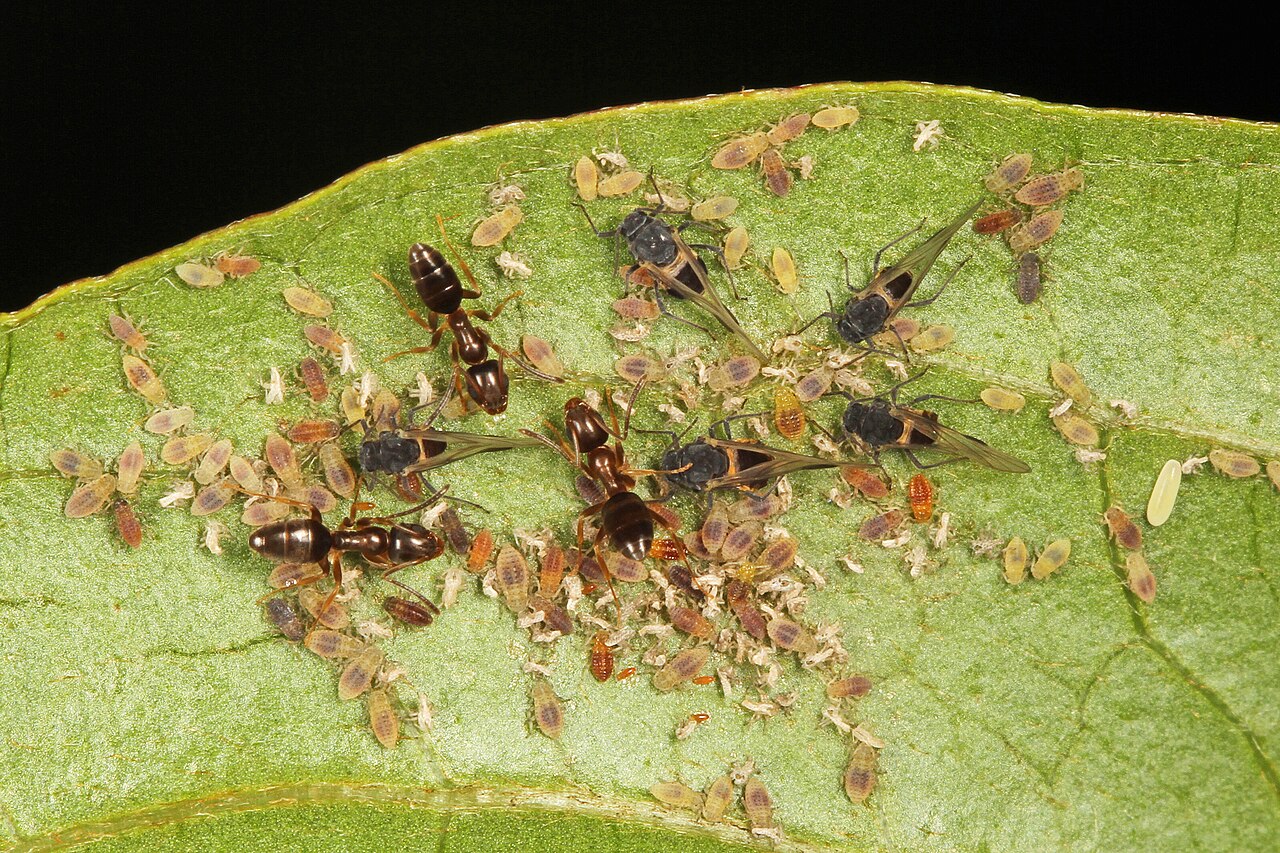
The big black ants are black carpenter ants, Camponotus pennsylvanicus. Workers range from 1/4 to 1/2 inch (6 to 13 mm) within one colony, and that size variation is the giveaway: mixed workers mean Camponotus, uniform workers mean almost anything else. The body is dull black with fine yellowish hairs, and the thorax forms one smooth arch with no spines.
They do not eat wood, they excavate it, and they prefer wood already softened by water, so galleries turn up in window sills, sill plates and porch columns. Sanded looking tunnels and sawdust mixed with insect parts are the classic signs. Photo keys for the genus are kept by the University of Florida at Featured Creatures, which is the fastest way to confirm a specimen.
Black Garden Ant (Lasius niger)
The black garden ant is what most of Europe means by black ant, and it turns up in US cities as an introduction. Workers measure 1/8 to 3/16 inch (3 to 5 mm) and queens reach about 3/8 inch (9 mm), so a worker is roughly twice the length of a little black ant. Color is dark brown to black and matte rather than shiny.
Nests are in soil, often under paving slabs, with the small volcano of excavated grit gardeners know. These ants farm aphids for honeydew and defend them against ladybirds, which is why a rose with an ant trail has an aphid colony first. Our profile of the black garden ant and its nesting habits covers the species alone.
Odorous House Ant and Black House Ant
The odorous house ant (Tapinoma sessile) is about 1/8 inch (3 mm), brown black, and the easiest ant in America to confirm: crush one and it smells like rotten coconut. Its waist node is hidden, so the abdomen seems to sit directly against the thorax.
It nests anywhere that holds moisture, including potted plants, insulation and the gap under a bathtub, and it relocates the whole colony when disturbed. In Florida and the Southwest, pest companies also use black house ant for Ochetellus glaber, a shiny introduced species of similar size. Neither damages wood; the fix is sealing entry points, drying the nest site and using slow acting sweet baits instead of contact sprays.
Pavement Ant and Black Field Ants
Pavement ants (Tetramorium immigrans) are 1/8 inch (3 mm) and dark brown to blackish, with parallel grooves running front to back on the head and two small spines at the rear of the thorax. They pile soil along sidewalk joints and stage the spring sidewalk battles that look like swarms of dark specks.
Field ants in the genus Formica include black and black and red species reaching 1/4 inch (6 mm) that are regularly mistaken for carpenter ants. The split is the thorax profile: a Formica thorax dips in the middle, a carpenter ant thorax is one clean arch. Field ants nest outdoors in mounds and spray formic acid when handled, enough to sting broken skin or eyes. Like other dark yard insects they share habitat with the ground beetles hunting the same leaf litter.
Black Ant vs Carpenter Ant: How to Tell Them Apart
Nearly every identification question we get is this one. Two characters settle it: whether workers in the trail differ in size, and the shape of the thorax seen from the side.
| Character | Little black ant | Black carpenter ant |
|---|---|---|
| Worker length | 1/16 in, all equal | 1/4 to 1/2 in, mixed |
| Waist nodes | Two | One |
| Thorax profile | Uneven, slight dip | Single even arch |
| Surface | Shiny, nearly hairless | Dull, fine yellow hairs |
| Damage | None | Galleries in damp wood |
| Active | Day | Night |
Frequently Asked Questions
Are any black ants poisonous?
No. No black ant in the United States is poisonous or medically venomous. Black carpenter ants bite and add formic acid to the wound, which burns briefly, and pavement ants manage a weak sting. The stingers worth avoiding in North America belong to reddish fire ants and harvester ants.
What is the size of a Lasius niger ant?
Workers of Lasius niger, the black garden ant, run 1/8 to 3/16 inch (3 to 5 mm). Queens are far larger at about 3/8 inch (9 mm), with winged males in between. A single colony typically holds 4,000 to 7,000 workers around one queen.
Why do I suddenly have large black ants?
Three causes account for most cases. Winged carpenter ants appearing indoors in spring came from a nest inside the walls. Heavy rain floods soil nests and drought drives foragers to sinks and bathrooms. The third is a food find, usually pet food, a leaking trash bag or honeydew on a nearby shrub.
What do black ants hate, and what won’t ants cross?
Ants avoid strong volatiles such as peppermint oil, cinnamon, vinegar and citrus, and they hesitate at dry barriers like diatomaceous earth, chalk and talc. None of these is a reliable wall. They disrupt the trail pheromone for a day or two, which helps alongside baiting but not instead of it.
Why should you not squish ants, and what is the fastest way to get rid of them?
A crushed ant releases alarm pheromones that recruit nestmates, so squishing often brings more within minutes. Wipe the trail with soapy water instead. The fastest real fix is sugar gel bait placed on an intact trail for three to five days while you seal entry points. Unusual colors raise the same questions, as in our guide to the pink spiders found indoors.