Javelina Poop: 7 Field Marks That Identify It Fast
Javelina poop looks like a soft, segmented dark mass about 1 to 2 in (2.5 to 5 cm) across, often packed with plant fiber and cactus spines, and it usually sits in a pile at the same spot again and again. That combination of blunt segments, visible fiber and a reused latrine is what separates javelina poop from deer, coyote and dog droppings in the same yard.
Javelinas (Pecari tajacu), also called collared peccaries, live across southern Arizona, southern New Mexico and much of South and West Texas, and they feed heavily on prickly pear, agave, roots and tubers. Their diet is the single best clue in their scat: almost every fresh dropping shows chewed fiber, and many show spines or seeds that no dog and no coyote would ever pass.
Javelina scat is a dark brown to black segmented mass, roughly 1 to 2 in (2.5 to 5 cm) wide, built from blunt pellets fused together. It contains coarse plant fiber, cactus spines, seeds and root pulp, never hair or bone fragments. Javelinas deposit it repeatedly in the same latrine near bedding areas, trails and water.
What Do Javelina Droppings Look Like?
Fresh javelina droppings look like a short, lumpy sausage that has been pressed together out of several blunt pellets. The individual segments measure about 0.75 to 1.5 in (2 to 4 cm) long, and the whole mass is usually 1 to 2 in (2.5 to 5 cm) wide. The surface is dull rather than glossy, and it dries to a matte gray brown within a day or two in desert heat.
Diet changes the shape more than anything else. On green forage after monsoon rain the scat is soft and holds together as one mass, sometimes almost a cow-like plop. On a dry winter diet of roots and dormant cactus the same animal drops separate, blunt-ended pellets that scatter when they hit the ground. Both are normal, and both come from the same gut.
Color runs from near black when fresh to a pale, bleached tan after a week of sun. If you break a dropping apart with a stick, you see the inside fiber, which is the most reliable identification step there is. A dropping that looks uniform and pasty all the way through is almost certainly not from a javelina.
Javelina Scat at a Glance
The table below collects the field marks most people need in the first minute. Use size and content together, because size alone overlaps with several other yard animals.
| Feature | What a javelina leaves |
|---|---|
| Size | Segments 0.75 to 1.5 in (2 to 4 cm); mass 1 to 2 in (2.5 to 5 cm) wide |
| Shape | Blunt pellets fused into a segmented mass, or loose blunt pellets on dry forage |
| Color | Dark brown to black when fresh, bleaching to gray tan |
| Content | Coarse plant fiber, cactus spines, agave fiber, seeds, root pulp |
| Never contains | Hair, feathers, bone chips, insect shells |
| Location | Reused latrines near bedding sites, trails, water, fence lines, under feeders |
| Amount | Several droppings together; herd latrines can cover 2 to 3 ft (60 to 90 cm) |
What Is Inside Javelina Scat
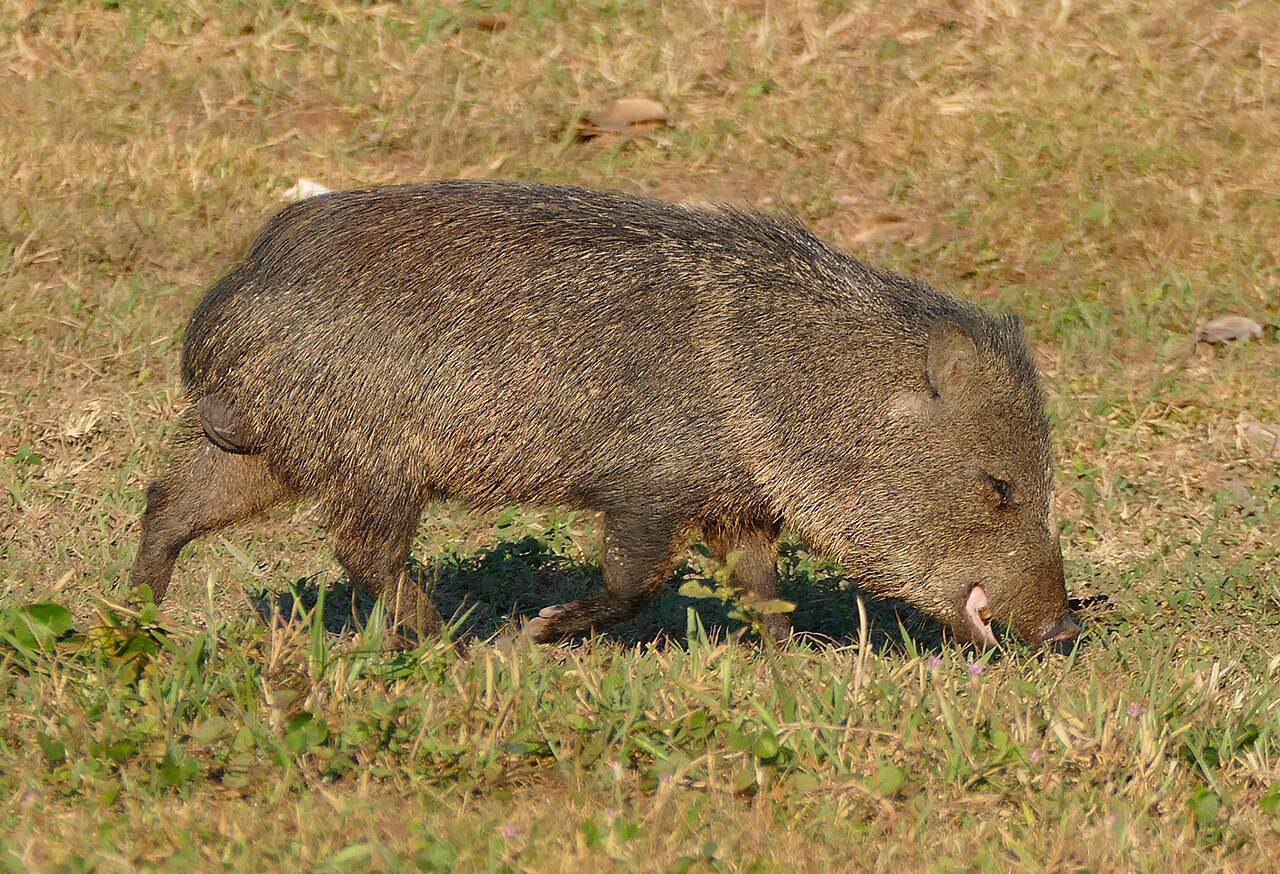
Inside a javelina dropping you find chewed plant tissue and little else. Prickly pear pad fiber is the most common component across the US range, and it often comes with intact spines that survive the gut unchanged. Agave and sotol fiber show up as pale, stringy bundles, and mesquite beans, juniper berries and hackberry seeds appear seasonally.
Javelinas are not true pigs and they are not predators, so animal remains are a red flag for a different species. Hair in a dropping points toward coyote, bobcat or fox; bone chips point the same way. If you are sorting carnivore from herbivore sign more generally, the contrast is the same one that separates deer and rabbit pellets from meat-eater scat.
Root and tuber feeding also leaves soil in the scat. Javelinas dig with the snout, and gritty droppings with visible sand are common where the herd has been rooting through a flower bed or a drip-irrigated garden.
Is a Javelina a Pig or a Rodent?

A javelina is neither a pig nor a rodent. It belongs to the family Tayassuidae, a New World group that split from Old World pigs and hogs tens of millions of years ago, and it is only a distant relative of the feral hogs that share parts of its Texas range. The rodent idea comes from the name alone, since a javelina is a hoofed mammal weighing 35 to 60 lb (16 to 27 kg).
The distinction matters for scat reading. Feral hog droppings are larger, often 2 to 3 in (5 to 8 cm) wide, and much more variable because hogs eat carrion, eggs and grain alongside plants. Javelina scat stays within a narrower size band and stays plant-based, which is why fiber content is such a dependable test in overlapping country.
Where to Look for Javelina Poop in Your Yard
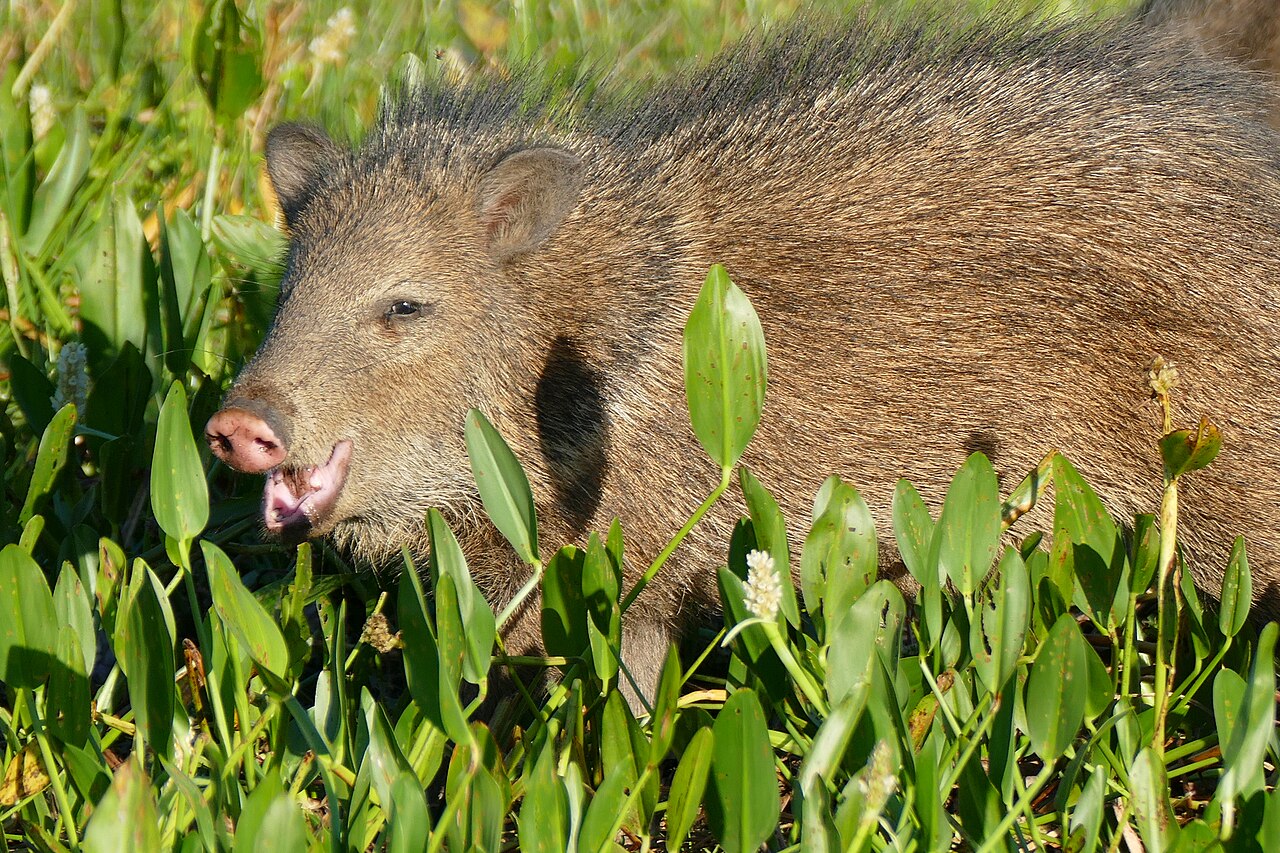
Javelinas repeat their routes, so the scat concentrates in predictable places. Check along fence lines and gates where the herd squeezes through, under bird feeders and fruit trees, beside drip lines and leaking hose bibs, and in the shade under oleander, mesquite or a deck where the herd beds down during the day.
Latrine behavior is the giveaway. A single animal passing through leaves one or two droppings; a resident herd builds up a mat of old and new scat in the same few square feet. Tracks usually accompany it, and javelina tracks are small for the animal’s bulk, roughly 1.5 in (4 cm) long, with two blunt toes and no dewclaw mark in front.
Rooted-up soil, chewed prickly pear pads with ragged bite edges and a trampled bed hollow complete the picture. When those three signs sit next to a latrine, you are looking at a herd that has adopted the property, not an animal passing through.
Javelina Poop vs Deer Poop
Deer droppings are the most common mix-up across the javelina range. Mule deer and white-tailed deer leave smooth, oval pellets 0.5 to 0.75 in (1.3 to 2 cm) long, each with a slight point at one end and a dimple at the other, scattered in a loose cluster of 20 to 100.
Javelina segments are bigger, blunt at both ends, and fused rather than scattered. Deer pellets are also finer inside, because deer chew cud and grind forage much more thoroughly, so you rarely see a recognizable spine or bean fragment. If the pile is a loose spray of small, pointed pellets, it is deer.
Javelina Poop vs Coyote Poop
Coyote scat is tubular, tapered to a twist at one end, and roughly 0.75 to 1 in (2 to 2.5 cm) thick. The content settles it: coyote droppings are matted with hair, often hold bone chips, and in late summer fill with fruit pits and juniper berries bound by hair. Javelina scat has no hair at all.
Placement differs too. Coyotes mark trail junctions, culverts and the middle of paths, leaving one deposit at a time rather than a latrine mat. Hair-bound, twisted scat on open ground is coyote, and the same twist-and-hair test works when you compare predator sign with the small rodent droppings that often sit nearby.
Javelina Poop vs Dog Poop
Dog droppings are smooth, pasty and uniform inside, because commercial kibble leaves almost no identifiable fiber. They come as a single soft tube or a few lumps, usually 0.75 to 1.25 in (2 to 3 cm) thick, and they smell far stronger than any plant-fed scat.
The break test decides it. Push a dropping apart: javelina scat separates into fiber bundles and spines, dog scat crumbles into a homogeneous paste. Dog scat also appears wherever the dog walked, with no latrine pattern, and it usually sits on open lawn rather than under cover.
Are Javelinas Smelly, or Is That the Scat?
Javelinas are smelly, and the smell is mostly not the scat. Each animal carries a dorsal scent gland above the tail that produces a strong musky, slightly skunky odor used for herd recognition and rubbing on rocks and posts. People often notice that smell before they see the animals.
The droppings themselves have a mild, grassy, barnyard odor that fades quickly once dry. If a yard smells sharply musky long after you clear the latrine, the herd is still bedding nearby and rubbing on hard surfaces, and removing the scat alone will not fix it.
Is Javelina Poop Dangerous to Humans and Pets?
Treat it the way you would treat any wild mammal feces: low risk if you do not handle it, real risk if you do. Wild ungulate droppings can carry Salmonella, pathogenic E. coli, Giardia and parasite eggs, and javelina latrines also host ticks and lice that drop off bedding animals. Public health guidance from the Centers for Disease Control and Prevention is consistent across wildlife feces: avoid bare-hand contact, do not stir up dry material, and wash afterward.
Dogs are the usual casualty, because they eat or roll in it. The practical risks are gastrointestinal infection and ticks rather than anything exotic, and a dog that has rolled in a latrine needs a bath and a tick check the same day. State wildlife agencies such as Texas Parks and Wildlife also warn that habituated javelinas defend food sources, so a latrine in the yard is a safety issue beyond hygiene.
How Do I Identify Animal Poop in My Yard?
Work through four questions in order: how big is it, what shape are the ends, what is inside when you break it, and is it in a latrine or a single deposit. Size narrows the field, end shape splits herbivores from carnivores, content confirms the diet, and placement names the behavior.
Then compare against the species that actually live where you are, not everything in a guide. In most suburban yards the realistic list is dog, cat, rabbit, squirrel, rat, raccoon and one or two local wild mammals. Paired comparisons do the work fastest, which is why guides like rat and mouse droppings, bat and mouse droppings and lizard and rat droppings are built around two species at a time. For the other large reptile sign people find in the Southeast, see alligator scat.
Frequently Asked Questions
What animals could have pooped in my yard besides a dog?
In the javelina range the realistic candidates are javelina, deer, coyote, rabbit, packrat, ground squirrel, raccoon and feral hog. Dog scat is pasty and uniform inside; everything on that list leaves either fiber, hair or hard pellets. Break one dropping apart and the content alone removes most of the list.
Is there an app that will identify animal poop?
Several general wildlife and plant apps accept scat photos, and a few scat-specific tools exist, but none is reliable enough to act on alone. They perform worst on exactly the cases people care about, meaning dry, weathered droppings with no scale in frame. Use an app for a first guess, then confirm with size, content and location.
Can AI identify animal poop?
AI image models can narrow the field, and they do reasonably well on distinctive sign such as hair-bound coyote scat. They fail on overlapping cases, because the deciding evidence is usually texture inside the dropping and the latrine pattern around it, neither of which shows in a single photo. Give any model a scaled photo and treat the answer as a hypothesis.
Can I identify feces using a photo?
Yes, if the photo includes a size reference and shows the broken interior. Photograph from directly above with a coin or key beside the dropping, then take a second shot after splitting one piece open. Those two images carry size, shape and content, which is most of what any identification needs.
How do I keep javelinas out of my yard?
Remove the attraction first: pick up fallen fruit, stop ground feeding of birds, fix leaking irrigation and secure trash. Solid fencing at least 3 ft (90 cm) high with no gaps at the bottom stops them, since javelinas push under rather than jump over. Never hand-feed them, because fed herds stop leaving.
Do javelinas use latrines like other animals?
They do, and it is one of the most useful clues in the field. A herd returns to the same few spots near bedding areas, building a mat of droppings in different stages of drying. Finding fresh black scat on top of bleached old scat means the herd is still active on the property.