Female Downy Woodpecker: Identification Guide
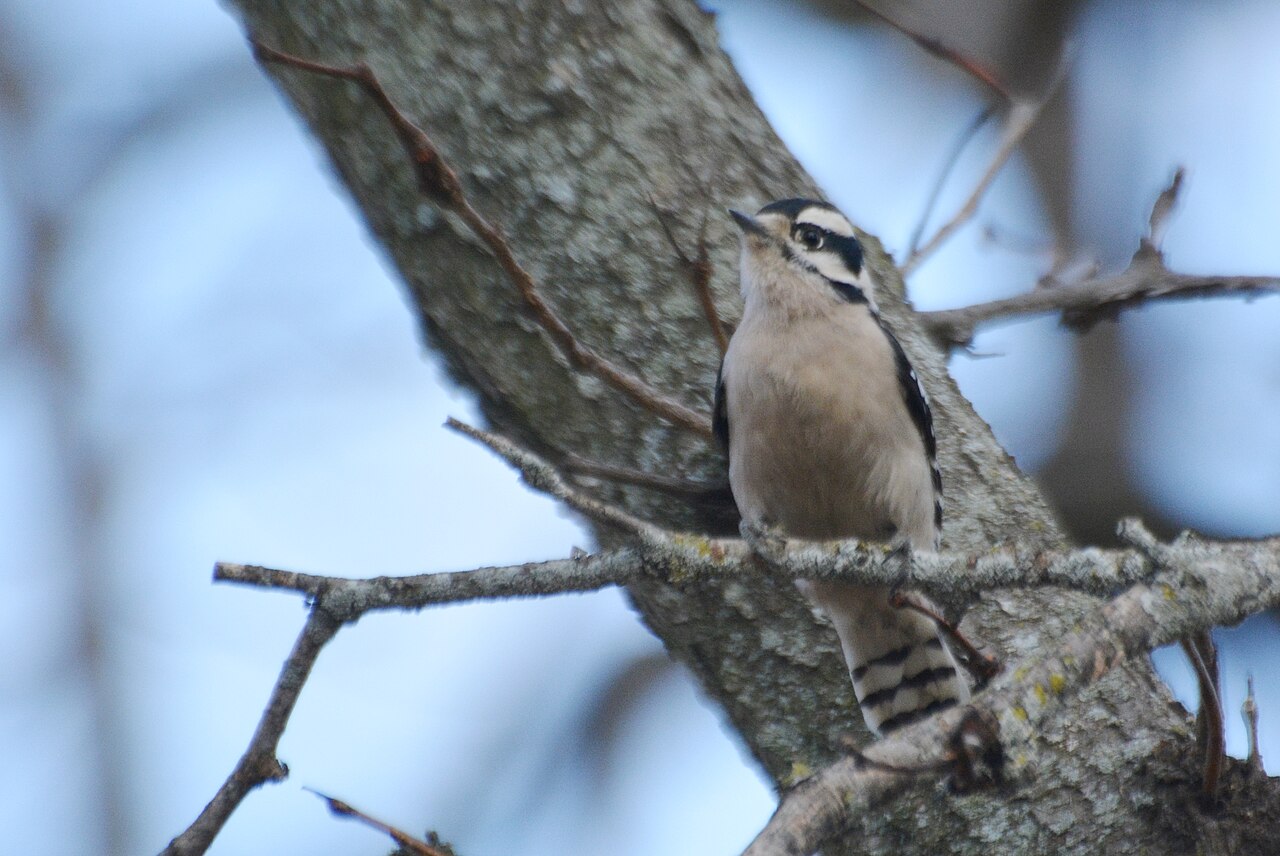
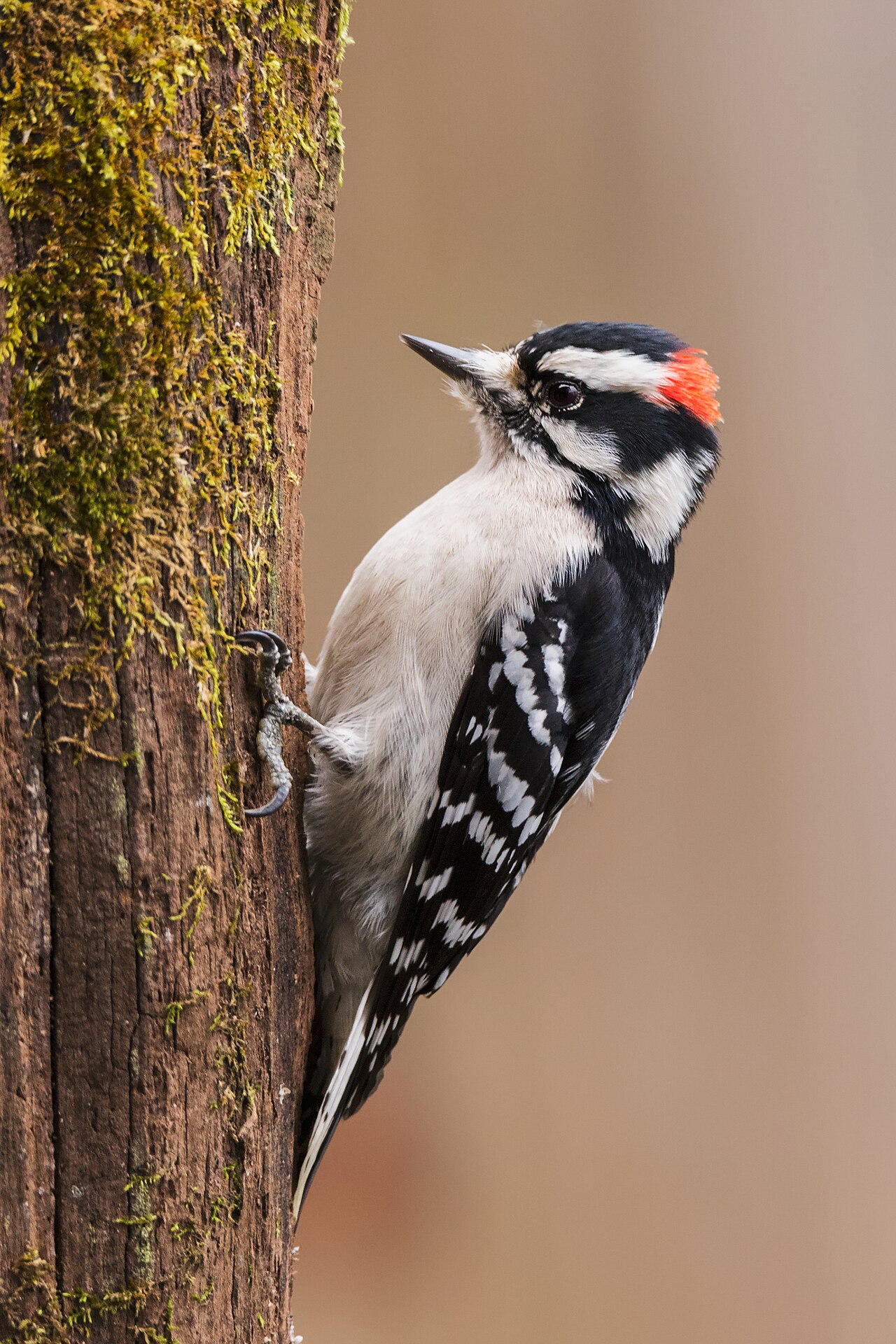
A female downy woodpecker looks just like the male but lacks the red patch on the back of the head. She has the same small size, black-and-white checkered wings, white back and belly, and black-and-white striped face, but her head is plain black and white with no red. This missing red spot is the single easiest way to tell a female downy from a male. This guide covers how to identify a female downy woodpecker, how she differs from the male, from the hairy woodpecker, and her role in nesting and feeding.
| Feature | Female Downy | |
|---|---|---|
| Red on head | None, plain black and white | |
| Size | Small, about 6 to 7 inches | |
| Back | White stripe down center | |
| Wings | Black with white spots | |
| Bill | Short and stubby | |
| Vs male | Identical except no red patch |
How to Identify a Female Downy Woodpecker
The female downy woodpecker shares nearly every field mark with the male, so identification comes down to one detail: the head. She is a small woodpecker, about 6 to 7 inches long, with a white back, white underparts, black wings checkered with white spots, and a boldly black-and-white striped face. The one difference is that her head is plain black and white, lacking the red patch that males wear on the back of the head. Everything else, from her short stubby bill to her compact size and checkered wings, matches the male exactly. So if you see a small black-and-white woodpecker with no red on its head, you are almost certainly looking at a female downy. For the complete species profile, see our Downy Woodpecker guide.
Female vs Male Downy Woodpecker
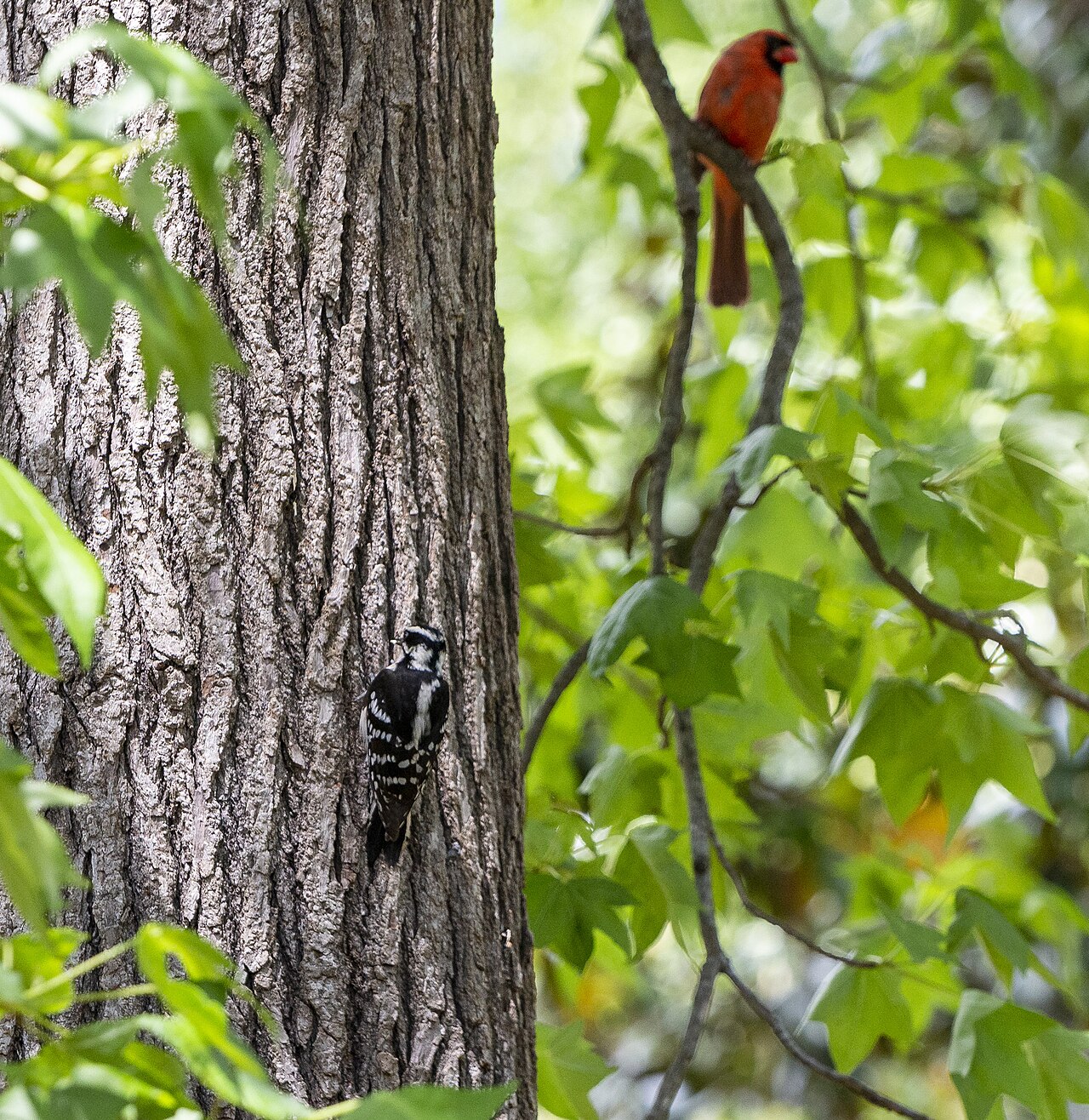
Telling the sexes apart is straightforward once you know where to look. The male downy woodpecker has a small red patch or spot on the back of his head, while the female has no red at all, showing only black and white there. This red nape patch is the only consistent visible difference between them, since the two are otherwise identical in size, shape, pattern, and bill. Both sexes have the same short bill, the same white back, and the same checkered wings. Because of this, sex identification in downy woodpeckers is one of the simplest in the bird world: red on the head means male, no red means female. Juveniles can be trickier, as some young birds show a reddish patch on the forehead rather than the nape.
Female Downy vs Female Hairy Woodpecker
Just as males can be confused, female downy and female hairy woodpeckers look alike and cause the same identification challenge. Both females lack red on the head, so you cannot use the red patch to separate them and must rely on the same clues that distinguish the species overall. Size and bill are again the keys: the female downy is small with a short, stubby bill, while the female hairy is noticeably larger with a long, chisel-like bill about as long as its head is wide. The outer tail feathers help too, spotted with black on the downy and pure white on the hairy. These are the same distinctions covered in our guide to the downy vs hairy woodpecker, and they apply equally to females.
Female Downy Woodpecker Behavior
Female downy woodpeckers are active, acrobatic foragers just like males, and they readily visit backyards. They climb trunks and branches, probe bark for insects, and often work on smaller stems and weeds that their tiny size allows, hunting insects, larvae, and eggs hidden in the wood. At feeders, females eagerly take suet, sunflower seeds, and peanuts, and they can be quite tame. Interestingly, research has shown that male and female downies sometimes forage in slightly different parts of a tree, which may reduce competition between the pair, with females often working larger branches and trunks. Watching a mixed pair at a feeder or in a tree is a nice way to see the subtle red-patch difference between the sexes side by side. To attract them, see our guide to the best suet feeders.
Nesting and the Female’s Role
Female downy woodpeckers play a full and equal role in raising a family. The pair excavates a nest cavity together in a dead tree or branch, with both the male and female sharing the work of chiseling out the hole, which is a demanding task. The female typically lays a clutch of white eggs inside the bare cavity, and both parents share incubation duties, though the male often takes the night shift. After the eggs hatch, both parents feed the nestlings a steady diet of insects until the young fledge. This shared, cooperative approach to nesting is typical of downy woodpeckers and means the female is just as central to reproduction as the male. Supporting a pair with suet and a yard rich in insects helps them thrive, as covered in our guide on attracting birds to your feeder.
Why Only Males Have the Red Patch
The red patch difference between male and female downy woodpeckers is an example of sexual dimorphism, where the sexes look slightly different. In many woodpeckers, males carry more or brighter red on the head than females, and this red is thought to play a role in signaling and mate choice, helping birds recognize sex and assess potential mates. According to the Cornell Lab of Ornithology, the male downy’s red nape patch is the key visible difference between the sexes, since the two are otherwise identical. This subtle dimorphism is milder than the dramatic differences seen in some birds, but it is consistent and reliable. It also means that, unlike species where females look completely different, a female downy is instantly recognizable as a downy, just without the male’s small red flag, a pattern also seen when comparing a female cardinal to her mate.
Female Downy Woodpeckers Through the Year
Female downy woodpeckers are present and active year round, and they do not migrate in most of their range, so you can see them in every season. In winter they are frequent feeder visitors, drawn to suet and seeds when insects are scarce, and they often join mixed flocks of chickadees, nuthatches, and other small birds foraging through the woods. In spring, females pair up and share nest-building and incubation with males. Through summer, they work busily to feed their young, and in fall they resume regular feeder visits as the weather cools. Because they stay all year and take readily to feeders, female downies are one of the most dependable small woodpeckers to observe, and offering suet keeps them coming, as covered in our guide to the best bird feeders.
Common Downy Woodpecker Look-Alikes
Because the female downy is small and black-and-white with no red, a few other birds can cause momentary confusion. The most common mix-up is with the female hairy woodpecker, separated by the downy’s smaller size and short bill. Beginners sometimes also confuse a downy with a nuthatch or a chickadee at a glance, but woodpeckers cling upright to trunks and have the classic chisel bill and stiff, propping tail, which quickly sets them apart. The black-and-white checkered wings, white central back stripe, and striped face are the female downy’s signature. Once you have seen a few, the small size and neat pattern make her easy to recognize, and the absence of any red confirms she is a female rather than a male downy.
Related reading: what do woodpeckers eat.
Related reading: Female Pileated Woodpecker.
Frequently Asked Questions
What does a female downy woodpecker look like?
She looks just like the male, small and black-and-white with a checkered pattern and striped face, but she lacks the red patch on the back of the head, showing only black and white there.
How do you tell a female downy woodpecker from a male?
The male has a small red patch on the back of the head, while the female has no red at all. This is the only consistent visible difference between them.
Do female downy woodpeckers have red on their heads?
No. Female downy woodpeckers have plain black-and-white heads with no red. Only males have the red nape patch.
How is a female downy different from a female hairy woodpecker?
Both females lack red, so use size and bill. The female downy is small with a short bill, while the female hairy is larger with a long, chisel-like bill and unspotted white outer tail feathers.
What do female downy woodpeckers eat?
They eat insects, larvae, and eggs probed from bark and stems, and at feeders they take suet, sunflower seeds, and peanuts, just like males.
Do female downy woodpeckers help build the nest?
Yes. The pair excavates the nest cavity together, and both share incubation and feeding, so the female is fully involved in raising the young.
Can you tell a juvenile downy from a female?
It can be tricky, since some juveniles show a reddish patch on the forehead rather than the nape. Adult females have no red anywhere on the head.