Downy vs Hairy Woodpecker: How to Tell Them Apart
The easiest way to tell a downy from a hairy woodpecker is by size and bill length: the downy is small with a short, stubby bill, while the hairy is noticeably larger with a long, chisel-like bill. Both are black-and-white woodpeckers with a red patch on the male’s head, and they look nearly identical, which causes constant confusion. Bill length relative to head size is the single most reliable clue. This guide covers every difference between the downy and hairy woodpecker, from size and bill to voice, outer tail feathers, and behavior.
| Feature | Downy | Hairy |
|---|---|---|
| Size | About 6 to 7 inches | About 9 to 10 inches |
| Bill | Short, less than head width | Long, about head width |
| Outer tail feathers | White with black spots | Pure white, no spots |
| Voice | Soft, descending whinny | Sharp, flat peek |
| Feel at feeder | Tame, common | Warier, less common |
Downy vs Hairy Woodpecker: The Quick Answer
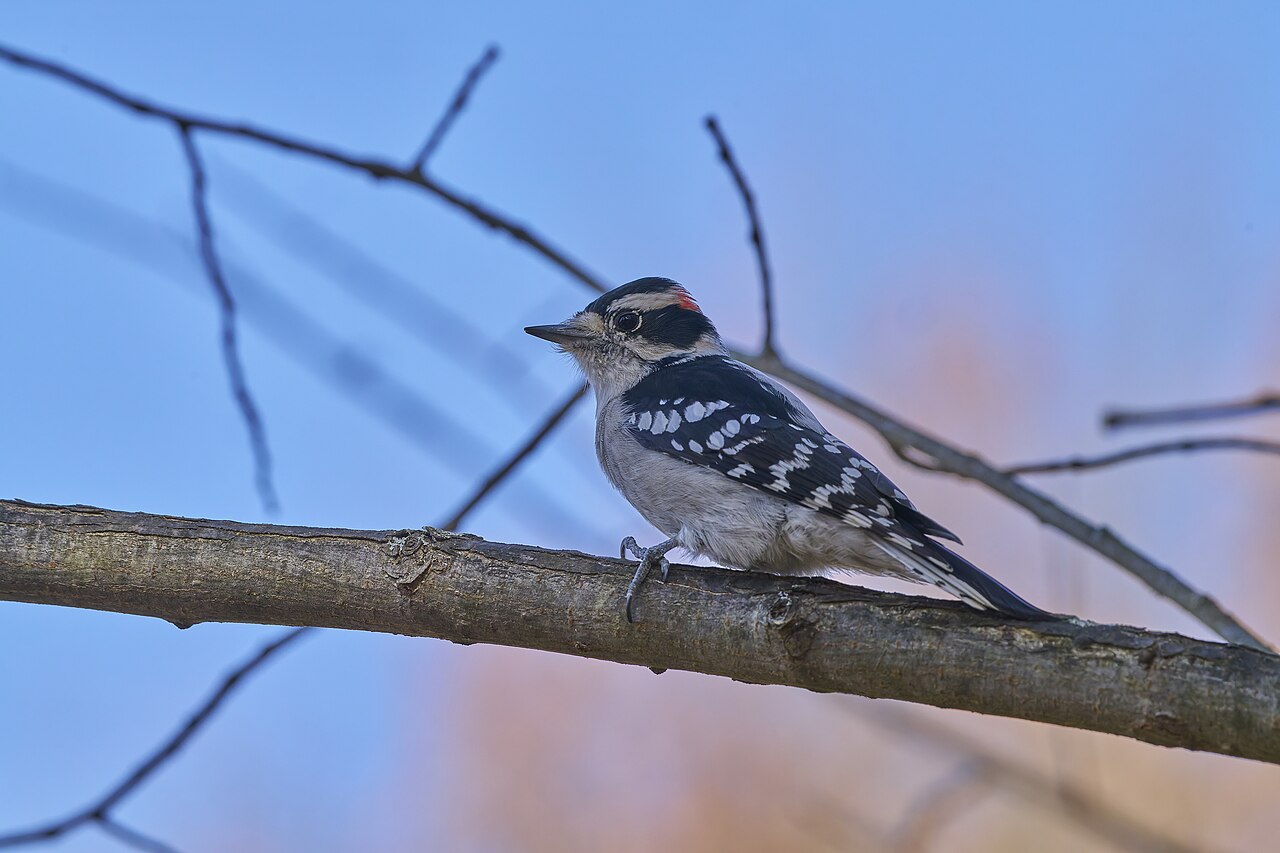
Downy and hairy woodpeckers are two separate species that look remarkably alike, both sporting a black-and-white checkered pattern, a white back, and a red patch on the back of the male’s head. The fastest way to tell them apart is size and bill: the downy is small, roughly the size of a sparrow, with a short, delicate bill, while the hairy is distinctly larger, closer to robin-sized, with a long, powerful bill. When the two cannot be seen side by side, the bill is the giveaway, since the downy’s bill is much shorter than its head is wide, while the hairy’s bill is nearly as long as its head is wide. These two clues, overall size and bill length, resolve most identifications. For the full profile of the smaller species, see our Downy Woodpecker guide.
Size Difference
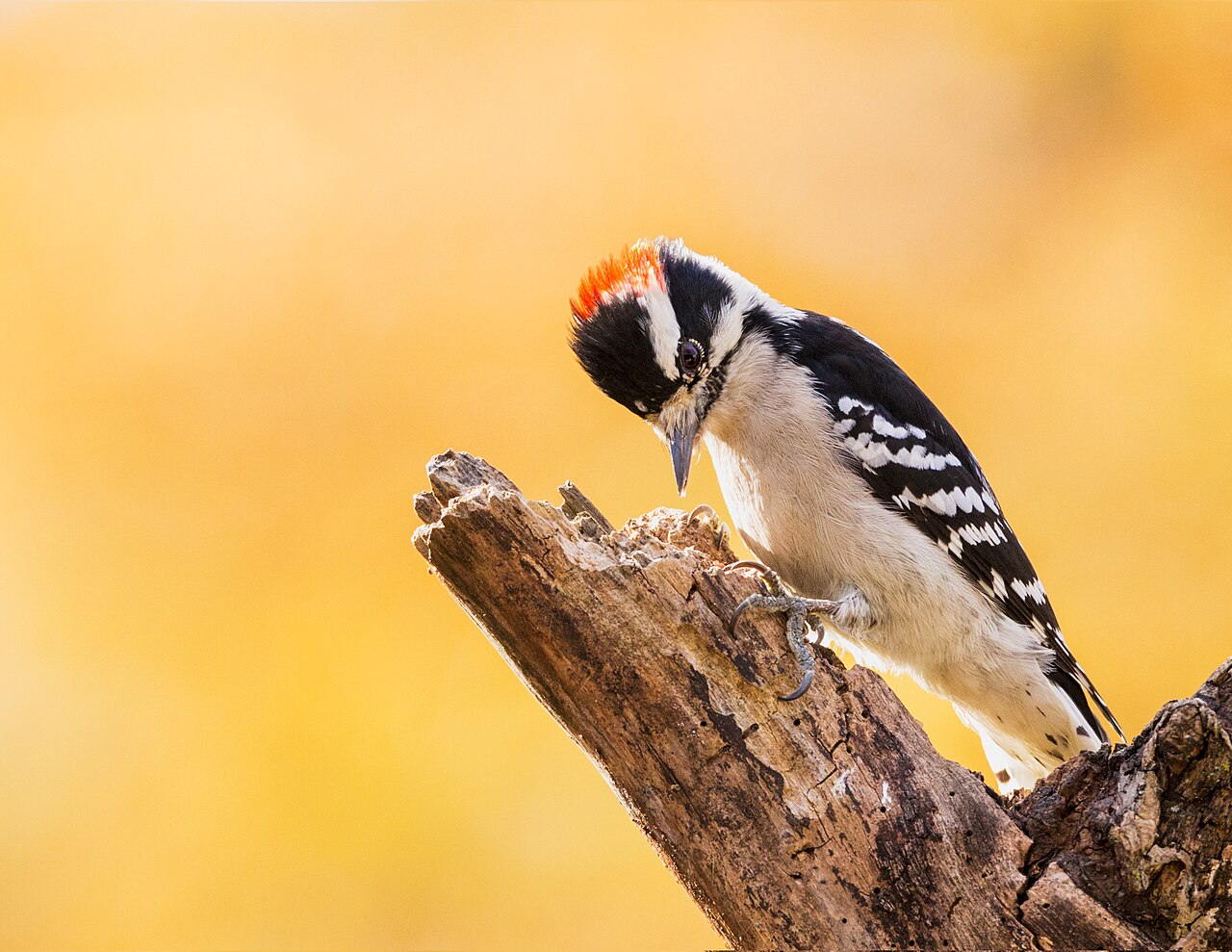
Size is the most obvious difference when you have a reference. The downy woodpecker is small, about 6 to 7 inches long, roughly the size of a house sparrow, and it looks dainty and compact. The hairy woodpecker is considerably larger, about 9 to 10 inches long, closer to the size of an American Robin, and it looks more robust and elongated. That difference is dramatic in person but can be hard to judge when a bird is alone with nothing nearby for scale, since a lone bird gives your eye no size reference. This is exactly why so many people struggle, and why birders lean on the bill rather than size alone when a woodpecker is seen by itself against the sky or a bare trunk.
Bill Length: The Best Clue
If you learn only one difference, make it the bill, because it works even on a lone bird. On a downy woodpecker, the bill is short and stubby, clearly shorter than the width of the bird’s head, giving it a cute, small-billed look. On a hairy woodpecker, the bill is long and chisel-like, roughly as long as the head is wide, giving it a front-heavy, powerful appearance. Comparing the bill to the head, rather than guessing absolute size, is the most reliable field mark birders use. Once you train your eye to check bill-to-head proportion, telling downy from hairy becomes far easier, and you will start to notice the hairy’s oversized bill immediately. For seed and suet that draw both, see our guide to the best suet feeders.
Outer Tail Feathers
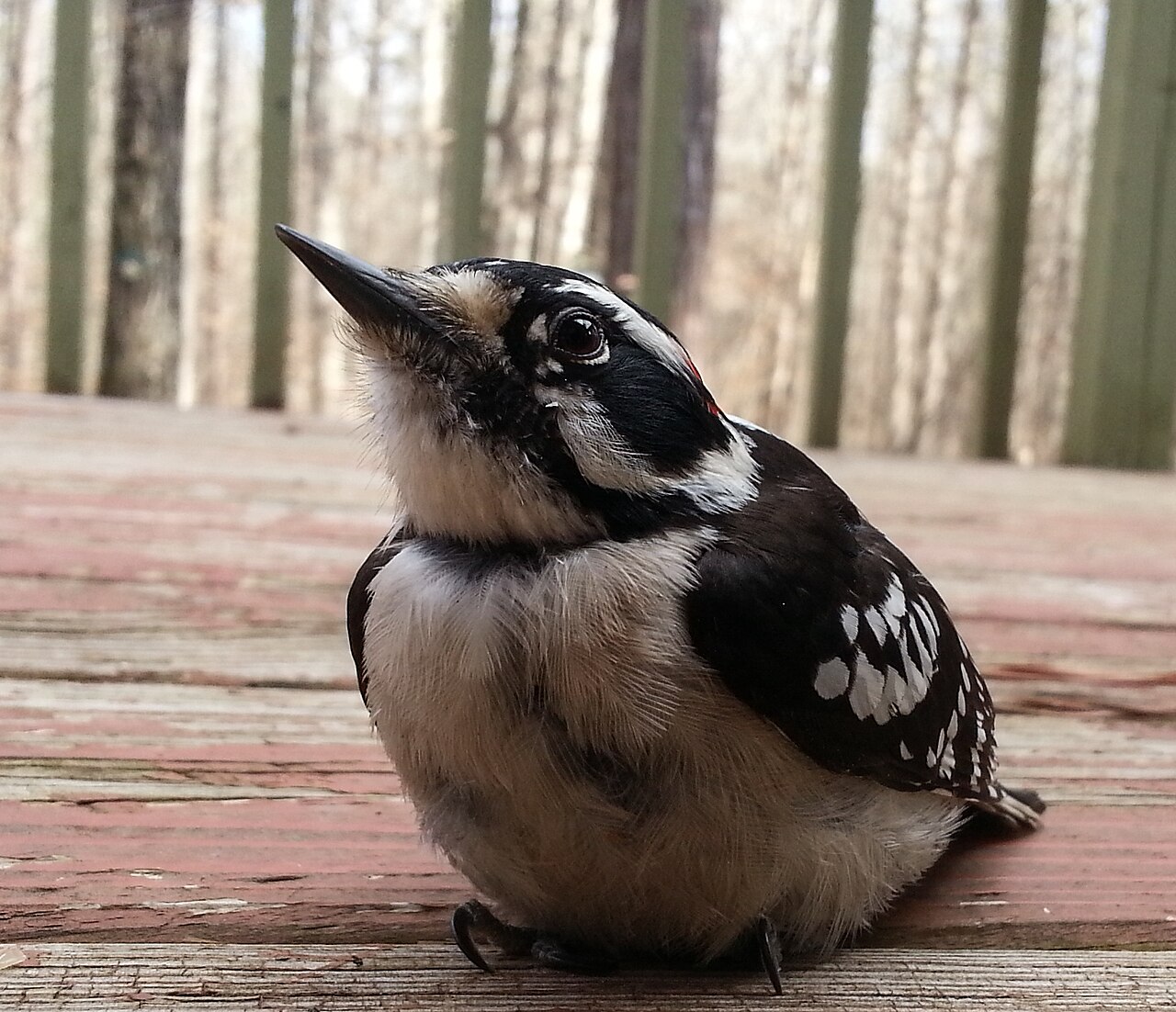
A subtler but definitive clue is the pattern on the outer tail feathers, which is worth checking when you get a clear look. On a downy woodpecker, the white outer tail feathers are marked with small black spots or bars. On a hairy woodpecker, those outer tail feathers are pure, clean white with no spots. This difference is reliable when the tail is visible, such as when the bird clings to a trunk or perches at a feeder. Combined with the bill and size, the tail pattern gives a third independent way to confirm your identification. Serious birders often use this feature to clinch tricky sightings, and photographers can zoom in on the tail after the fact to be certain which species they saw.
Voice and Sounds
Downy and hairy woodpeckers also sound different, which helps identify them even when they are hidden. The downy gives a soft, gentle whinny that descends in pitch, along with a quiet, high pik call that is not very sharp. The hairy gives a louder, sharper, flatter peek call that is more emphatic and does not descend the way the downy’s whinny does. With a little practice, the difference in their calls becomes a quick way to tell them apart by ear, especially in wooded areas where you hear them before you see them. Both species also drum on wood to communicate, with the hairy tending to drum faster and more forcefully, reflecting its larger size and stronger bill.
Behavior and Habitat
Behavior and setting offer additional hints. Downy woodpeckers are more common in backyards, more tolerant of people, and more likely to feed on small stems, weeds, and thin branches, since their small size lets them forage on slender vegetation. Hairy woodpeckers are somewhat warier, less frequent at feeders in many areas, and tend to work on larger trunks and branches, matching their bigger, stronger build. Both eat insects from wood and readily take suet, and both visit yards, so behavior is a supporting clue rather than a definitive one. If you see a small, tame woodpecker working a sunflower stalk at your feeder, it is almost certainly a downy, while a larger, more cautious bird hammering a tree trunk is more likely a hairy. To bring either to your yard, see our guide on attracting birds to your feeder.
Why Are They So Similar?
The striking resemblance between downy and hairy woodpeckers is one of the classic puzzles of North American birding, and it is not a coincidence. The two species share the same black-and-white plumage pattern almost feather for feather, despite not being especially close relatives, an example of two birds converging on a very similar look. Scientists have long debated why, with one leading idea being that the smaller downy may benefit from mimicking the larger, more dominant hairy, gaining an edge when interacting with other birds. Whatever the reason, the practical result for birdwatchers is a pair of look-alikes that must be separated by size, bill, and tail rather than color. Both are widespread and common, so learning to tell them apart is a rewarding early skill, and you can compare the smaller one in detail in our Downy Woodpecker guide.
Where You Will See Each One
Both species are common across much of North America, and according to the Cornell Lab of Ornithology the downy woodpecker is one of the most abundant and widespread woodpeckers on the continent, found in woodlands, parks, and backyards nearly everywhere. The hairy woodpecker is also widespread but generally less numerous and more tied to mature forests and larger trees, so you are more likely to see a hairy in wooded areas and a downy almost anywhere, including small yards. Both come to feeders, though the downy is the more frequent and confiding backyard guest. Knowing these habitat tendencies adds a useful clue: a woodpecker calmly feeding at a suburban feeder is more often a downy, while a larger bird deep in the woods may well be a hairy. To draw either, see our guide to the best bird feeders and consider a red-bellied woodpecker visitor too.
Related reading: types of woodpeckers.
Related reading: what do woodpeckers eat.
Frequently Asked Questions
How do you tell a downy from a hairy woodpecker?
The best clues are size and bill length. The downy is small with a short bill shorter than its head width, while the hairy is larger with a long bill about as long as its head is wide.
What is the main difference between downy and hairy woodpeckers?
Bill length relative to head size is the most reliable difference. The downy has a short, stubby bill, while the hairy has a long, chisel-like bill, plus the hairy is noticeably larger.
Are downy and hairy woodpeckers the same bird?
No, they are two separate species that look very similar. Despite their nearly identical black-and-white pattern, they differ in size, bill length, voice, and tail markings.
Which is bigger, downy or hairy woodpecker?
The hairy woodpecker is bigger, about 9 to 10 inches long, roughly robin-sized. The downy is smaller, about 6 to 7 inches, roughly sparrow-sized.
Do downy and hairy woodpeckers have red on their heads?
Yes, males of both species have a red patch on the back of the head, while females of both lack the red. This shared trait adds to the confusion between them.
How can I tell them apart by their tail?
Downy woodpeckers have white outer tail feathers with small black spots, while hairy woodpeckers have pure white outer tail feathers with no spots.
Which woodpecker is more common at feeders?
The downy woodpecker is more common and tame at backyard feeders. The hairy is warier and visits feeders less often in many areas.