Bison Symbolism: Spiritual Meaning, Omens and the White Bison
Seeing a bison is read as a sign of abundance, endurance and standing your ground, the opposite of the flight reading given to deer. Bison symbolism in North America rests almost entirely on Plains Native tradition, where the animal is a provider and a relative rather than a decorative emblem.
The modern American use of the bison as a symbol of grit and national resilience is a much later layer, and it sits uneasily on top of the older one. Both are covered below, kept apart, along with what people read into specific sightings, bison skulls and dreams.
The bison is a symbol of provision, strength, patience and gratitude. In Plains Native tradition it is a sacred relative that gives everything it has, and the white bison is a sign of prophecy fulfilled. Seeing one is commonly read as a reminder that what you need is already available if you stop chasing it.
| Situation | Common symbolic reading |
|---|---|
| Bison standing alone | Hold your position; the matter does not need a response yet |
| Bison in a large herd | Belonging, family duty, strength that comes from the group |
| Bison blocking your path or a road | A pause that is being imposed on you rather than chosen |
| Bison charging or bluffing | A boundary has been crossed; back off rather than push harder |
| White bison | Prophecy and renewal, the rarest and most sacred sign |
| Bison skull | Respect for what was given, and the completion of a cycle |
| Bison in a dream | Stored strength you are not using |
What Is a Bison a Symbol Of?
A bison is a symbol of provision above all. An adult bull weighs up to 2,000 lb (900 kg), and for the peoples of the Great Plains that single animal supplied food, hide, shelter, tools, thread, fuel and ceremony. Nothing in that relationship was symbolic first; the meaning grew out of dependence.
Strength and patience come second. Bison face into blizzards instead of drifting away from them, a behavior that has become the most quoted lesson drawn from the animal. Where the deer survives by leaving, the bison survives by enduring, and that contrast is the core of what people take from a sighting. It is the same divide that separates deer symbolism from the heavier grounded animals.
What Does a Bison Mean to Native Americans?
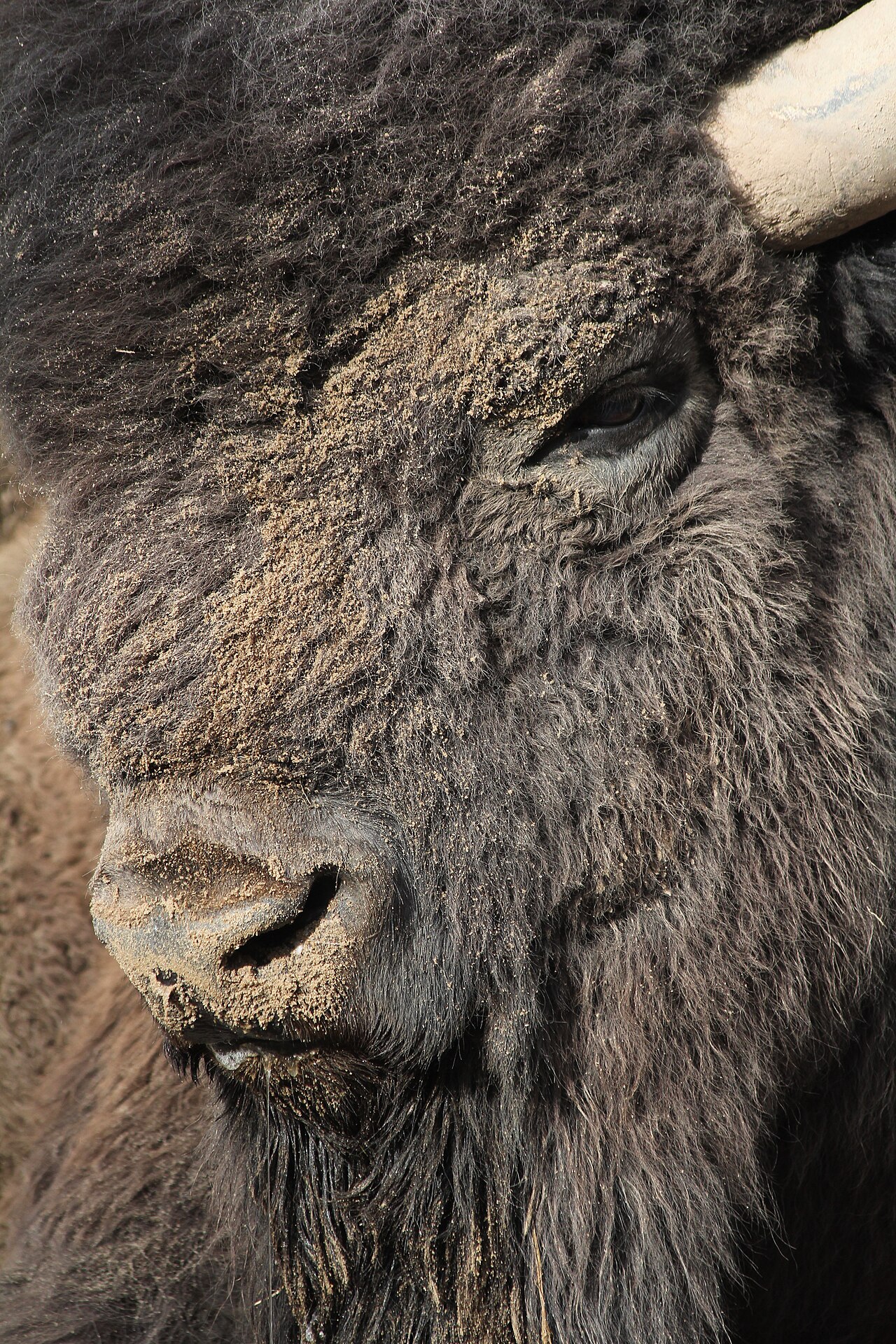
There is no single answer, and the differences between nations matter. In Lakota tradition the bison, tatanka, is a relative whose generosity models how a person should live, and the animal appears in the Sun Dance and in prayers of thanks. In Blackfeet tradition the iinnii is tied to origin stories and to the buffalo jumps that fed whole communities.
Among the Mandan, Hidatsa and Arikara, bison societies and the White Buffalo Cow ceremony organized social and spiritual life. Kiowa, Comanche and Cheyenne accounts all describe the near extermination of the herds in the 1870s and 1880s as a wound rather than an economic loss, which is why bison restoration today is handled as a cultural project as much as a conservation one.
What runs through all of it is obligation. The bison gives, and the taking is answered with prayer, restraint and use of the whole animal. Reading a bison sighting as a personal message, with nothing owed in return, belongs to modern popular spirituality and not to these traditions.
The White Bison and the Sacred Pipe
In Lakota tradition, White Buffalo Calf Woman appeared to two scouts in a time of hunger, brought the sacred pipe and the seven ceremonies, and left as a white buffalo calf that changed color four times. Her promised return is why the birth of a white bison calf is treated as a prophetic event and draws thousands of visitors.
Not every white calf qualifies in the eyes of traditional practitioners. Some are albinos, some are leucistic, some are the result of cattle genes in a herd, and some are born brown with a white coat later. Elders have publicly distinguished between these cases, and the distinction is taken seriously.
Outside Lakota belief, white animals are read more loosely as messengers. That broad reading is common in the symbolism literature, but it is not the same claim, and it should not be presented as the Lakota one.
Bison, Buffalo and Old World Cattle Symbolism
The American bison (Bison bison) is not a buffalo, and the European wisent (Bison bonasus) is a separate species, but the word buffalo is so embedded in English, in treaty language and in Native English usage that insisting on correction misses the point. Where the two words carry different symbolic weight, it is cultural, not zoological.
Old World symbolism attaches to cattle and aurochs rather than to bison. Biblical references translated as “wild ox” or “unicorn” point to the aurochs, and they stand for untamable power that belongs to God and not to kings. The Hebrew letter aleph and the Greek alpha both descend from an ox head, which is how the animal ended up at the start of the alphabet.
European cave art at Altamira and Lascaux gives the bison its oldest surviving role, painted thousands of years before any written tradition. In East Asian symbolism the water buffalo takes the place the bison holds here, standing for patient labor and for the sage who rides it away from the world.
What It Means to See a Bison
A lone bison is read as a signal to hold your position. The animal is not hiding and not fleeing, and the interpretation follows that: the situation you are worried about does not yet require a response from you.
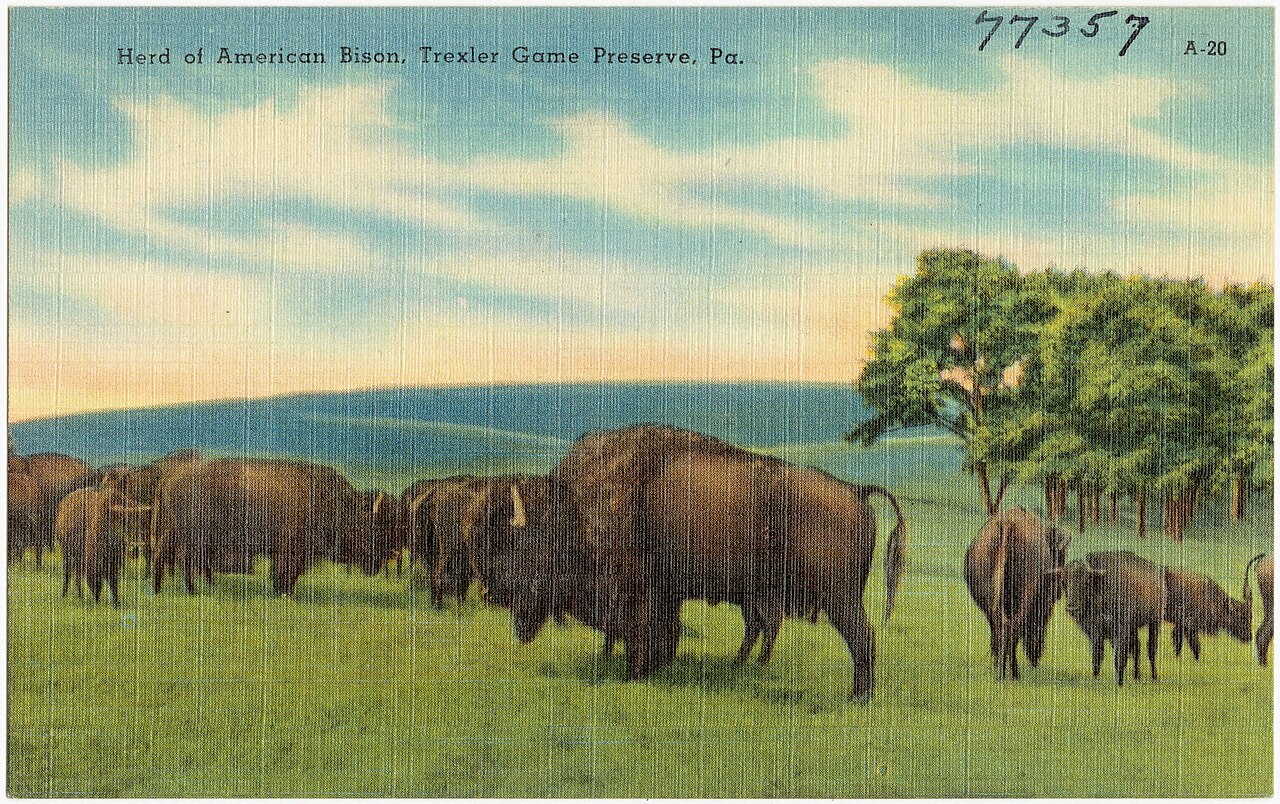
A herd is read as belonging and obligation, the reminder that your strength is partly borrowed from the people around you. A bison blocking a road, which is an everyday event in Yellowstone, is read as an imposed pause, and the practical advice matches the symbolic one. The U.S. Fish and Wildlife Service and park authorities ask visitors to stay at least 25 yd (23 m) back, because bison injure more people in Yellowstone than bears do.
A bluff charge, with the tail raised and the head low, is read as a boundary being stated plainly. In symbolic terms people apply it to a relationship where they have been pressing too hard. In literal terms it means leave, and the comparison with bear symbolism holds here too: both animals are read as teachers of limits.
What Does a Bison Skull Represent?
A bison skull represents the completion of a cycle and the respect owed for what was given. In Plains ceremony, skulls were placed facing east in Sun Dance arbors and on altars, painted and offered, not displayed as trophies. The meaning is gratitude and continuation rather than death.
The twentieth century photographs of skull piles from the hide trade gave the same object a second, grimmer meaning as a record of industrial slaughter. Both readings are now active at once, which is why the image is loaded in a way that a decorative use rarely acknowledges.
In contemporary Western decor the skull reads as endurance and frontier identity. Anyone drawn to that use is borrowing from a ceremonial object still in active use, and it is worth knowing that before hanging one on a wall.
Bison as Spirit Animal, Totem and Omen
As a spirit animal in modern practice, the bison is chosen for grounding: people name it when they want to stop reacting and start enduring. The usual lesson drawn is gratitude for what is already present, paired with the willingness to face hard weather rather than circle it.
Totem in the strict sense belongs to a clan, and several nations have buffalo clans and buffalo societies with inherited membership and specific duties. Using the word for a personal favorite animal empties it. An omen, by contrast, is one event read as a message, and that is what the situation table above describes.
In dreams, a bison is generally read as stored strength that is not being used. A calm grazing herd is read as sufficiency, a stampede as pressure building from a direction you have not been watching, and a single bison watching you as a question about whether you will stand still. For a lighter messenger reading, bird symbolism and bee symbolism work differently, carrying news rather than weight.
Frequently Asked Questions
What represents buffalo?
In Plains Native tradition the buffalo represents provision, generosity and the duty to use everything given. In American popular use it represents resilience and the frontier, which is why it appears on the nickel, on state flags and as the national mammal. The two meanings come from different places.
What does bison stand for?
Bison stand for abundance, endurance and gratitude, and for strength that holds rather than strength that attacks. The most repeated lesson is that bison walk into storms instead of running from them, used as an image for facing a difficulty directly. Compare the patient grounded reading with alligator symbolism, which is about waiting to strike.
What animal signifies marriage?
Not the bison. Cranes, swans, doves, wolves and geese carry the marriage symbolism in most traditions, because all of them pair for long periods or for life. Bison do not pair bond; bulls hold cows briefly during the summer rut and then leave, so the animal signifies family provision instead.
Does a bison tattoo mean anything?
Commonly it means endurance, rootedness, or a tie to the Plains, Montana, Wyoming or the Dakotas. Among Native wearers it can mark clan identity or a specific ceremonial relationship, which is exactly why the design is best chosen as personal rather than as borrowed tradition.
What is the significance of the bison in mythology?
Bison appear as creators of plenty and as gatekeepers of ceremony. Lakota accounts credit White Buffalo Calf Woman with bringing the sacred pipe; Blackfeet stories tie the iinnii to the origin of their people; and Paleolithic cave paintings in Spain and France make the animal one of the oldest subjects in human art. See also moose symbolism for the other large North American ungulate.