White Salamander: 5 Pale US Species and How to Tell Them Apart
No salamander in the United States is naturally pure white, but several come close enough to look it. A white or ghostly pale salamander is usually one of three things: a blind cave species such as the Texas blind salamander, an albino or leucistic individual of a normally dark species, or a dark salamander so heavily marked with white flecks that it reads as white in low light.
Which of the three you are looking at is easy to settle. Cave species have no working eyes and feathery red gills on the neck. Albinos have pink or red eyes. White spotted species have normal black eyes and a dark background under the speckling.
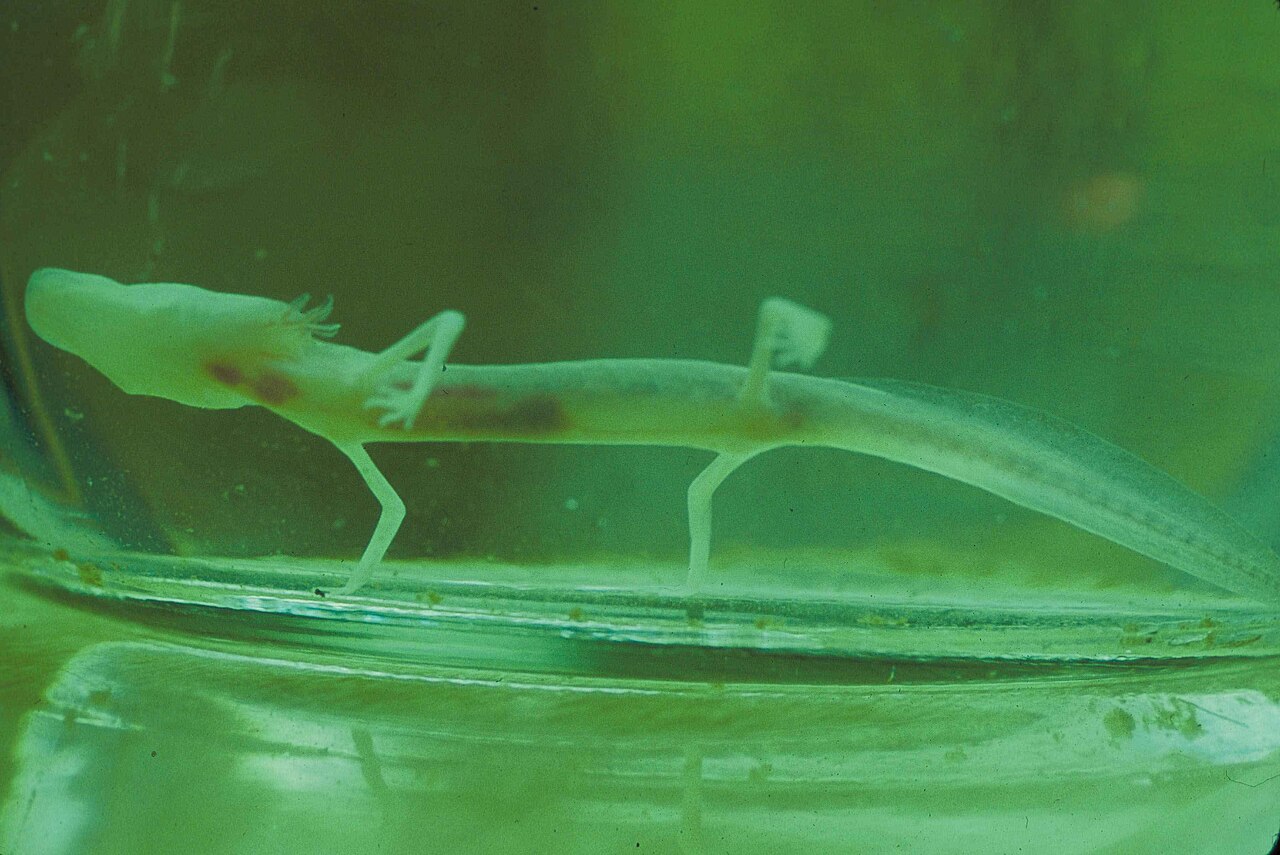
A white salamander in the US is most likely a Texas blind salamander (Eurycea rathbuni), a Georgia blind salamander, or an albino or leucistic individual of a common species such as a tiger salamander. True cave species are translucent white with no functional eyes and red external gills. None of them are venomous, but all secrete skin toxins and should not be handled.
| Feature | Texas blind salamander | Albino tiger salamander | White spotted slimy salamander |
|---|---|---|---|
| Body color | Translucent white to pinkish | Pale cream to yellow white | Black with white flecks |
| Eyes | Two dark dots, nonfunctional | Pink or red, functional | Black, functional |
| Gills | Red, feathery, external | Only as a larva | None |
| Size | 3 to 5 in (8 to 13 cm) | 6 to 8 in (15 to 20 cm) | 4 to 7 in (10 to 18 cm) |
| Where found | Edwards Aquifer, Texas only | Rare, anywhere in range | Appalachian forests |
What Is a White Salamander?
White salamander is a description, not a species. Salamanders are amphibians, in the order Caudata, and the roughly 190 species in the United States run from jet black to bright orange. Pale individuals arise either from life underground, where pigment is useless, or from a genetic lack of pigment.
Cave dwellers lose color over evolutionary time, which is why they look washed out rather than snow white. An albino, by contrast, is a one in many thousands individual of an ordinary species, and it is usually spotted in a basement or a garden rather than a cave.
Texas Blind Salamander (Eurycea rathbuni)
This is the classic white salamander of North America. It is translucent white with a broad flat head, blood red external gills, long spindly legs and two black dots where eyes would be. Adults reach 3 to 5 in (8 to 13 cm) and live only in the water filled caves of the Edwards Aquifer near San Marcos, Texas.
It is federally listed as endangered and spends its entire life underwater in total darkness, hunting tiny invertebrates by sensing water movement. Seeing one in the wild is essentially impossible; almost every photograph comes from a hatchery or a research population. For current listing status the US Fish and Wildlife Service maintains the species record.
Georgia Blind Salamander and Other Pale Cave Species
The Georgia blind salamander (Eurycea wallacei) lives in the limestone aquifer under southern Georgia and the Florida panhandle and looks like a smaller, pinker version of its Texas relative. The grotto salamander (Eurycea spelaea) of the Ozarks is the odd one out: it hatches with eyes and pigment in surface streams, then loses both as it matures into a pale cave adult.
All three are restricted to groundwater, all three are threatened by aquifer pumping and contamination, and none of them will ever turn up in a backyard. Range is the fastest filter: if you are not standing on karst limestone in Texas, Georgia, Florida, Missouri or Arkansas, your pale salamander is something else.
Albino and Leucistic Salamanders
Albino salamanders lack melanin entirely and have pink or red eyes. Leucistic animals keep dark eyes but lose most body pigment, producing a creamy white animal that still looks normal in shape. Both turn up occasionally in tiger salamanders, spotted salamanders and marbled salamanders.
The white salamander most Americans have actually seen is the leucistic axolotl (Ambystoma mexicanum), the pale pink pet shop animal with frilled gills. It is a Mexican species, critically endangered in the wild, and not a native North American animal despite being the picture most people hold in mind. Color morphs like this exist across the group, from a black salamander to a blue salamander or a pink salamander.
White Spotted Species Mistaken for White Salamanders
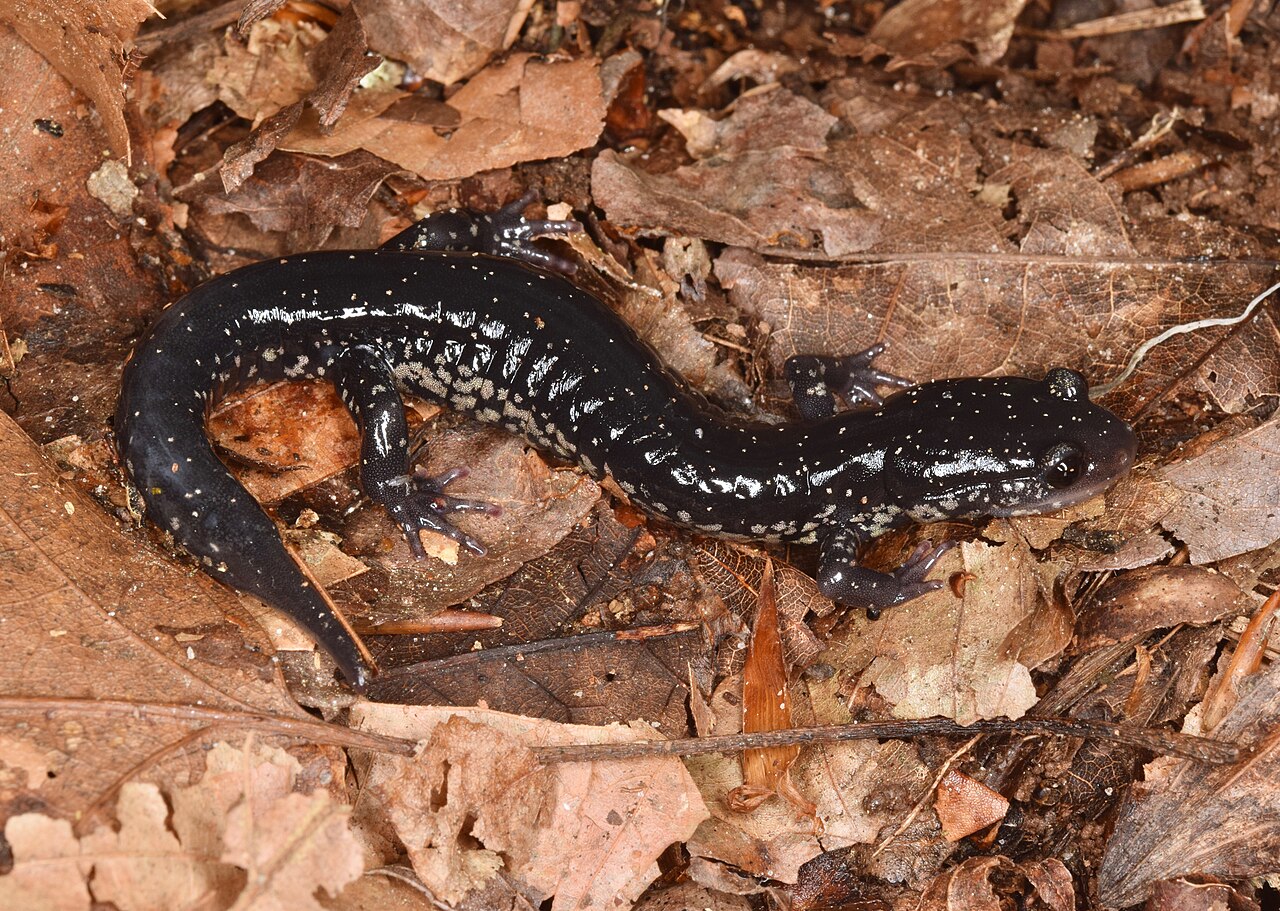
Several dark species carry so much white that a flashlight makes them look white overall. The white spotted slimy salamander (Plethodon cylindraceus) and the northern slimy salamander (Plethodon glutinosus) are black with dense white or brassy flecks and produce a glue like skin secretion that is genuinely hard to wash off. The marbled salamander (Ambystoma opacum) wears bold white or silver crossbands on black and is one of the few salamanders that breeds in autumn.
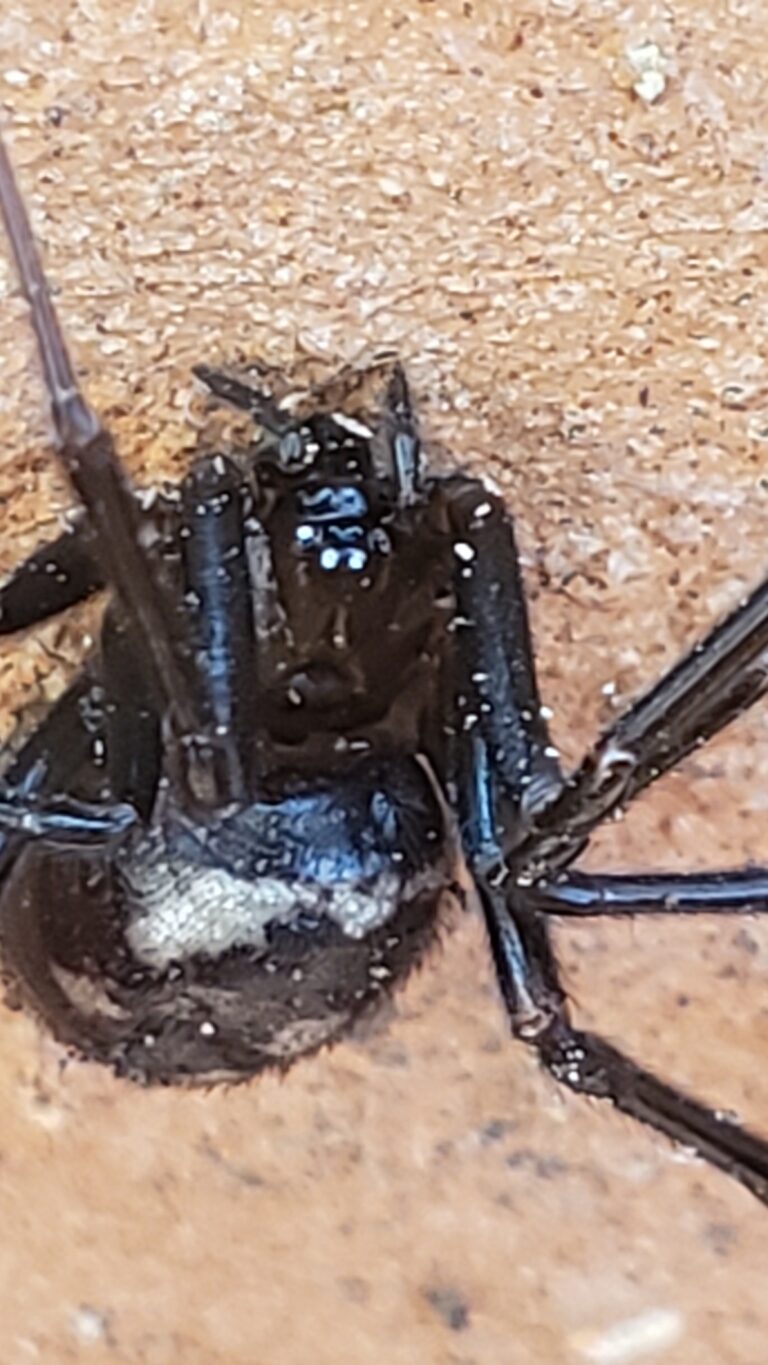
The same flashlight effect fools people with other wildlife, which is why a black and white snake, a black spider with white spots or a black and white beetle gets reported as pure white far more often than it should. Check the animal in daylight or in a photograph before settling on a color.
Frequently Asked Questions
Are salamanders amphibians?
Yes. Salamanders are amphibians in the order Caudata, alongside frogs and caecilians in the class Amphibia. They have moist permeable skin, most lay eggs in water, and many pass through an aquatic larval stage with external gills before moving onto land.
Is the white salamander the same as the White Salamander letter?
No. The White Salamander letter was a forged 1830s document fabricated by Mark Hofmann in the 1980s concerning early Mormon history. It has nothing to do with the animal, though it dominates search results for the phrase. The animal in this guide is a real amphibian.
What does seeing a salamander mean spiritually?
Across European and North American folklore the salamander is a symbol of fire, renewal and transformation, drawn from the old belief that it was born in flames. A white salamander is sometimes read as a sign of purity or hidden knowledge. None of this reflects anything about the animal itself.
What should I do if I find a salamander?
Leave it where it is and put the log or rock back the way you found it. If it is on a road or a driveway, move it with a wet leaf rather than bare hands, in the direction it was already heading. Never relocate it to another pond, since that spreads amphibian disease.