Muskrat Tracks: 3 Clues That Identify Them in Snow and Mud
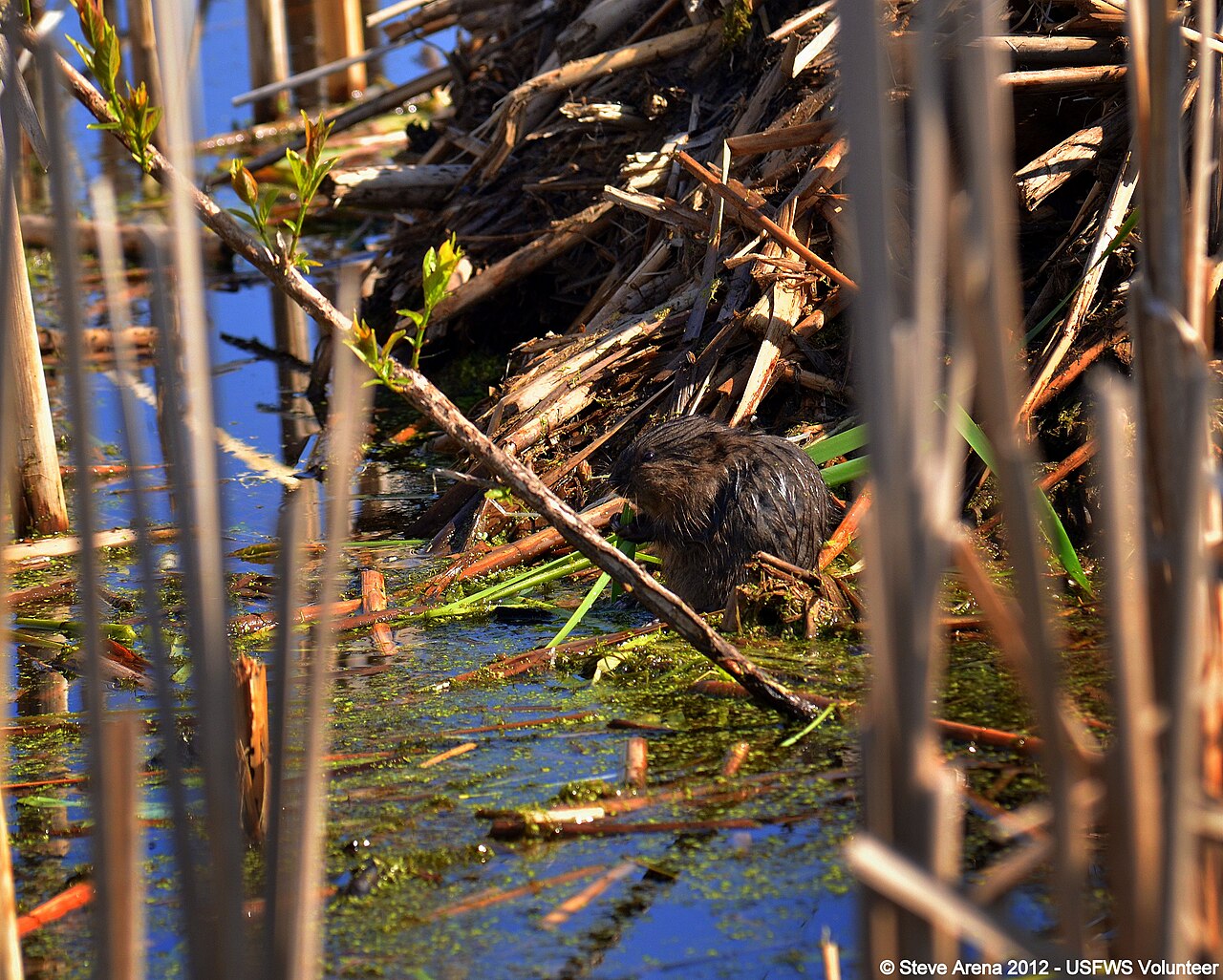
Muskrat tracks are identified by three things together: a small 4 toed front print, a long 5 toed hind print with partial webbing, and a thin wavy tail drag running down the middle of the trail. Any one of those can mislead you. All three in the same trail, within a few feet of water, means muskrat (Ondatra zibethicus) and almost nothing else.
Winter is the best time to look. Muskrats do not hibernate, they travel across ice and snow between feeding holes, and fresh snow records the tail drag that mud often swallows. The sections below work through the front and hind prints, the measurements, the gait, and how the same tracks read differently in snow, mud and sand.
Muskrat front tracks show 4 long toes with claws and measure about 1 to 1.5 in (2.5 to 3.8 cm). Hind tracks show 5 toes with partial webbing at 1.5 to 3 in (3.8 to 7.6 cm). A thin tail drag between the prints confirms the animal, and trails always lead to water.
| Feature | Measurement | Notes |
|---|---|---|
| Front track length | 1 to 1.5 in (2.5 to 3.8 cm) | 4 visible toes, claws almost always show |
| Hind track length | 1.5 to 3 in (3.8 to 7.6 cm) | 5 toes, long and splayed, partial webbing |
| Trail width | 3 to 4.5 in (7.6 to 11.4 cm) | Narrow, waddling line |
| Stride, walking | 3 to 5 in (7.6 to 12.7 cm) | Alternating front and hind pairs |
| Tail drag | Thin, wavy, continuous | Tail is 7 to 11 in (18 to 28 cm), flattened sideways |
| Typical gait | Walk or slow waddle | Short bounds in deep snow |
| Where | Within 30 ft (9 m) of water | Pond edges, marsh, ditches, canal banks |
What Muskrat Tracks Look Like
The overall impression is of a small hand and a long foot printed side by side, joined by a scratch line. The front print is compact and star shaped, the hind print is long and finger like, and the tail drag ties the trail together. In good substrate, individual toe pads and claw tips are sharp and clear.
Context does half the identification work. Muskrat trails run between water and a food source: a bank burrow, a cattail bed, a feeding platform of chewed stems, a slide down a muddy bank. A track that looks right but sits 200 yards from the nearest water is probably a rat.
Muskrat Front Tracks: Four Toes and a Hidden Thumb
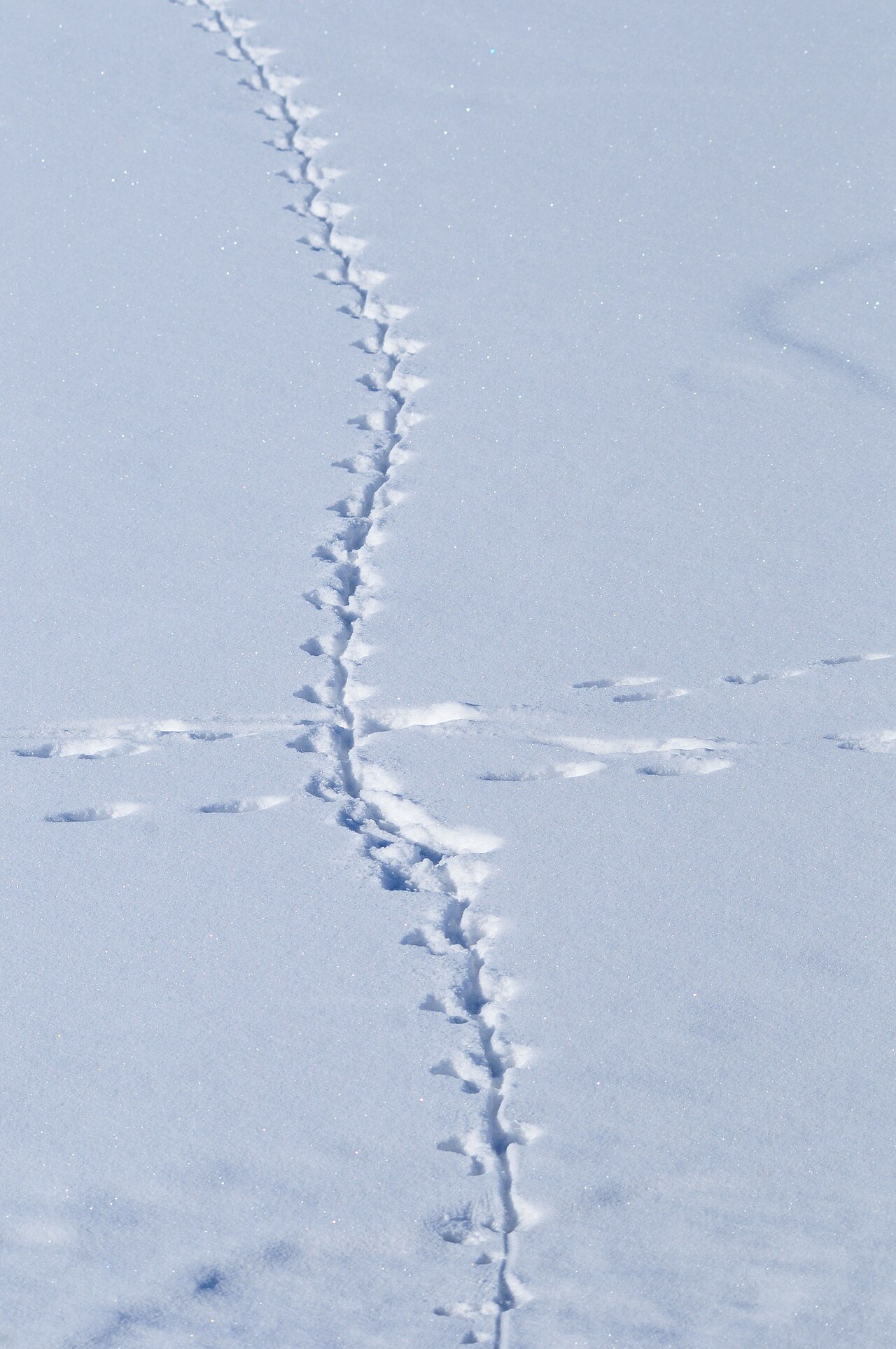
The front foot shows 4 toes in nearly every print. The animal has a fifth inner digit, a small thumb with a nail, but it sits high and rarely registers except in deep mud. The 4 toes spread wide, giving the print a star or asterisk shape, with claw marks set slightly ahead of each toe pad.
The front track measures about 1 to 1.5 in (2.5 to 3.8 cm) long and roughly as wide. The palm pad behind the toes often prints as a broken, lumpy area rather than one clean pad, which is normal and not a sign of injury.
Muskrat Hind Tracks: Five Toes and Partial Webbing
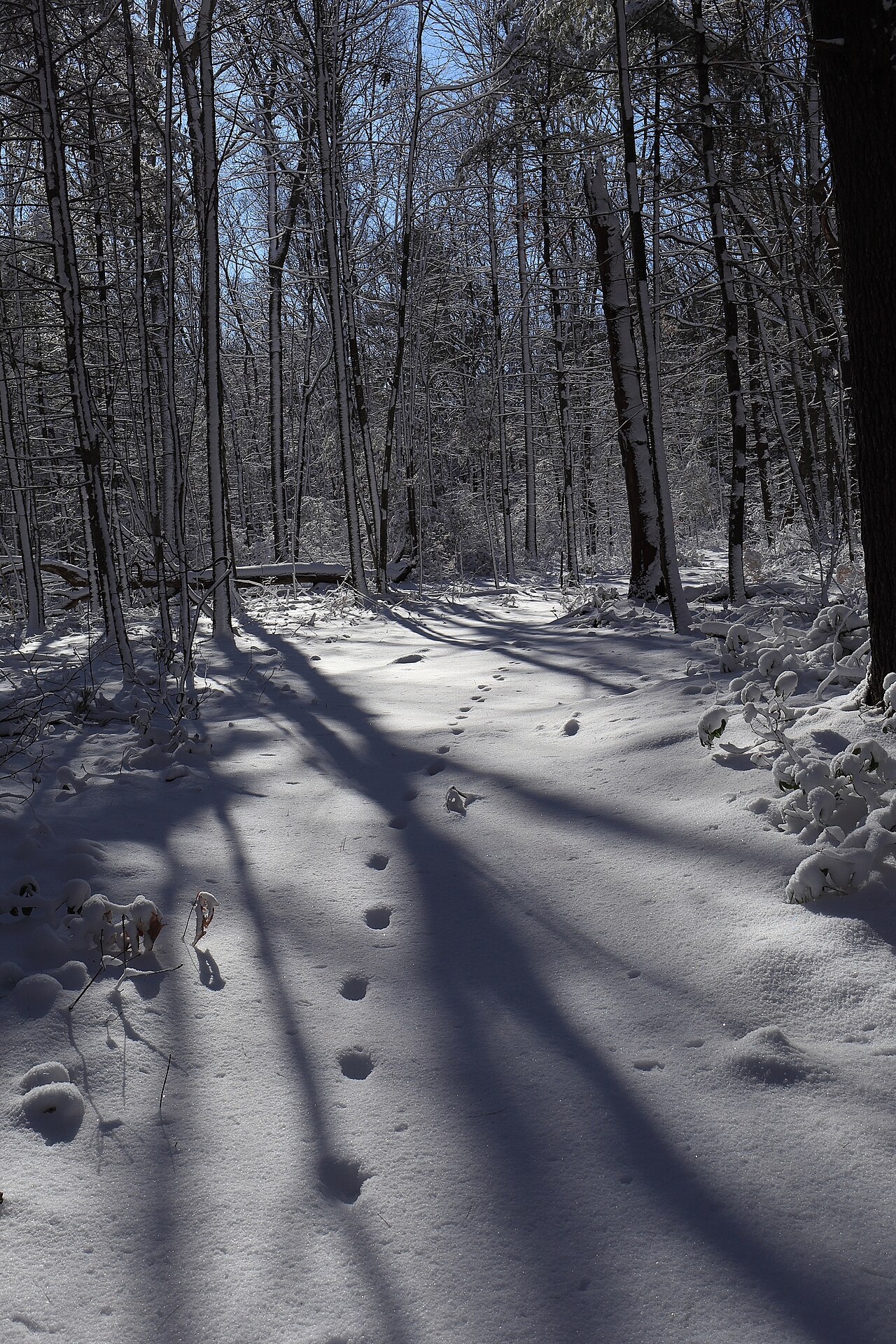
The hind foot is the giveaway. It carries 5 long toes, all of them clawed, splayed out like fingers, and the webbing between them is partial rather than full. That webbing starts at the base of the toes and stops partway, so in soft mud you see short membranes between the toe bases and free toe tips beyond them.
Hind prints run 1.5 to 3 in (3.8 to 7.6 cm) long, noticeably bigger than the front. The outermost toe sometimes angles sharply sideways, which can make the print look asymmetrical or six toed in a sloppy impression.
The Tail Drag: The Single Best Clue
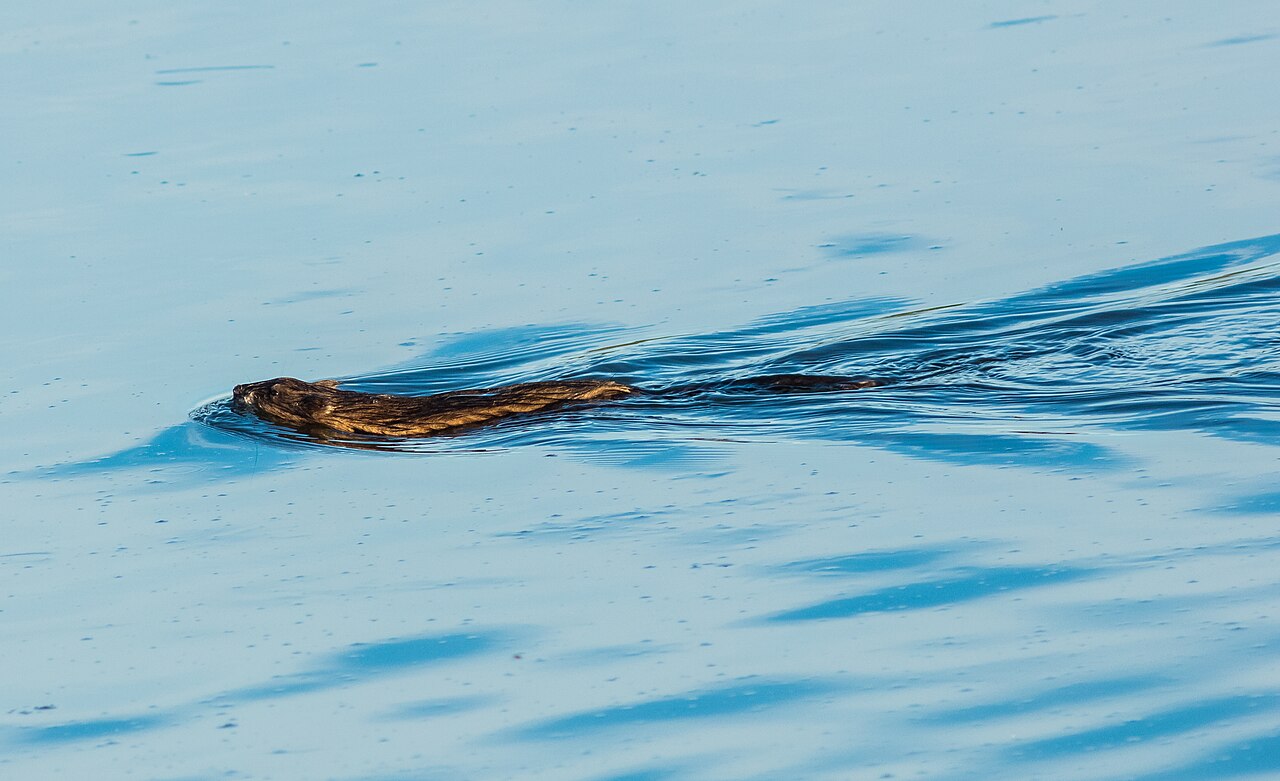
A muskrat’s tail is 7 to 11 in (18 to 28 cm) long, scaly and flattened from side to side. Dragged behind a walking animal it leaves a thin continuous line that wanders gently left and right between the prints, sometimes crossing them.
When the line is present, identification is close to settled. A beaver drags a tail too, but that mark is broad and smooth. A Norway rat leaves a thin drag as well, though rat prints are far smaller and rat trails rarely run in and out of open water the way muskrat trails do.
Gait and Stride Pattern
Muskrats usually walk. Front and hind feet alternate, the hind print landing near or slightly over the front print on the same side, producing a tight, narrow trail 3 to 4.5 in (7.6 to 11.4 cm) wide with a stride of 3 to 5 in (7.6 to 12.7 cm). The result looks hurried and slightly clumsy, which matches the animal.
In deep snow or when alarmed, the walk breaks into short bounds and the pattern tightens into paired clusters with a longer gap between them. That is a different trail from the steady two by two walk of a weasel family hunter, and it is one of the places where counting the whole trail beats studying one print.
Muskrat Tracks in Snow
Snow is the easiest surface and winter is prime season. Muskrats stay active under and over the ice all winter, moving between push ups, which are domed heaps of vegetation built over holes in the ice. Fresh trails run from those domes to the bank and back.
In an inch or two of powder, toes and claws print cleanly and the tail drag shows as a crisp groove. In deeper snow the feet punch through and the prints lose detail, so read the trough: a muskrat plows a narrow channel with a drag line in the base, where a mink leaves paired holes and a beaver leaves a much wider path.
Muskrat Tracks in Mud
Mud gives the best anatomical detail and the worst overall shape. Along a pond margin or a ditch bank, soft mud records all 5 hind toes, the webbing at the toe bases and every claw, but it also lets prints slump as water seeps back in. Measure within the hour if you can.
Look for the companion signs that mud holds well: slides where animals enter the water, 4 to 6 in (10 to 15 cm) burrow entrances just at or below the waterline, and clipped cattail or bulrush stems piled on a platform. Those surroundings separate muskrat sign from the heavier bank work of beaver activity.
Muskrat Tracks in Sand
Dry sand is the hardest surface. Toe detail collapses almost immediately, claws vanish, and a hind print can read as a shapeless oval. On sandy river bars and lake beaches, work from the trail instead: narrow width, short stride, a persistent drag line, and a direct route to the water.
Damp sand at the edge of the waterline behaves more like mud and can hold excellent prints for a tide or a wind cycle. Early morning, before the surface dries and before the wind picks up, is the productive window.
Muskrat vs Beaver Tracks
Size settles this one. A beaver hind track runs 5 to 7 in (12.7 to 17.8 cm) long with obvious full webbing, two to three times the muskrat’s hind print, and the beaver’s trail is 6 to 10 in (15 to 25 cm) wide. Beaver front prints are also larger and blockier.
The tail marks differ just as much. A beaver’s flat paddle leaves a wide smooth sweep or an occasional broad slap mark, while the muskrat leaves a pencil thin squiggle. Chew sign separates them further: beavers cut saplings and trees, muskrats clip soft herbaceous stems.
What Can Be Mistaken for a Muskrat?
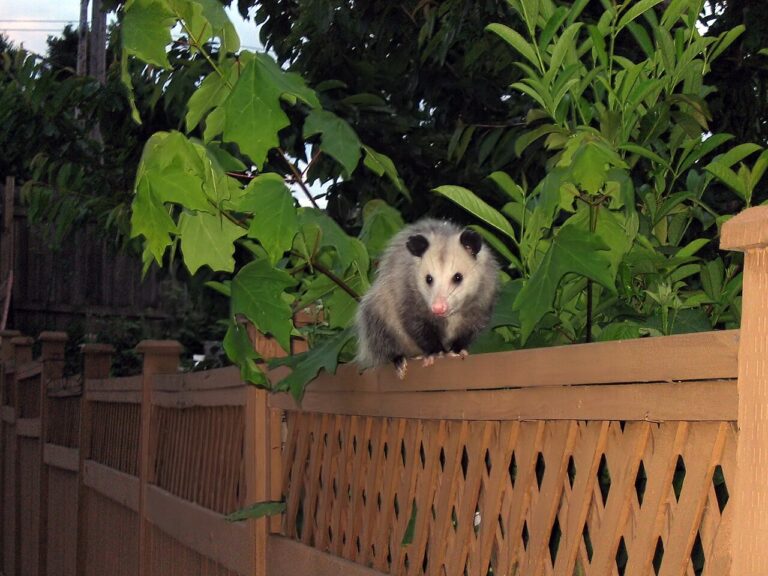
Four animals cause most of the confusion. Mink print 5 toes on both front and hind feet, travel in a bounding two by two pattern, and leave no tail drag. Norway rats produce a similar looking small print with a tail drag but at roughly half the size and usually around buildings. Raccoons leave unmistakable long fingered prints that look like small human hands. Opossums show a hind print with a thumb sticking out sideways.
Dogs, coyotes and foxes are not a serious source of confusion, because canine tracks show 4 toes on all four feet with no long splayed digits at all. If you are still weighing claw visibility and print symmetry, the comparison in our guide to coyote and fox tracks covers how that family reads, and bobcat tracks show the retracted claw pattern on the feline side. Larger flat footed prints with five toes and heavy claws belong to bears, and the long nailed digging prints of badgers point away from water entirely.
Frequently Asked Questions
What time of day do muskrats come out?
Mostly at dusk, during the night and again around dawn. Muskrats are crepuscular and nocturnal, though they are commonly seen swimming in daylight, especially in spring and in quiet water with little disturbance. Tracks laid overnight are usually freshest in the first hours after sunrise.
Is a muskrat an invasive species?
Not in North America, where it is native from Alaska and Canada south through most of the United States. Muskrats introduced to Europe and parts of Asia in the early 1900s did become invasive there, damaging dikes and canal banks, and several countries now manage them as a pest.
Are muskrats found in Illinois?
Yes, statewide. Illinois has abundant muskrat habitat in marshes, drainage ditches, farm ponds and the backwaters of the Illinois and Mississippi rivers, and the state runs a regulated trapping season. Tracks along any muddy pond edge in the state are worth checking for the tail drag.
Will a muskrat destroy a pond?
One muskrat rarely does, but a colony can. The problem is burrowing: tunnel systems driven into a dam or an earthen bank can cause seepage and eventually a breach. Muskrats also clear large patches of aquatic vegetation. Pond owners usually respond with riprap on the dam face or trapping.
What is a predator to a muskrat?
Mink are the main one, small enough to follow a muskrat into its own burrow. Great horned owls, northern harriers, raccoons, red foxes, coyotes, bobcats, snapping turtles and large pike also take them. That pressure is why muskrat trails are short, direct and never far from the safety of water.
Are muskrats aggressive?
Not toward people under normal circumstances. A cornered or trapped muskrat will bite hard and should never be handled, and males fight each other during the spring breeding season. Away from a trap, an animal on a bank will simply slide into the water and swim off. Range and natural history details are kept by the U.S. Fish and Wildlife Service.