Yellow Jacket Symbolism: Strength, Boundaries and Omens
A yellow jacket is a warning, not a bad omen: it asks you to guard your boundaries and speak up before a conflict does it for you.
A yellow jacket is a warning sign rather than a bad omen. The yellow and black bands act as a stop signal, a sting marks a limit that somebody already crossed, and a landing asks you to pause before you act.
What Does a Yellow Jacket Symbolize?
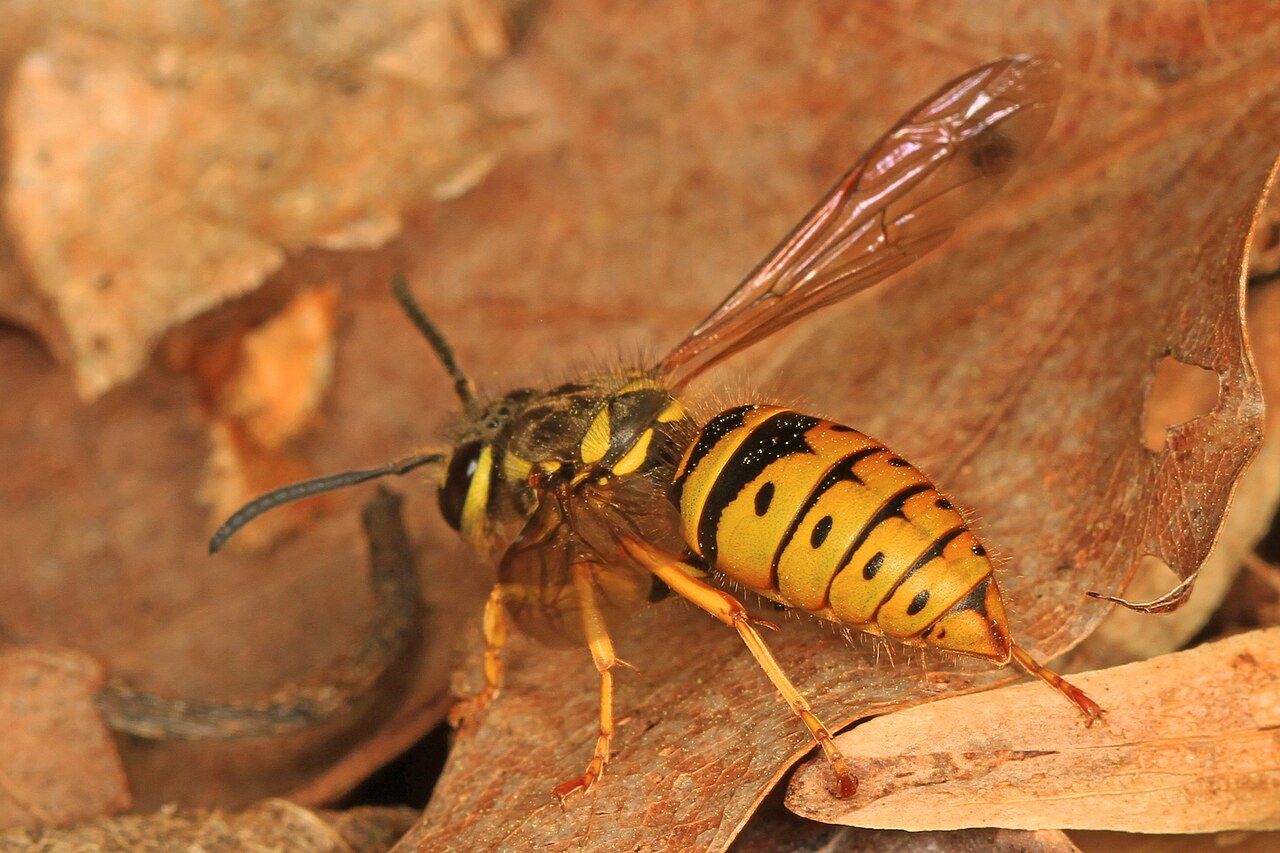
A yellow jacket symbolizes protection, community, assertiveness, vigilance and warning. The colony defends its nest with real force, every worker serves the group, and the insect reacts the moment it feels threatened.
The yellow and black banding is nature’s own stop sign, so the insect arrives as a messenger of caution. A yellow jacket on the scene says slow down and check what you have been ignoring. Its scavenging habit, picking meat off a plate or sugar from a soda can, turns into a lesson in resourcefulness.
The color yellow carries its own message of light and quick change, and that side of the symbol belongs to yellow butterfly symbolism. The eerie symbol from the TV series “Yellowjackets” is a fictional sigil invented for the show and has nothing to do with the insect’s traditional meaning.
Spiritual Lessons From the Yellow Jacket
The yellow jacket teaches four spiritual lessons, and boundaries come first. A colony defends its nest hardest and rarely picks fights far from it. Protect what is yours with full commitment and leave everything else alone. Which space or relationship do you guard, and which battles are you fighting that are not yours?
Every worker has a job, from nest building to feeding larvae to standing guard at the entrance, and no single wasp carries the colony. The ant teaches a quieter version of collective labor, and ant symbolism covers that side in depth. Who is in your colony, and what role do you actually play in it?
Vigilance means staying alert through a season of change, since the colony’s year runs on noticing threats early. What changed this season that you have not looked at yet? Assertiveness is the sharpest lesson. The yellow jacket wears its warning on its body. Speak up early, before swallowed anger builds pressure and comes out as a sting nobody saw coming. What have you been holding back that needs saying out loud this week?
Yellow Jacket Spirit Animal, Totem and Power Animal
A yellow jacket spirit animal is a temporary messenger during a phase of conflict or overload, while a yellow jacket totem is a lifelong trait you carry. The word totem comes from the Ojibwe doodem, a clan emblem, but the personal yellow jacket readings used here come from modern spiritual practice.

People with a yellow jacket totem are protective, loyal to their group, direct in speech and quick to react. The shadow side is irritability, a defensive crouch and striking first when a question would have done. The wider frame of guides and totems sits under animal symbolism.
Call on the yellow jacket as a power animal when you need grounded force, such as a negotiation where you keep caving, a family member under attack, or a limit at work that keeps getting pushed. Picture the guard at the nest entrance, calm until the line is crossed, and borrow that posture for the meeting.
Is a Yellow Jacket a Good or Bad Omen?
A yellow jacket is a warning omen rather than a curse. The message is usually “pay attention” rather than “misfortune is coming.” Nothing has gone wrong yet, but the next move decides whether something will.
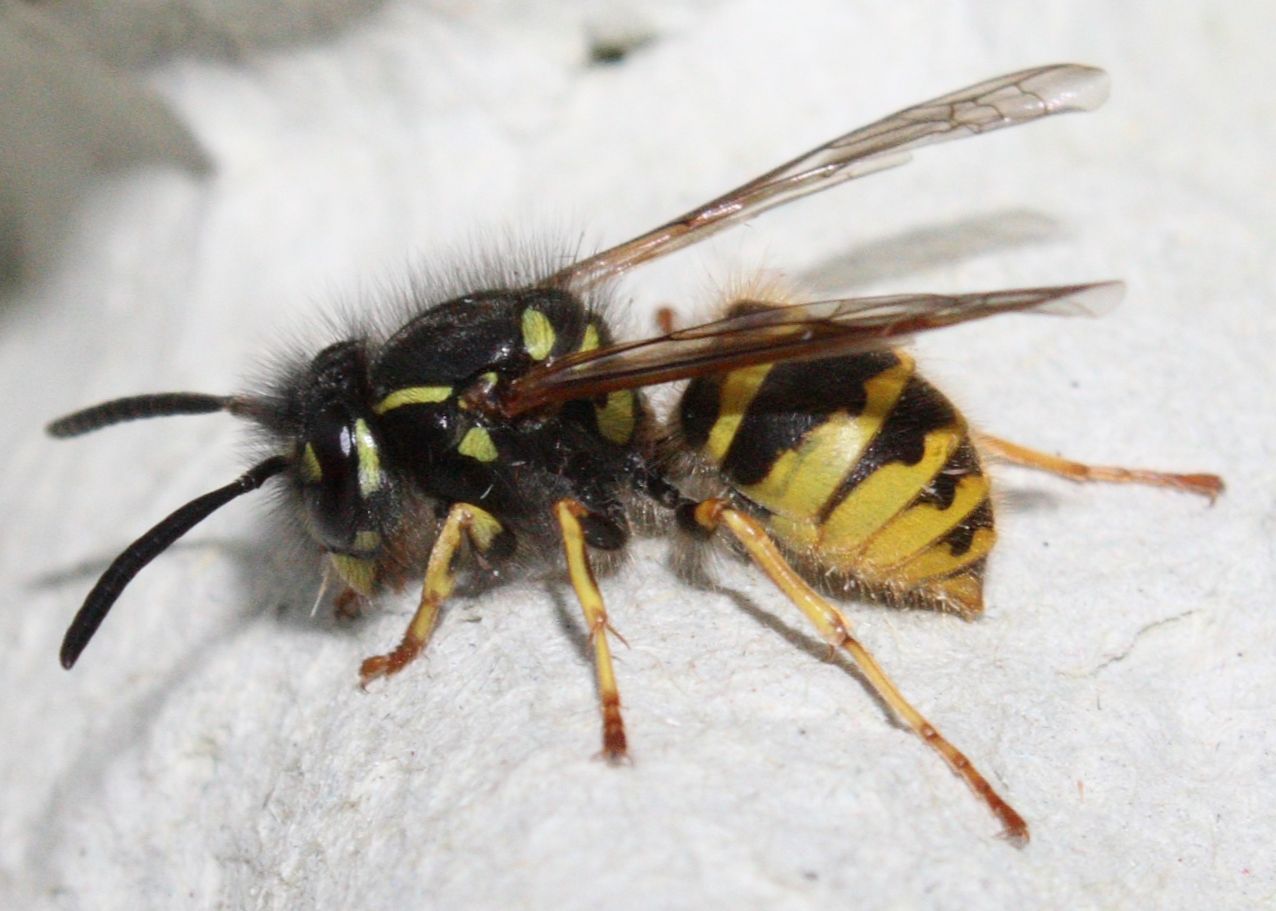
The good-omen readings cluster around home and work. Some readers take a yellow jacket near the house as a sign that the home is guarded, though a nest close by is better read as tension close to home. A sighting at the start of a project points to a phase of hard, repetitive, well-rewarded labor.
The warning readings point outward, toward conflict inside your circle, gossip buzzing where you cannot hear it, or a person testing how far they can push you.
Yellow Jacket Encounters and What They Mean
A yellow jacket lands on you. The insect is telling you to stop and assess before you act. It is usually investigating sweat, perfume or a sugary drink. Hold still and do not swat, since slapping at a yellow jacket is a common way to get stung.
Getting stung by a yellow jacket. A sting is a wake-up call about a boundary you ignored, yours or someone else’s. Either you stepped on a nest you should have noticed, or you let somebody step on yours until it hurt.
Keeps appearing or seems attracted to you. Wasps that seem attracted to you are a repeated reminder of an unresolved conflict. Practically, sweet drinks, perfume and sweat draw them, so check the plain explanation first. If sightings keep coming without one, name the conflict and the sightings lose their charge.
| Situation | Common spiritual reading | What the insect is doing |
|---|---|---|
| Lands on you | Pause before acting | Investigating sweat, perfume or a sugary drink |
| Stings you | A boundary was crossed | Defending a disturbed nest nearby, or trapped against skin |
| In the house or garden | Protect your space | Late-summer sugar foraging near food and trash |
| At the window | A warning from outside | Trapped indoors and flying toward daylight |
| Repeated sightings | Unresolved conflict | A nest or a steady food source nearby |
| Found dead | A defensive phase is over | Workers die off as the colony ends in fall |
| In a dream | Stress or one sharp conflict | Nothing, the image is your own |
Do Wasps Have a Biblical Meaning?
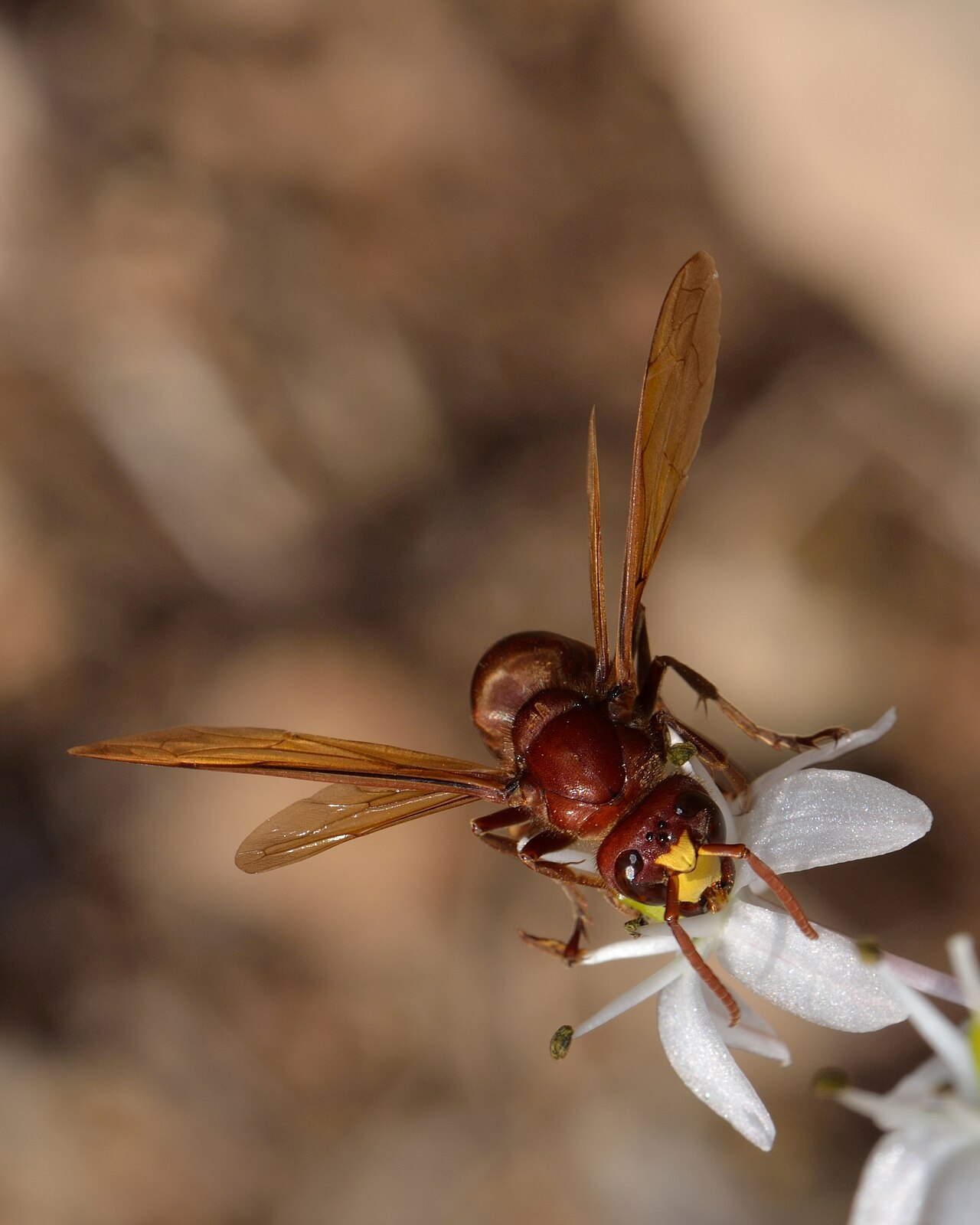
Yes, wasps have a biblical meaning, and it is protective. In Exodus 23:28 God promises to send the hornet ahead of Israel to drive out the Hivite, the Canaanite and the Hittite. Deuteronomy 7 and Joshua 24 repeat the promise and record its fulfillment. The stinging wasp works as an instrument of divine protection.
The question of which demon is associated with bugs has a scriptural answer too. Baal-zebub, the god of Ekron whom King Ahaziah consults in the first chapter of 2 Kings, carries a name translated as “lord of the flies.” Later Christian tradition turned him into the demon Beelzebub. The flies belong to that name, and the wasp has no part in it.
Wasps in Myth and World Traditions
No well-known deity is tied to wasps, though the K’iche’ Maya mountain god Jacawitz was linked to the wasp. In Athens, Aristophanes staged the comedy “The Wasps” in 422 BC, with a chorus of elderly jurors who wear stingers and buzz with eagerness to convict, and the wasp became shorthand for a prickly, litigious temper. In the Popol Vuh, the K’iche’ Maya book from highland Guatemala, the founding lords defend their mountain citadel by filling gourds with wasps and hornets, which pour out and rout the attacking army.
Yellow Jacket Symbolism and Death
Yellow jacket symbolism and death meet in the life cycle rather than in any omen. In regions with cold winters the colony dies off in fall as hard frosts arrive, and only the young, mated queens survive, typically sheltering under loose bark, in leaf litter or in other protected spots until spring, when each one starts a colony alone. An ending makes room for a new start, and the symbol asks what in your life is ending so that one essential thing can go on.

Yellow Jackets vs. Bees: Why the Meaning Differs
Yellow jackets are not aggressive bees, because they are not bees at all. They are social wasps of the genera Vespula and Dolichovespula, and the two insects carry opposite symbols. The bee stands for sweetness, productivity and the hive’s gentle order, which bee symbolism explores in full. The yellow jacket stands for defense and scavenging.
The “aggressive for no reason” reputation has a biological root. In late summer the colony’s larvae are grown, so the foragers switch from hunting protein to seeking sugar, and that search brings them to soda cans, fruit and picnic tables, right where people are. Numbers peak at the same time, so encounters multiply.
The symbolic reading of that aggression is defense under pressure. When a yellow jacket seems to lash out, the symbol asks what pressure is building and where the real nest is.
How to Work With Yellow Jacket Energy
Working with yellow jacket energy takes three practical exercises. First, name one boundary and say it out loud, to a mirror or to the person it concerns. Second, map your colony by writing down the five people you would actually defend, and notice who did not make the list. Third, catch your reaction before you sting by counting the seconds between the trigger and your reply. Put the energy down once a defensive phase hardens into constant irritability. The yellow jacket guards a nest for a season, and then the colony ends.

Frequently Asked Questions
Is seeing a yellow jacket a bad omen?
No. A yellow jacket is read as a warning rather than a sign of misfortune. It tells you to check a boundary, watch your circle and speak up before a conflict builds.
What does it mean when a yellow jacket lands on you?
It means pause before you act. Spiritually, the landing asks you to stop and assess before you rush into something, so hold still rather than swatting.
Do yellow jackets do anything good?
Yes. Yellow jacket workers hunt caterpillars, flies and other soft-bodied insects to feed the colony’s larvae, which makes them useful predators in vegetable gardens through spring and early summer, before the foragers turn to sugar. It is a reminder that the fierce one also feeds the colony.
Is a hornet the same as a yellow jacket spiritually?
No, not quite. Hornets and yellow jackets share the warning and guard theme, but a hornet stands for the larger, rarer threat. The bald-faced hornet (Dolichovespula maculata) is actually an aerial yellow jacket of the genus Dolichovespula, with white markings instead of yellow. The only widely established true hornet in North America is the introduced European hornet (Vespa crabro), while the invasive yellow-legged hornet (Vespa velutina) is still under eradication around Savannah, Georgia.
Can a yellow jacket sting more than once?
Yes. A yellow jacket’s stinger is smooth and stays attached, so one wasp can sting repeatedly, unlike a honey bee, whose barbed stinger tears out after a single use. Symbolically, one sting is a warning, and repeated stings point to a boundary that keeps being crossed.
Is a yellow jacket nest near your home a bad sign?
No, not by itself. Nests are often underground in abandoned rodent burrows, though some species build in wall voids and shrubs. Spiritually, a hidden nest near the house stands for tension close to home that nobody has named yet.
Sources
- UC IPM, Yellowjackets and Other Social Wasps Pest Note
- Bible Gateway, Exodus 23:28 (KJV)
- Bible Gateway, 2 Kings 1:2 (KJV)
- Georgia Department of Agriculture, Yellow-Legged Hornet Ledger
- University of Illinois Extension, Yellowjackets
- Online Etymology Dictionary, totem
Explore more: Insect Spiritual Meanings: 15 Bugs and What They Signal