Wild Boar Droppings: How to Identify Them and the Risks
Wild boar droppings are dark, uneven logs or clumps of fused pellets. Feral hogs, wild boar and wild pigs are one species, Sus scrofa, so the same ID rules apply wherever you found the pile.
Hog scat matters for two reasons. It carries the same kinds of gut germs as other animal poop, and a fresh pile means a sounder is close. Animal poop identification follows the same three steps for every species, which are shape, contents and place.
Wild boar droppings are dark, lumpy logs or clumps of fused pellets packed with seeds, grass and acorn bits. Fresh piles are moist and sit near rooted soil and mud wallows. Like other animal scat they can carry germs such as Giardia, so never touch them bare-handed.
What Wild Boar Droppings Look Like
Wild boar droppings come as dark logs that look like dog scat, or as loose, irregular clumps whose look depends on diet. One sounder leaves both forms on the same trail. Size changes with the age of the hog, so shape and contents tell you more than length.
The contents give hogs away. Sus scrofa is an omnivore that eats seeds, acorns, grasses, roots, insects and small animals. Break a pile open and you see seed coats, grass fibers, acorn hulls, beetle parts and bits of hair.
Fresh scat is moist and dark and smells strong. Over the following days it dries lighter and crumbles at a touch. Look along game trails, beside mud wallows and at the edge of freshly rooted ground, where hogs feed and rest.
Wild Boar Droppings vs Deer, Javelina and Bear Scat
Hog scat is lumpier and more varied than deer scat, and that one difference settles most cases. Deer poop comes as small, uniform pellets that lie separate or in a loose scatter. A hog pile looks like a jumble beside it.
Javelina poop is easy to confuse with hog scat. The javelina (Pecari tajacu) is native to Arizona, New Mexico and Texas, mostly in brush, mesquite and chaparral country. In those states it shares range with feral hogs, so check tracks and rooting before you rule it out. Outside those three states you can rule it out.
Black bear scat comes in larger, looser piles, often full of berries. Cloven tracks with two dewclaws behind them confirm a hog.
| Animal | Scat shape | Typical contents | Other sign nearby |
|---|---|---|---|
| Feral hog (Sus scrofa) | Lumpy logs or fused pellet clumps | Seeds, grass fibers, acorn hulls, insect parts | Rooted soil, mud wallows, cloven tracks |
| White-tailed deer (Odocoileus virginianus) | Small, uniform, separate pellets | Fine plant fiber | Browsed twigs, antler rubs |
| Javelina (Pecari tajacu) | Dark, lumpy pellets or clumps | Prickly pear seeds and cactus fiber | Chewed prickly pear pads, musky odor |
| Black bear (Ursus americanus) | Large, loose piles | Berries, seeds, hair | Torn logs, claw marks |
| Elk (Cervus canadensis) | Pellets, sometimes clumped | Grass and browse fiber | Rubbed trees, bugling in fall |
Are Wild Boar Droppings Dangerous?
Yes, wild boar droppings can be a health risk, because animal poop can carry germs that make people sick. The CDC describes these germs for animal and human poop in general, not for hogs specifically. Cryptosporidium lives in the poop of infected people or animals. Symptoms start 2 to 10 days after infection.
A healthy-looking hog tells you nothing. Many animals carry Campylobacter without becoming sick, and touching animals that carry it can infect you. Swallowing just a few Giardia germs can make a person sick, so wash your hands after any contact.
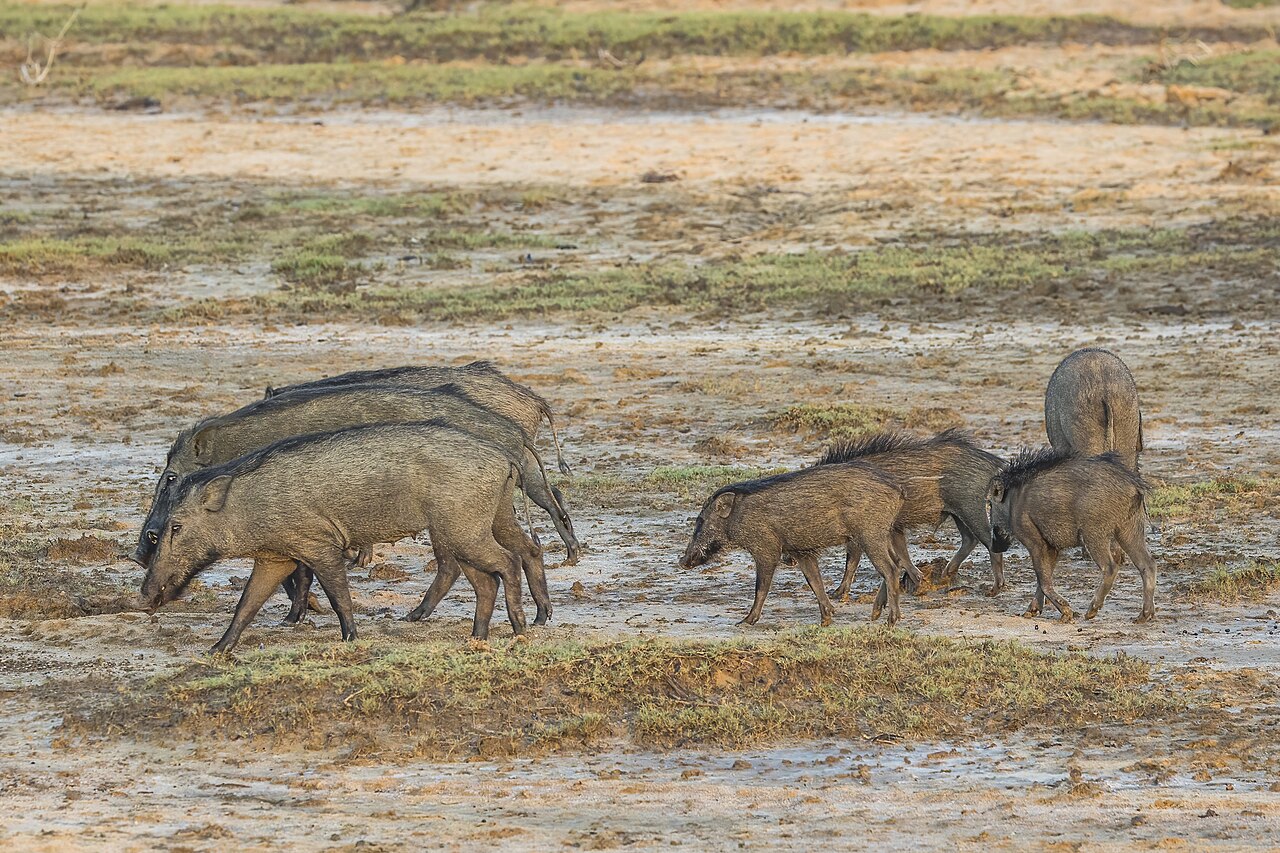
Fresh scat also means hogs are near. Feral hog sounds tell you where the sounder is feeding. Feral hog attacks on people are rare, and most happen when a hog is cornered, wounded or guarding piglets. Leave quietly, keep your distance, and give sows with young a wide berth.
Frequently Asked Questions
Is it safe to drink stream water near hog wallows?
No, not without treating it first. Hogs often gather along streams and wet ground, and rain can wash scat into the water. Boil lake or river water for at least 1 minute to kill Giardia, or for 3 minutes at elevations above 6,500 feet.
How long do germs from hog droppings last in soil?
Weeks to months. Giardia survives that long outside the body, for example in soil, so treat the ground around any pile, old or fresh, as possibly contaminated. Wear gloves when you work rooted soil, and wash your hands before you eat or touch your face.
Can you get rabies from wild boar droppings?
No. Rabies spreads through bites and saliva, not through scat, and rabies in wild hogs is rare. Any mammal can carry the virus, so report a hog that acts tame, staggers or attacks without cause to your state wildlife agency.
Sources
- CDC, About Giardia
- CDC, About Campylobacter Infection
- CDC, About Cryptosporidium
- Texas A&M AgriLife Extension, Javelinas
- USDA APHIS, Feral Swine Identification
Explore more: Animal Poop Identification: A Field Guide by Species