Seeing a Praying Mantis Meaning: A Sign to Slow Down
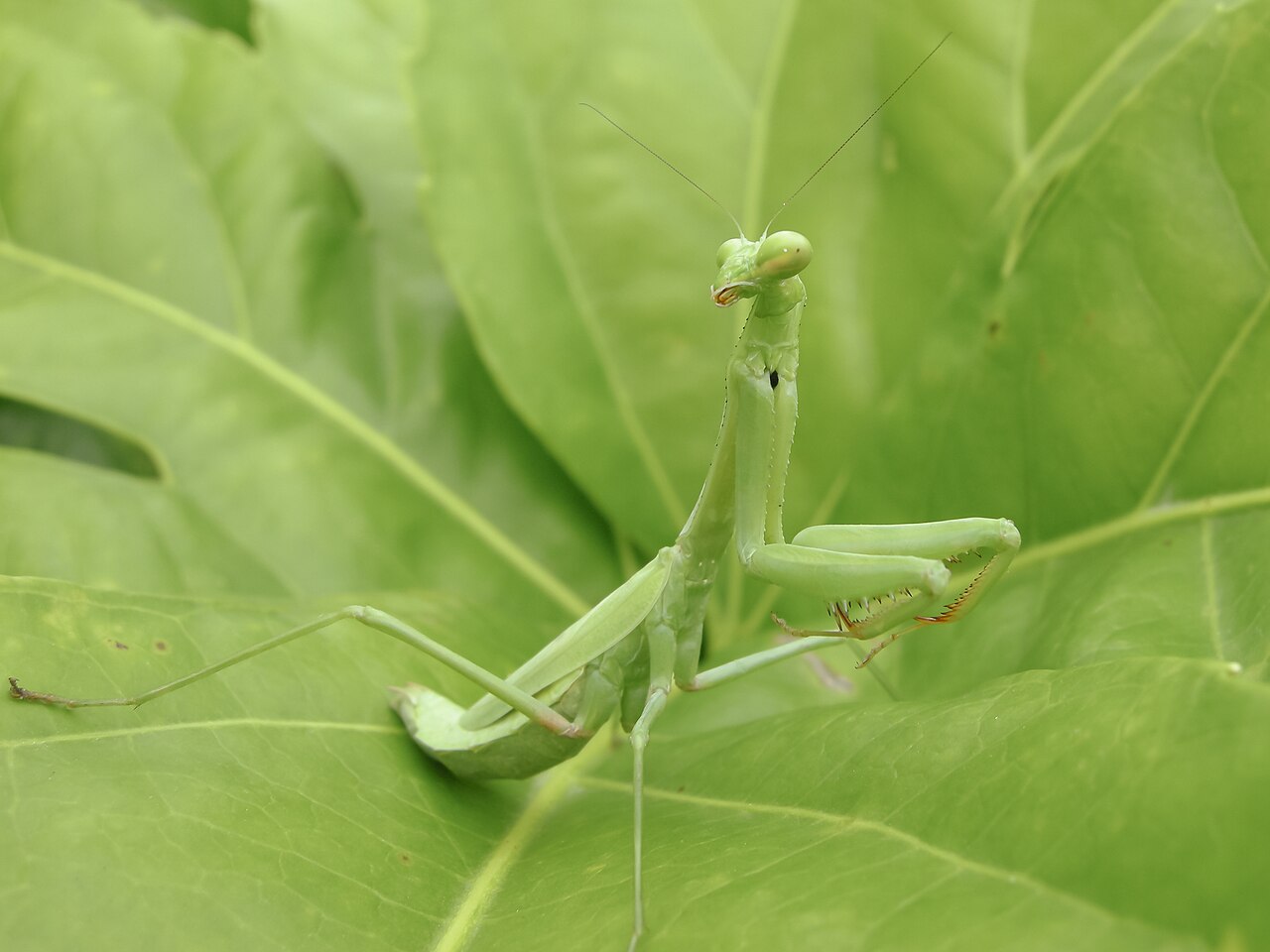
A praying mantis in your path is a call for stillness. Seeing a praying mantis asks you to stop, look and wait for the right moment before you move. The insect holds its folded forelegs up like hands in prayer and can sit motionless on a leaf for a long time, so its sudden appearance at a door, on a window screen or on a tomato plant feels like a message meant for you.
Seeing a praying mantis is widely read as a spiritual sign to slow down, get still and trust your timing before you act, and modern spiritual readings usually count it as a good sign. Its folded forelegs suggest prayer, and its patient hunting style points to waiting for the right moment instead of forcing one.
What Does Seeing a Praying Mantis Mean?
Seeing a praying mantis means it is time to pause and focus before your next move. The mantis does nothing in a hurry. It holds its position, watches and acts once, with full attention, and that pattern is the core of its message.

The sighting comes when you are rushing a choice or talking over your own intuition. A mantis on the porch railing the week you weigh a job offer does not tell you which answer is right. It tells you to stop collecting opinions long enough to hear your own.
The meaning shifts with your situation. A mantis is not a fixed prophecy that applies to everyone the same way. Ask what you are pushing hardest on right now, and apply the pause there.
The Spiritual Meaning of Seeing a Praying Mantis
The spiritual meaning of seeing a praying mantis is mindful stillness. Its raised forelegs look like hands joined in prayer or held in meditation, and the posture invites the same pause in you.
A mantis reads its surroundings with large compound eyes and a head that swivels to track movement, and it trusts what it sees. In spiritual terms, that points to quiet inner signals over outside noise.
The mantis also stands for balance. One animal holds both long patience and a lightning strike, so the mantis stands for waiting and decisive action together, not one instead of the other. Its calm is protection, not passivity. Praying mantis symbolism as a whole rests on this same pairing of stillness and strike.
Is Seeing a Praying Mantis Good Luck or a Bad Omen?
Seeing a praying mantis is read as good luck: modern spiritual readings usually treat a mantis as a good sign. Older folk beliefs were mixed. In parts of the US it was thought bad luck to kill one, and some superstitions said its spit could blind a person, a myth with no basis in biology. Gardeners welcome mantises because they eat flies, moths and beetles on vegetable and flower beds, and Connecticut named the European mantis its state insect in 1977 for the same reason. That goodwill carries straight into the luck reading.
A mantis seen eating its prey is the one sighting read as a warning, because it marks an ending. Even then the image points to an ending that clears space, not to harm coming your way.
A mantis indoors is a welcome visitor, not a warning. Praying mantis good luck beliefs also cover a mantis that lands on your car, your doorstep or your hand.
What Is a Praying Mantis Trying to Tell You?
A praying mantis is telling you to pause before a decision that matters. In everyday terms, that means a job change, a money move or a relationship question you have been circling. The insect asks for one more look before the leap.
It is also a reminder to cut distractions. A hunting mantis locks onto one target and ignores everything else on the branch. Pick the one goal that matters this season and let the rest wait.
Some sightings mark the end of a waiting period. The mantis holds still until the moment arrives, then moves without hesitation. Ask yourself three questions right after you see one. What am I rushing? What am I ignoring? What am I ready to act on now?
| Behavior you notice | Common modern reading | Question to ask yourself |
|---|---|---|
| Sitting perfectly still | Patience, a pause before action | Which decision am I forcing? |
| Swaying side to side | Adapting to change like a leaf in the wind | Where do I need to bend instead of push? |
| Turning its head to face you | Being seen, a call for attention | What have I avoided looking at? |
| Raising its forelegs | Prayer, focus and a clear boundary | Where do I need to hold my ground? |
| Flying off | Time to move, a change in motion | What am I ready to start? |
| Eating prey | An ending that feeds something new | What should I let go of? |
Where You See It: House, Garden, Window or on You
Where you see a praying mantis shapes the message, because each place points to a different part of your life.
In Your House. A mantis in the house is a guest bringing calm into the home. It points to household tension that a slower conversation could settle. Move it outside gently and keep the lesson indoors.
In Your Garden. A garden mantis signals growth that needs patience to ripen. The work you planted is on track, but it is not ready for harvest yet. Tend it and leave it alone a little longer.
On a Window or Door. A window or doorway is a threshold, so a mantis there marks a change ahead. Pause on the edge of it and step through on purpose.
On You. A praying mantis landing on you is the most personal version of this sign, a direct nudge to trust your own timing.
Praying Mantis Color Meaning: Green, Brown and Pink
A green mantis means growth and renewal, a brown mantis means grounding and stability, and a rare pink or white mantis stands for gentleness and wonder. Green points to a fresh start, a new project or a relationship putting out new leaves.
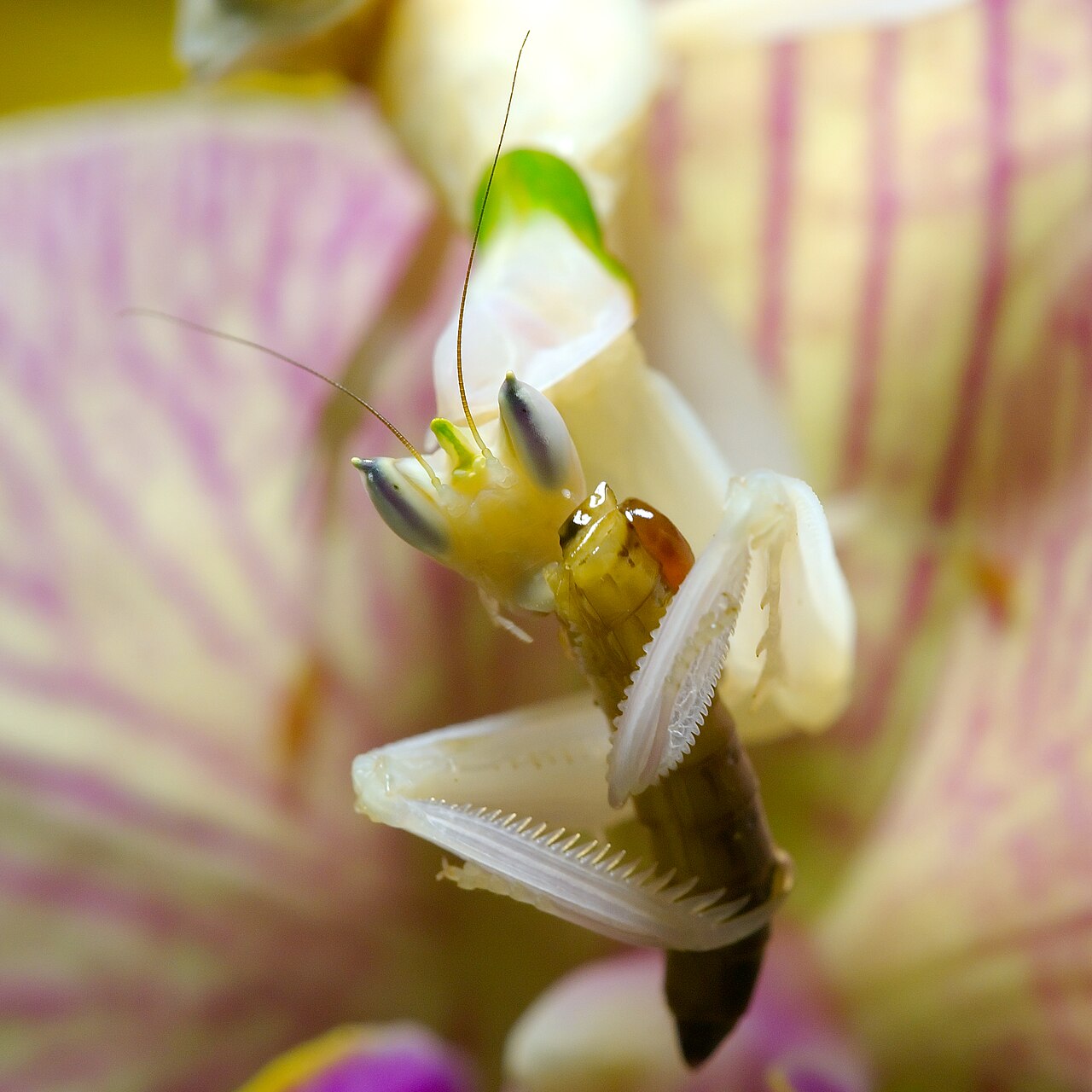
Brown points to a season of steady, patient work. It ties the message to roots, bark and steady ground, and it asks you to finish things cleanly before you start over. The Carolina mantis (Stagmomantis carolina), a native US species, comes in both green and brown forms.
The orchid mantis (Hymenopus coronatus) of Southeast Asia is the pink and white species most people picture. In the US it lives in hobby enclosures, not in backyards. In biology, mantis color is camouflage matched to the flowers, leaves or bark the insect hunts on.
Praying Mantis Spirit Animal and Totem
The praying mantis as a spirit animal is observant, calm, deliberate and quietly confident. People who feel drawn to it read a room well and rarely speak first. They gather the facts, then act once.
Its gift is reading a situation before others notice it. That shows up as good timing in a negotiation, in parenting or in creative work, where the right move depends on waiting for the opening.
The shadow side is overthinking. Wait too long and patience turns into paralysis, and stillness turns into isolation. Call on the mantis as a totem when a decision needs patience, and set it aside once the moment to move arrives.
Praying Mantis in Myth: Southern Africa and China
The praying mantis holds a central place in the stories of the San people of southern Africa and in Chinese martial arts. Among the |Xam San of what is now South Africa, the creator figure Kaggen, often described as a trickster, appears most often in the form of a mantis, though he can also take other forms, such as an eland. He is clever, mischievous and at times foolish, and his stories explain how parts of the world came to be.
In China, the Northern Praying Mantis kung fu style from Shandong province models its hooking hand techniques on the insect’s grasping forelegs. The style credits a legendary founder named Wang Lang, whose historical existence is doubted by some scholars. In the best known version of the legend he watched a mantis catch a cicada.
Both traditions link the mantis to cleverness and precise timing. Kaggen wins by wit, and the kung fu fighter wins by striking at the exact moment.
Praying Mantis Facts Behind the Symbolism
The praying mantis is an ambush hunter, and that habit is the root of its patience symbolism. It waits motionless on a stem or flower until an insect comes within reach, then grabs it with spined forelegs.
The female praying mantis sometimes eats the male during or after mating. Symbolism turns this into a picture of endings and renewal, since the meal feeds the next generation.
The Chinese mantis (Tenodera sinensis), introduced to the US in the late 1890s, reaches about 4 inches and is the large species gardeners find on stems in late summer. Large mantises have been recorded catching hummingbirds at garden feeders. A mantis can turn its head about 180 degrees and hears with a single ear in the middle of its chest, tuned to the calls of hunting bats.
Related reading: Dead Praying Mantis Meaning.
Frequently Asked Questions
What attracts a praying mantis to your house?
Food. Porch lights draw moths and flies after dark, and a mantis follows them to doors, window screens and siding. Dense shrubs, tall flowers and vegetable beds near the house give it cover and steady prey. Most house visits come in late summer and fall, when adults are full grown.
What should you do if you see a praying mantis?
Leave it alone if it is outdoors. A mantis on a plant is hunting and moves on by itself. It has no venom and no sting, and a large adult pinches only when grabbed. Indoors, carry it out on a sheet of paper and set it on a shrub, not on bare pavement.
Is it rare to see a praying mantis?
No, seeing a praying mantis is not rare. Mantises are common in US gardens, meadows and hedges, and adults are largest and easiest to spot in late summer and fall. Camouflage makes sightings feel rare, since a green or brown mantis on a matching leaf can sit in plain view.
What does the word “mantis” mean?
The word mantis comes from ancient Greek and means prophet or seer. The European species name religiosa adds the same idea in Latin, so the insect carries both prophecy and prayer in its name.
What is the lifespan of a praying mantis?
Most praying mantises live less than a year. In cold US regions, eggs hatch in spring, the young grow through summer, and adults mate and lay eggs in fall before dying with the first hard frost. Only the egg case lives through winter, carrying the next generation to spring.
Do praying mantises make good pets?
Yes, for patient keepers. A pet mantis lives in a ventilated enclosure with twigs to climb and needs live insect prey such as flies or crickets. It also needs room to hang upside down when it molts, because a cramped molt can cripple it. Native species are the better choice in the US.
Sources
Explore more: Insect Spiritual Meanings: 15 Bugs and What They Signal