Lizard Noises: 6 Sounds Explained and Why You Hear Them at Night
Most lizard noises fall into five groups: chirps and clicks, barks and croaks, hisses, squeaks and the dry scratching of feet on a wall. Only a minority of lizards are vocal at all, so if you are hearing something in the house at night, you are almost certainly hearing a gecko, because geckos are the one family that calls routinely. The word gecko is itself an imitation of the call.
The other sounds people file under lizard noises are not voices. Scuttling in a wall cavity, a rustle in dry leaves and a sudden thump behind a picture frame are movement, not communication, and they are the most common thing a homeowner actually reports. This article separates the two, gives you the time of day and season for each call, and names what you are most likely confusing it with.
Lizards make chirps, clicks, barks, croaks, hisses and squeaks, but only some families are vocal and geckos are by far the loudest. Chirping is usually a male gecko advertising territory, hissing is a defensive warning, and squeaking means the animal is being handled or seized. Night chirping in a house is almost always a house gecko.
| Sound | Most likely maker | What it means | When you hear it |
|---|---|---|---|
| Chirp, chirp, chirp in a series | House gecko, male | Territory and mate advertisement | After dark, warm months |
| Loud to kay, to kay bark | Tokay gecko | Territorial challenge | Dusk and through the night |
| Single sharp click | Gecko, either sex | Contact or mild alarm | Any time after dark |
| Hiss with open mouth | Iguana, monitor, bearded dragon | Back off warning | Daylight, when cornered |
| Thin squeak or scream | Almost any lizard | Distress, usually being grabbed | When caught by a cat or hand |
| Dry scratching or scuttling | Any lizard on a hard surface | Movement, not a call | Dawn, dusk, night |
What Kind of Noise Do Lizards Make?
Lizards make chirps, clicks, barks, croaks, hisses, squeaks and in a few species a low rasp, and the family tells you which to expect. Geckos are the vocal specialists, with roughly 1,500 species that use sound for territory and courtship. Iguanas, monitors and agamids hiss but have no real calls, and most North American natives such as anoles, skinks and fence lizards are effectively silent.
The reason is anatomy. Geckos have the vocal structures and the behavior to use them, while the majority of lizards communicate visually, through push ups, dewlap flashing, head bobs and color change. If you are watching a lizard display at length in full daylight and hearing nothing, that is normal and not a sign the animal is unwell.
Chirps and Clicks: the Gecko Contact Call
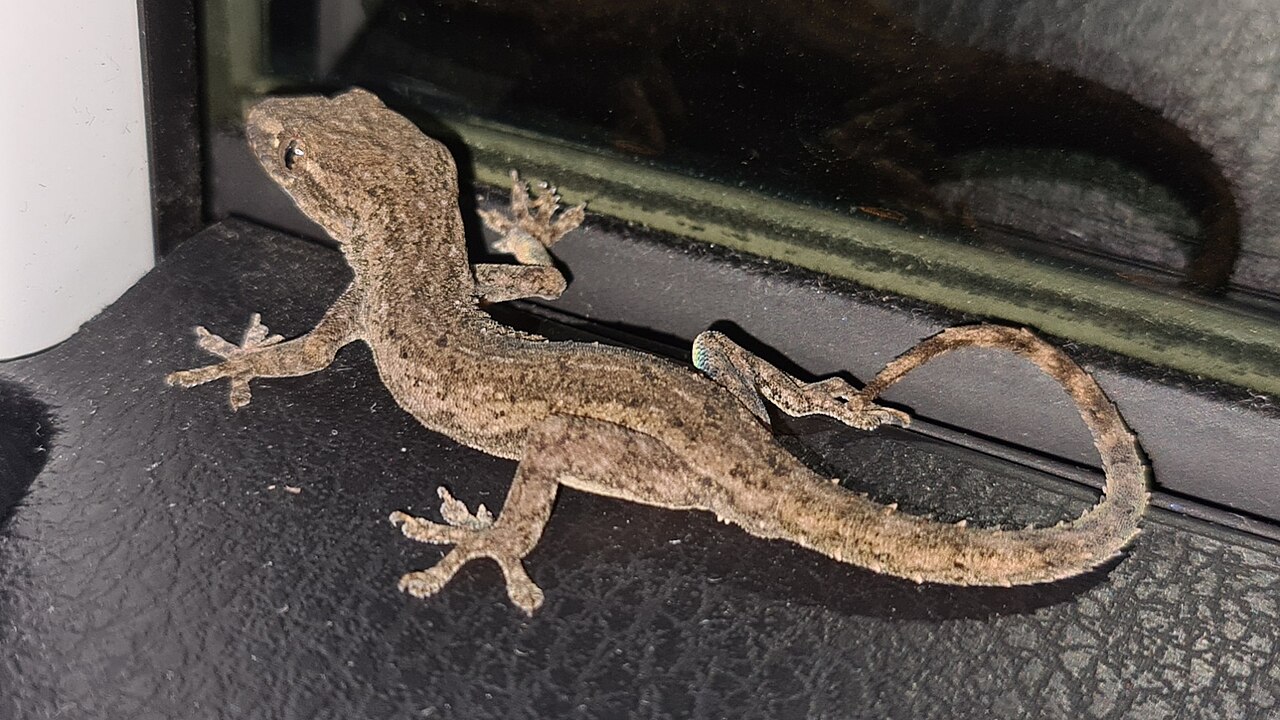
The chirp is the sound almost everyone means by lizard noises. A common house gecko (Hemidactylus frenatus) produces a series of three to seven short chirps, often written as chick chick chick, with a thin, slightly electronic quality that carries through a wall better than its volume suggests. Males chirp far more than females, and the rate climbs when two males are within sight of each other.
Single clicks are a quieter, closer range sound. They work as a contact call between animals on the same wall and as a low level alarm when something large moves nearby. In a bedroom the click is the sound you hear when the gecko is in the room with you rather than behind the plaster, which is useful if you are trying to find it.
Barking and Croaking: Territorial Calls
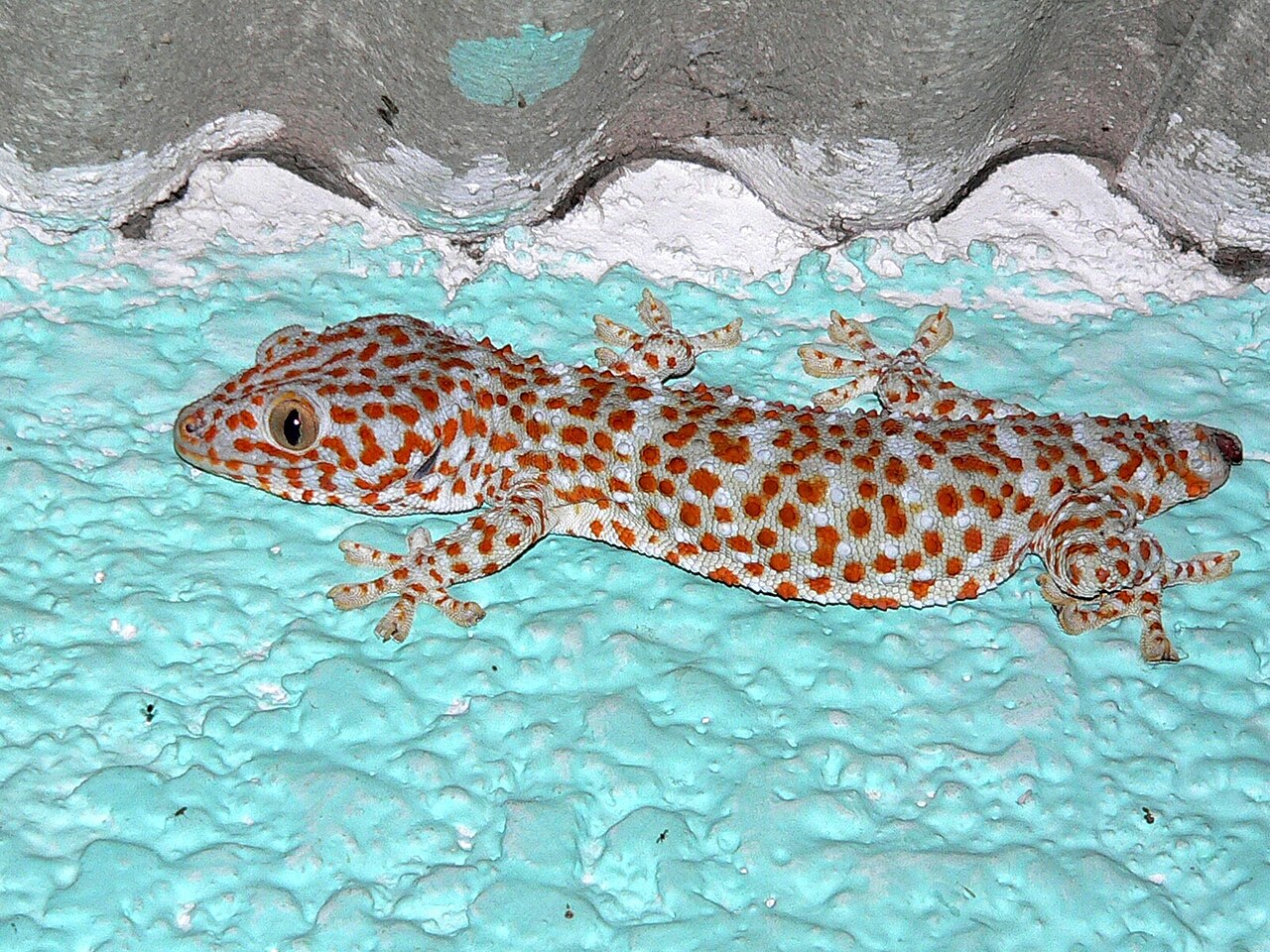
The loudest lizard sound in the world belongs to the tokay gecko (Gekko gecko), which barks a two part call that sounds like to kay, to kay and reaches volumes that wake people in the next room. Males repeat it in bouts of up to ten calls, mostly in the first hours after dark, and the function is to hold a territory against other males without a fight.
Barking geckos in southern Africa, in the genus Ptenopus, do something different and worth knowing if you have heard a recording. Dozens of males call from burrow mouths at dusk in a chorus that sounds more like frogs than lizards, which is why these recordings are so often mislabeled. For a genuine frog chorus to compare against, listen to the bullfrog call.
Hissing and Squeaking: the Warning Sound
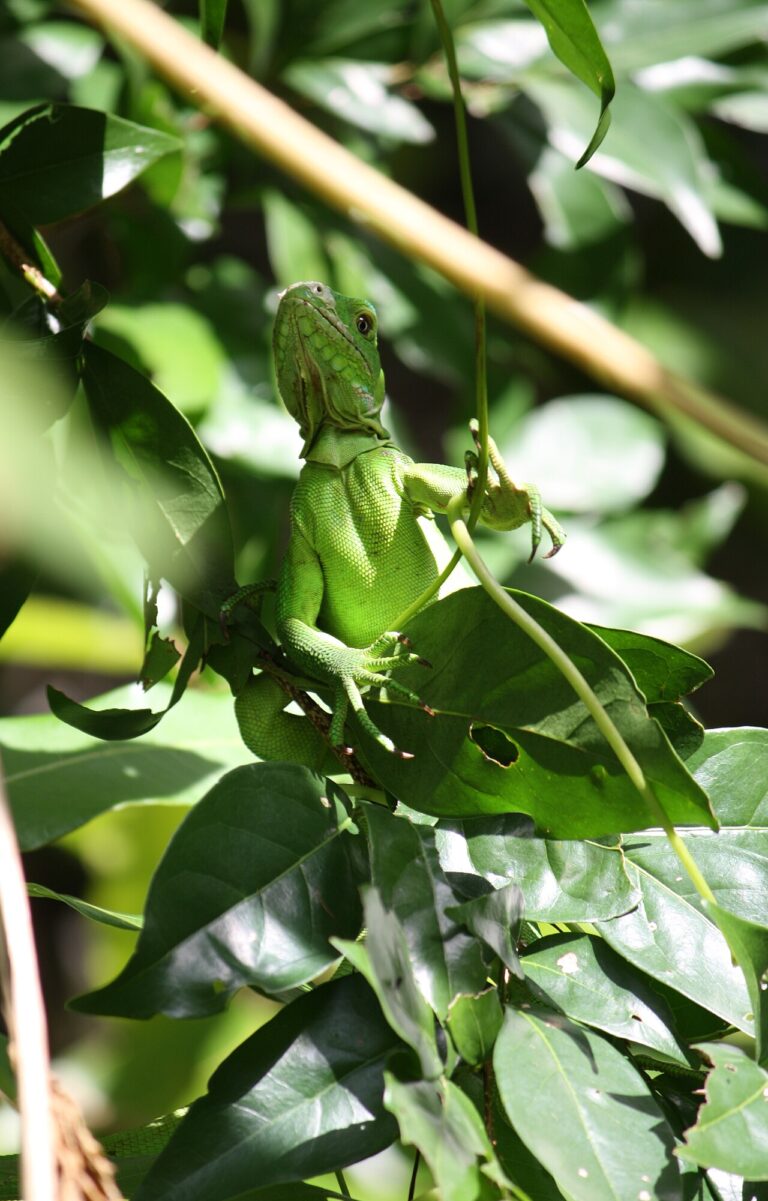
A hiss is a lizard telling you to stop. Green iguanas, monitors, bearded dragons and tegus all hiss by forcing air out while holding the mouth open, usually with the body flattened sideways and the throat flared to look bigger. It is a bluff that precedes a bite, so it is the one lizard sound you should act on rather than investigate.
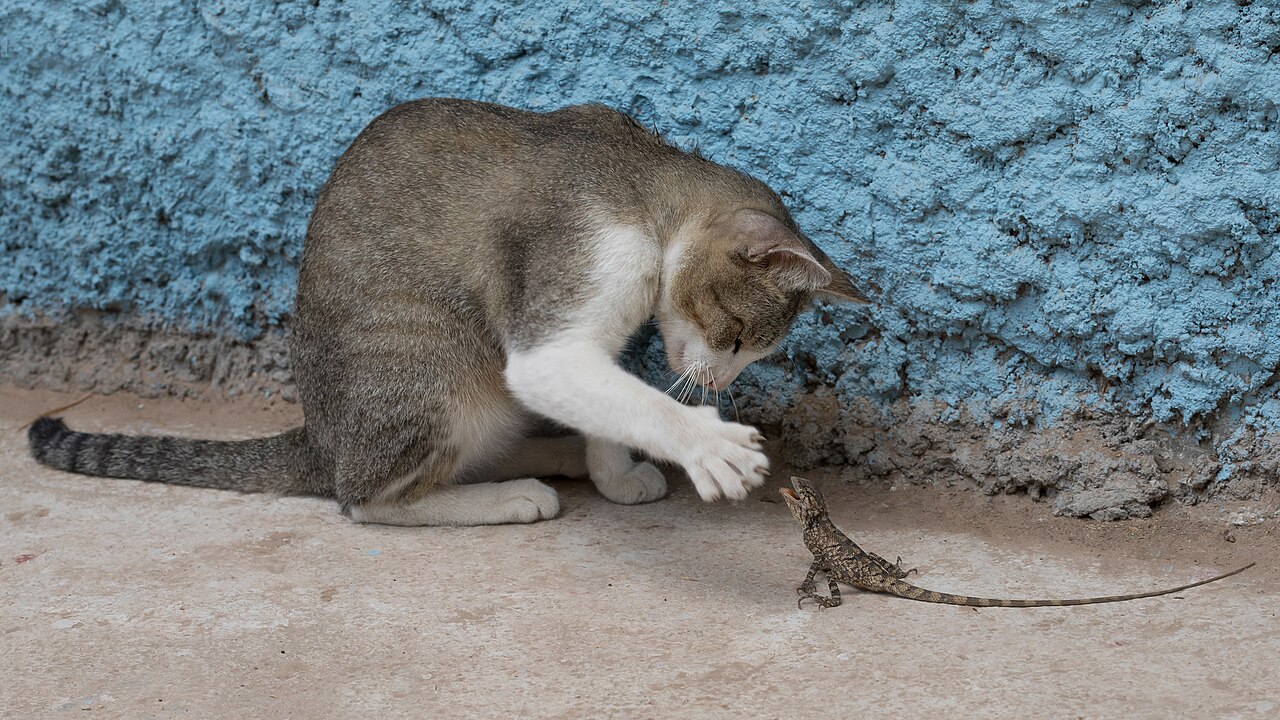
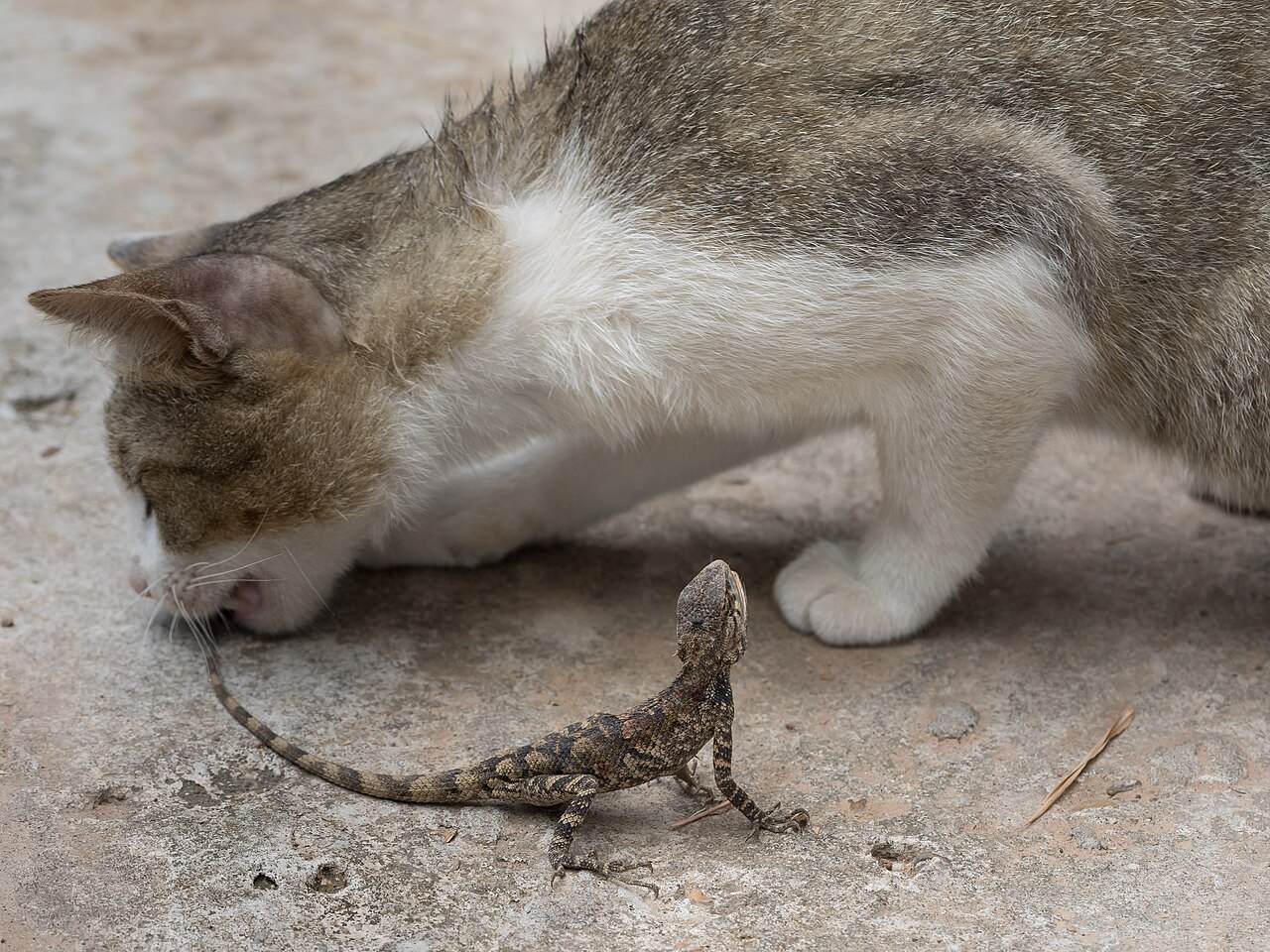
Squeaks and thin screams are distress, not threat. Almost any lizard will squeak when it is seized, and a cat carrying an anole indoors is the usual cause of a sudden high sound in a living room. The animal is not warning you; it is calling because it is being handled, and setting it down near cover is the correct response.
Courtship Calls and What They Sound Like
Courtship chirping is softer, slower and more repetitive than territorial calling. In house geckos the male produces a run of gentle, evenly spaced chirps while approaching a female, sometimes with a visible tail wave, and the sound drops in volume as he gets closer. Keepers describe it as a purring stutter rather than the sharp chick of a territorial call.
Timing separates the two reliably. Territorial calling peaks in the first two hours after dark and again before dawn, while courtship calling clusters in the breeding season, which in the warm parts of the United States runs from late spring through summer. A gecko calling steadily in January in a heated house is usually a male responding to another male, not to a female.
Sounds Hatchlings and Young Lizards Make
Hatchling geckos squeak, and the sound is thinner and faster than an adult call. In several gecko species, embryos and freshly hatched young produce clicks that help synchronize hatching within a clutch, which is why a drawer or a plant pot can produce faint ticking for a day before small geckos appear. The sound is quiet enough that most people only notice it at night.
Young iguanas and monitors hiss from the day they hatch, at a pitch high enough to be mistaken for an insect. Juvenile distress calls are also more frequent than adult ones, simply because small lizards are caught more often. If you hear repeated faint squeaking from one spot over several days, look for a nest site rather than a single animal.
Scratching, Scuttling and Other Non-Vocal Noises
Most reports of lizard noises in houses are movement sounds. A gecko crossing a hollow wall, a ceiling panel or the back of a cabinet makes a dry, light scratching with an irregular rhythm, and the giveaway is the pattern: a few quick steps, a pause of several seconds, then a few more. Rodents move with longer runs and gnawing, and insects move continuously.
Two other non-vocal sounds come up often. A thump or soft slap is a gecko dropping from a ceiling to a wall, which is normal and happens several times a night in houses with resident geckos. A faint tapping on glass is a lizard striking at insects on the outside of a lit window. For a louder nocturnal roof sound with a different cause, compare the noises bats make.
Why Is My Gecko Chirping at Night?
A gecko chirps at night because night is when it is awake, hunting and defending space. Most house geckos are strictly nocturnal, so the calling window opens at dusk and peaks in the two hours after full dark. In a pet enclosure, a male who chirps nightly is usually responding to his own reflection, to a neighboring male he can see or hear, or to a female in the same room.
Chirping that is new, constant or paired with other signs is worth checking. Open mouth breathing, clicking on the inhale, weight loss or a gecko calling in daylight point to a respiratory infection or to stress from heat, crowding or a tank that is too bright. A healthy calling gecko goes quiet for long stretches; a sick one does not.
When You Hear Lizards: Time of Day and Season
Nocturnal geckos call from dusk to dawn with peaks at either end of the night, and almost all of that activity happens above roughly 70 degrees Fahrenheit (21 C). Daytime lizards make their defensive sounds when disturbed, which in practice means mid morning and late afternoon when they are basking in the open and a person walks up on them.
Season matters more than most people expect. Calling rises sharply in the breeding season, drops in cool weather, and in the southern United States stops almost entirely from late November through February outdoors while continuing year round inside heated buildings. A sudden burst of chirping in early spring is the season starting, not a new infestation.
Can You Hear Lizards in Your House?
Yes, and in the Gulf states, Florida, southern California, Hawaii and much of the Southwest it is routine. Introduced house geckos live on walls, ceilings and porches across that range, and a single male calling behind a bedroom wall is loud enough to wake a light sleeper. Native anoles and skinks also get indoors but are silent, so a voice in the house means gecko.
The practical case is simple. Geckos eat roaches, moths, spiders and ants, do no structural damage, and cannot chew or nest in insulation, so the standard advice is to tolerate them or catch and release them outside. If you want them gone, reduce the insects first by changing porch lights to yellow bulbs or motion switches, then seal the gaps around pipes, vents and window frames.
What Else Could It Be? Sounds Confused With Lizards
Four things account for nearly every misidentification. Tree frogs, especially Cuban tree frogs and green tree frogs, chirp and croak from walls and gutters in exactly the places a gecko would call from. Crickets give a longer, more regular trill than any gecko. House mice produce squeaks plus gnawing and continuous scrabbling. Birds in a soffit make scratching and scuffling in daylight rather than at night.
The rhythm test sorts most of it out. Lizard calls come in short discrete bouts separated by silence, insects run long and even, frogs are wetter and lower with a throaty quality, and mammals rustle continuously. A deeper grunt from a waterside wall is something else again, and alligator vocalizations cover that end of the reptile range. The National Park Service keeps species pages for US reptiles at nps.gov if you want to narrow down what lives locally.
Frequently Asked Questions
What is a tokay gecko?
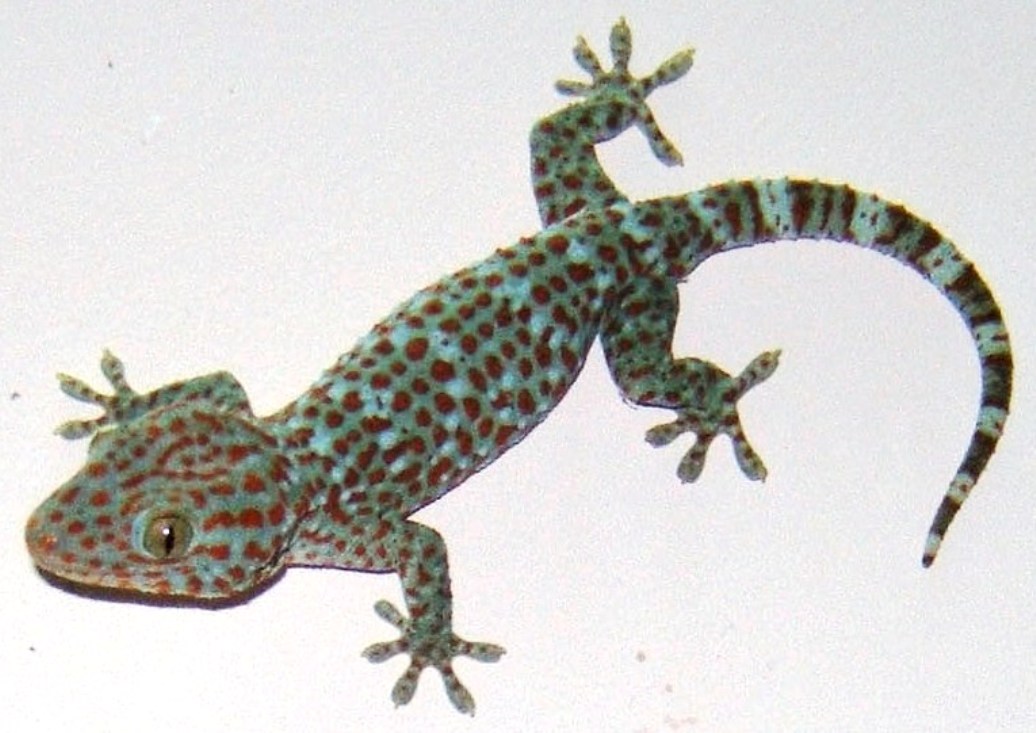
The tokay gecko (Gekko gecko) is a large gray and orange spotted gecko from Southeast Asia, reaching about 14 inches (35 cm), and it is the loudest lizard most people will ever hear. Its two part to kay bark is a male territorial call. It is kept in the pet trade, bites hard, and has small feral populations in south Florida and Hawaii.
Are lizards good at hearing?
Lizards hear well in the range that matters to them, roughly 100 to 5,000 hertz, which covers their own calls and the rustle of approaching animals. They have external ear openings and a functional eardrum, unlike snakes, and geckos are among the most sensitive. They are poor at the high frequencies birds use and detect low vibration mostly through the ground.
Will house lizards crawl in your bed?
It is very unlikely. House geckos stay on vertical surfaces and ceilings where they can hunt insects and escape upward, and open bedding offers neither. The rare cases happen when a gecko falls from a ceiling or when it is cold and seeking warmth. They do not bite sleeping people and carry no disease risk beyond ordinary salmonella hygiene.
How long will a lizard stay in your room?
An accidental visitor usually leaves within a day if a door or window is open, while a gecko that finds insects and a warm hiding spot will settle in for months. Removing the food supply is what moves them along. To catch one, corner it against a wall with a box, slide paper underneath, and release it outside near cover rather than in the open.
What is a lizard’s favorite food?
Most lizards prefer live insects, with crickets, roaches, moths, spiders and ants making up the bulk of the diet for house geckos, anoles and skinks. Larger species add eggs, small vertebrates and fruit, and iguanas are mainly herbivorous as adults. The full breakdown by species is in our guide to what lizards eat.
What is a lizard’s enemy?
Domestic cats are the leading predator of lizards around houses, and in the wild the list runs to snakes, hawks, roadrunners, herons, raccoons, opossums and larger lizards. Hatchlings also lose heavily to spiders and ants. Most lizard sounds people hear, especially squeaks and screams, are the moment a predator makes contact, which is why one of the best indicators of nearby predators is the call of a hunting owl at the same hour.