Birds That Look Like Cedar Waxwings: 6 Lookalikes by Region
Most birds that look like Cedar Waxwings share only one or two of its marks, and the place and season of your sighting rule out half of them before you check a single feather. The Cedar Waxwing (Bombycilla cedrorum) is a sleek, crested, brown and gray bird with a black mask, a yellow tail tip and a habit of moving in flocks.
The closest lookalike is the Bohemian Waxwing, a northern winter visitor with rusty undertail and a gray belly. In the East, female Northern Cardinals and Tufted Titmice often cause mix-ups. In the desert Southwest, Phainopeplas and Pyrrhuloxias do. A crest, black mask, yellow tail tip and white undertail point to a Cedar Waxwing.
| Bird | Where and when in the US | Bill color | Visits seed feeders |
|---|---|---|---|
| Cedar Waxwing | Most of the US, nomadic | Black | Rarely |
| Bohemian Waxwing | North and mountains, winter only | Black | Rarely |
| Northern Cardinal (female) | East and Southwest, year-round | Orange-red | Yes |
| Pyrrhuloxia | Desert Southwest, year-round | Yellow | Yes |
| Phainopepla (female) | Desert Southwest and California | Black | No |
| Tufted Titmouse | East, year-round | Dark gray | Yes |
| Loggerhead Shrike | South and open West | Black, hooked | No |
Bohemian Waxwing, the Closest Lookalike
The Bohemian Waxwing (Bombycilla garrulus) is the bird that looks most like a Cedar Waxwing. Both wear a crest, a black mask, a yellow tail tip and red waxy tips on the wings.
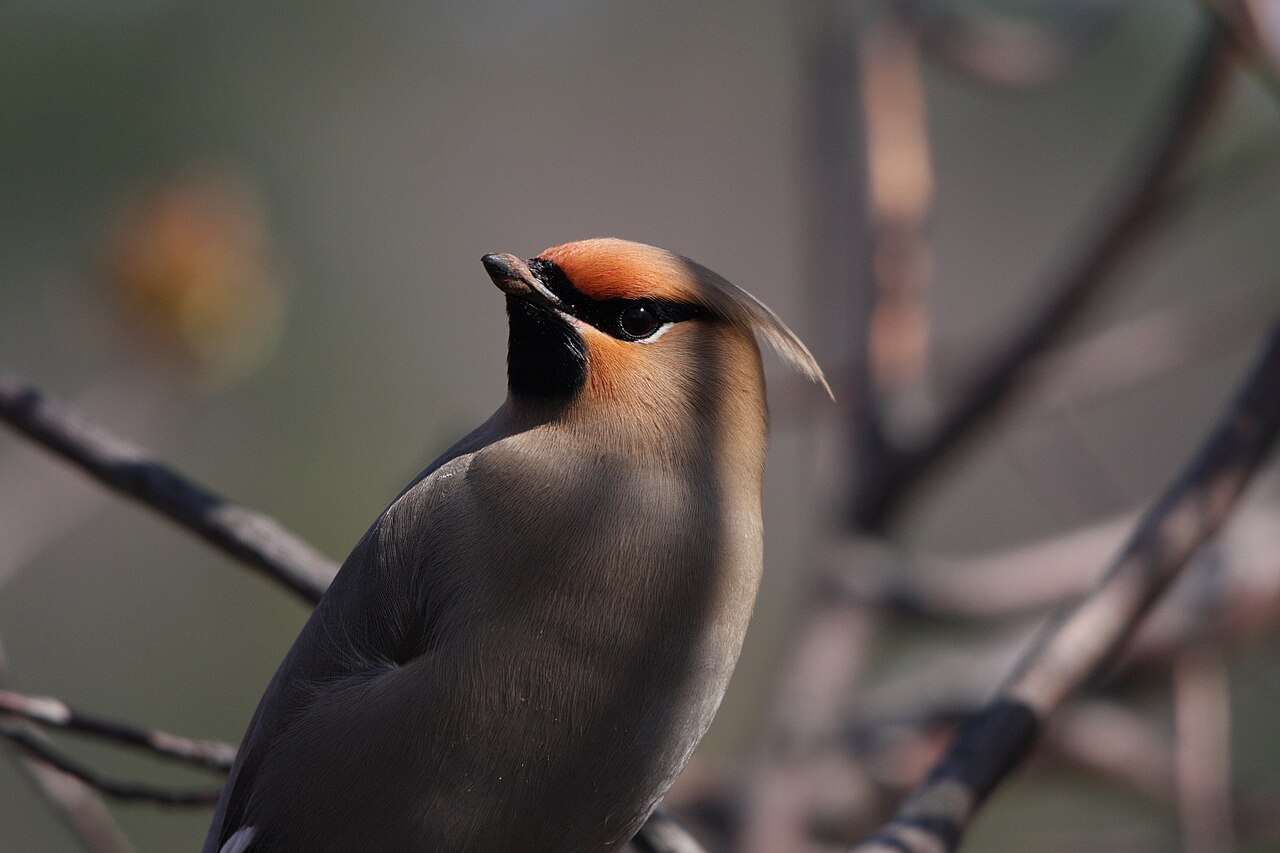
Check the undertail first. A Bohemian has rusty undertail feathers, while a Cedar’s undertail is white. The Bohemian belly is plain gray, and the Cedar shows a pale yellow wash. Bohemians also carry white and yellow bars on the wings that a Cedar lacks.
Side by side, the Bohemian is the larger and grayer bird. Cedar Waxwings look warmer and browner on the head and chest.
Female Northern Cardinal and Pyrrhuloxia
No, a Cedar Waxwing is not a cardinal. It belongs to the waxwing family, Bombycillidae.
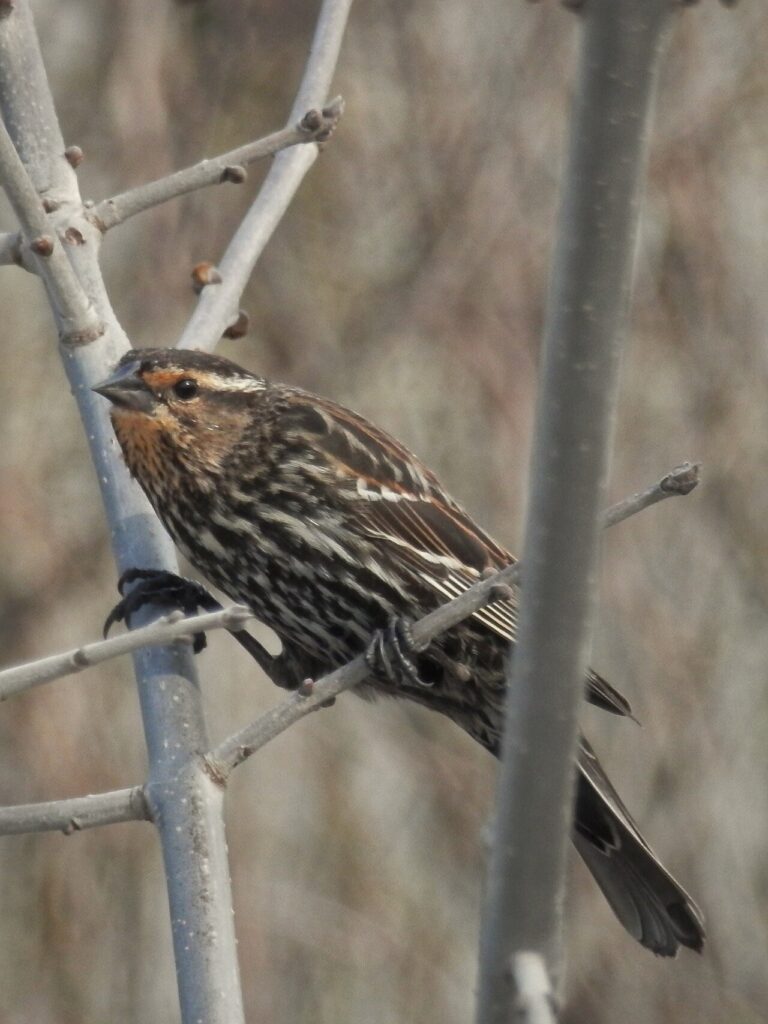
The female Northern Cardinal (Cardinalis cardinalis) is a common source of confusion in eastern yards. She shares the soft brownish body and the pointed crest. Her thick orange-red bill gives her away at once. Her wings and tail are washed red, and she has no yellow tail band.
The Pyrrhuloxia (Cardinalis sinuatus) is the desert relative. It is gray with red tips on the crest and a stubby yellow bill shaped like a parrot’s. Both cardinals crack seeds at feeders, and waxwings rarely visit seed feeders. Birds that look like cardinals, like the Summer Tanager, lack the crest that causes waxwing mix-ups.
Phainopepla, Tufted Titmouse and Loggerhead Shrike
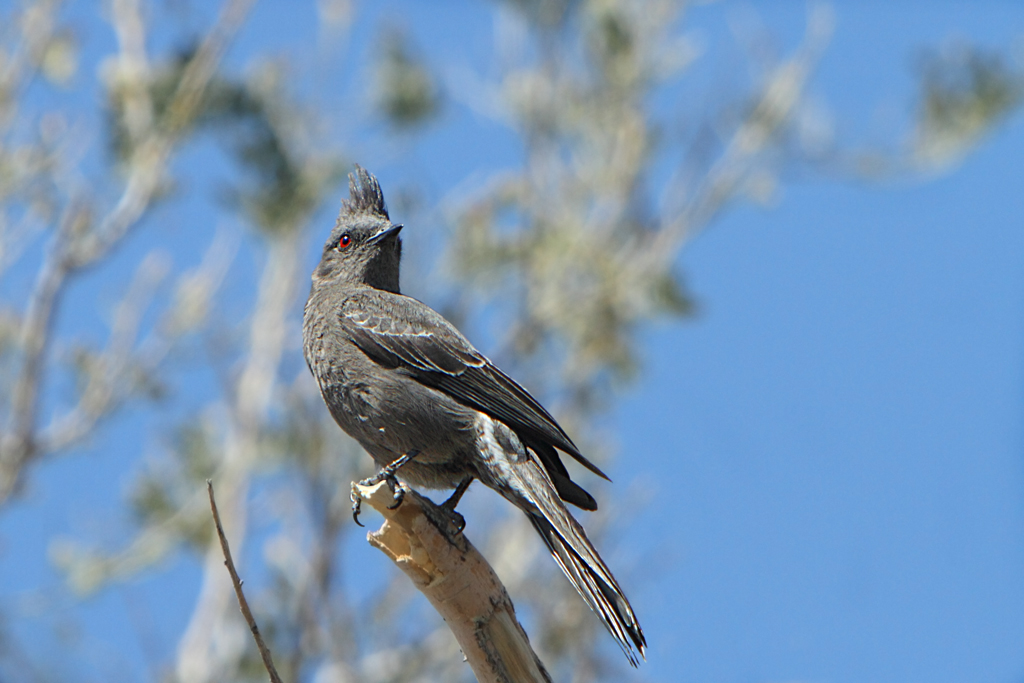
A crested gray bird that is not a waxwing is often a Tufted Titmouse in the East or a female Phainopepla in the Southwest. The female Phainopepla (Phainopepla nitens) is gray with a ragged crest and a red eye. She has no black mask, and that ends the comparison.
The Tufted Titmouse (Baeolophus bicolor) has a gray crest and a black spot just above the bill. It shows no mask and no yellow tail band.
The Loggerhead Shrike (Lanius ludovicianus) copies the mask and nothing else. It has no crest, a hooked bill and black and white wings. It perches alone on wires and fence posts and does not travel in flocks. Blue Jays are the other crested backyard bird with a dark face line, but their blue back rules out a waxwing at once.
Where and When You See Each Lookalike
Cedar Waxwings occur across most of the US in at least one season, so range alone does not rule them out.
In the lower 48 states the Bohemian Waxwing is mainly a winter visitor to the northern and mountain states. It breeds in Alaska and Canada. A waxwing in Ohio in July is a Cedar. Phainopepla and Pyrrhuloxia live only in the desert Southwest. Female cardinals and titmice are the main suspects in the East. Loggerhead Shrikes live year-round across the South and in open country in the West, where they hunt from fences and wires.
Cedar Waxwings are common but nomadic, and that makes sightings feel rare. Flocks follow fruit crops and move on when the berries run out. American Robins feed in the same winter fruit trees, so check every bird in a mixed flock.
How to Find and Confirm a Cedar Waxwing
Listen before you look. Cedar Waxwing calls are thin, high whistles that reveal a flock before you see it. Bohemian Waxwings give a lower, buzzier trill, so the pitch alone separates the two species in a mixed flock.
Scan fruiting trees and treetops near water rather than seed feeders. Then check four marks. The crest, the black mask, the yellow tail tip and the white undertail together point to a Cedar Waxwing. An orange tail tip does not rule one out, because some eastern Cedar Waxwings grow orange tips after eating berries of introduced honeysuckle while their tail feathers form.
Juveniles are streaky below and look duller than adults. Look for the yellow tail tip and the hint of a mask. A tight flock that lands and leaves together is a strong sign of waxwings.
What Attracts Cedar Waxwings to Your Yard
Cedar Waxwings eat mostly small fruit, such as serviceberries, mulberries and dogwood in summer, and eastern red cedar, mountain ash, hawthorn and crabapple in winter. The cedar in their name comes from those red cedar berries. A yard with fruiting shrubs draws flocks that a feeder never will.
Plant native shrubs such as serviceberry, dogwood and winterberry. Mix species so fruit ripens from early summer into winter.
Related reading: birds that look like eagles.
Frequently Asked Questions
Are Cedar Waxwings and Bohemian Waxwings related?
Yes. Both belong to the genus Bombycilla in the family Bombycillidae. The third member of the genus is the Japanese Waxwing (Bombycilla japonica) of eastern Asia.
Do all waxwings show red wax tips?
No. The red tips on the secondary wing feathers, which gave waxwings their name, are flat extensions of the feather shafts. Their number varies and some birds show none, so a missing red spot does not rule out a waxwing.
Do male and female Cedar Waxwings look different?
No, not in any way that helps at a distance. The sexes look alike in color, crest and mask. Males show a slightly larger and darker black chin patch, but you need a close, clear view to see it.
Is there a special name for a flock of Cedar Waxwings?
Yes. A flock of waxwings is traditionally called an “earful” or a “museum”. Cedar Waxwings travel in flocks all year, and winter flocks at a fruiting tree can number in the hundreds.
Sources
- Cornell Lab of Ornithology, All About Birds, Cedar Waxwing
- Cornell Lab of Ornithology, All About Birds, Bohemian Waxwing