Baby Salamander: What It Looks Like and Why It Has Gills
Most baby salamanders are larvae, and they spend the first part of their life in water before they ever walk on land.
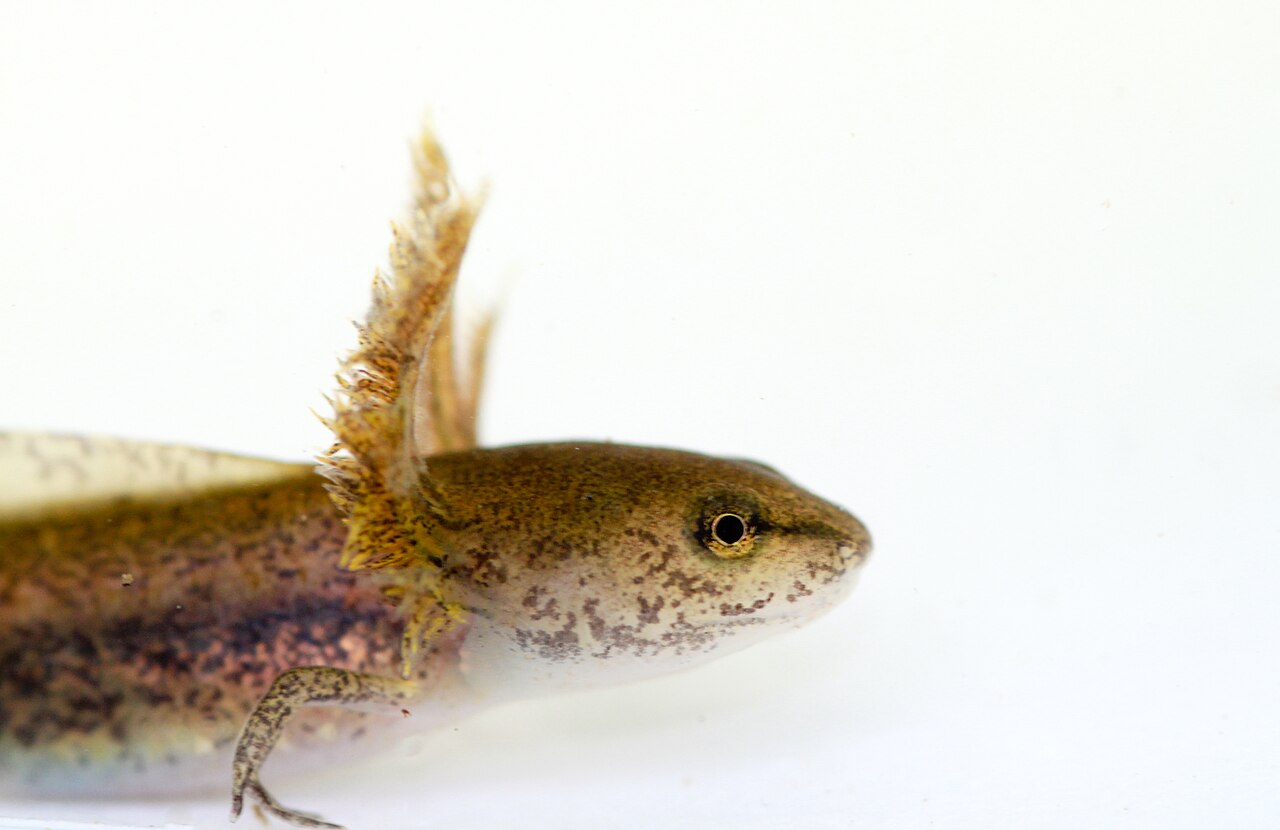
Most baby salamanders are larvae. It looks like a slim, olive or brown miniature salamander with a finned tail, feathery external gills behind the head and front legs that usually grow before the back legs. It breathes through gills and skin in water, then switches to lungs and skin, or skin alone, at metamorphosis.
What Does a Baby Salamander Look Like?
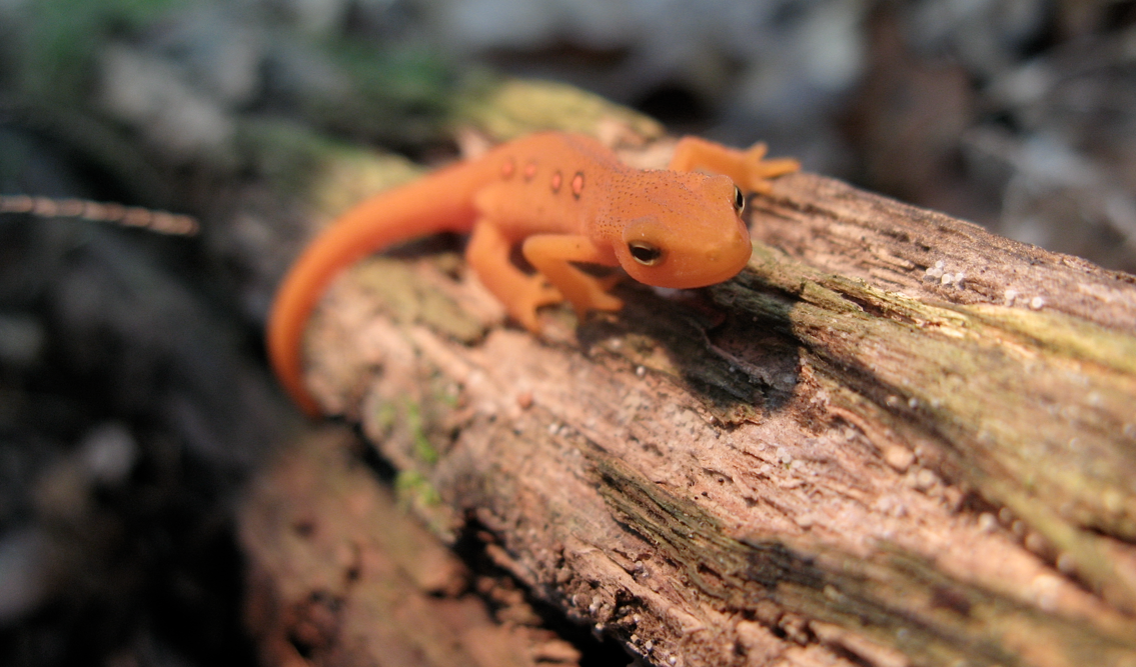
A baby salamander looks like a slim, gilled copy of the adult, with a long finned tail and feathery gills on both sides of the head. Biologists call it a larva. Some newts add one more name. The young of the eastern newt that leave the water and live on land for a while are called red efts.
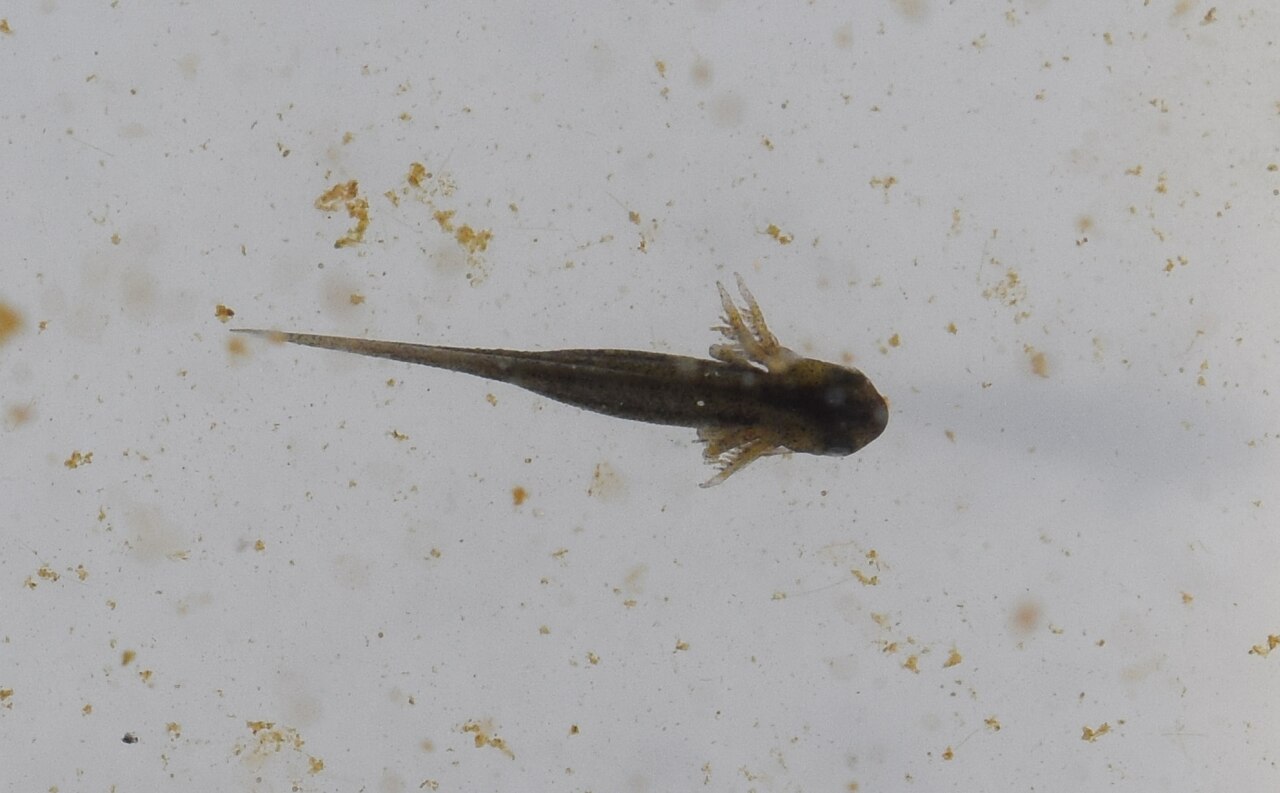
The gills are the giveaway. They fan out just behind the head like small plumes and stay visible while the larva swims or rests on the bottom. The tail carries a thin fin along its edges. The body stays narrow from head to tail, with no round belly.
Legs settle the question when you compare it with a tadpole. Salamander larvae usually show their front legs first, and some pond species hatch with only front limb buds. Baby frogs usually do it the other way around and show their back legs first. Color helps less. Most larvae are olive, gray or brown, which hides them against mud and leaf litter on the pond floor. For a closely related question, see our guide to baby mosquito bites.
Where you find it narrows things down. Pond larvae, like those of the spotted salamander, usually have tall tail fins and long, bushy gills for life in still water. Stream larvae, like those of the northern two-lined salamander, usually have short gills and a low fin that suits a fast current.
Why Baby Salamanders Have Feathery Gills
Baby salamanders have feathery gills because they live underwater and must pull oxygen from it. Each gill branches into fine filaments, and every filament adds surface where oxygen passes into the blood. That extra surface matters in still ponds, which hold less oxygen than a rushing creek. The thin, moist skin takes up oxygen as well, so the whole body helps the gills.
Metamorphosis rebuilds the breathing system. The gills shrink and disappear, and in most species lungs take over alongside the skin. Lungless salamanders of the family Plethodontidae never grow lungs at all. As adults they breathe through their skin and the lining of the mouth. Black salamanders (Aneides flavipunctatus) belong to this lungless family.
Axolotls (Ambystoma mexicanum) are the famous exception. They keep their larval gills and finned tails for life and still breed. An adult axolotl is not a baby salamander but a grown animal that never finished metamorphosis. Many pink salamanders sold as pets are pale axolotls with the same lifelong gills.
White salamanders in the pet trade are mostly leucistic axolotls, with white skin, dark eyes and bright pink or red gills. Their gills look so vivid because blood shows through the thin, pale tissue.
How Baby Salamanders Grow and What They Eat
Baby salamanders grow from eggs into gilled larvae and then into air-breathing juveniles, and they eat live prey the whole way. Many species, such as the spotted salamander (Ambystoma maculatum), lay jelly coated egg masses in ponds. Each spotted salamander mass holds about 20 to 200 eggs, and the larvae hatch after 1 to 2 months at about 1/2 in long. The jelly often turns green because algae live inside the eggs. Other salamanders lay eggs on land, and some of those eggs hatch as tiny gill-less adults that skip the larva stage entirely.
Larvae are carnivores from the first meal. In the wild they hunt water fleas, insect larvae and small worms, and bigger larvae take anything that fits in their mouths. Crowded tiger salamander larvae even eat smaller larvae of their own kind. In captivity they take live daphnia, brine shrimp or blackworms. Feed small amounts so leftovers do not foul the water.
Adult colors arrive with metamorphosis. Eastern newts (Notophthalmus viridescens) add an extra stage. In most populations their larvae turn into bright orange red efts that roam the forest floor before they return to water as olive green adults. Some coastal populations skip the eft stage and stay in the water. Blue salamanders such as the blue-spotted salamander (Ambystoma laterale) show their blue flecks only after they leave the water.
| Stage | Where it lives | How it breathes |
|---|---|---|
| Egg | Jelly mass in water or a moist spot on land | Oxygen passes through the jelly and egg capsule |
| Larva | Ponds, creeks and spring pools | Feathery external gills and skin |
| Red eft (eastern newt) | Forest floor | Lungs and skin |
| Adult, species with lungs | Land, water or both | Lungs and skin |
| Adult, lungless family | Moist ground under logs and leaves | Skin and mouth lining |
| Adult axolotl | Water for life | Gills, skin and lungs |
Frequently Asked Questions
Can you keep a baby salamander as a pet?
Yes, if it is captive bred. Wild larvae belong back in their pond, and many US states require a permit or license to collect native salamanders. A captive larva needs live food every day and a land area once its gills shrink. The CDC says children younger than 5 should not handle amphibians or touch their tanks or tank water, because Salmonella can cause serious illness in young kids.
How long does a baby salamander stay a larva?
2 to 4 months in most pond species such as the spotted salamander, which leave the water at about 2 in long. Stream salamanders such as the northern two-lined salamander (Eurycea bislineata) keep their gills for 1 to 3 years before they transform into adults.
Sources