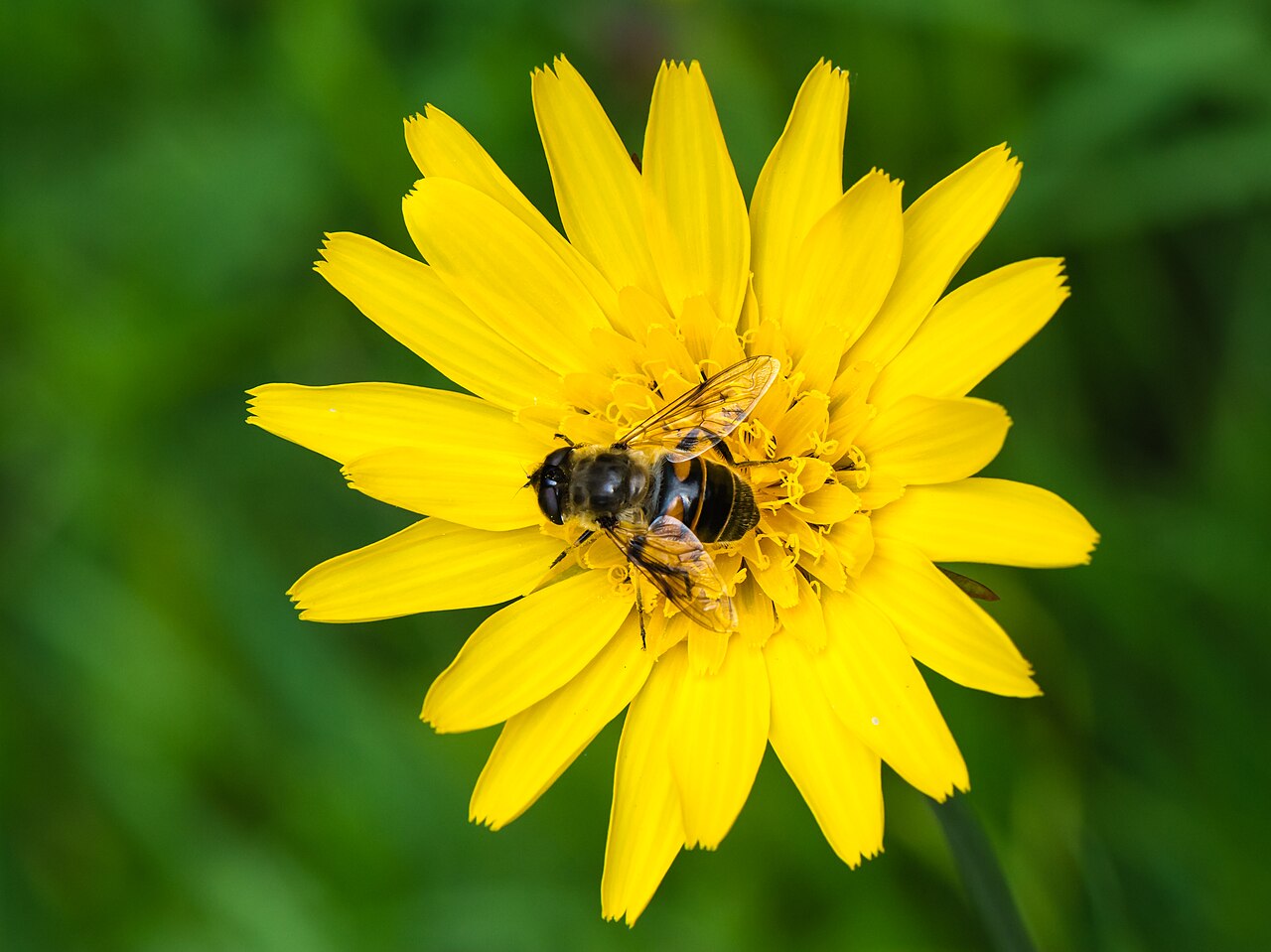
Bee Looks Like Fly? It’s Likely a Hover Fly or Bee Fly
When a bee looks like a fly, it is usually a fly. In spring and summer, plenty of striped or fuzzy insects hover over garden flowers, and many of them are flies copying bees to scare off predators. A smaller group runs the other way, real native bees so small and dark that they pass for houseflies.
If a bee looks like a fly, it is a fly in most cases, most often a hover fly or a bee fly. Both are stingless bee mimics with one pair of wings, huge eyes and short antennae. True bees carry two pairs of wings, elbowed antennae and, in most species, pollen on hairy legs.
Bee or Fly? 5 Quick Ways to Tell
Danger comes first. No fly can sting, and only female bees and wasps carry a stinger. After that, five features settle the call.
- Wings. Flies have one pair, bees have two pairs that hook together in flight.
- Eyes. Fly eyes are huge and, in many males, meet on top of the head, while bee eyes sit on the sides of the face like two ovals.
- Antennae. Flies carry short, stubby antennae that look like two little knobs, bees have long antennae with a visible elbow.
- Legs. Bee hind legs are hairy and carry yellow or orange pollen loads, fly legs are thin and bare.
- Behavior. Hover flies and bee flies often hang dead still in midair, while bees zigzag from flower to flower.
The same checks sort out the beetles, moths and wasps covered under bugs that look like bees.
Hover Flies Are the Most Common Bee Lookalike
Hover flies, family Syrphidae, are the insects behind the bulk of “bee looks like fly” moments across the US. They work gardens and parks from spring to fall, and their yellow and black bands are a direct copy of bee and wasp colors.
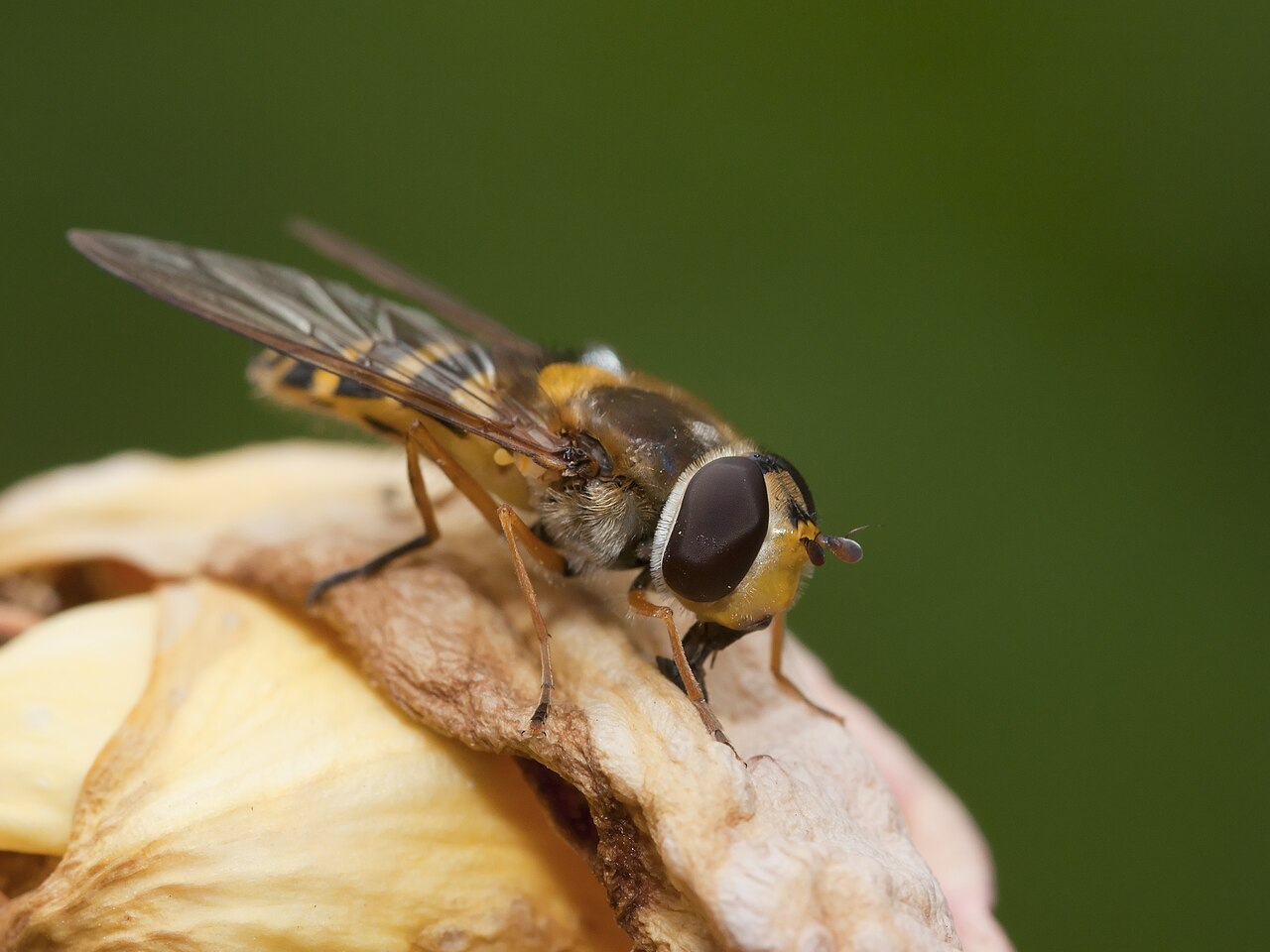
A hover fly is flatter and has little fur, where a honey bee is plump and fuzzy. Against a wasp, the hover fly lacks the narrow waist, carries those short antennae and parks itself in one spot in the air instead of patrolling back and forth.
They are harmless in every sense, with no stinger and no biting mouthpart. Adults pollinate, and the larvae of many species typically eat aphids by the dozen, woolly aphids included.
Drone Flies, the Honey Bee Double
The drone fly, Eristalis tenax, is a hover fly that copies the honey bee closely in size and brown color, and people who know bees well still pause over it.
Two details break the disguise. The eyes are big and dark. The hind legs are bare, with no pollen loads. Fall is the peak season to see one, when they crowd late flowers such as asters and goldenrod alongside real honey bees.
The larva lives in stagnant, dirty water such as a clogged gutter or a neglected trough and breathes through a long tail-like tube, which gave it the name “rat-tailed maggot.”
Bee Flies Are Fuzzy Fliers With a Long Beak
Bee flies, family Bombyliidae, are the furry, rounded insects that look like a tiny bumble bee with a needle stuck on the front. The greater bee fly, Bombylius major, is the one people find across much of the eastern US.
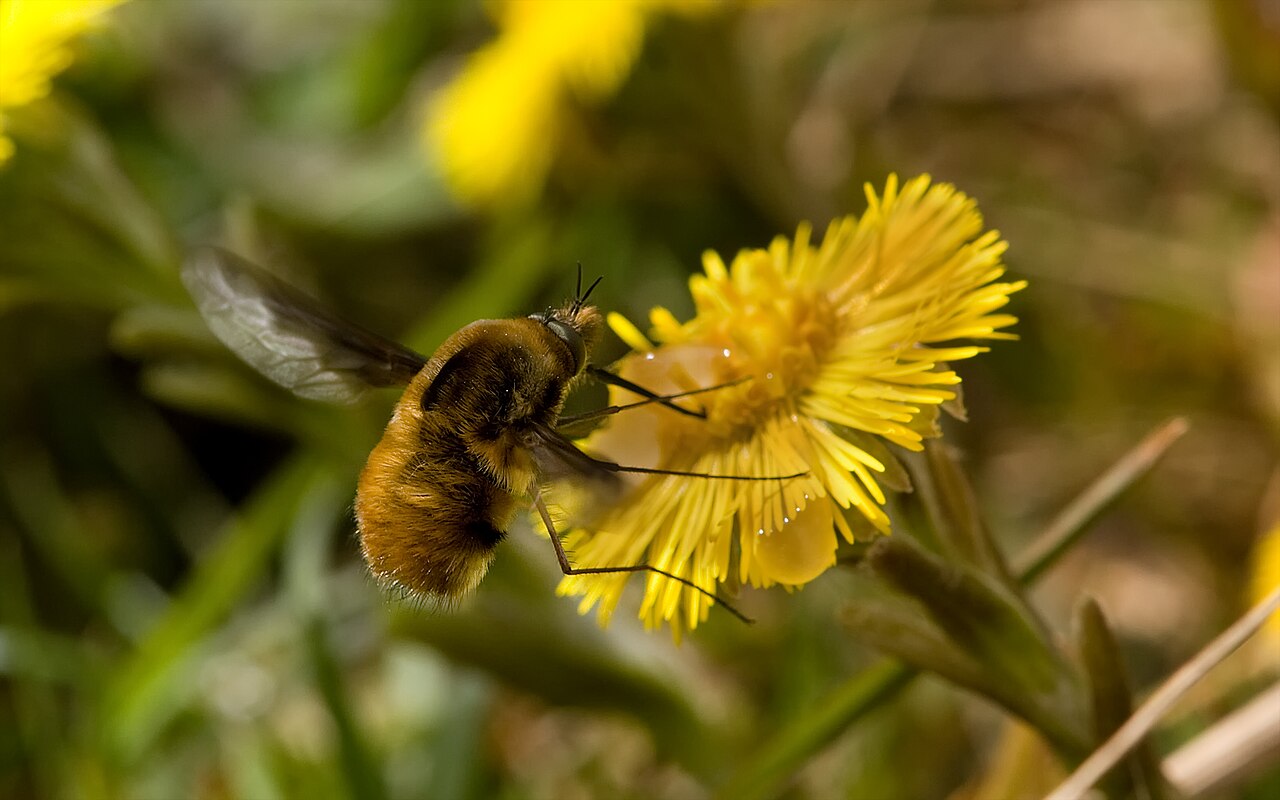
Tell a bee fly from a hover fly by the beak and the fur. Bee flies have a long, forward-pointing proboscis, a furry round body and wings held out to the sides, while hover flies have no visible beak and a smooth, banded body. The proboscis never retracts, and the wings of the greater bee fly carry a dark front edge. The tiger bee fly, Xenox tigrinus, and other US species such as those in the genus Poecilanthrax trade the light fur for dark, boldly patterned wings and a leaner body. Adults fly in spring near sunny woodland edges, sandy slopes and bare patches where host bees nest, and they spend much of their time hovering low over that bare soil.
Female greater bee flies flick their eggs toward the burrows of ground-nesting solitary bees, and the larvae develop inside those nests and feed on the young. Other bee flies target beetle larvae, grasshopper eggs or, in the case of the tiger bee fly, carpenter bee nests. Bee flies are harmless to people, because the beak only sips nectar and cannot pierce skin.
Bumble Bee Lookalikes, Carpenter Bees and Robber Flies
Something that looks like a bumble bee but bigger is, in the eastern half of the US, often an eastern carpenter bee, Xylocopa virginica. The top of the abdomen is shiny, bald and black instead of fuzzy and banded, and the body matches bumble bee size or exceeds it. Carpenter bees drill round holes into decks and fence rails. Males bluff but have no stinger, and females sting only if grabbed.
Bumble bee robber flies, genus Laphria, are the other oversized copy, furry mimics that hunt other insects in flight. A bearded face and a stout beak give them away, and that beak can bite if you hold one.
Real Bees That Look Like Flies
Some real bees are small and dark enough to pass for flies. A long list of native US bees are tiny, dark and barely hairy, so people read them as small flies.
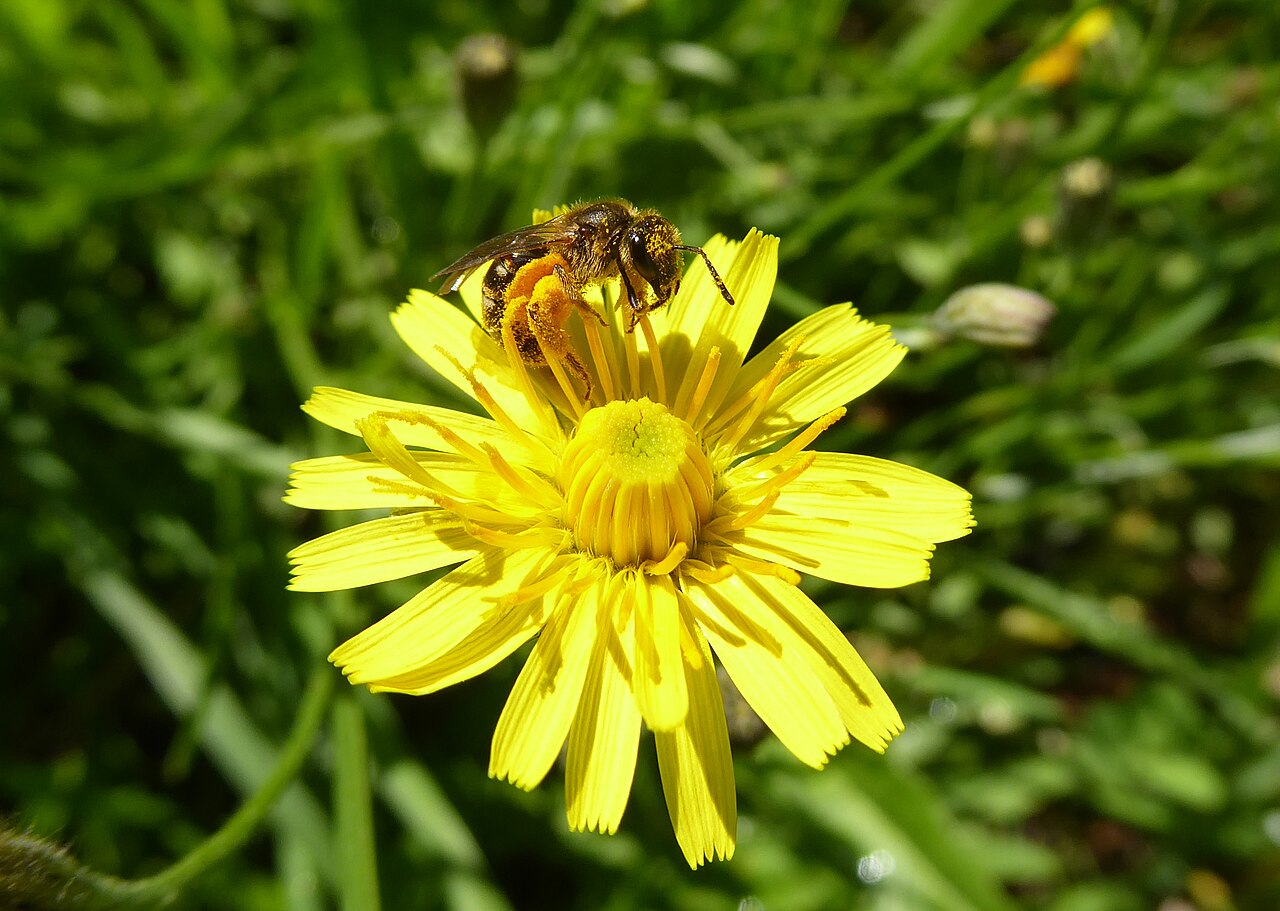
Sweat bees in the family Halictidae, such as the genus Lasioglossum, are typically smaller than a house fly, and several species shine metallic green or bronze. Masked bees, genus Hylaeus, are slim, black and bald, with a pale yellow or white face mark that looks painted on. Most sweat bees nest in soil, masked bees in hollow stems and small cavities. Both are among the smallest types of bees in the US.
These bees land and crawl across flowers rather than hovering in place. Some sweat bees can give a mild sting when pressed against skin.
What to Do When One Gets Inside, and Where to Find Them Outside
Inside. Flies and bees both steer toward daylight, so a buzzing insect bumping along the glass is trapped, not attacking. Turn off the room lights, open the nearest window wide, and give it a few minutes to find the daylight. If it stays, trap it against the glass with a cup, slide a card underneath and carry it outside.
In the garden. Hover flies gather over flat, open flowers such as daisies and yarrow. Bee flies hang over bare, sunny soil in early spring, close to the ground. Sweat bees favor small blooms and land on bare skin on hot days.
Why Flies Copy Bees
In Batesian mimicry, a harmless species borrows the warning colors of a stinging one, and predators that have learned to avoid bees skip the copy as well. Killing a hover fly or bee fly removes a pollinator and an aphid eater from the garden.
Bees have enemies of their own. Beewolf wasps, robber flies and birds that eat bees take single bees, and parasitic mites hit whole hives.
The striped wasps that hover flies also copy have their own hunters, see birds that eat wasps.
| Insect | Look | Stings or bites | Flight style | Larvae feed on |
|---|---|---|---|---|
| Honey bee | Plump, fuzzy, pollen on hind legs | Workers sting once | Zigzags flower to flower | Pollen and honey |
| Bumble bee | Big, furry, banded | Females sting, can repeat | Heavy, slow, bobbing | Pollen and nectar |
| Hover fly | Smooth, banded, no beak | Neither | Hovers in one spot, darts | Aphids, in many species |
| Drone fly | Brown, bee-sized, bare legs | Neither | Heavy buzzing, brief hovers | Rotting matter in foul water |
| Bee fly | Furry, long beak | Neither | Low hover over bare soil | Young of bees, wasps or other insects |
| Bumble bee robber fly | Furry, bearded face, stout beak | Bites if handled | Perches, then hunts in the air | Grubs in rotting wood |
| Sweat bee | Small, dark or metallic | Mild sting if pressed | Lands and crawls | Stored pollen in soil nests |
Frequently Asked Questions
Can fuzzy bumblebees sting you?
Yes, female bumble bees can sting, and males cannot because they have no stinger. A bumble bee’s stinger is smooth rather than barbed, so a female can sting more than once, but she does so only when grabbed or when the nest is disturbed.
How rare is a bee fly?
Not rare at all. The greater bee fly is common in spring, but adults fly only from about April to June and stay out on warm sunny days, so they are easy to miss.
What are the different stages of the life cycle of a hoverfly?
Four stages make up the hover fly life cycle, egg, larva, pupa and adult. In aphid-eating species, females lay small white eggs next to aphid colonies and the larvae look like small green or brown slugs on leaves, while drone fly larvae live in foul water instead. The pupa is a teardrop-shaped case on the plant.
Why do hover flies land on my skin?
Hover flies land on skin to lap up salt and moisture from sweat, which they need in hot weather. They cannot bite or sting, and they leave as soon as the sweat dries or you move.
Why does a hover fly hover right in front of me?
Male hover flies guard a small patch of airspace and hold position to watch for females and rivals. A person walking into that patch gets inspected, so the fly hangs in front of your face, darts away and returns to the same spot.
Sources
- BeeSpotter, University of Illinois, Bee Mimics
- Missouri Department of Conservation, Bee Flies
- Missouri Department of Conservation, Tiger Bee Fly
- UC Marin Master Gardeners, Discover the hover fly