A Fly That Looks Like a Bee: What It Is and If It Stings
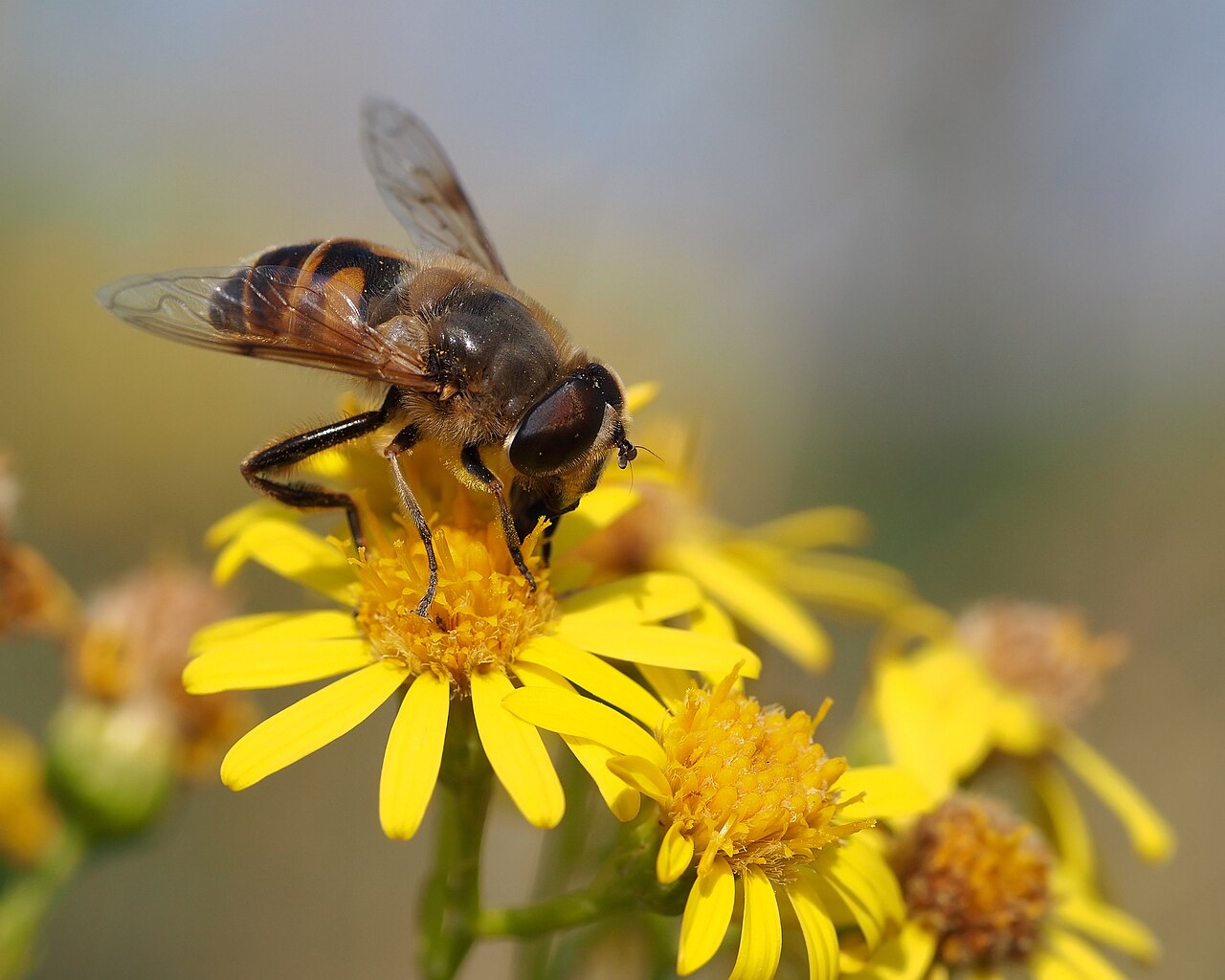
A fly that looks like a bee is a hover fly or a bee fly in most cases, and neither can sting. Thousands of harmless fly species wear bee colors, so the striped insect on your flower is bluffing, much like the moths behind most reports of birds that look like hummingbirds.
A few bee look-alikes do bite, and they are covered below.
A fly that looks like a bee is in most cases a hover fly or a bee fly. Neither can sting. Tell it from a bee by its single wing pair, oversized eyes, short stubby antennae and its motionless hovering.
How to Tell a Fly From a Bee at a Glance
Count the wings first: flies have one pair, bees and wasps two. Fly eyes are huge and, in many males, nearly meet on top of the head; bee eyes sit at the sides.
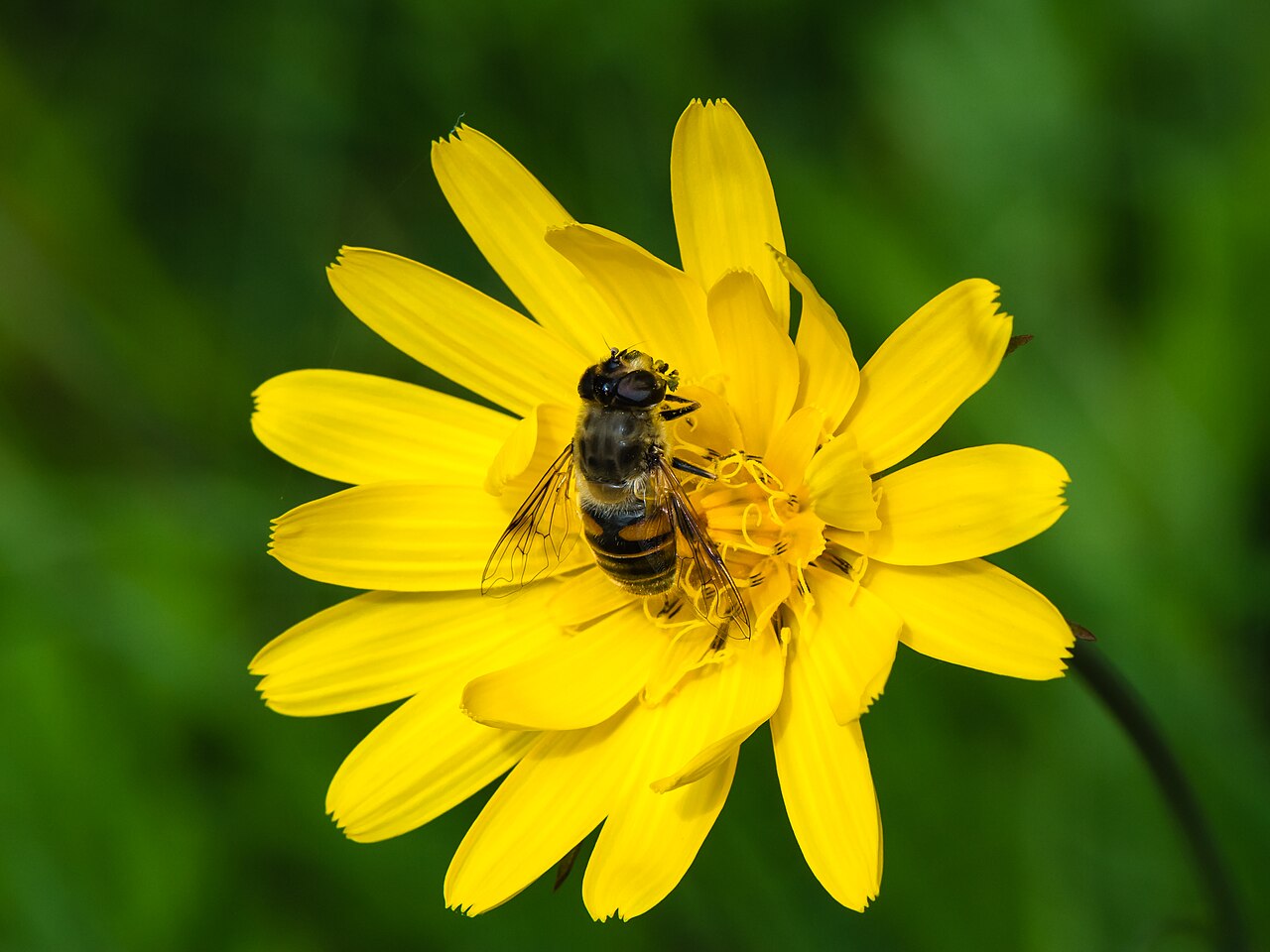
Fly antennae are short and stubby; a bee’s are longer and bent at an elbow. A fly hangs motionless in the air and darts sideways, while a bee never holds still.
The costume is Batesian mimicry: a harmless species copies a dangerous one. Birds that have been stung avoid the pattern, which shields the impostor too, though some bee-eating birds see through it.
Hover Flies: Striped Flies That Hover Like Bees
Hover flies, also called flower flies, form the family Syrphidae. They have no stinger and cannot bite, because their sponge-like mouthparts only lap up nectar, pollen and sweat. The drone fly (Eristalis tenax) copies the honey bee; others copy wasps or bumblebees.
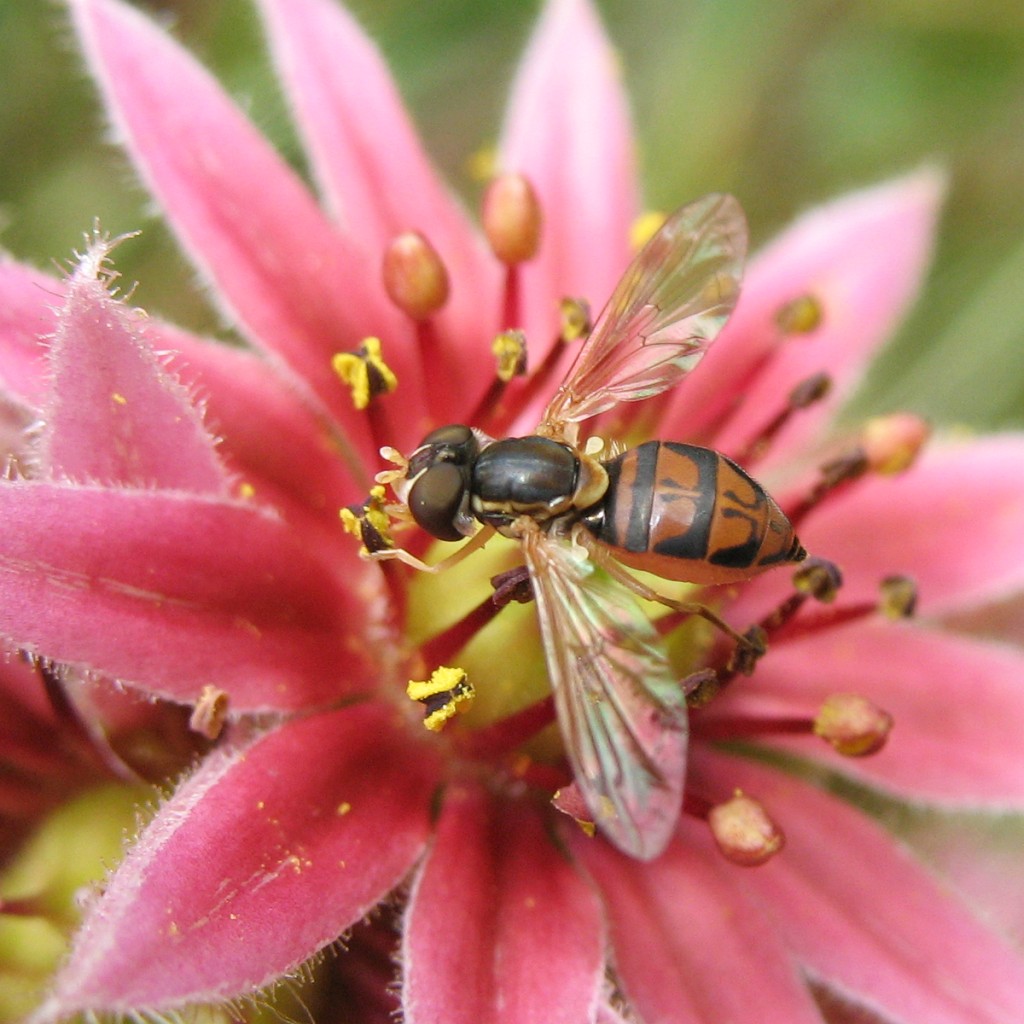
Adults pollinate garden flowers and crops, and in many species the larvae crawl over leaves and eat aphids, including woolly aphids, and thrips. Drone fly larvae instead live in stagnant water.
Tiny striped insects drinking sweat off your skin get called sweat bees, but many are small hover flies like Toxomerus marginatus, nicknamed corn flies. True sweat bees are real bees and can sting, so brush them off rather than squeezing.
Bee Flies: Fuzzy Flies That Look Like Bumblebees
Bee flies (family Bombyliidae) have round, densely fuzzy bodies, like the greater bee fly (Bombylius major). The long, stiff mouthpart pointing forward looks like a stinger but is a harmless nectar straw.
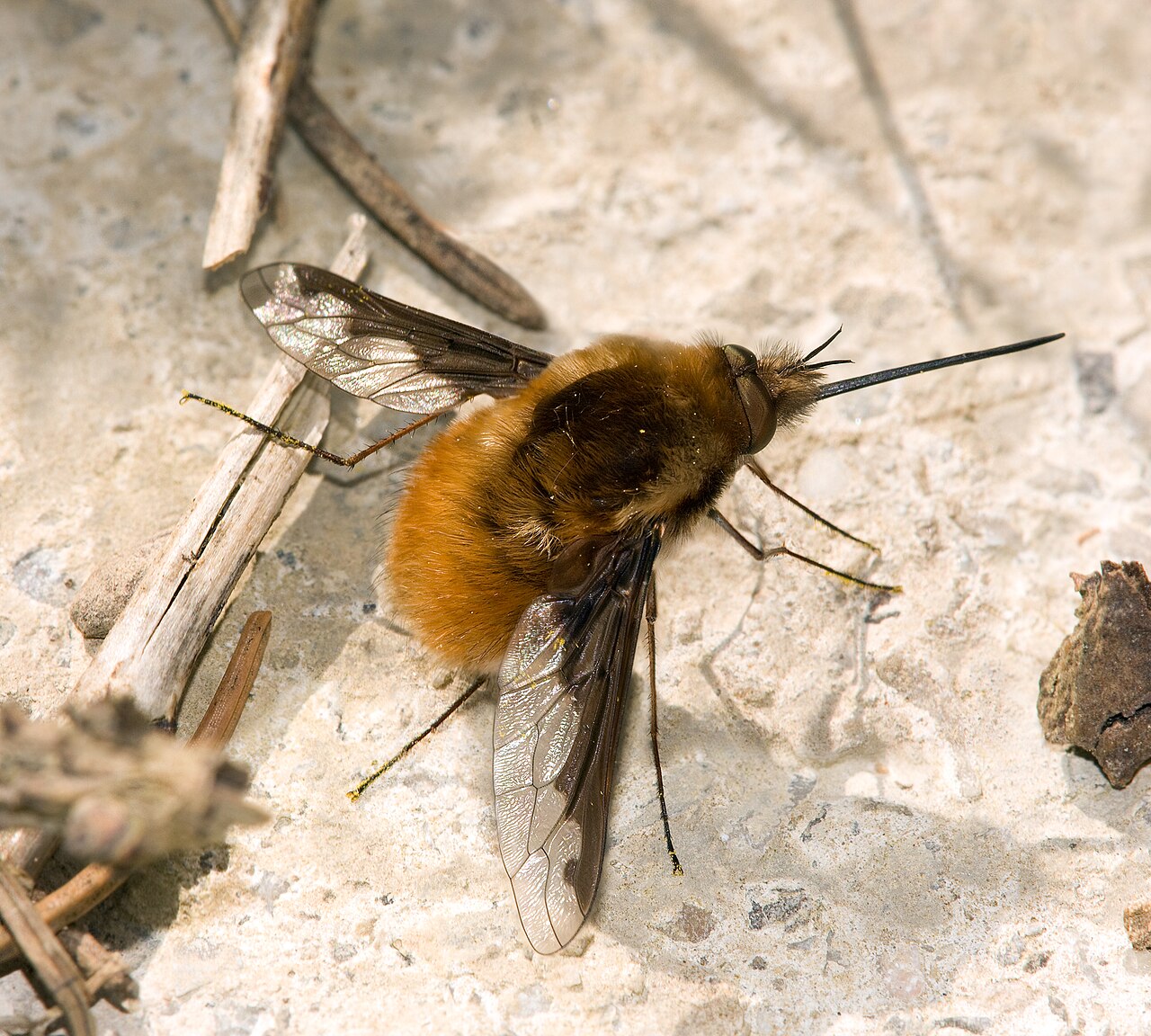
Bee flies live across the US, most varied in dry, open country. They hover at low spring flowers, then rest on sunny bare soil. Dark wing patches mark many species, a pattern North American bees lack.
They are harmless to people and gardens. Adults pollinate early blooms. Bombylius larvae parasitize the young of ground-nesting bees, and other bee flies attack beetle grubs or grasshopper eggs, no threat to your yard.
Flies That Look Like Bees and Bite
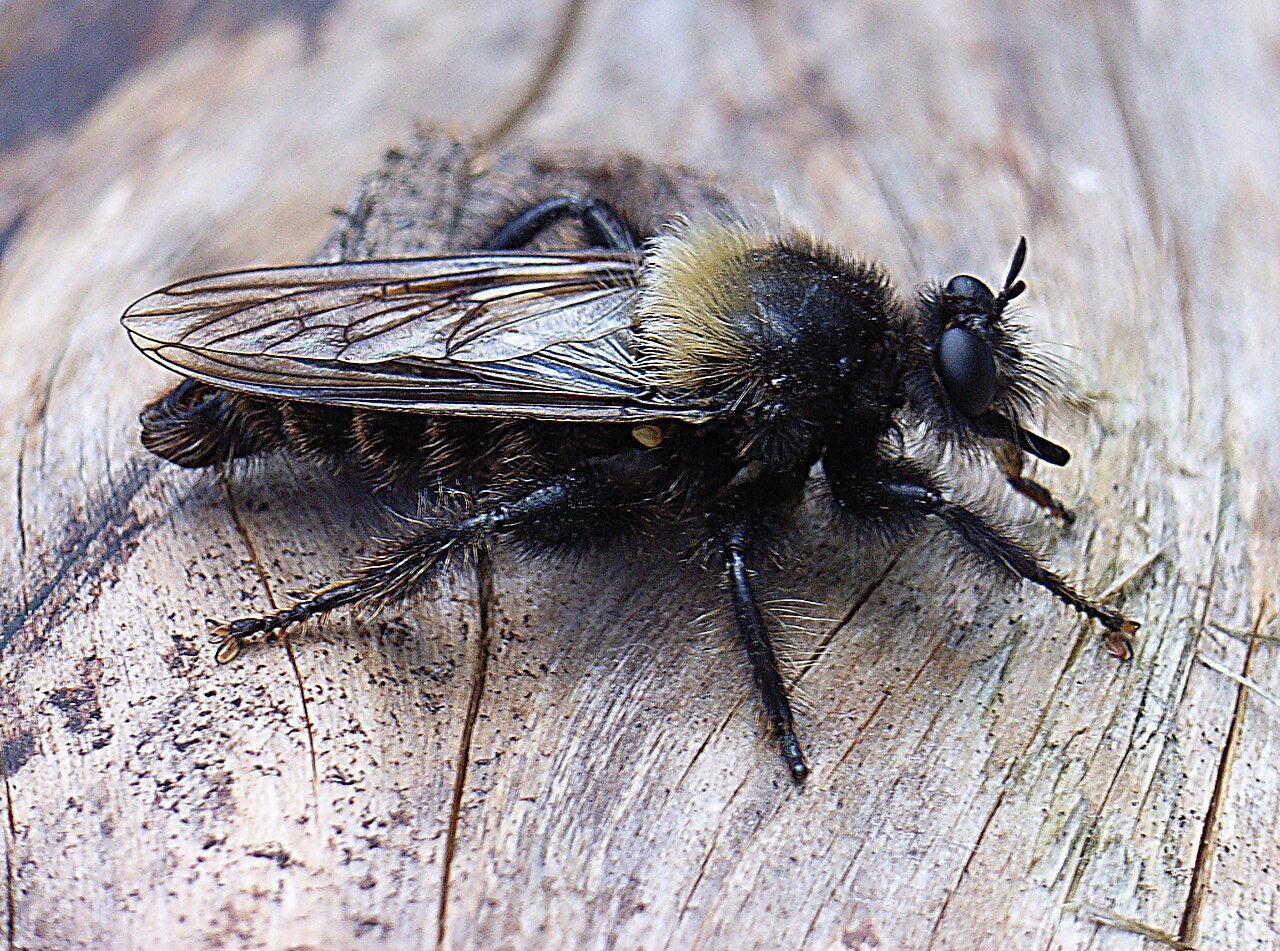
Bee-mimic robber flies in the genus Laphria are fuzzy black and yellow and give a painful bite if you grab one. They ambush insects from perches and leave people alone.
Deer flies (Chrysops) have banded bodies and dark-marked wings, and the females bite people for blood. Long sleeves and an EPA-registered repellent keep them off.
| Feature | Hover fly | Bee fly | Honey bee |
|---|---|---|---|
| Can sting | No | No | Yes |
| Mouthparts | Sponge | Long straight proboscis | Short tongue |
| Hind legs | Thin, bare | Thin, bare | Flattened, pollen basket |
| Halteres | Present | Present | Absent |
| Waist | None in most, wasp mimics look waisted | None, round body | Narrow waist |
Frequently Asked Questions
Can fuzzy bumblebees sting you?
Yes, female bumblebees, like most types of bees, sting repeatedly because the smooth stinger does not stay in the skin. They sting only when the nest is disturbed or one is squeezed. A fuzzy flier with one wing pair is a fly and cannot sting.
What insects look like wasps?
Several do. Wasp-mimic hover flies, clearwing moths and thick-headed flies (Conopidae) copy wasps with narrow bodies or clear wings. None can sting, so the birds that eat wasps take them without risk.
Can a fly that looks like a bee bite you?
Hardly ever. Hover flies and bee flies cannot bite, but robber flies like Laphria can if handled, and female deer flies bite for blood.
Do flies that look like bees make honey?
No, these flies form no colonies and make no honey. Each adult lives alone, and the female lays eggs where the larvae find food: near aphids, in stagnant water or at bee, wasp or beetle burrows.
Sources
- Illinois Extension, Syrphid (hover) Flies
- BugGuide, Family Syrphidae, Hover Flies
- US Forest Service, Pollinator of the Month, Bee Flies (Bombylius spp.)