Insects That Look Like Lightning Bugs (and 2 That Glow)
Insects that look like lightning bugs are mostly beetles and true bugs that borrow the firefly’s black, red and yellow colors without its light. Fireflies are beetles too, not flies, and several harmless neighbors wear nearly the same pattern. Most mix-ups happen on a sunny fall wall or at summer dusk.
Boxelder bugs, soldier beetles and net-winged beetles are the insects most often mistaken for lightning bugs, and none of them light up. Glowing click beetles and railroad worms are the two lookalike groups that share the firefly’s glow. A head hidden under the shield and a pale belly tip point to a true firefly.
| Bug | Family | Peak season | Active by day or night | Glows |
|---|---|---|---|---|
| Lightning bug | Lampyridae | Early to midsummer | Night for most species | Flashes from the belly tip |
| Boxelder bug | Rhopalidae | Fall | Day | No |
| Goldenrod soldier beetle | Cantharidae | Late summer | Day | No |
| Net-winged beetle | Lycidae | Summer | Day | No |
| Glowing click beetle | Elateridae | Summer | Night | Steady glow from two shield spots |
| Railroad worm | Phengodidae | Summer | Night | Green side spots, red head light in Phrixothrix |
| Kissing bug | Reduviidae | Summer | Night | No |
How to Tell a Real Lightning Bug Apart
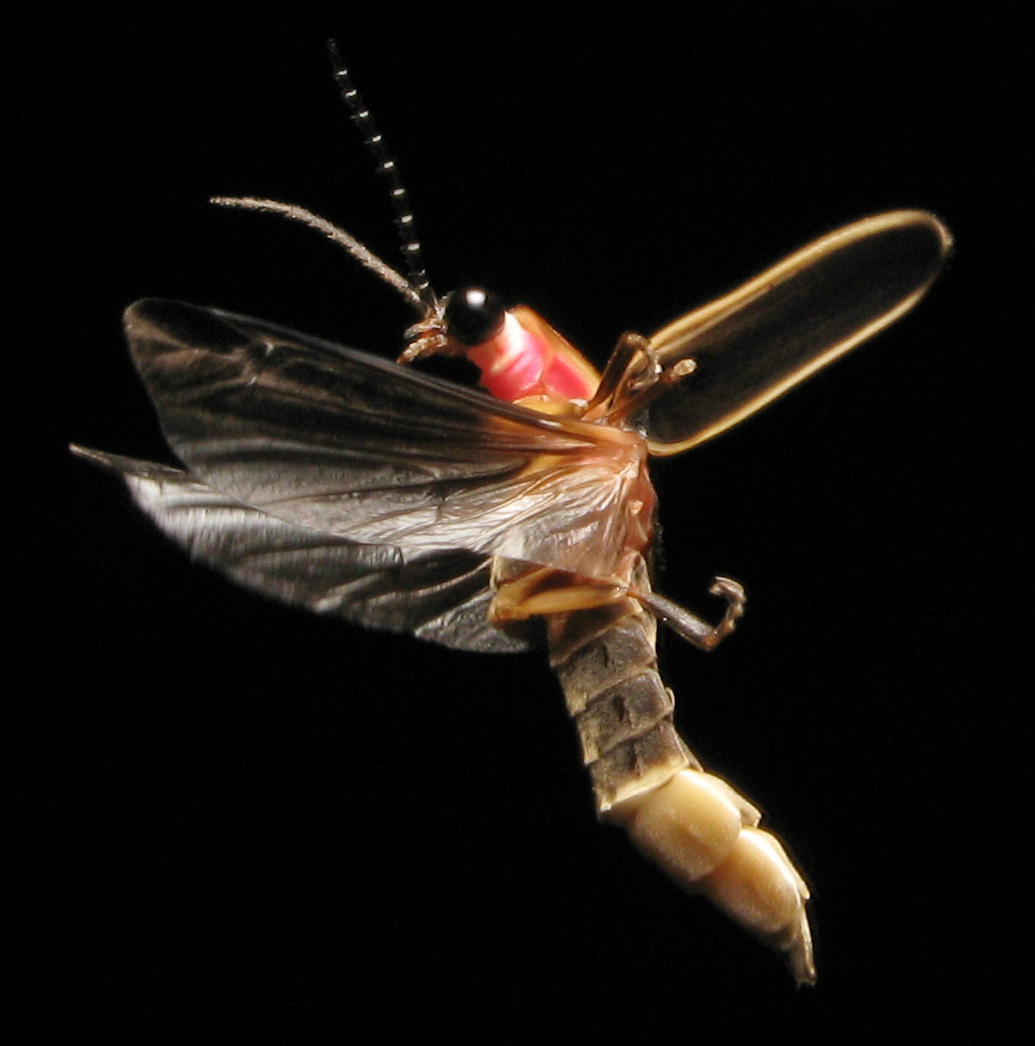
A real lightning bug is a soft-bodied beetle in the family Lampyridae, and two body features point to it. Look at it from above. A flat shield called the pronotum covers the head, so the bug seems to have no face. In most flashing species, the last belly segments are pale yellow or cream, and that patch is the light organ. Day-active species such as the winter firefly have no adult light organ.
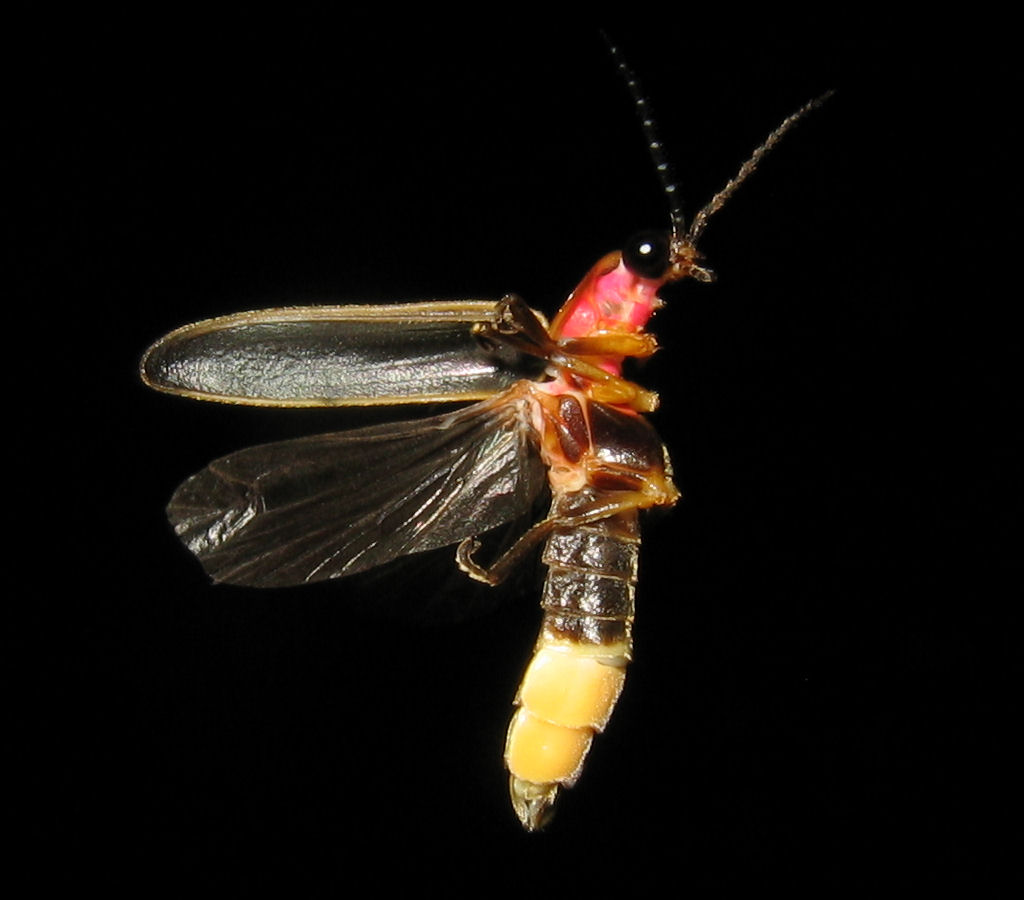
The light is a cold chemical reaction. An enzyme called luciferase makes luciferin react with oxygen, and almost no heat escapes.
Each flash pattern is a species code. The common eastern firefly (Photinus pyralis) draws a rising J-shaped flash about every 6 seconds. Males flash in flight, and females answer from the grass. Bugs that look like flies such as hover flies have one pair of clear wings, while a firefly folds a second pair under hard wing covers.
Boxelder Bugs: The Lookalike on Your Walls
Boxelder bugs are harmless to people, but their droppings stain curtains and light fabric. Boxelder bugs (Boisea trivittata) are black with red-orange lines on the shield and along the wing edges. They have no light organ, so they never glow.
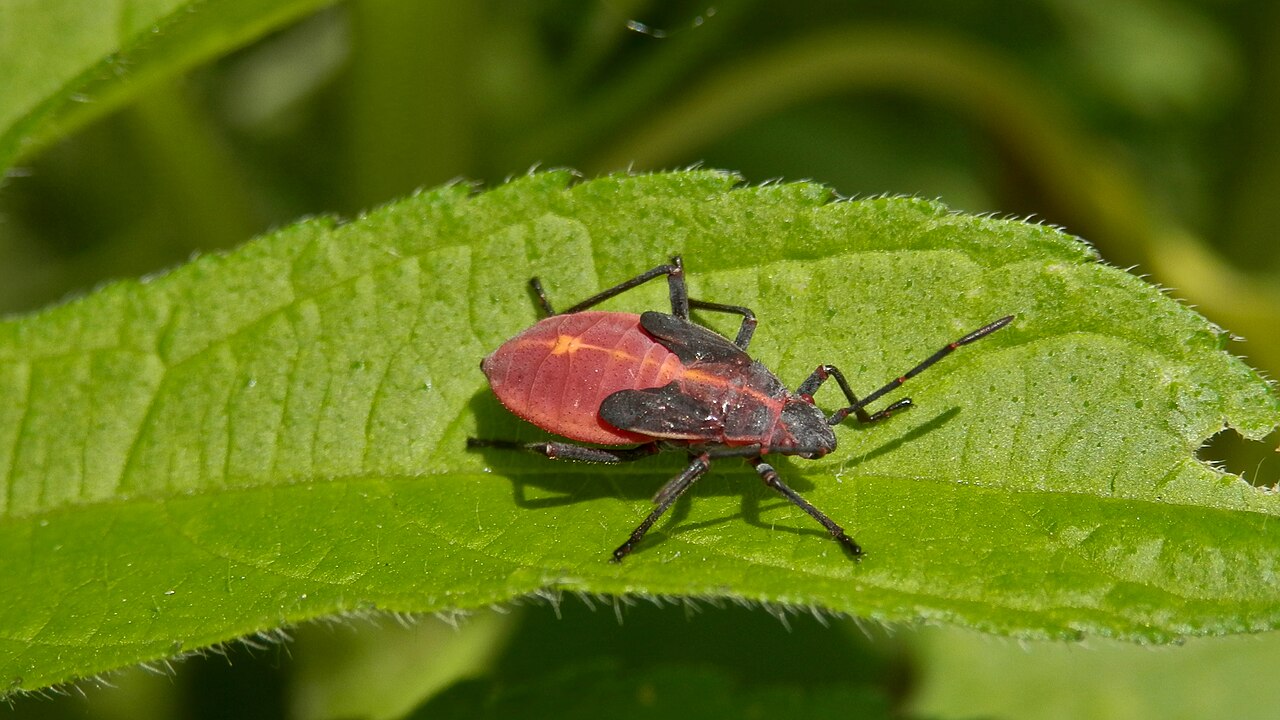
They are true bugs, not beetles. The head sticks out in plain view, a sucking beak folds under the body, and the wings cross flat in an X on the back. A firefly’s wing covers meet in a straight line down the middle. Bugs that look like stink bugs are mostly true bugs with the same folded beak and crossed wings.
In fall they cluster on sunny south and west walls, then slip indoors to overwinter. They feed on boxelder and maple seeds, so a yard full of them has those trees nearby. Bugs that look like boxelder bugs include the red-shouldered bug and the small milkweed bug, two more red and black seed eaters.
Lookalikes That Actually Glow: Click Beetles and Railroad Worms
Glowing click beetles and railroad worms are the lookalikes that make their own light. Glowing click beetles (Pyrophorus) shine from two oval spots on the shield, and the light stays steady instead of flashing. Flip one onto its back and it snaps upright with an audible click.
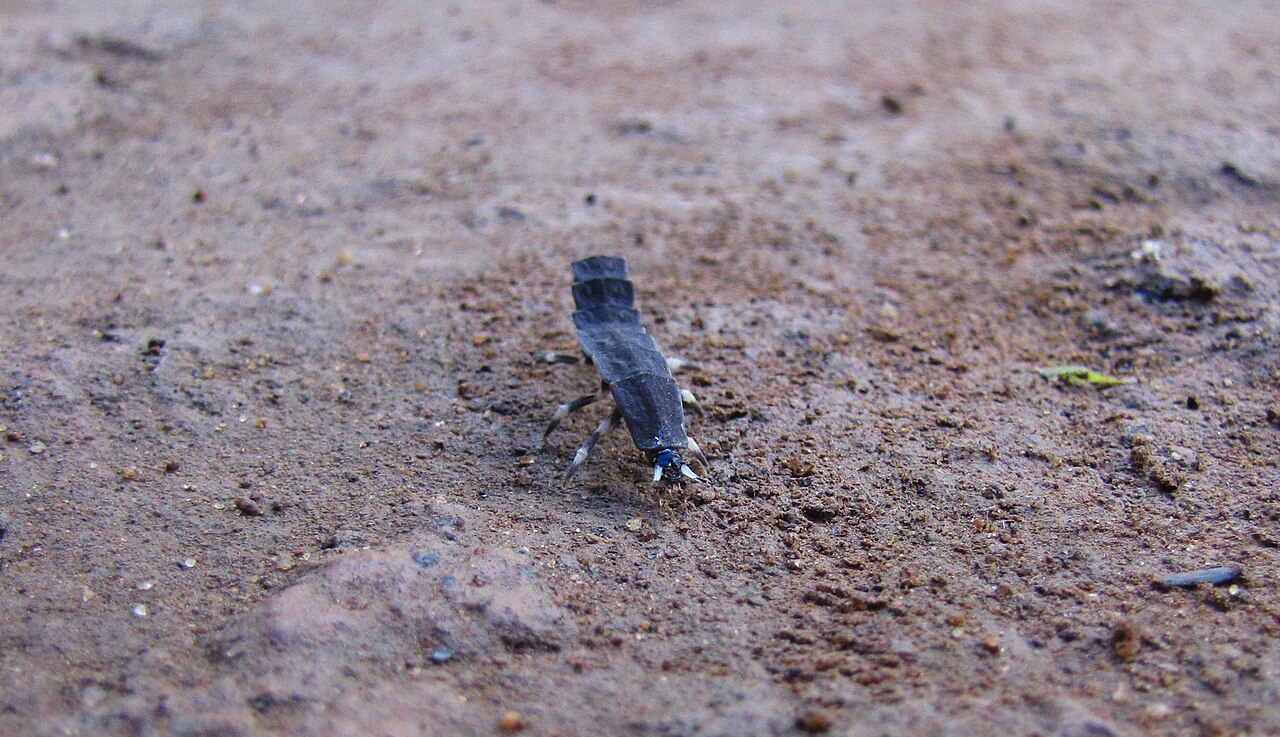
Railroad worm females (family Phengodidae) keep a larva-like body all their lives. A row of yellow-green spots runs down each side, like the lit windows of a train. In the South American genus Phrixothrix, the head also shines red.
A South American cockroach, Lucihormetica, carries pale spots that resemble a click beetle’s lights. Tests found no measurable light from them, so true bioluminescence is unproven, and the spots probably only fluoresce.
Soldier Beetles, Net-Winged Beetles and Other Mimics
Soldier beetles and net-winged beetles are both harmless, and neither bites people or stings. The goldenrod soldier beetle (Chauliognathus pensylvanicus) is yellow with black spots and crowds goldenrod blooms in late summer. Its soft wings and slim body look very firefly-like.
The head settles it. Viewed from above, a soldier beetle shows its head in front of the shield, while a firefly’s shield hides it.
Net-winged beetles (family Lycidae) have raised ridges running along orange wings, like fine netting. Predators learn they taste bad and leave them alone. Drilidae, snail-hunting relatives now grouped with click beetles, have larva-like females and look like fireflies, but they make no light.
Some harmless beetles copy firefly colors, because predators avoid fireflies. In Texas, the yellow-bordered flower buprestid (Acmaeodera flavomarginata) has a hard, bullet-shaped shell, unlike a firefly’s soft, bendable wing covers. Bugs that look like bees use the same disguise against birds.
Do Any Lightning Bug Lookalikes Bite?
Kissing bugs bite, and they are the one lookalike worth handling with care. Kissing bugs (genus Triatoma) have black bodies with orange-red bands along the edges and a narrow, cone-shaped head. They feed on blood at night and fly toward porch lights in summer. Kissing bugs can carry the parasite that causes Chagas disease, which spreads through their droppings rather than the bite itself.
Any bug with a long beak folded under its head can bite when handled.
Move a beaked bug with a jar and a card, never bare-handed. Fireflies have no beak, so a beak alone rules out a lightning bug. Bugs that look like kissing bugs gather on porches too, so check the head shape before you call one dangerous.
Where Lightning Bugs Live, Why They Are Declining and Why People Love Them
Lightning bugs live in moist meadows, forest edges and stream banks, where damp ground keeps their larvae alive. The larvae spend most of their lives in leaf litter and eat snails, slugs and worms.
The Missouri Department of Conservation field guide describes fireflies as a group, notes that firefly numbers show signs of decline and lists light pollution, insecticides and habitat loss among the threats. At home, leaving leaf litter in place, letting a patch of grass grow tall and switching off outdoor lights at night give local fireflies a better chance.
Fireflies are the official state insect of Pennsylvania and Tennessee. In the Great Smoky Mountains, Photinus carolinus males flash in sync each late May and June, and the National Park Service runs a lottery for viewing passes at Elkmont. In Japan, hotaru-gari, firefly watching on summer nights, goes back to the Heian period, and a chapter of The Tale of Genji is named for fireflies.
Frequently Asked Questions
Are lightning bugs poisonous to pets?
Yes, for some pets. Many fireflies carry defensive steroids called lucibufagins that can poison small animals such as lizards and frogs. Pet lizards such as bearded dragons can die after eating even one firefly, so never feed them wild-caught insects. Dogs and cats usually get at most a mild stomach upset.
Do all fireflies light up?
No. Some fireflies are active by day and find mates by scent instead of flashing. The winter firefly (Ellychnia corrusca) is the best known example. It is a dark beetle with reddish marks on its shield, and adults show up on tree trunks in late winter and early spring.
Do firefly larvae glow?
Yes. All known firefly larvae glow, even in day-active species such as the winter firefly whose adults stay dark. Their glow appears as small, steady points rather than flashes.
Do fireflies ever fake another firefly’s flash?
Yes. Females of the genus Photuris copy the answer flash of other firefly species. A male that flies down expecting a mate gets eaten instead. The predator also gains the defensive lucibufagins of its prey, chemicals Photuris cannot make on its own. Researchers call these females femme fatale fireflies.
What gets rid of flying beetles in the house?
Sealing gaps around windows, doors and vents keeps flying beetles and boxelder bugs from getting in. Vacuum the ones already inside and empty the bag outdoors. Avoid crushing boxelder bugs, since that leaves orange stains on walls and fabric. A firefly indoors needs no treatment. Carry it outside at dusk.
Sources
- Missouri Department of Conservation, Fireflies (Lightning Bugs) Field Guide
- Firefly Conservation and Research, Bioluminescent Insects
- National Geographic Kids, Firefly
- Barnes Exterminating, Lightning Bugs vs. Boxelder Bugs
- ASPCA, Bad Bugs
- Backyard Nature, Jewel Beetles