Locust Symbolism: Biblical Meaning, Omens and Plagues
Locust symbolism in the Bible centers on judgment. The locust is the eighth plague of Egypt, the invading army of Joel and the creature from the abyss in Revelation 9, and each time it arrives as a force no farmer can stop. The same books also turn the insect into a promise, because in Joel 2:25 God promises to restore “the years that the locust hath eaten.”
The locust here is the insect, a short-horned grasshopper of the family Acrididae. The honey locust is a tree, and the “17-year locust” of the eastern US is a cicada, so neither one carries this symbolism.
Symbolically, the locust stands for judgment, destruction and the hunger that follows, and in Joel 2:25 also for restoration. The symbol grows out of biology. A locust is a grasshopper that switches from a solitary phase to a gregarious swarming phase when crowded, so a harmless loner becomes part of a plague.
What do locusts symbolize spiritually?
Locusts symbolize destruction followed by renewal. A swarm strips a field in hours, and the bare ground it leaves is the plainest image of loss in the ancient world. Joel 2:25 turns that image around. God promises to “restore to you the years that the locust hath eaten,” so the insect that marks ruin also marks the point where repair begins.
Animal symbolism grows out of behavior, and the locust’s behavior is collective appetite. No single locust matters. The meaning belongs to the crowd. It points to pressures that are small one by one and overwhelming together, such as debt, rumor or a run of bad seasons.
What the sources carry is narrow. The Bible and the Quran give the locust three meanings. Exodus, Joel and Revelation 9 carry judgment, Surah 7:133 carries sign, and Surah 54:7 carries multitude.
What do locusts symbolize in the Bible?
Locusts in the Bible stand for divine judgment carried out through hunger. In Exodus 10:1 to 20, Moses warns Pharaoh, an east wind brings the swarm, and the locusts eat “every herb of the land” the hail had left. When Pharaoh relents, a strong west wind drives them into the Red Sea.
Joel 1 treats a locust invasion as a national disaster and a call to repentance. Joel 1:4 lists four waves of eaters, the palmerworm, the locust, the cankerworm and the caterpiller, each eating what the last one left. Joel 2 then pictures the swarm as an army that runs like horsemen and climbs walls like soldiers.
Proverbs 30:27 adds a quieter note. “The locusts have no king, yet go they forth all of them by bands.” The verse praises order without a ruler. Leviticus 11:22 lists the locust, the bald locust, the beetle and the grasshopper among the insects Israel may eat.
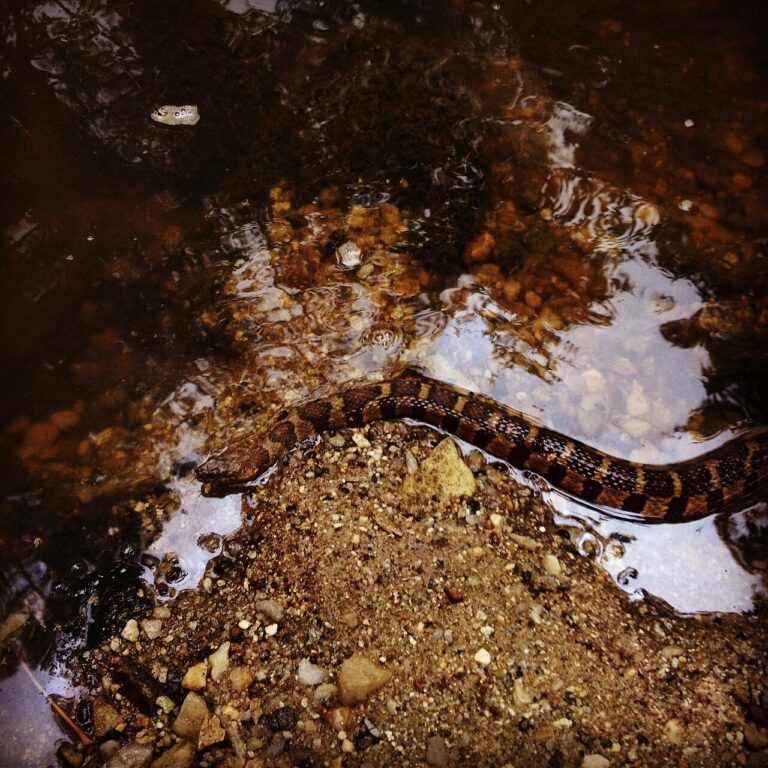
The black snake as a biblical omen draws its weight from one serpent in Genesis 3. The locust draws its weight from numbers.
| Text | What the locust stands for | Key detail |
|---|---|---|
| Exodus 10:1 to 20 | Judgment on Egypt | Eighth plague, east wind brings it, west wind removes it |
| Joel 1 to 2 | Judgment and a call to repentance | Four waves of eaters, swarm pictured as an army |
| Joel 2:25 | Restoration | “The years that the locust hath eaten” are restored |
| Proverbs 30:27 | Order without a ruler | No king, yet they move “by bands” |
| Leviticus 11:22 | Permitted food | Locust, bald locust, beetle and grasshopper |
| Matthew 3:4 | Plain wilderness diet | John the Baptist eats locusts and wild honey |
| Revelation 9:1 to 11 | Torment from the abyss | Their king is named Abaddon and Apollyon |
How do locust swarms and plagues work?
Locust swarms form when crowded grasshoppers change phase and move together as one migrating mass. The desert locust (Schistocerca gregaria) is the species the FAO Locust Watch tracks across Africa, the Middle East and South Asia. FAO states that a swarm covering about 0.4 square mile (1 km²) eats as much food in one day as about 35,000 people.
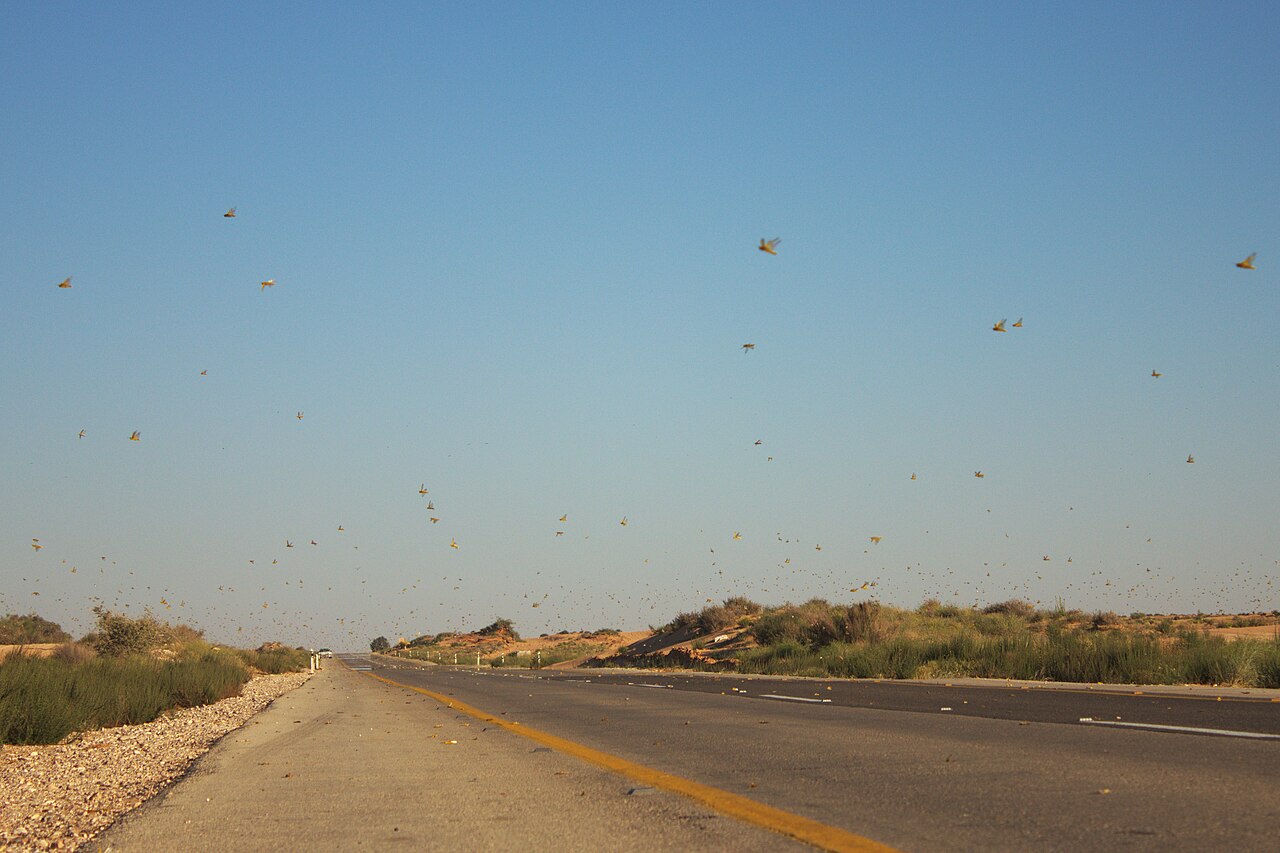
The 2019 to 2021 upsurge in East Africa showed that scale in modern terms. Swarms crossed Kenya, Ethiopia and Somalia, and FAO coordinated surveys and control across the region. The threat was never a bite or a sting. It was the loss of crops and pasture that whole communities live on.
North America once had its own plague insect. The Rocky Mountain locust (Melanoplus spretus) swarmed across the Great Plains in the 1870s, and Cornell University describes an 1874 swarm over Nebraska that covered about 198,000 square miles, the largest locust swarm on record. The species has been extinct since about 1902.
Are locusts a bad omen?
Locusts are a bad omen in the biblical sense, a warning that comes before the damage. In Exodus 10:4, Moses tells Pharaoh that the locusts arrive tomorrow if he refuses. In Joel 2:12 and 13, the call to “turn ye even to me with all your heart” follows the swarm, so the warning still leaves room to act.
A single locust in a garden is not a swarm, and the omen belongs to the swarm. One insect points to a small warning worth noticing, not a verdict on your year. Black beetles as omens carry a similar small warning, tied to decay rather than appetite.
A bee landing on you is the opposite sign. Bees also live in thousands, but their crowd builds stores instead of stripping them.
Locust vs grasshopper: how to tell them apart
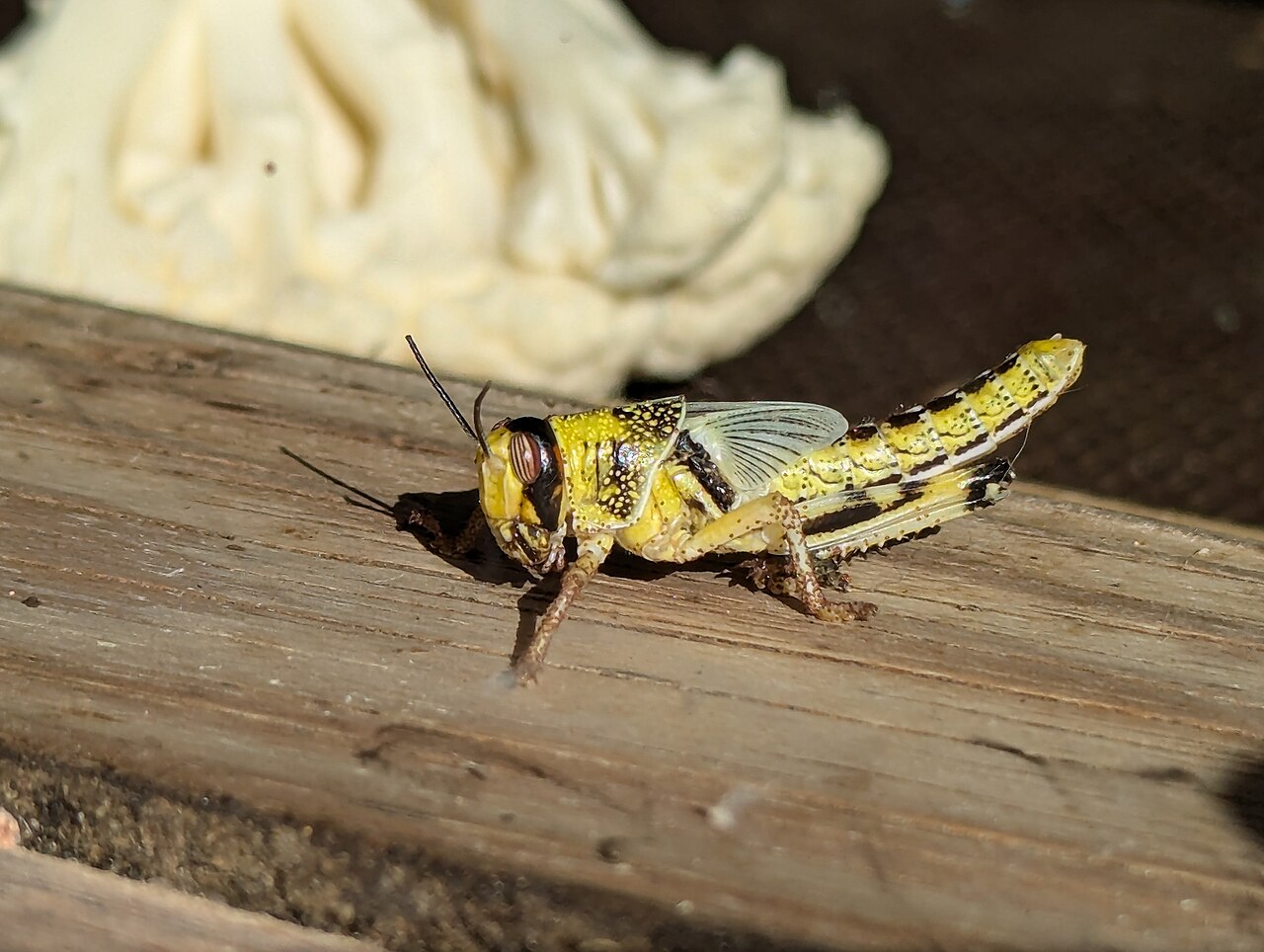
You tell a locust from a grasshopper by its behavior, not its family, because a locust is a grasshopper species that switches into a swarming phase. Both belong to the short-horned grasshoppers, family Acrididae. Only a few species, such as the desert locust, make that switch.
Crowding triggers the change. Repeated touching of the hind legs in a dense group turns solitary insects gregarious within hours. Gregarious desert locust nymphs turn yellow and black, while solitary ones stay green or brown. Gregarious insects seek each other out instead of avoiding each other, and the band starts to march.
A grasshopper landing on you is the solitary insect, and its meaning is personal and small. The locust is the same body in its crowd form, and a swarm of that kind is what Joel 2 pictures as an army.
Why are locusts associated with the devil?
Locusts are associated with the devil because Revelation 9 sends a locust army out of the bottomless pit under the angel of the abyss. In Revelation 9:1 to 3, a star falls from heaven, opens the pit, and locusts rise from the smoke with power like scorpions. They may not harm grass or trees, only people without “the seal of God in their foreheads.”
Revelation 9:7 to 10 gives them faces like men, hair like women, teeth like lions and breastplates of iron, and they torment people for five months. Revelation 9:11 names their king Abaddon in Hebrew and Apollyon in Greek. Both names point to destruction.
The text never calls this angel Satan. The link to the devil comes from later Christian readings of the abyss and its king. Beelzebub, another insect title, means “lord of the flies,” not lord of the locusts.
Locusts in the Quran
The Quran names locusts as one of the signs sent against Pharaoh’s people. Surah 7:133 lists the flood, locusts, lice, frogs and blood as distinct signs, and the people answer them with arrogance.
Surah 54:7 uses the insect as a picture of the resurrection. People leave their graves with eyes cast down, “as if they were locusts spreading.” Here the swarm stands for sheer numbers on the Day of Judgment, not for punishment.
Locust or honey locust, cicada and carob: what people mix up
Three things share the locust name without being the insect of the plagues. The honey locust (Gleditsia triacanthos) is a thorny North American tree with long seed pods. Periodical cicadas (Magicicada) emerge in huge broods and carry the folk name “17-year locusts,” though cicadas belong to a different insect order.
Matthew 3:4 says John the Baptist ate “locusts and wild honey.” A later reading turns those locusts into carob pods, which gave the carob tree (Ceratonia siliqua) the name St. John’s bread. That reading is disputed, and Leviticus 11:22 already allows the insect as food.
Frequently Asked Questions
What demon is associated with locusts?
Abaddon, called Apollyon in Greek, is the figure tied to locusts. Revelation 9:11 names him king of the locust army and angel of the bottomless pit. Both names point to destruction. The verse gives him no place in a hierarchy of demons, and later demonologies built that on their own.
Who is God’s most feared angel?
The most fearsome angel the Bible shows is the angel of the abyss, Abaddon or Apollyon, who rules the locust army of Revelation 9:11 that torments people for five months. The Bible never ranks angels by fear. Among holy angels, the Protestant canon names only Michael and Gabriel, and Michael fights the dragon in Revelation 12:7.
What is it called when God sends locusts?
It is called the plague of locusts, the eighth plague of Egypt in Exodus 10:1 to 20. Joel 1 describes a later locust invasion as a sign that the day of the Lord is near. Revelation 9 carries the image into a final judgment, with locusts rising from the abyss.
What color will we wear in heaven?
White is the color Revelation 7:9 gives. John sees a great multitude from every nation standing before the throne, “clothed with white robes” and holding palms. The passage has no connection to locusts, which appear two chapters later in Revelation 9 as a judgment on people without God’s seal.
Are locusts dangerous to humans?
No. Locusts are not venomous and rarely bite people. The danger is indirect. A swarm eats crops and pasture, and the food loss that follows causes hunger in farming regions. FAO tracks desert locust swarms for that reason, because a large swarm strips fields that whole communities depend on.
Are there locusts in the US today?
No. North America’s swarming locust, the Rocky Mountain locust (Melanoplus spretus), has been extinct since about 1902. The insects that damage US rangeland and crops today are grasshopper species, and none of them forms swarms on the scale of the desert locust in Africa and Asia.
Sources
- FAO, Locust Watch: Desert Locust
- Bible Gateway, Exodus 10 (KJV)
- Bible Gateway, Joel 2 (KJV)
- Bible Gateway, Revelation 9 (KJV)
- Quran.com, Surah Al-A’raf 7:133