Baby Skink: Care, Handling, Lifespan and Birth
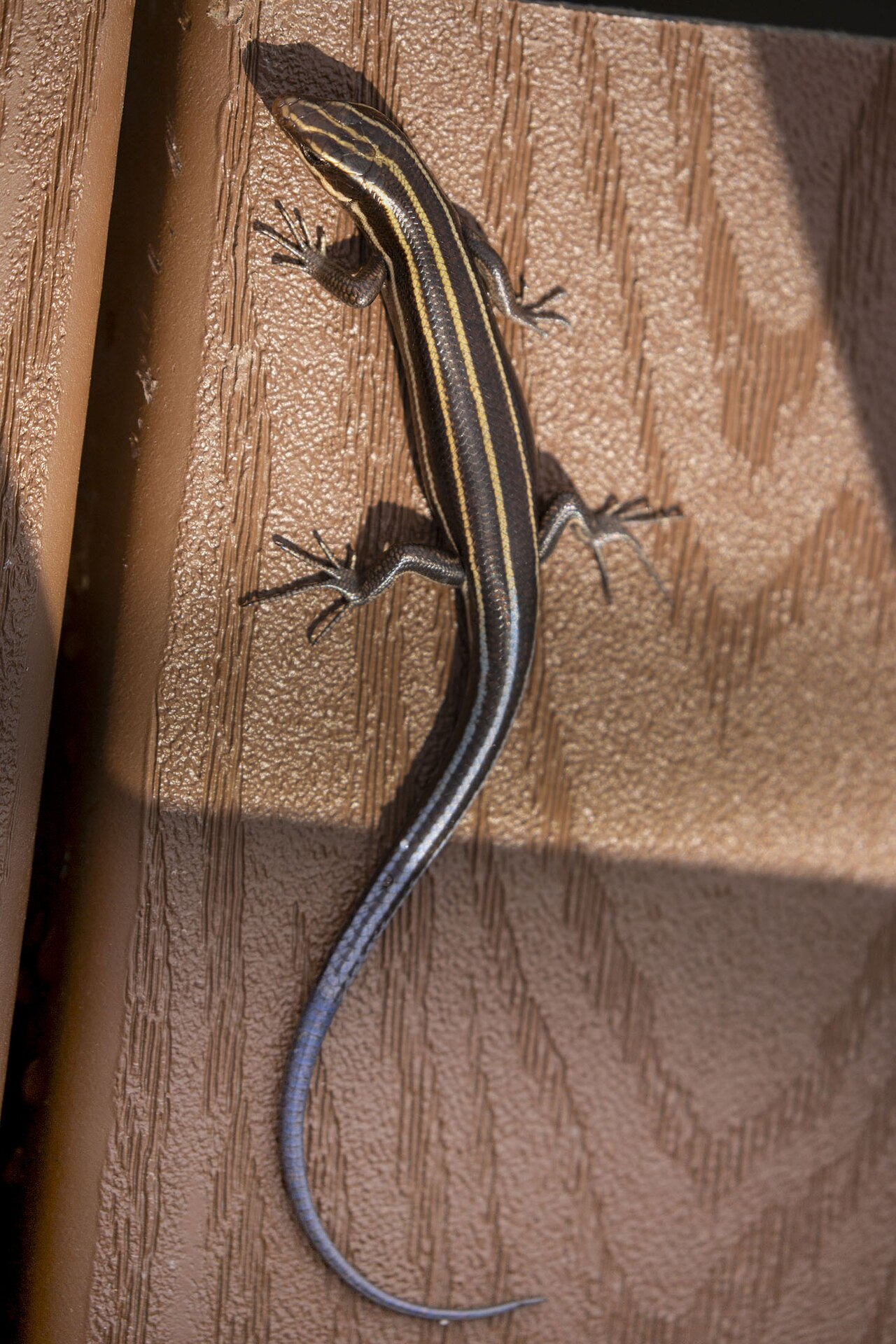
A baby skink needs warmth, light, shelter and food suited to its species. A healthy native wild skink found indoors usually needs a quiet route back outside. In the eastern United States, young five-lined skinks (Plestiodon fasciatus) and several similar species have pale stripes and bright blue tails. Pet skinks include blue-tongued species such as Tiliqua scincoides, whose babies need different food and housing from tiny wild skinks.
Whether you keep one or found one on the kitchen floor, the questions are the same. How do you care for it, how do you hold it without losing the tail, and how long will it live? Skinks are not venomous, but they can bite when frightened. Patient handling can help a pet become comfortable with you, although individuals differ.
Baby skinks need species-specific warmth, UVB, hides, shallow water and food; blue-tongued babies need mixed diets. Allow roughly a week to settle as a rule of thumb, then try brief handling only when feeding reliably and calm. Never grab the tail. Healthy native wild skinks belong outdoors.
How to Care for a Baby Skink
Caring for a baby skink starts with identifying its species. Provide a secure enclosure large enough for warm and cool zones, thermostatically controlled heating, digital thermometers, UVB and hides. The RSPCA blue-tongued skink guide gives basking-zone temperatures typically around 30 to 32°C, up to 35°C for younger animals. Other species need their own targets. Match humidity, substrate and UVB placement to the species; a secure lid does not replace adequate space.
Food depends on species. Small insect-eating skinks take appropriately sized feeder insects; as a rule of thumb, choose prey no wider than the gap between their eyes. Baby blue-tongued skinks need animal foods and vegetables, with fruit only a small part of the diet. RSPCA Australia recommends daily feeding for young eastern blue-tongued skinks. Follow species-specific guidance for portions and supplements. Provide fresh water in a shallow, stable dish with an easy exit, plus hides at both ends.
Are skinks difficult to care for? No, most pet species are easy to moderate, and blue-tongued skinks are among the most forgiving lizards for beginners. Small, fast species such as rainbow skinks are harder to handle and better for watching. Crested geckos are another common first lizard, but their enclosure and feeding requirements differ from those of skinks.
How Are Baby Skinks Born and How Long Do They Live?
Baby skinks are either born live or hatch from eggs, depending on the species. Blue-tongued skinks give birth to fully formed young that start hunting within days. Five-lined skinks, broad-headed skinks (Plestiodon laticeps) and the little brown skink (Scincella lateralis) all lay eggs.
A female five-lined skink buries her clutch in a rotting log or under a board and stays curled around the eggs until they hatch in summer. The hatchlings measure about 2 inches (5 cm) and get no further care once they leave the nest. So do skinks give live birth? Some do, but most North American species do not.
Lifespan depends on species and living conditions, not simply on whether a skink lays eggs or gives live birth. Animal Diversity Web reports wild five-lined skinks living up to six years, while noting that most probably die before maturity. Six years is therefore not a typical lifespan for every hatchling. A well-kept blue-tongued skink typically lives roughly 15 to 20 years in captivity and may live longer.
Is It Okay to Pick Up a Baby Skink?
Yes, it is okay to pick up a baby skink if you scoop it gently from below and never grab the tail. Cup one hand under its body and let it walk onto the other. Keep your hands low over the floor or a bed, since a falling hatchling can be injured and a loose one vanishes behind furniture in seconds.
Many skinks can shed their tail when restrained or attacked. The detached tail may keep wriggling while the animal escapes, but tail loss should never be induced. Wash your hands with soap and water after every contact. The CDC guidance on reptiles and amphibians warns that these animals can carry Salmonella even when they look healthy.
Early socialization starts slowly. Allow roughly a week to settle as a rule of thumb, and wait longer if the pet is not feeding reliably or remains defensive. Begin with your hand resting nearby inside the enclosure, then try brief supported holds. Stop if it twists, gapes or tries to escape; increase contact only as it becomes comfortable.
Can You Tame a Baby Skink?
Yes, a captive-bred baby skink can become accustomed to gentle handling, especially a blue-tongued skink, but individuals differ. Skinks can learn feeding routines and become familiar with a keeper’s presence. Approaching the enclosure front can reflect an expectation of food rather than a wish to be held.
Can you befriend a skink? Yes, in the practical sense that a pet can learn to feel comfortable around you and tolerate gentle contact. Move slowly, keep a predictable care routine and use feeding tongs rather than your fingers. Let the skink approach your empty hand without restraining it; forced contact can undermine that familiarity.
Tameness depends on species and individual. Blue-tongued skinks often adjust to gentle handling, while small, fast species may be better suited to observation. Do not capture wild hatchlings to keep as pets, and check local wildlife rules before moving or collecting a wild skink.
Is a Baby Skink in the House a Problem?
No, finding a baby skink indoors is usually not a cause for alarm. Small wild skinks eat insects and other invertebrates, including spiders, crickets and roaches. They can enter through door gaps, damaged screens and openings around pipes. A house may lack suitable warmth, water and shelter, so help a healthy native skink back outside rather than keeping it indoors.
Move a healthy native wild skink outside calmly. Place a cup over it, slide a piece of card underneath, and release it into nearby cover close to its entry point. If it is injured, appears to be an escaped pet or cannot be identified as native, contact a wildlife rehabilitator or reptile rescue before releasing it.
Skink poop may be found on a windowsill or floor, but droppings alone cannot establish how long an animal has been indoors.
Lizard poop and rat poop look alike at first glance, but lizard droppings carry a white urate tip that rodent droppings lack. Frog poop is the other common mix-up in damp basements and garages. After the skink is outside, repair screens and seal entry gaps to reduce further visits.
Which Baby Skink Do You Have?
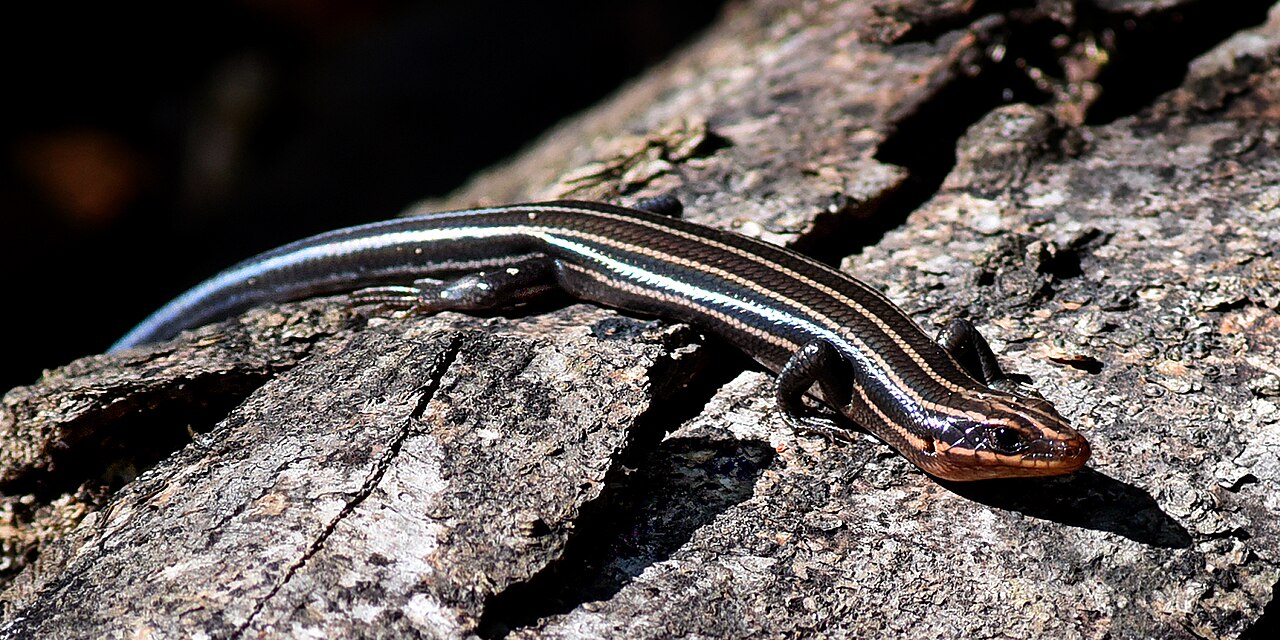
A black baby with five pale stripes and a blue tail may be a five-lined, broad-headed or southeastern five-lined skink (Plestiodon inexpectatus). Color alone cannot reliably distinguish these juveniles. The Savannah River Ecology Lab account of the five-lined skink describes the scale differences used for identification. Use location and clear photographs, without restraining the animal to inspect it.
| Species | Baby look | Birth | Where you meet it |
|---|---|---|---|
| Five-lined skink | Black, five pale stripes, blue tail | Eggs, guarded by female | Yards, woodpiles, porches |
| Broad-headed skink | Like a five-lined skink, larger head with age | Eggs | Southeastern woodlands, trees |
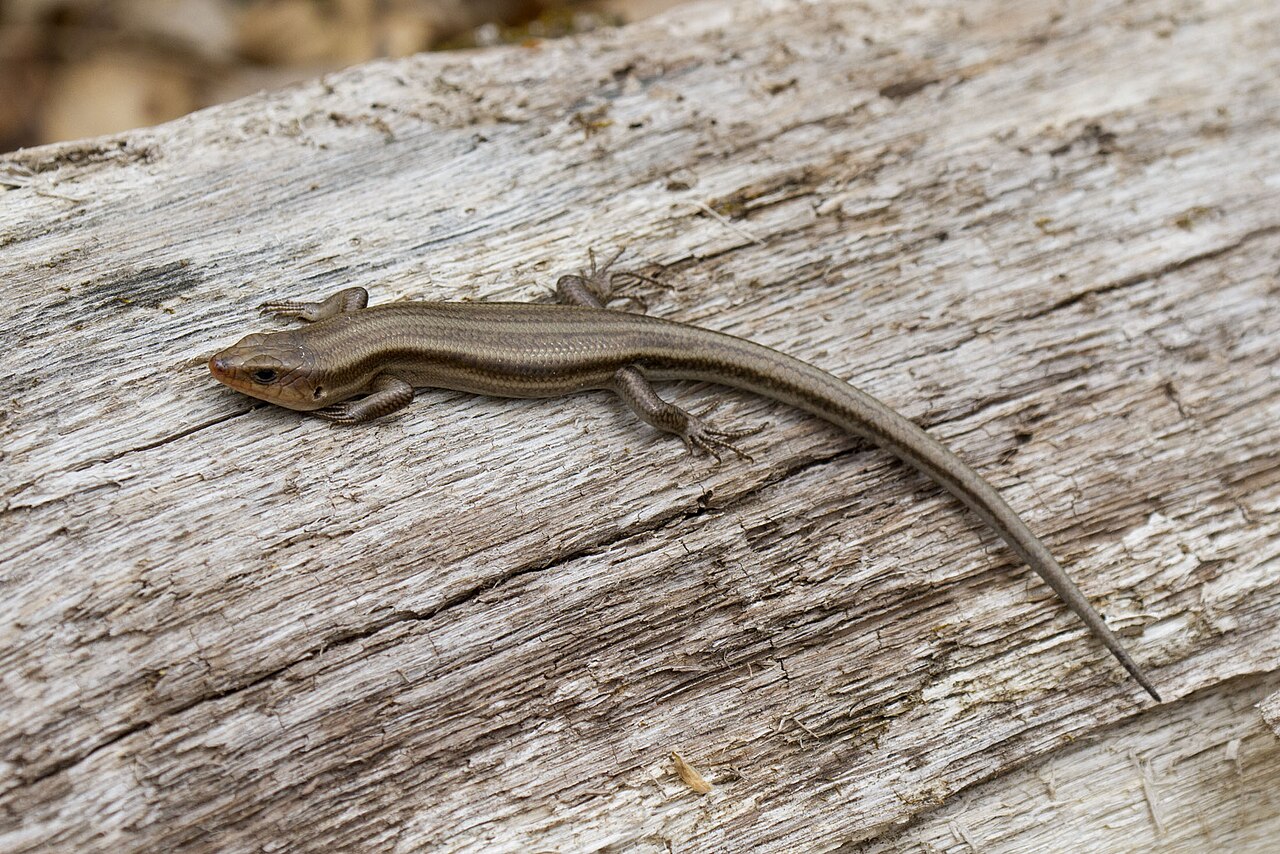
| Little brown skink | Bronze-brown, dark side stripe, tiny legs | Eggs | Leaf litter, gardens |
| Blue-tongued skink | Banded, stocky, blue tongue | Live young | Pet trade, from Australia |
| Rainbow skink | Slim, striped, glossy | Eggs | Pet trade, from Africa |
Blue tailed skinks include several species whose tails are especially vivid when young; some retain blue coloration as adults. Location, markings and scale details help identify them. Neither a tiny striped body nor a stocky banded body is enough on its own to establish the species.
Frequently Asked Questions
Does a skink bite hurt?
A small skink’s bite typically causes little pain, but a large blue-tongued skink can deliver a painful bite and break the skin. Skinks are not venomous. Wash any bite promptly with soap and running water, and seek medical advice for a deep wound or signs of infection.
How to keep a baby lizard alive?
For a pet baby skink, provide species-specific heating, UVB, humidity, hides, fresh shallow water and an appropriate diet. Insect-eating species need suitably small prey; blue-tongued babies also need plant foods. A healthy native wild baby should remain outdoors. If it is injured or may be an escaped pet, contact a wildlife rehabilitator or reptile rescue instead of releasing it.
Do skinks carry salmonella?
Yes, skinks and other reptiles can carry Salmonella on their skin and in their droppings without looking sick. Wash your hands with soap and water after touching a skink or its enclosure. Supervise children closely, and keep young children from handling reptiles at all.
Do skinks lose their tails?
Yes, many skinks can drop their tails when grabbed or attacked, and the detached tail may twitch to distract a predator. Never test this by pulling the tail. Regrowth takes time and varies with species and conditions; the replacement can differ in shape and color and contains cartilage rather than the original vertebrae.
What do baby skinks eat?
Small insect-eating baby skinks take appropriately sized feeder insects such as small crickets, roaches and fruit flies. As a rule of thumb, choose prey no wider than the gap between their eyes. Baby blue-tongued skinks need a mixed diet of animal foods and vegetables, with only a small amount of fruit. Match portions and calcium supplementation to the species and its care plan.
Sources
- CDC, Reptiles and Amphibians
- Savannah River Ecology Lab, Five-lined Skink (Plestiodon fasciatus)
- Animal Diversity Web, Plestiodon fasciatus
- Animal Diversity Web, Tiliqua scincoides