Snapping Turtle Spiritual Meaning: Signs and Safety
Symbolically, the snapping turtle stands for boundaries, patience and the right to protect yourself. That is the heart of snapping turtle spiritual meaning, and it comes straight from how the animal lives. The common snapping turtle (Chelydra serpentina) has a small belly plate and cannot hide inside its shell the way a box turtle does. It meets a threat face first, with a lunge and a hard bite, and then it goes back to waiting.
A sighting in your yard raises a second question right away, and that one needs a straight answer too. A snapping turtle on land is a defender, not a hunter of people. Give it room and it leaves on its own schedule. The symbol and the safety advice point the same way here. Respect the line by watching from a distance and leaving the turtle’s path clear.
Spiritually, a turtle stands for patience, protection and a steady life close to the earth. The snapping turtle adds an edge to that base. It points to firm boundaries, self-defense without cruelty and patience until the right moment. Seeing one is not bad luck. Keep your distance and let it pass.
What is the spiritual meaning of a snapping turtle?
The snapping turtle stands for boundaries that hold. Its shell covers the back, but its belly plate is small, so the animal cannot hide the way other turtles do. It protects itself with its jaws and its posture instead. The lesson is plain. Know where your line is and defend it without chasing anyone.
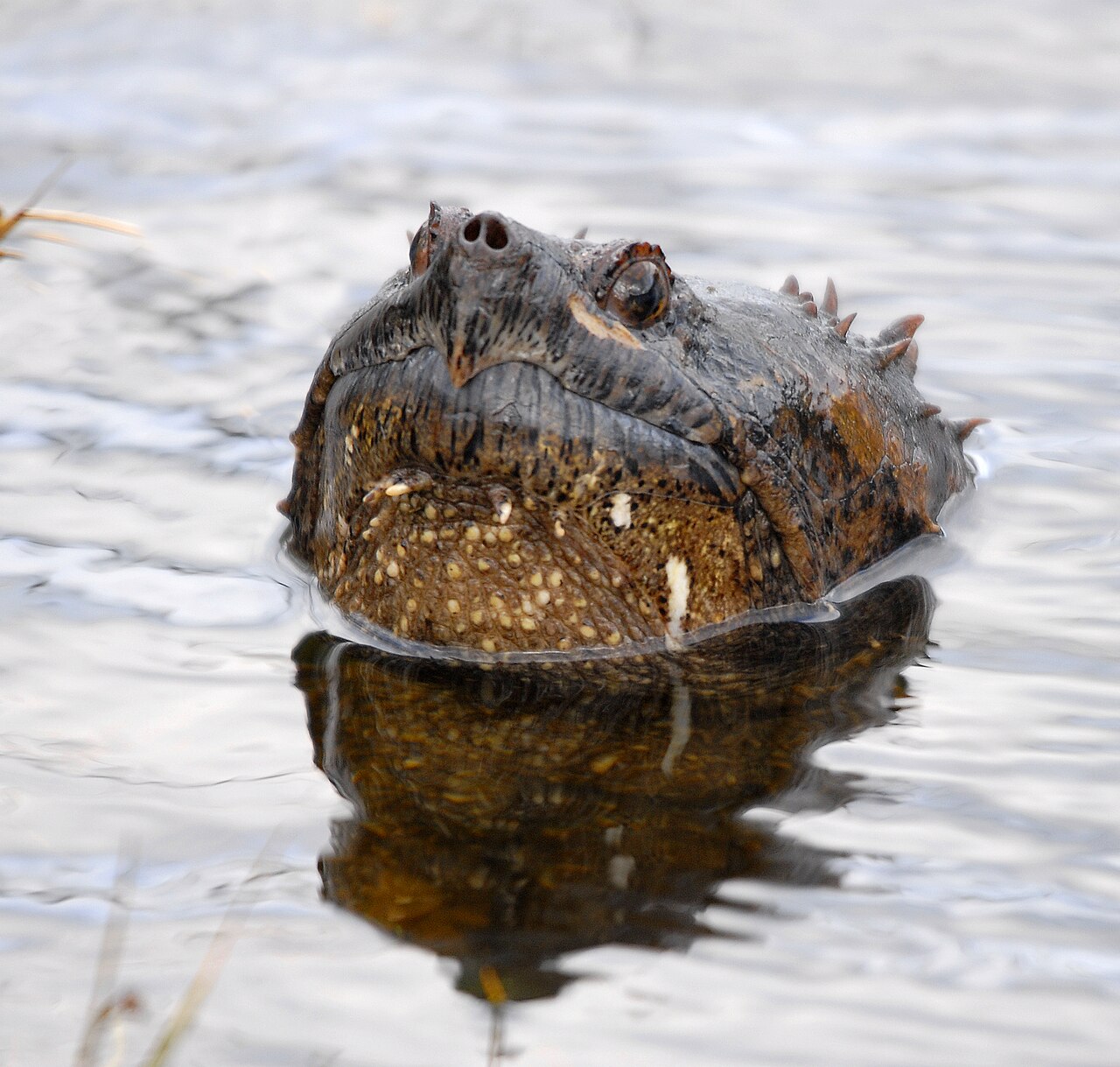
Patience is the second thread. A snapping turtle spends long stretches still in mud or shallow water, waiting for food to come within reach. It does not waste effort. That stillness points to a slower plan. Stop forcing a result and let the right moment arrive.
Self-protection is the third. The snapper’s defensive response points to protecting yourself without pursuing a fight. Its lesson is a clear boundary followed by space to retreat, rather than an argument that keeps escalating.
What does a snapping turtle encounter point to?
A snapping turtle encounter points to whatever you are guarding or waiting on right now. Its movement toward water, food or a nest site gives the encounter its context. The meaning comes from what its behavior mirrors in your own week.
Each behavior has its own reading. A turtle that hisses and opens its mouth is drawing a line, and it asks where your own line has gone soft. A turtle crossing a lawn or a road moves with purpose through open ground, a picture of a necessary trip that feels exposed. A turtle lying still in the shallows stands for timing, the discipline of not moving until the moment is right.
Keep the reading practical. If a project or relationship has you on the defensive, the snapper suggests one clear boundary rather than constant snapping. If you have been rushing, it suggests stillness. The animal goes back to its pond either way, and so should the thought once you have used it.
How is snapping turtle meaning different from general turtle symbolism?
General turtle symbolism centers on long life, protection, the earth and patience, while the snapping turtle adds firm boundaries and active defense.
Turtle symbolism explores broader meanings and named traditions, whose connection to a particular species needs to be established separately.
Turtle dream meaning includes the biting snapping turtle as an image of a boundary under strain.
Are snapping turtles good or bad, aggressive or dangerous?
Snapping turtles are neither good nor bad; the encounter points to boundaries and patience rather than misfortune. The practical danger is a bite within reach of the jaws. A cornered or handled snapper can defend itself with a strong bite that causes serious injury.
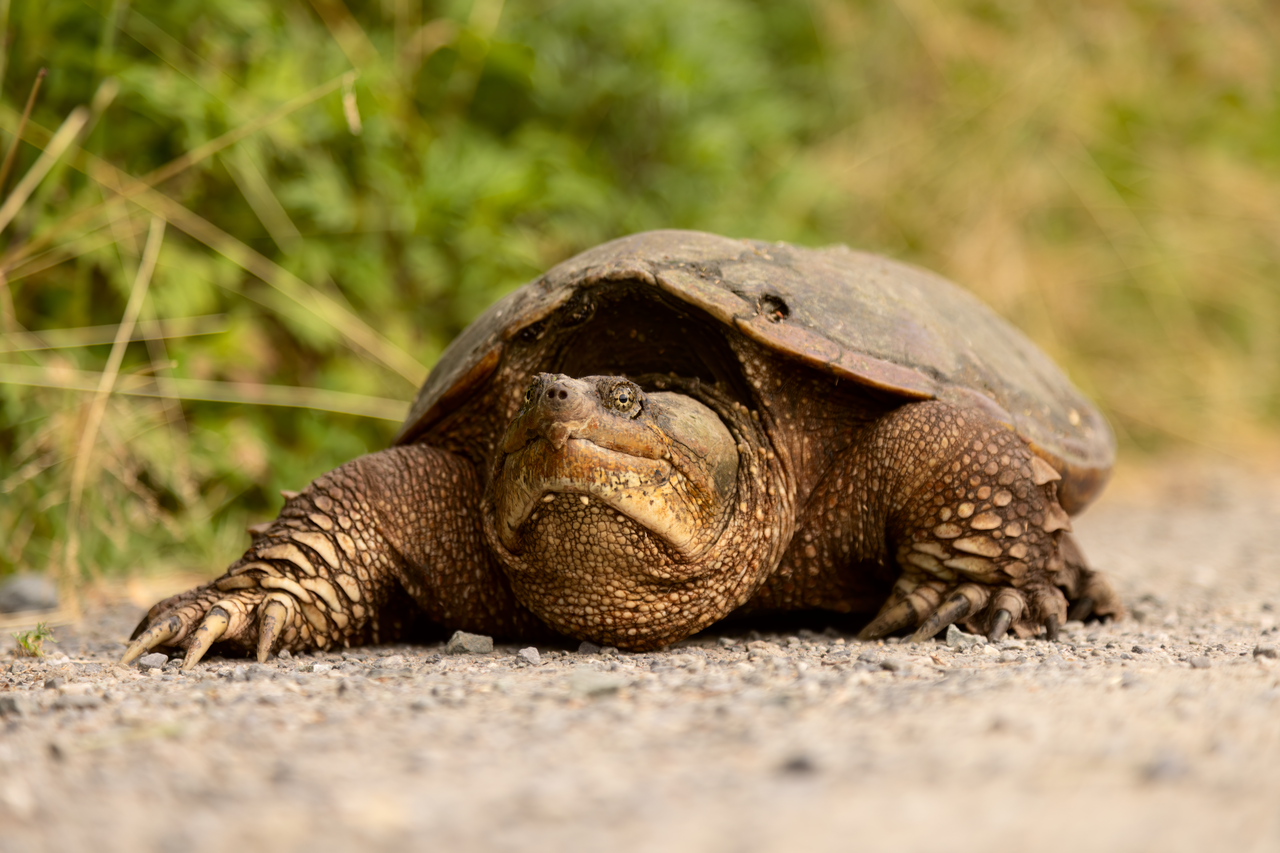
Their aggression is defense. Bites happen when a person walks up close, blocks the turtle’s path, pokes it, or tries to pick it up. The neck is long and fast and reaches farther back along the shell than most people expect, so grabbing the back edge of the shell is not safe either. Distance is the whole answer to bite risk.
| Encounter | What it points to | Safe response |
|---|---|---|
| Turtle crossing your yard | A path you should not block | Watch from a distance and let it pass |
| Turtle hissing with its mouth open | A boundary stated clearly | Step back slowly, no sudden moves |
| Female digging in soil or gravel | Investment in the future | Leave her alone until she finishes and goes |
| Turtle still in shallow water | Patience and timing | Swim or wade elsewhere |
| Turtle on a busy road | A risky but necessary crossing | Never lift it by the tail, call local wildlife help |
| Turtle in a dream | A boundary under strain | No action beyond reflection |
Why does a snapping turtle act differently on land and in water?
A snapping turtle on land is exposed and may stand its ground and strike defensively. In water it typically swims away from people or stays hidden. Its small belly plate offers limited protection underneath, so retreat into the shell does not provide the protection it does for a box turtle.
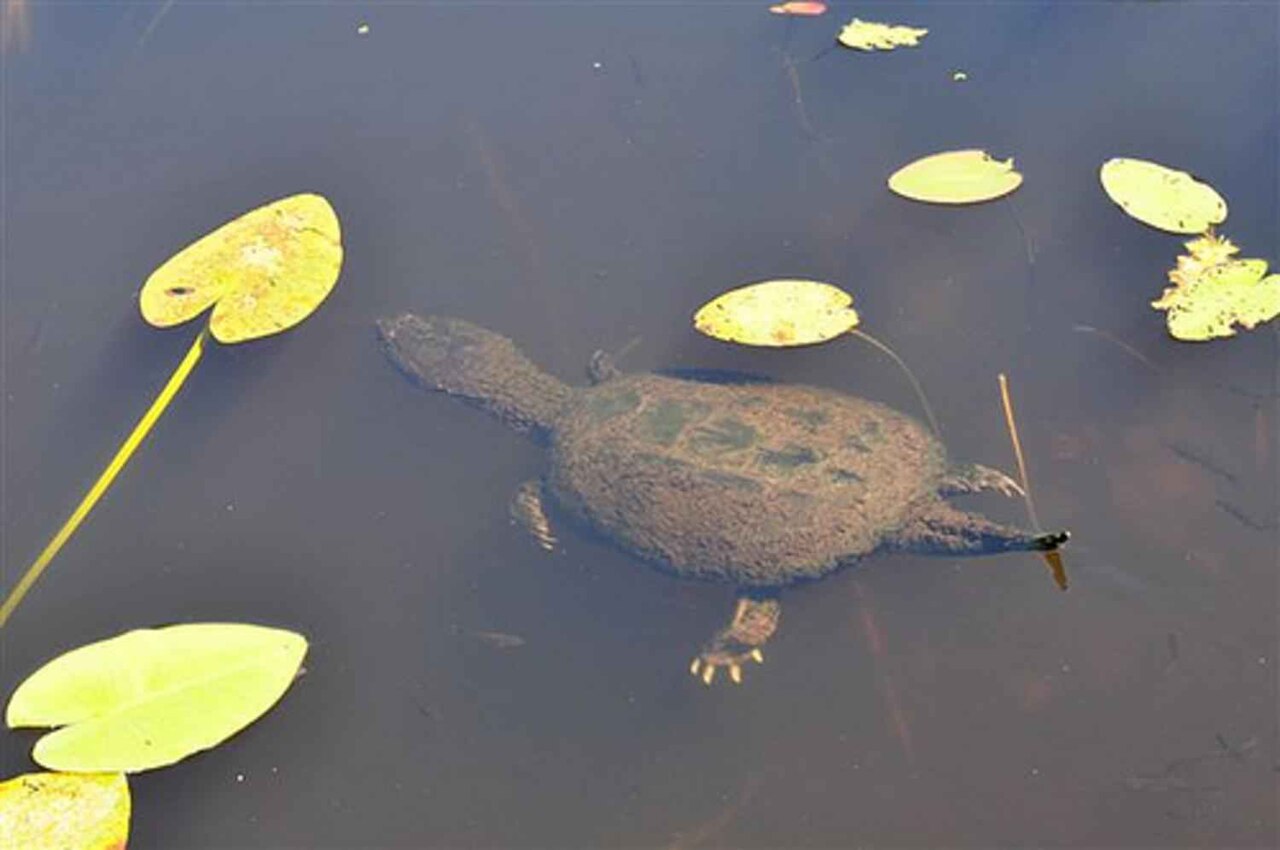
Swimming near a snapper is not a guarantee of a bite, and it is not a guarantee of safety. A bite in water is possible when a foot lands on a buried turtle or a hand reaches toward one. Keep to clear water where you see the bottom, and leave weedy, muddy edges alone.
Never feed a snapping turtle at a dock or beach. Food teaches it to come close to people, and that closeness raises the chance of a bite for the next swimmer. A turtle that keeps its distance is the safest turtle in the pond.
What should you do if you see a snapping turtle in your yard?
Keep your distance, bring children and pets inside, and leave the turtle a clear way out. A snapper in a yard is passing through, resting, or looking for a nest site. Give it a quiet hour and check again. Watch from a window rather than from arm’s reach.
Never lift a snapping turtle by the tail. That grip injures the tail and spine. Do not carry it to another pond or a different area either, because capture, keeping and moving wild turtles fall under state and local rules that differ from place to place. If the turtle is trapped, hurt, or in a dangerous spot, call your state wildlife agency or a licensed wildlife rehabilitator and let trained people handle it.
Wash your hands if you touch the turtle, its water, or anything it crawled across. The CDC turtle Salmonella outbreak notice warns that pet turtles of any size can carry Salmonella germs in their droppings even when they look healthy and clean. A wild turtle gets the same care. Keep hands away from your mouth and food until they are washed.
What should you do if a snapping turtle bites you?
If bleeding is heavy, apply firm pressure with a clean cloth first. Seek emergency care for a large or deep wound or bleeding that will not stop. For a minor wound, wash with soap and running water and cover it with a clean dressing. A bite can cause crushing injuries as well as cuts, so seek medical advice if the skin is broken and ask about tetanus protection.
A snapping turtle bite that breaks the skin on a hand or finger needs prompt medical assessment. Watch the wound over the following days. Spreading redness, swelling, warmth, pus or fever calls for urgent medical advice, even if the wound has already been treated.
First aid covers the first minutes and nothing more. It does not replace medical treatment for a serious bite. Reptile mouths and pond water both carry bacteria, so a clean look on day one proves little.
How can you tell if you have a snapping turtle?
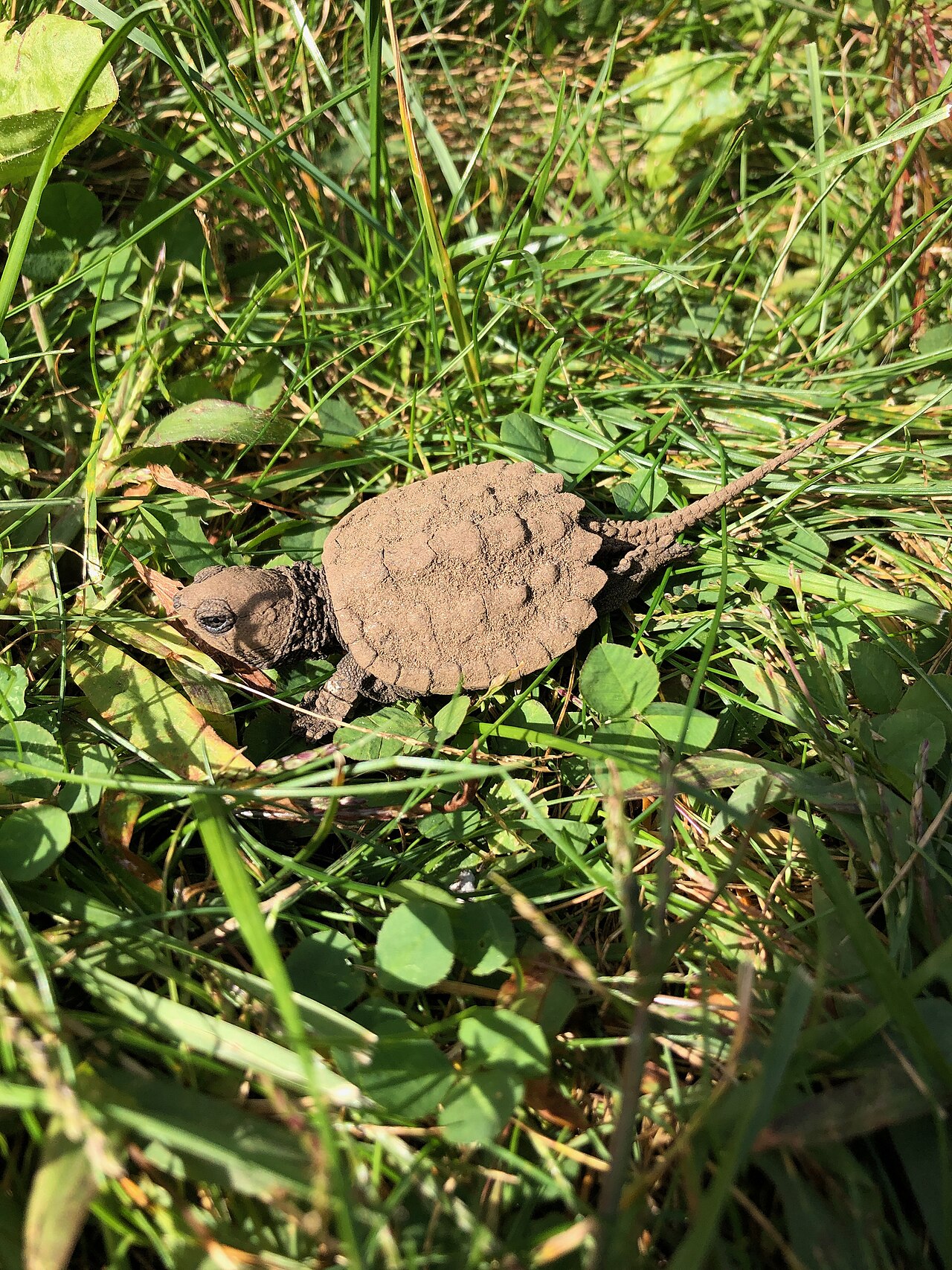
A common snapping turtle has a large head with a hooked jaw, a long tail with a saw-toothed ridge along the top, and a small, cross-shaped belly plate that leaves its legs exposed. Check these features together from a safe distance, using photographs if necessary. Do not pick up or turn over a turtle to inspect its underside.
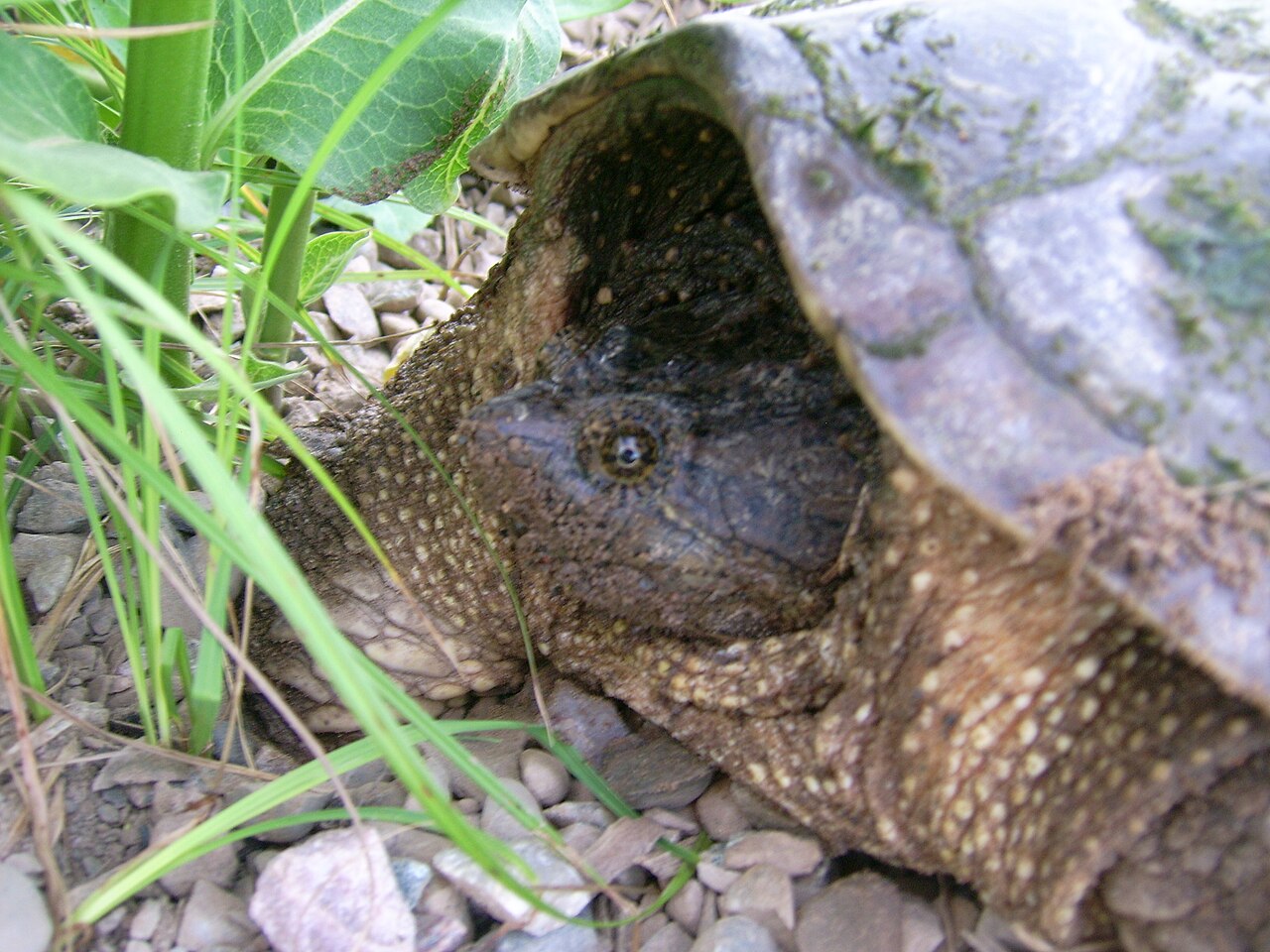
The common snapping turtle is the species most people in the US meet. Its shell is dark and rough, often coated in algae or mud, and the turtle looks too big for it. The Animal Diversity Web species account for Chelydra serpentina lists the full set of field marks and its range.
Defensive behavior alone does not identify a snapping turtle. Other turtles can bite when threatened, and a snapping turtle may remain still or retreat. Use the physical features rather than approaching it to provoke a response.
How do you tell a common snapping turtle from an alligator snapping turtle?
Look at the eyes and the location first. The alligator snapping turtle (Macrochelys temminckii) has eyes set on the sides of its head. Its range includes Gulf Coast drainages and extends north through the Mississippi River system into parts of the Midwest. The common snapper has eyes set higher on its head and a much wider range.
The shell ridges do not settle the question on their own. Alligator snappers carry three tall rows of ridges, but young common snappers have ridged shells too. Check the head shape, the eye position and the location together before you name the species.
Outside the alligator snapping turtle’s range, a wild snapper is more likely to be a common snapping turtle. Either species can deliver a serious bite, so keep your distance and do not handle it.
How rare is it to see a snapping turtle at your house?
No general sighting rate exists. The odds depend on whether you live inside the snapping turtle’s range and how close your house sits to a pond, creek, marsh or lake. A home near water in the eastern or central US sees them far more than a home in a dry suburb.
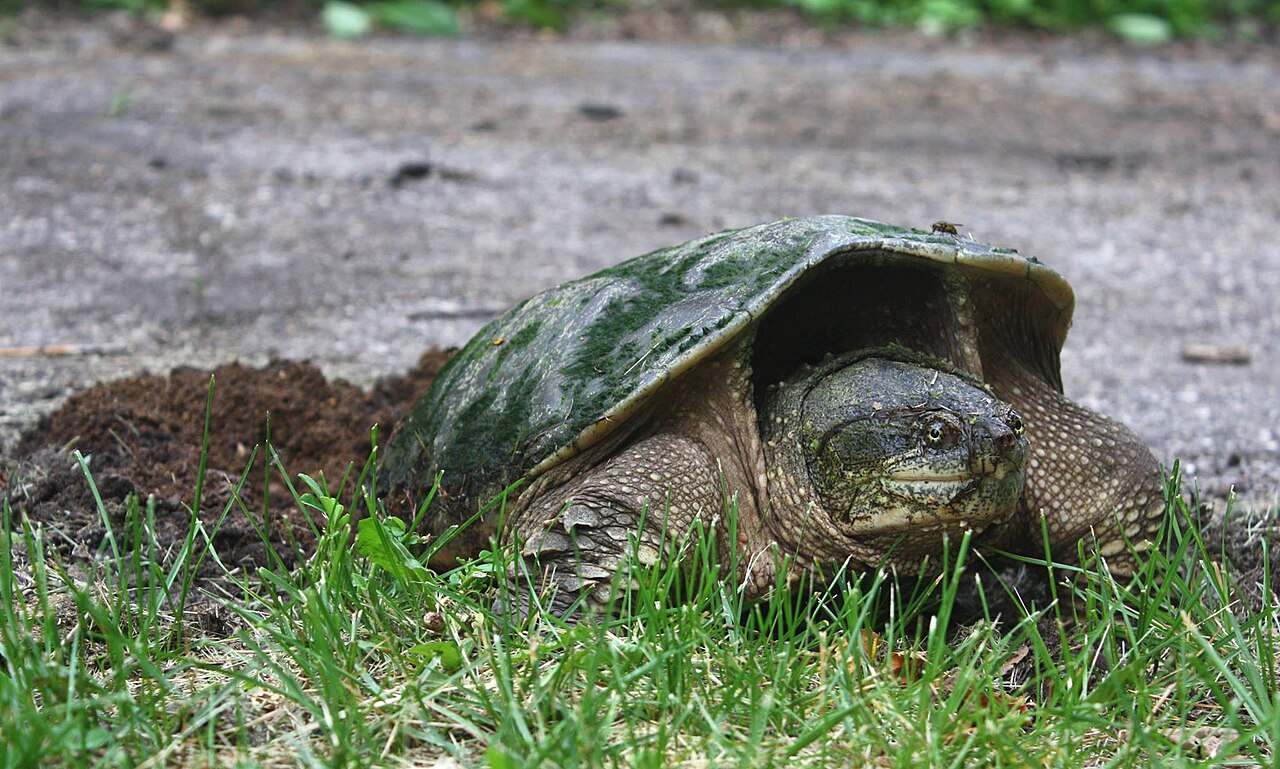
Season matters too. Females leave the water in late spring and early summer and walk overland to find loose or sandy soil for their eggs. A female in your garden does not prove a nest. She might be passing through toward a better site.
Baby snapping turtles typically hatch in late summer or fall and head toward water. A tiny dark turtle with a long tail may be a young snapper, but check its other features too. Leave a healthy hatchling a clear route in its direction of travel; contact a wildlife rehabilitator if it is injured or trapped.
Frequently Asked Questions
What does a turtle represent spiritually?
A turtle represents patience, steadiness and protection. Its slow pace stands for endurance, and its shell stands for a safe home carried everywhere. This broad reading belongs to turtles in general. Specific beliefs come from named traditions, and each one deserves to be read in its own source, not mixed together.
What is a turtle’s biggest enemy?
The biggest enemy changes with age. Raccoons and other predators dig up nests and eat the eggs, and hatchlings fall to birds, fish and mammals. For adult snapping turtles, road traffic is one of the most serious threats, especially when females cross roads to reach nesting sites.
Will a snapping turtle bite you if you are swimming?
No, not as a rule. A snapping turtle in water moves away from swimmers more than it confronts them. A bite stays possible if you step on one, reach toward it or corner it. Keep your distance, never touch or feed it, and swim where you see the bottom.
Is it bad luck to see a snapping turtle?
No. In the reading developed here, a snapping turtle encounter points to self-protection and patience rather than bad luck. Its defensive posture represents a boundary, while its stillness represents waiting for the right moment. Give the turtle room and let it continue on its way.
Can you get sick from touching a snapping turtle?
Yes. Touching a turtle or anything in its environment and then touching your mouth or food with unwashed hands can pass Salmonella germs. Symptoms usually start 6 hours to 6 days after swallowing the bacteria. Wash your hands thoroughly with soap and water after contact. Children younger than 5 should not handle turtles or touch their environments.
Do snapping turtles hiss?
Yes. A snapping turtle can hiss when disturbed on land. Treat the sound as a reason to give it more space. Step back and keep children and pets away rather than waiting close by for it to move.
Sources
- CDC, Salmonella Outbreak Linked to Pet Turtles
- Animal Diversity Web, Chelydra serpentina (Common Snapping Turtle)