White Buffalo Meaning: The Lakota Sacred Story, Luck and Rarity
Symbolically, a white buffalo stands for a sacred promise and the hope of renewal, and the white buffalo meaning comes from one specific people. It belongs to the Lakota and their account of White Buffalo Calf Woman, the holy woman who brought the sacred pipe. A white calf is rare enough that a single birth on a Wisconsin farm in 1994 drew visitors from across the country. They came to pray and leave offerings, not to sightsee.
The meaning is not a luck charm and not a private message for whoever happens to see the animal. It sits inside a living religion with keepers, ceremonies and obligations. The animal itself is an American bison with an unusual coat. Hold on to that difference between the animal and the story, and every other question about white buffalo gets easier to answer.
A white buffalo spiritually signals renewal and the return of a sacred teaching. It recalls the Lakota story of White Buffalo Calf Woman, who brought the sacred pipe and the rites of prayer. A sighting calls for respect and gratitude. It does not promise personal luck or carry a private message for the viewer.
| Question | Short answer | What the answer rests on |
|---|---|---|
| What it means | A sacred promise, renewal, prayer | The Lakota account of White Buffalo Calf Woman |
| Good luck? | Hope, not a guaranteed outcome | The teaching centers on duty, not personal gain |
| How rare? | Rare, with no reliable rate | No survey counts white calves across herds |
| Always albino? | No | A white coat has more than one genetic cause |
| Bison or buffalo? | American bison (Bison bison) | True buffalo live in Africa and Asia |
| Best known calf | Miracle, born 1994 | A farm near Janesville, Wisconsin |
What does a white buffalo mean spiritually?
A white buffalo means a sacred promise kept and a call to pray, not a forecast for the person who sees it. The animal is a bison with a pale coat. The meaning comes from the Lakota story attached to that coat. That story is a teaching about how people should live with each other and with the buffalo.
Three things get mixed together around a sighting. First comes the observation, a pale bison standing in a pasture or a park. Second comes the tradition, a specific Lakota account with its own keepers and ceremonies. Third comes the personal reading, the feeling a viewer carries home. Keep the three apart and the meaning stays clear.
A sighting does not hand anyone an individual mission. The story places the duty on the people as a whole, to keep the pipe, to pray and to treat one another well. If the animal moves you, that response is yours and it is real. It still does not turn the bison into a messenger with your name on it.
Sacred comes before lucky. A white calf points back to an old teaching rather than forward to a payout. The right response is closer to reverence than to excitement, the way a visitor lowers their voice in a church. That is the frame the Lakota themselves bring to these animals.
What does the white buffalo mean in Lakota tradition?
In Lakota tradition, the white buffalo is the sign of White Buffalo Calf Woman, the holy woman who brought the people the sacred pipe and the way to pray with it. Her Lakota name appears as Ptesan Win in many tellings. She came during a hard time when the people were hungry. Her arrival marks the beginning of their central ceremonies.
The account opens with two young men out scouting for game. They saw a beautiful woman in white walking toward them across the prairie. One of them wanted her with bad intent, and a cloud covered him and left only his bones. The other returned to camp as she instructed, and the people built a lodge to receive her.
She taught the people, gave them the pipe and then walked away. Tellings describe her rolling on the earth and changing color before she left as a buffalo, and they differ on the exact sequence. The white calf is the last form the people saw. For that reason a white calf born today recalls her visit and her teaching.
The meaning carries responsibility, not decoration. The pipe she brought is still kept by a designated keeper. Arvol Looking Horse is the 19th Generation Keeper of the Sacred White Buffalo Calf Pipe. He has treated white calf births as a call to prayer and to care for the earth. This is a Lakota account, and it does not stand in for the buffalo stories of other nations.
What did White Buffalo Calf Woman bring the Lakota?
White Buffalo Calf Woman brought the sacred pipe, the Chanunpa, and the teaching that ties prayer to it. The pipe joins the person praying to the earth, the buffalo and the powers above. It stays at the center of Lakota religious life today. The ceremonies that use it are not public spectacles.
In The Sacred Pipe, the account Black Elk gave to Joseph Epes Brown, she brings the pipe and teaches the first of seven rites. The remaining rites come to the people later through visions. Other Lakota tellings group the rites differently. All of them place the pipe and her instructions at the start.
She also left a promise. Her departure as a buffalo ties her return to the buffalo, and a white calf stands as a reminder of that promise. The reminder points to obligations the people already hold, not to a new revelation. A birth renews attention to teachings that never stopped.
Why does a white calf birth draw so much attention?
A white calf birth draws attention because it ties a living herd animal to the return of White Buffalo Calf Woman. The best known case is a female calf named Miracle, born in 1994 on the Heider family farm near Janesville, Wisconsin. Visitors arrived by the thousands. Many left prayer ties, feathers and tobacco on the fence.
The farm family kept the calf and opened the property to visitors. Lakota and other Plains spiritual leaders came to pray with her. The farm did not sell her. Miracle lived there until her death in 2004.
The attention follows the story, not the coat. A pale steer would draw no crowd. A pale bison calf does, because the Lakota account gives it a place and a purpose. The crowds at the Heider fence came for that account.
How rare is a white buffalo in the wild?
A white buffalo in the wild is rare, and no reliable figure says exactly how rare. The odds that circulate online name no population and no survey behind them. A real rate needs a counted herd, a counted number of calves and a clear definition of white. No such count exists across North America.
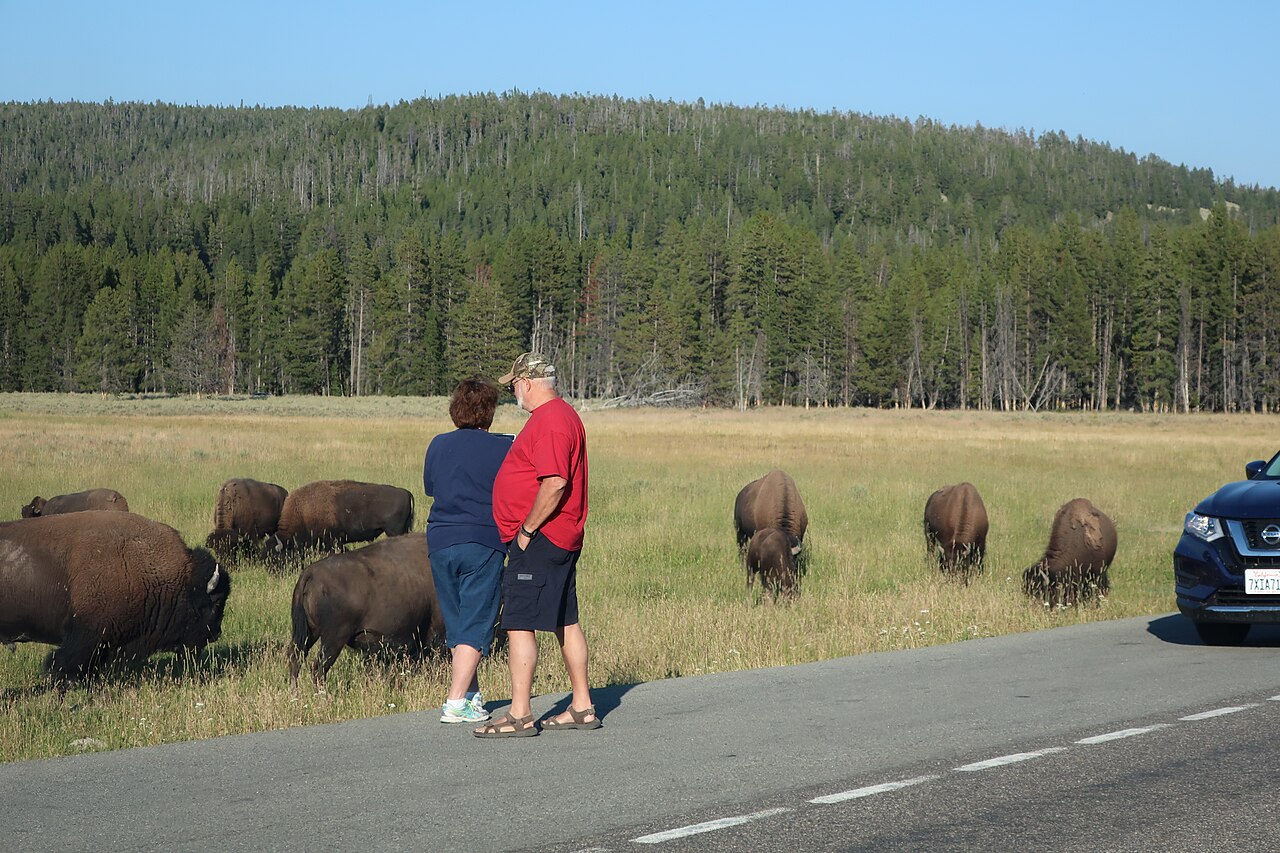
Wild and kept animals have to be separated. The best known white bison were born on ranches and private farms, where owners notice and report them. Free ranging herds are a different case. Yellowstone has held wild bison continuously since prehistoric times, and the National Park Service bison page describes that herd and its management.
In June 2024, visitors photographed a white calf in Yellowstone’s Lamar Valley. A report from a wild herd is unusual, and it drew wide coverage. Lakota leaders, Arvol Looking Horse among them, held a naming ceremony for the calf later that month. A sighting in a wild herd is a rare event, and it stays rare even without a number attached.
Is every white buffalo an albino?
No, a white buffalo is not always an albino. Albinism removes pigment completely and leaves pink or pale eyes. Leucism reduces pigment in the coat but leaves dark eyes. Both conditions produce a white or cream animal.
A third route runs through ancestry. Over the last two centuries, some ranch herds mixed bison with cattle, and a pale coat in such a herd can trace back to cattle genes. Yellowstone bison are among the few herds that show no evidence of cattle ancestry. Coat color alone tells you nothing about which route produced an animal.
Genetic testing is the only reliable way to tell whether cattle ancestry is involved. A white coat does not prove albinism, leucism or any particular lineage. The Lakota meaning does not depend on the cause. It attaches to the white calf itself.
Are white buffalo good luck?
No, white buffalo are not good luck charms, they are signs of hope tied to a sacred duty. Hope and predicted luck are different things. Hope asks you to act well. Predicted luck asks you to wait for a reward.
The Lakota meaning does not shrink into a luck formula. White Buffalo Calf Woman came with instructions, and the story punishes the man who treated her as something to take. A white calf recalls those instructions. Reading it as a lottery ticket misses the point of the story that gives it meaning.
No sighting guarantees that a personal wish comes true. If you see a white bison, gratitude fits better than a request. Say a prayer if that is your practice. Then leave the animal and the ceremony to the people who keep them.
What should you do after seeing a white buffalo?
After seeing a white buffalo, pause, give thanks and learn the story from Lakota voices. The moment asks for attention more than interpretation. Notice what the animal is doing and let it be. A bison that grazes calmly is the best outcome of any sighting.
If the animal lives on a ranch or farm, follow the owner’s rules. Some owners welcome visitors on set days. Others ask for privacy because crowds stress the herd. Respect for the animal includes respect for the people who feed it.
If a ceremony is announced, attend as a guest. Listen, follow the instructions of the hosts and skip photos unless they invite them. Lakota leaders decide what a specific calf means for their people. A visitor’s role is to witness, not to declare.
What does a bison symbolize spiritually?
A bison stands for strength and provision, because it once fed and clothed whole nations on the Great Plains. The animal is massive and steady. Those facts make it an easy picture for endurance. A brown bison carries that picture without any sacred story attached.
The bison is also a civic symbol. Congress named the American bison the national mammal of the United States in 2016. That status honors the animal’s recovery and its place in the country’s history.
A white bison needs separate context. The pale coat does not add extra strength to the general image. It points to the Lakota account, and that account stays distinct from a personal reading of the brown animal.
Is a white buffalo a bison or a true buffalo?
A white buffalo is a bison, specifically the American bison (Bison bison). In everyday American English the two words name the same animal. Zoologists keep them apart. The Department of the Interior’s bison facts note that bison live in North America and Europe, while buffalo live in Africa and Asia.
True buffalo include the water buffalo (Bubalus bubalis) of Asia and the African buffalo (Syncerus caffer). Neither has the bison’s shoulder hump or heavy beard. Neither has any part in the Lakota story. Confusing them leads to wrong pictures and wrong claims online.
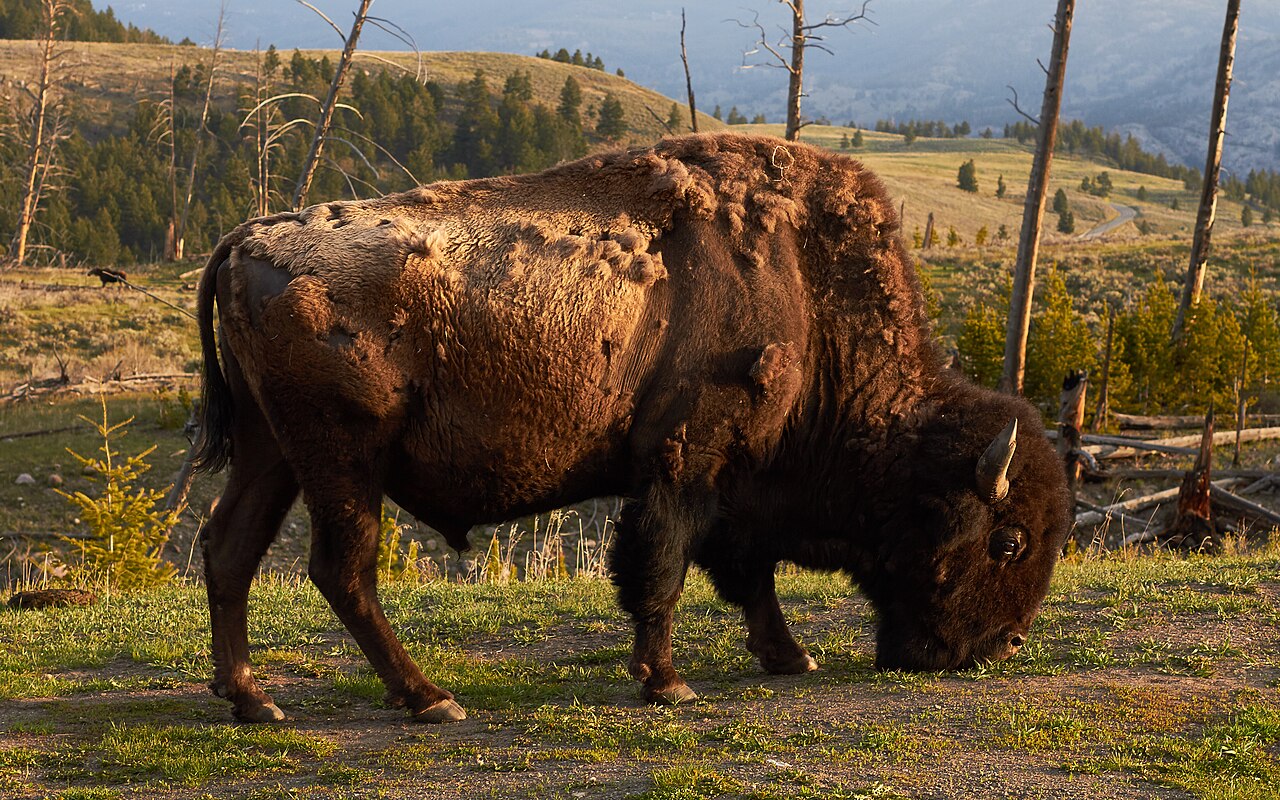
American bison are the largest land mammals in North America. Bulls weigh up to 2,000 lb (907 kg) and stand up to 6 ft (1.8 m) tall at the shoulder. The Smithsonian’s National Zoo profile covers their diet and herd life.
How does white buffalo symbolism compare with other animal signs?
White buffalo symbolism stands apart, because white animals share no common code of meaning. A white coat in one species and a white coat in another come with different stories. Each meaning depends on the tradition or text that carries it.
White horse symbolism draws on scripture and legend, from the rider in Revelation to royal steeds, and none of it transfers to the bison.
White cat symbolism grows out of household folklore and luck customs, a very different setting from a sacred pipe.
White butterfly symbolism centers on brief garden encounters rather than a ceremony with a named keeper.
Bumblebee symbolism turns on personal encounters in the yard, where the bee’s work is the whole message.
Cobra symbolism belongs to its own traditions in Asia and Africa. The Lakota account of the white buffalo stays its own story.
Frequently Asked Questions
What does white buffalo mean in slang?
White buffalo has no fixed slang meaning that holds across contexts. The phrase shows up as a nickname, a band name and a figure of speech for something rare, and each use means what its speaker intends. Check the song, film or conversation where you heard it before you settle on a meaning.
How much is a white buffalo worth?
Documented sale gives a reliable price for a white buffalo. Owners of famous calves, including the Heider family with Miracle, kept the animals rather than selling them. The sacred meaning is not a basis for a dollar value. Any price you see quoted without a dated sale record is a guess.
What is a group of buffalo called?
A group of buffalo is called a herd. The word covers American bison as well as true buffalo in Africa and Asia. When Americans say white buffalo, they mean a white American bison, so a herd that holds one is a bison herd with a single pale calf among brown animals.
What is a female buffalo called?
A female buffalo is called a cow, a male is a bull and a young animal is a calf. These terms match cattle vocabulary, but they do not make the bison a domestic cow. Miracle, the famous Wisconsin calf, was a female, so she grew from a calf into a cow.
What is a gathering of squirrels called?
A gathering of squirrels is called a scurry. The word fits the way squirrels dash around a yard. It is a collective noun from English word lore and has nothing to do with bison or the Lakota meaning of a white buffalo. It shows up in searches next to herd terms.
Does a white buffalo stay white its whole life?
No, a white buffalo does not always stay white. Miracle, born white in 1994, darkened over the following years and passed through shades of brown and red. The Lakota account likewise has White Buffalo Calf Woman change color before she leaves. A truly albino animal keeps its pale coat for life.
Sources
- National Park Service, Yellowstone Bison
- U.S. Department of the Interior, 15 Facts About Our National Mammal, the American Bison
- Smithsonian’s National Zoo, American Bison