Female Rose-breasted Grosbeak: Identification Guide
A female rose-breasted grosbeak looks like a large, streaky brown finch or sparrow, with a bold white eyebrow, a heavily streaked breast, and a very large, pale bill. She looks nothing like the black-and-white male with his rose-red breast, which often surprises people. This guide covers how to identify a female rose-breasted grosbeak, how she differs from the male, what she looks like, and where to see her.
| Feature | Female Rose-breasted Grosbeak |
|---|---|
| Bill | Very large, pale, conical |
| Eyebrow | Bold white stripe |
| Crown | Dark with pale central stripe |
| Underparts | Whitish, heavy brown streaks |
| Wing linings | Yellowish to buff |
| Overall | Large, brown, sparrow-like |
How to Identify a Female Rose-breasted Grosbeak
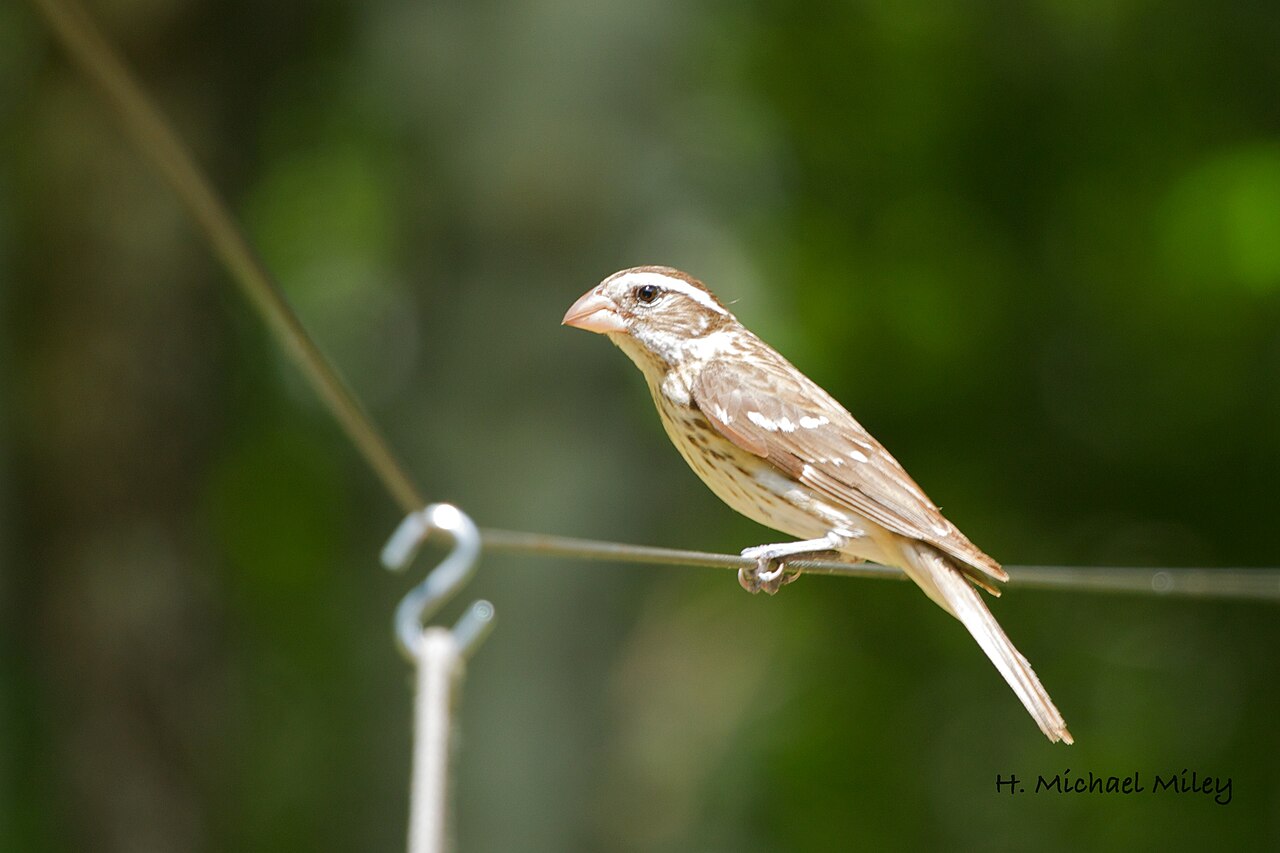
Identifying a female rose-breasted grosbeak starts with her large size, bold head pattern, and massive bill. Unlike the striking black-and-white male with his triangle of rose-red on the breast, the female is brown and streaky, looking much like an oversized sparrow or finch. The key features are her strong face pattern, with a broad white eyebrow stripe over the eye, a dark crown with a pale stripe down the center, and a dark cheek, giving her a boldly striped head. Her underparts are whitish with heavy brown streaking across the breast and sides, and she has a very large, thick, pale conical bill, well suited to cracking seeds. In flight or at close range, her wing linings show a yellowish or buffy wash. She is a chunky, big-headed bird, clearly larger than a sparrow. This combination of bold head stripes, heavy streaking, and a massive bill identifies her, part of the wider group covered in our guide to types of grosbeaks.
Female vs Male Rose-breasted Grosbeak
The difference between a female and male rose-breasted grosbeak is dramatic, more so than in most birds. The male is boldly patterned in black and white, with a black head and back, white underparts, and a brilliant triangle of rose-red across the chest, making him unmistakable. The female looks completely different, being brown and heavily streaked like a large sparrow, with a bold white eyebrow, striped crown, and a big pale bill, and lacking any red. Because the two look so unalike, people often do not realize they are the same species, and a female at a feeder may be misidentified as a sparrow or finch. Both sexes share the very large, seed-cracking bill and chunky shape, and both give a sweet, robin-like song. The male’s rosy wing linings are replaced by yellowish ones in the female. Learning that this streaky brown bird is the female grosbeak is a satisfying piece of knowledge, as explored in our guide to the female cardinal.
What Does a Female Rose-breasted Grosbeak Look Like?
A female rose-breasted grosbeak is a large, sturdy, brown songbird with a strongly patterned head and an oversized bill. She is brown above and whitish below, with bold, dark brown streaks covering her breast and sides. Her head is her most distinctive feature, showing a broad creamy-white eyebrow stripe, a dark crown split by a pale central stripe, and a dark cheek, which together create a boldly striped face. Her bill is very large, thick, and pale, an ideal seed-cracking tool that gives grosbeaks their name, since grosbeak means large-beaked. Her wings are brown with white markings, and the undersides of her wings show a yellowish to buff wash, unlike the rosy linings of the male. She is clearly bigger and heavier-billed than a sparrow, with a chunky, big-headed look. This handsome, boldly marked brown bird is a rewarding one to identify correctly, as explored in our guide to the female purple finch.
Where to See Female Rose-breasted Grosbeaks
Female rose-breasted grosbeaks can be found across much of eastern and central North America during the breeding season, in a variety of wooded habitats. Rose-breasted grosbeaks breed in deciduous and mixed forests, woodland edges, and second-growth woods across the northeastern and north-central United States and much of Canada, and they migrate to the tropics for winter. During spring and summer, a female may be seen foraging in trees and shrubs for seeds, insects, and fruit, and during migration they often visit backyard feeders, especially those offering sunflower seed. Spring migration is a wonderful time to see them, as they move north and stop at feeders, and a streaky brown female may appear alongside a boldly marked male. They are present in North America mainly from spring through fall, wintering farther south. Because they readily visit feeders during migration, female rose-breasted grosbeaks are often seen in yards in spring, as detailed in our guide to the best bird seed.
Female Rose-breasted Grosbeak Behavior
The female rose-breasted grosbeak shares some remarkable behaviors that make her especially interesting. According to the Cornell Lab of Ornithology, in rose-breasted grosbeaks both the male and the female sing, and the male takes an unusually large role in incubating the eggs. This means a female grosbeak may be heard giving the species’ sweet, rich, robin-like song, and her mate shares nesting duties to a degree uncommon among songbirds, sometimes even singing quietly while on the nest. A female uses her powerful bill to crack seeds and also gathers insects and fruit, and she builds a loose, open cup nest in a shrub or tree. During migration, females travel with males to and from the tropics, and they may pause at feeders along the way. Because both sexes sing and share parenting, the rose-breasted grosbeak offers a lovely example of cooperation, making the female a rewarding bird to watch, as explored in our guide to the female cardinal.
Telling Her From Similar Birds
Female rose-breasted grosbeaks are involved in a few identification puzzles worth knowing. The most common confusion is with large sparrows and with the female purple finch, since all are brown and streaky, but the grosbeak’s much larger size and massive pale bill set her apart at once. In the West, the very similar female black-headed grosbeak overlaps in places, and it tends to be warmer buff below with less heavy streaking, so range and the amount of streaking help separate them. Young male rose-breasted grosbeaks in their first fall can also resemble females, being brown and streaky, though they often show a wash of buff or pink on the breast and rosy wing linings begin to appear. Focusing on the huge bill, the bold white eyebrow, and the striped crown reliably points to a rose-breasted grosbeak. Mastering these distinctions is a satisfying skill, as explored in our guide to types of sparrows.
Appreciating Female Rose-breasted Grosbeaks
Female rose-breasted grosbeaks are a rewarding bird to appreciate, both for the identification challenge they present and for their behavior. Learning to recognize a female by her bold head stripes, heavy streaking, and massive pale bill, and to see past her sparrow-like looks to realize she is the same species as the striking male, is a satisfying piece of birding knowledge. Watching a female visit a feeder during spring migration, perhaps alongside a rose-breasted male, is a seasonal treat, and hearing her sweet, robin-like song is a delight. Because both sexes sing and share nesting duties, the female offers a lovely example of cooperation in the bird world. Taking the time to study a female rose-breasted grosbeak and appreciate her subtle beauty and her surprising difference from the male makes birding more engaging and connects you to the wider world of grosbeaks.
Frequently Asked Questions
How can you tell if a rose-breasted grosbeak is female?
A female rose-breasted grosbeak is brown and streaky like a large sparrow, with a bold white eyebrow, a striped crown, heavy breast streaks, and a very large pale bill.
Why does the female rose-breasted grosbeak look so different from the male?
The male is black and white with a rose-red breast, while the female is brown and streaky. The two look so different that people often do not realize they are the same species.
What does a female rose-breasted grosbeak look like?
She is a large brown bird with a bold white eyebrow, a dark striped crown, heavy brown streaks on whitish underparts, yellowish wing linings, and a very large pale bill.
Is a female rose-breasted grosbeak a sparrow?
No, though she looks like a large sparrow. Her chunky size and very large, pale seed-cracking bill set her apart from any true sparrow. She is a grosbeak, not a sparrow.
What is the difference between a female rose-breasted grosbeak and a female purple finch?
The grosbeak is larger with a much bigger, paler bill and a chunkier shape, while the female purple finch is smaller with a more slender bill. Both have bold face patterns.
When do rose-breasted grosbeaks visit feeders?
Rose-breasted grosbeaks visit feeders mainly during spring and fall migration, when they stop to feed on sunflower seed. They breed in northern woods and winter in the tropics.
Where can you see a female rose-breasted grosbeak?
Female rose-breasted grosbeaks live in deciduous and mixed forests and woodland edges, and they visit backyard feeders during migration, often alongside males.