What Do Koalas Eat?
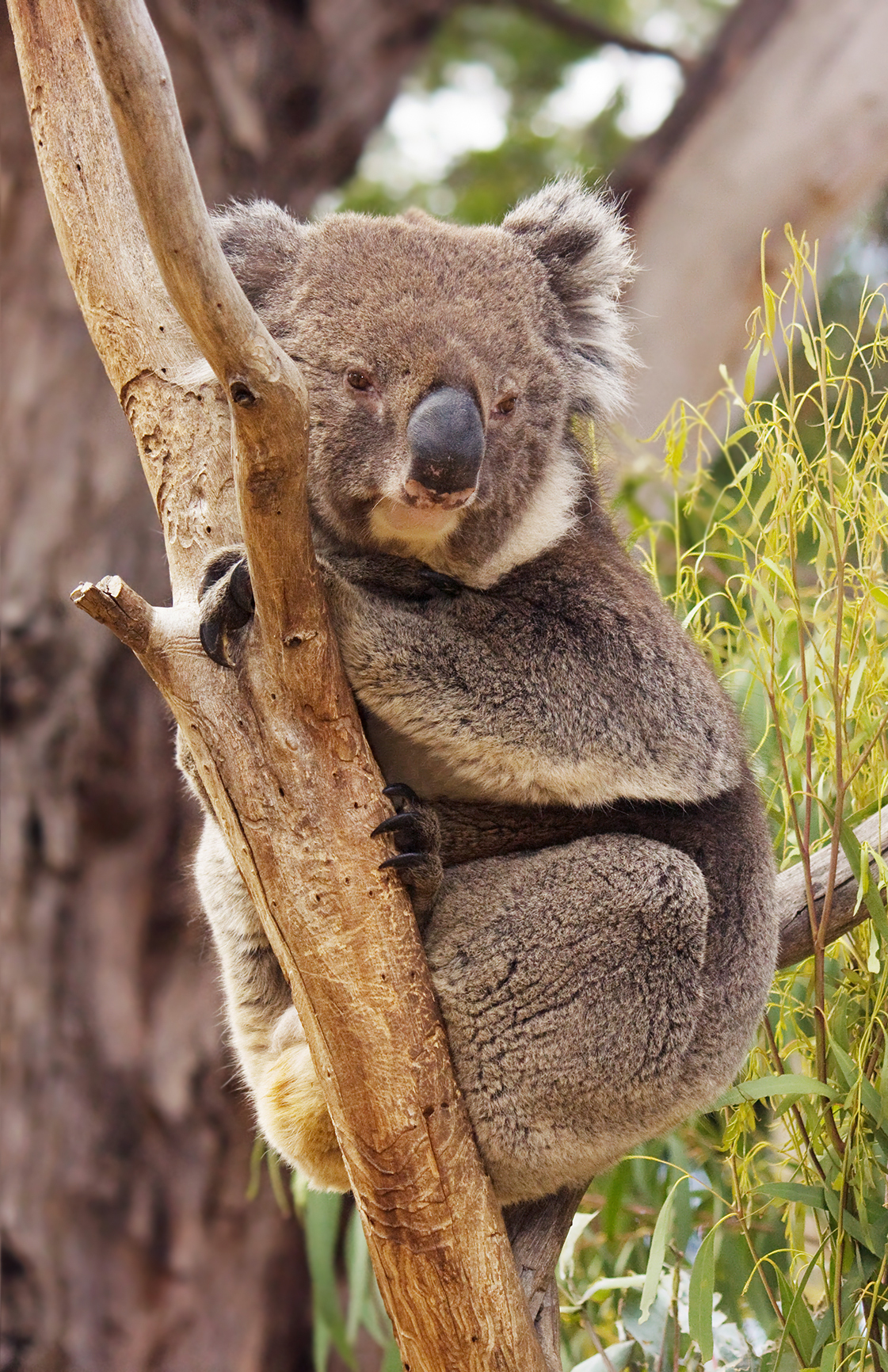
Koalas eat almost nothing but eucalyptus leaves, and that single fact explains nearly everything strange about how they live. An adult koala works through 500 grams to a kilogram of leaves a day, picking through only a fraction of the 700 plus eucalyptus species available to find the ones that are safe and nutritious enough to bother with. The leaves are low in calories and mildly toxic to most other animals, which is exactly why koalas evolved a digestive system built for almost nothing else. Everything from their 18 hour naps to their famously picky palates traces back to this one narrow diet.
Below is a breakdown of what koalas actually eat in the wild, how their bodies process a food that would poison most mammals, what joeys eat before graduating to leaves, and whether koalas ever drink water at all. Quick facts appear in the table below, with the full detail in each section that follows.
| Primary food | Eucalyptus leaves, roughly 30 to 50 preferred species out of 700 plus |
| Daily intake | 500 g to 1 kg of leaves per adult koala |
| Water source | Mostly moisture inside the leaves themselves |
| Native range | Eastern and southern Australia |
| Classification | Marsupial, not a bear despite the nickname |
| Joey food progression | Milk, then pap (a soft maternal secretion), then leaves |
| Daily sleep | 18 to 20 hours, mostly to conserve energy on a low calorie diet |
What Koalas Eat in the Wild
In the wild, a koala’s diet is built almost entirely around the genus Eucalyptus, a group of tough, fibrous, oil laden leaves that most mammals cannot digest at all. Koalas spend the bulk of their waking hours doing one of two things: sitting quietly to digest, or reaching for another branch. They rarely descend to the ground except to move between trees, and they show a strong preference for mature trees with dense, healthy canopies over young or stressed ones.
Occasionally a koala will nibble on a related plant such as wattle or tea tree, but these moments are rare and usually brief. The leaves themselves are high in fiber and low in easily accessible energy, so koalas rely on a long, specialized gut chamber called the cecum to ferment plant material with the help of bacteria. That fermentation process is slow, which is one reason koalas move so little compared to other mammals their size.
Because eucalyptus offers so little in the way of quick calories, koalas cannot afford to waste energy on activities that do not directly help them survive. Feeding sessions are typically slow and deliberate, often happening at night or in the early morning when temperatures are cooler and leaves hold more moisture.
Why Eucalyptus Leaves Are Toxic to Most Animals
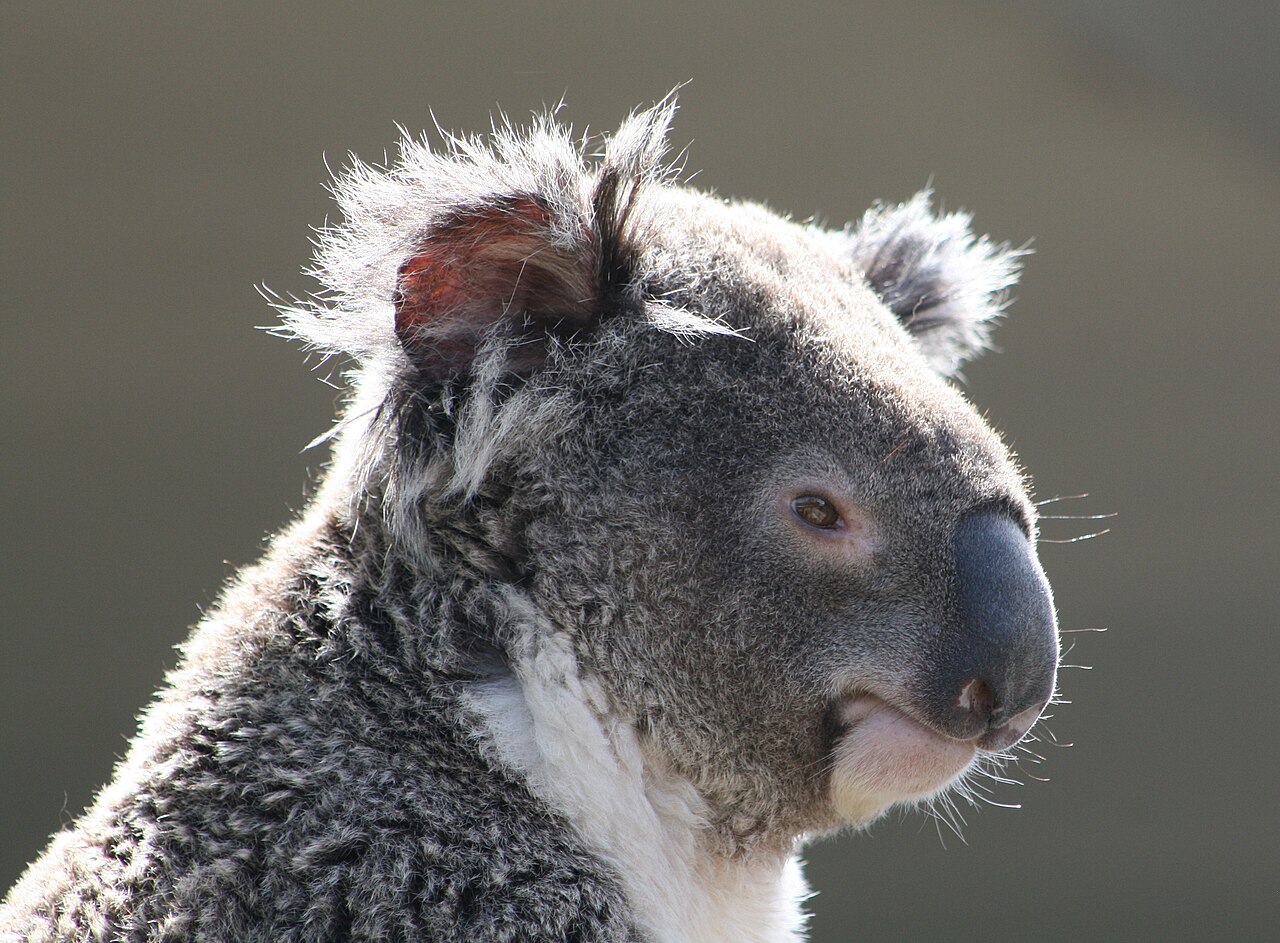
Eucalyptus trees defend themselves chemically. Their leaves contain terpenes, phenolic compounds, and in some species cyanogenic compounds that make the foliage bitter, difficult to digest, and outright dangerous for most herbivores. This chemical defense is a large part of why so few animals compete with koalas for the same food source, unlike a low effort generalist such as a lizard, whose much simpler feeding habits are covered in our guide to what lizards eat.
Koalas get around this thanks to an unusually capable liver. Specialized enzymes, including a well developed set of cytochrome P450 enzymes, break down many of the toxic compounds before they can build up to dangerous levels in the bloodstream. This detoxification system is more developed in koalas than in almost any other mammal that has been studied.
The gut itself does additional work. The koala cecum is proportionally one of the longest of any mammal, and the bacteria living inside it help neutralize remaining toxins while extracting whatever nutrients the leaves do contain. Together, the liver and the gut turn a meal that would sicken most animals into a survivable, if unglamorous, food source.
How Koalas Choose Which Leaves to Eat
Not all eucalyptus leaves are equal in a koala’s eyes, or rather in its nose. Koalas rely heavily on smell to judge a leaf’s nutrient content against its toxin load before taking a single bite, and they are remarkably selective for an animal often assumed to eat whatever is in front of it.
Younger leaves tend to carry more nitrogen, which koalas need, but they also often carry higher concentrations of defensive chemicals. Older leaves are safer but less nutritious. Individual koalas learn to balance this trade off, and their preferences can vary tree by tree, since soil conditions and genetics create different chemical profiles even within the same eucalyptus species.
This selectivity has a real world consequence for wildlife management. Koalas relocated to a new area sometimes struggle if the local eucalyptus population has an unfamiliar chemical makeup, even when the species name on the tree is one the koala has eaten before elsewhere.
Do Koalas Drink Water?
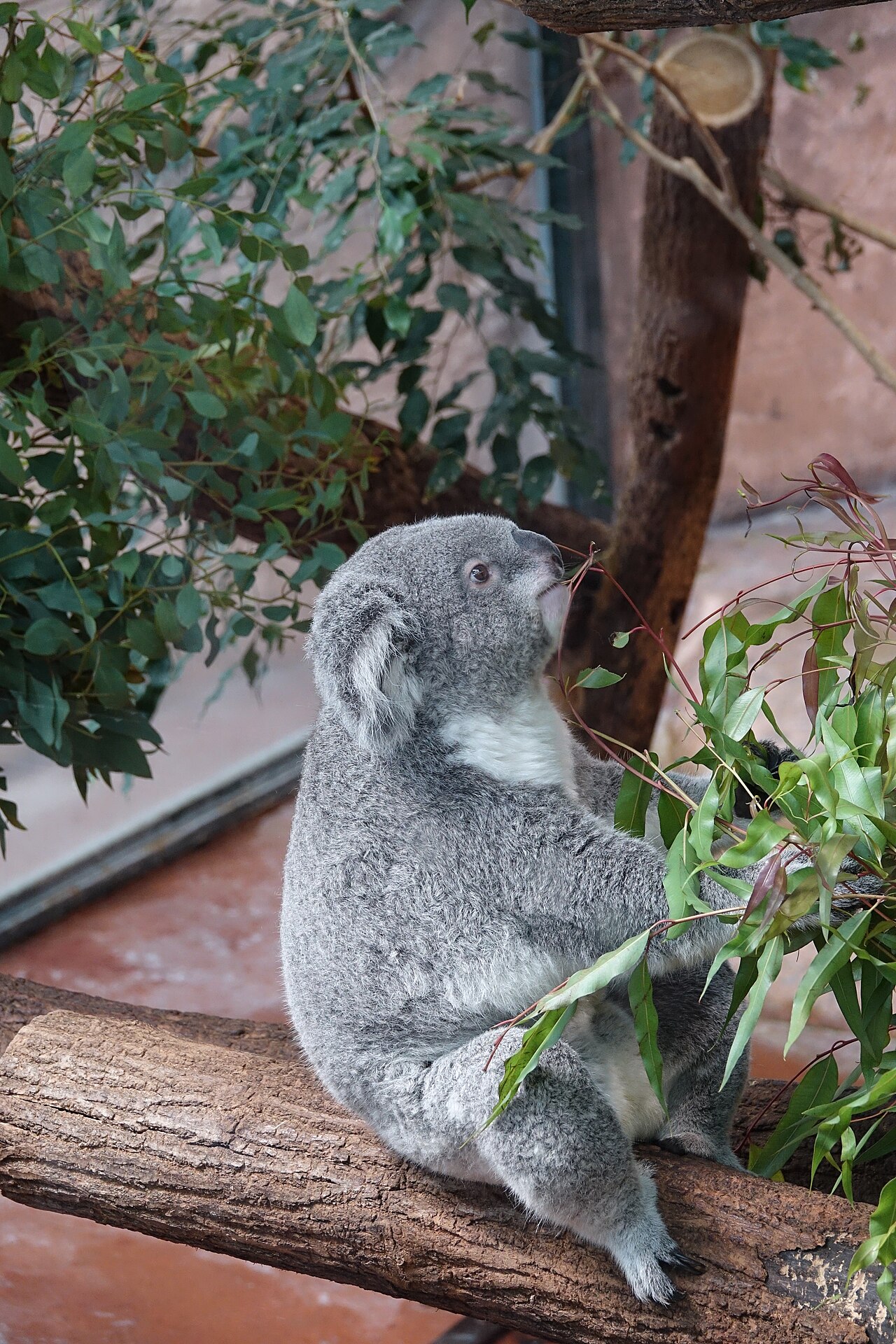
Koalas get the overwhelming majority of their hydration from the moisture inside eucalyptus leaves rather than from drinking, a strategy that looks unusual next to a fully aquatic mammal like a dolphin, whose very different water relationship is covered in our guide to what dolphins eat. Under normal conditions, a healthy koala in a leafy tree may go long stretches without ever visiting a water source, since the leaves themselves supply what it needs.
That changes during extreme heat or drought. Wildlife carers and researchers in Australia have documented koalas coming down from trees during severe heatwaves to drink from creeks, puddles, or even water offered by people, something that almost never happens in milder weather. These events tend to make headlines precisely because they are so unusual for the species.
Zoos and wildlife rehabilitation centers still provide water access for koalas in their care, since captive diets and climate control do not perfectly replicate wild conditions. In practice, though, a koala’s day to day hydration comes from its meals, not a water bowl.
What Baby Koalas Eat
Koala joeys are born tiny, blind, and only partly developed, and they crawl unaided into their mother’s pouch within minutes of birth. For roughly the first six months, milk is the joey’s only food, delivered inside the safety of the pouch.
As the joey nears the point of eating solid leaves, the mother produces a substance called pap, a soft, specialized form of feces that is richer in bacteria than her normal droppings. The joey eats this pap directly from her, and in doing so it picks up the specific gut bacteria it will need to break down eucalyptus later in life. Without this step, a young koala’s digestive system would not be ready for its adult diet.
Over the following months the joey gradually shifts from milk and pap toward chewed eucalyptus leaves, usually completing the transition somewhere between six months and a year of age. By the time it is fully weaned, its gut microbiome has essentially been handed down from its mother.
How Much Do Koalas Eat Each Day
An adult koala typically eats somewhere between 500 grams and a full kilogram of eucalyptus leaves daily, though the exact amount shifts with body size, season, and the energy density of the leaves available. Larger males generally need more than smaller females. That may sound like a lot until it is set against a true bulk feeder like an elephant, whose staggering daily intake is covered in our guide to what elephants eat.
Because that intake delivers relatively few usable calories, koalas compensate with extreme energy conservation rather than extreme eating. Sleeping 18 to 20 hours a day is not laziness so much as a direct metabolic strategy, and their resting metabolic rate is notably lower than that of similarly sized mammals with richer diets.
This slow, low energy lifestyle is common among specialist leaf eaters more broadly, but koalas take it further than almost any other mammal, largely because their single food source is both abundant and metabolically stingy at the same time.
Do Koalas Eat Anything Besides Eucalyptus
True departures from eucalyptus are uncommon and usually minor. Wildlife observers occasionally note koalas browsing briefly on related plants such as wattle, or nibbling bark, especially in captivity or during periods of stress, but these are exceptions rather than a meaningful part of the diet. That narrow habit looks even more extreme next to an actual bear’s diet, which despite the koala’s nickname is far broader and covered separately in our guide to what bears eat.
What can look like variety is often just variety within eucalyptus itself. Since koalas may sample dozens of different eucalyptus species across their range, from river red gum to manna gum, the diet can appear more varied than it truly is while remaining, in essence, a single family of plants.
Reports of koalas eating meaningful amounts of anything outside the eucalyptus family should generally be treated as unusual behavior tied to illness, stress, or captivity, rather than typical wild feeding.
Koala Diets Compared to Other Marsupials
Koalas sit at the extreme specialist end of the marsupial spectrum, built around a single narrow food source. Many other marsupials take the opposite approach. American opossums, for example, are generalist omnivores that will eat insects, fruit, small animals, and carrion depending on what is available, a strategy covered in more detail in our guide to baby possum development.
That contrast highlights two very different survival strategies. A generalist diet like a possum’s offers flexibility when food is scarce, while a highly specialized diet like a koala’s offers a reliable, low competition food source as long as that one food stays available. Readers curious about the messier side of marsupial digestion, including why some species eat their own droppings for nutrition, may also want our piece on opossum droppings and diet.
Neither strategy is objectively better. Koalas thrive precisely because so few other animals want to compete for eucalyptus, while generalists like opossums thrive by being able to eat almost anything they come across.
Frequently Asked Questions
Do koalas eat only eucalyptus leaves?
Almost exclusively, yes. Eucalyptus makes up the vast majority of a wild koala’s diet, with only rare, minor nibbling on other plants such as wattle.
Is eucalyptus poisonous to koalas?
Eucalyptus contains compounds that are toxic to most animals, but koalas have a specialized liver and an unusually long cecum that allow them to process these toxins safely.
Do koalas drink water?
Rarely under normal conditions, since they get most of their hydration from leaf moisture. During extreme heat or drought, koalas have been observed drinking from streams or accepting water from people.
Why do koalas sleep so much?
Their diet of low calorie eucalyptus leaves does not provide much usable energy, so koalas conserve what they have by sleeping 18 to 20 hours a day and moving as little as possible.
Are koalas bears?
No. Koalas are marsupials, not bears. The nickname koala bear comes from their bear like appearance, but they are more closely related to kangaroos and wombats than to any bear species.
Do koala joeys eat their mother’s droppings?
Joeys eat a specialized maternal secretion called pap rather than ordinary feces. Pap is rich in the specific bacteria a joey needs to digest eucalyptus once it starts eating solid leaves.
Which eucalyptus species do koalas prefer?
Preferences vary by region, but manna gum, river red gum, and grey gum are commonly favored species, while a koala’s actual choice can depend on soil conditions and even individual trees.
Do koalas ever eat meat?
No. Koalas are strict herbivores with a digestive system adapted specifically for fibrous plant material, and meat plays no role in their natural diet.