White Tree Frog: Care, Setup, and the Obesity Trap
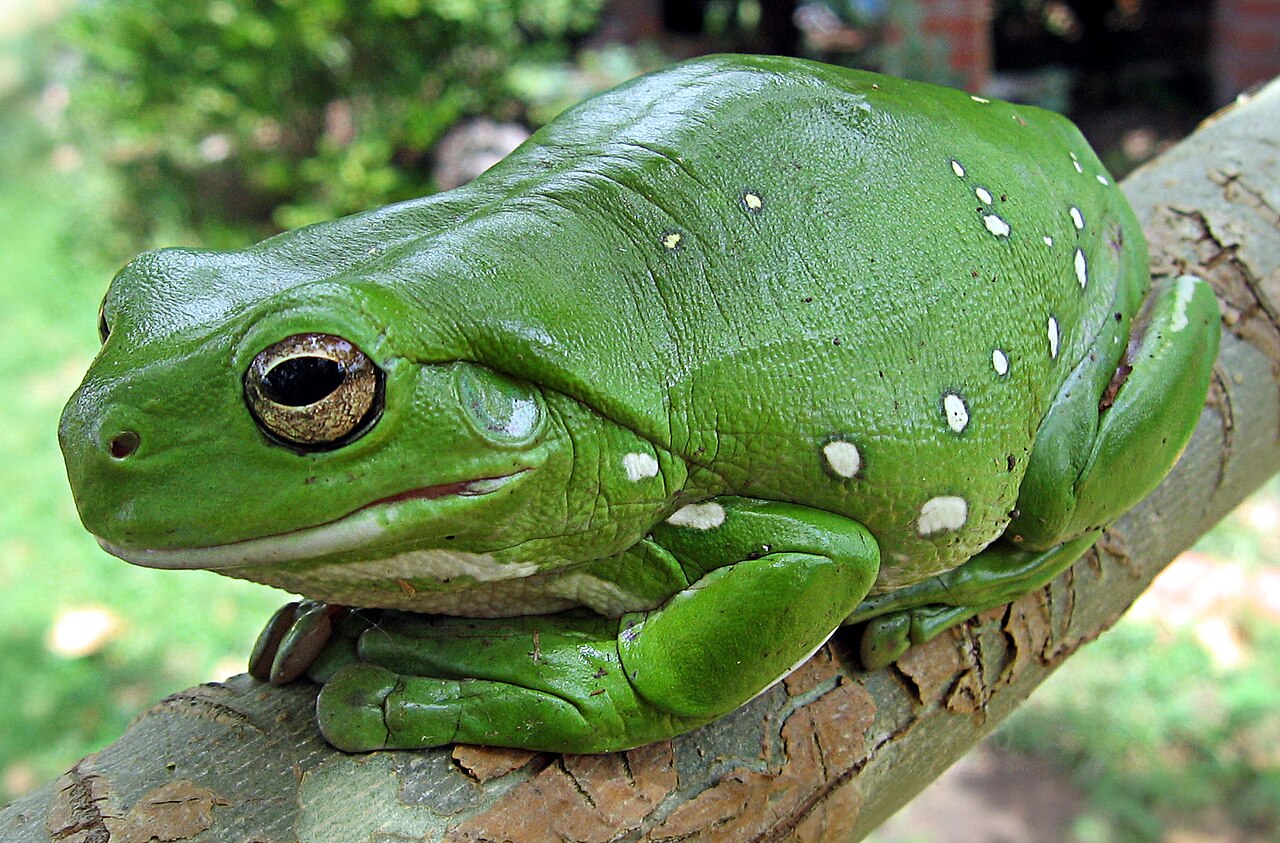
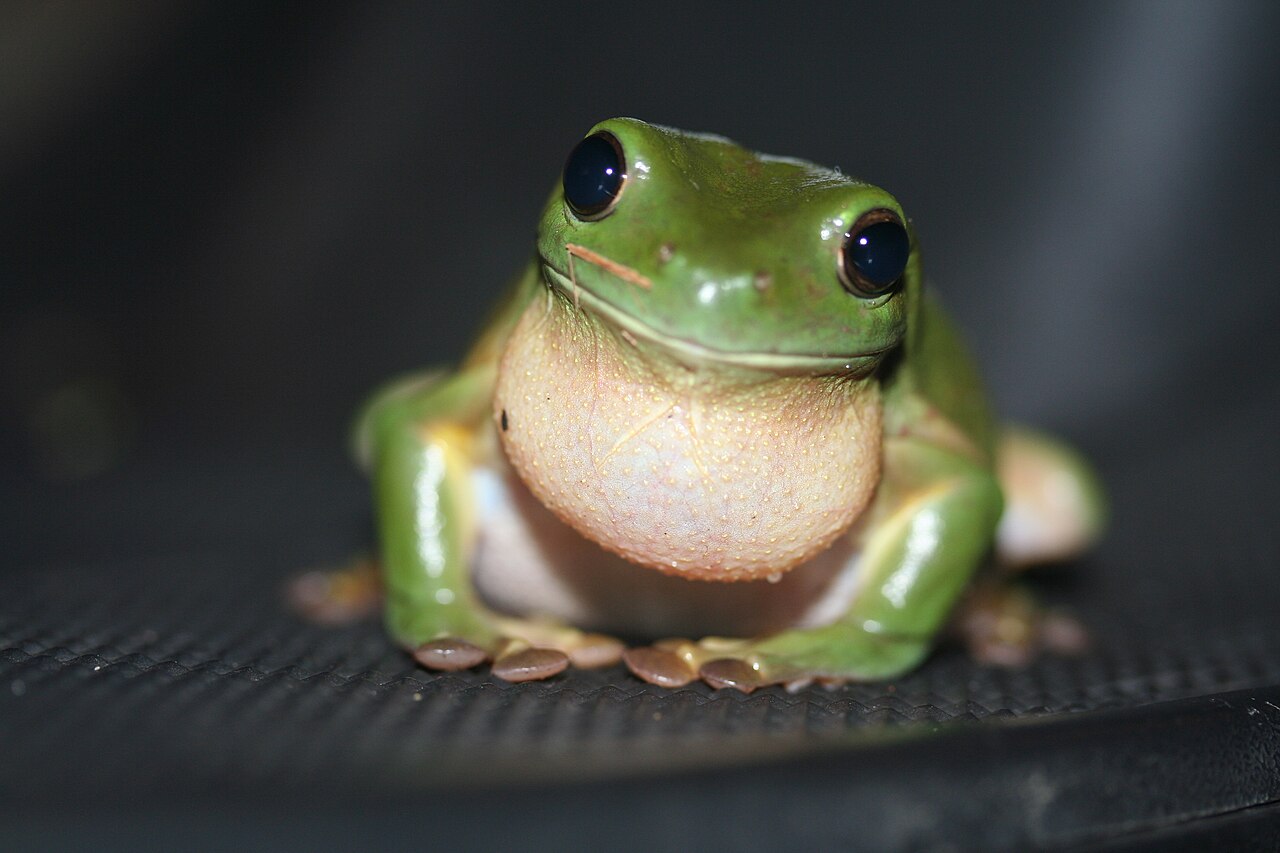
The white tree frog (Litoria caerulea), also called White’s tree frog, the white tree frog, or the Australian green tree frog, is a large placid amphibian from Australia and New Guinea that reaches 3 to 4.5 in and lives 15 to 20 years in captivity. The nickname comes from the fatty ridges that develop over the eyes and along the body in well-fed adults, giving them a permanently sleepy expression.
They are among the few amphibians that genuinely tolerate gentle handling, which is a large part of their popularity. The main pitfall is exactly what makes them charming: they beg convincingly and will eat anything offered, and obesity is the single most common health problem in captive individuals. This guide covers setup, feeding, handling limits, health, and whether the species suits a first amphibian.
| Quick Facts | Dumpy Tree Frog |
|---|---|
| Scientific name | Litoria caerulea |
| Size | 3 to 4.5 in, females larger |
| Lifespan | 15 to 20 years, some over 20 |
| Enclosure | 18 by 18 by 24 in minimum for one adult |
| Temperature | 75 to 85 F day, low 70s at night |
| Main health risk | Obesity from overfeeding |
What a Dumpy Tree Frog Is
The species is native to northern and eastern Australia and southern New Guinea, occupying a wide range of habitats from wet forest to surprisingly dry country, where it shelters in tree hollows, rock crevices, and frequently in human structures including water tanks, drainpipes, and bathrooms.
Color ranges from bright emerald green through olive to blue-green and occasionally brown, and individuals change shade with temperature, humidity, and mood. Some show scattered white spots along the flanks. A blue morph exists in the trade, produced by animals lacking the yellow pigment layer.
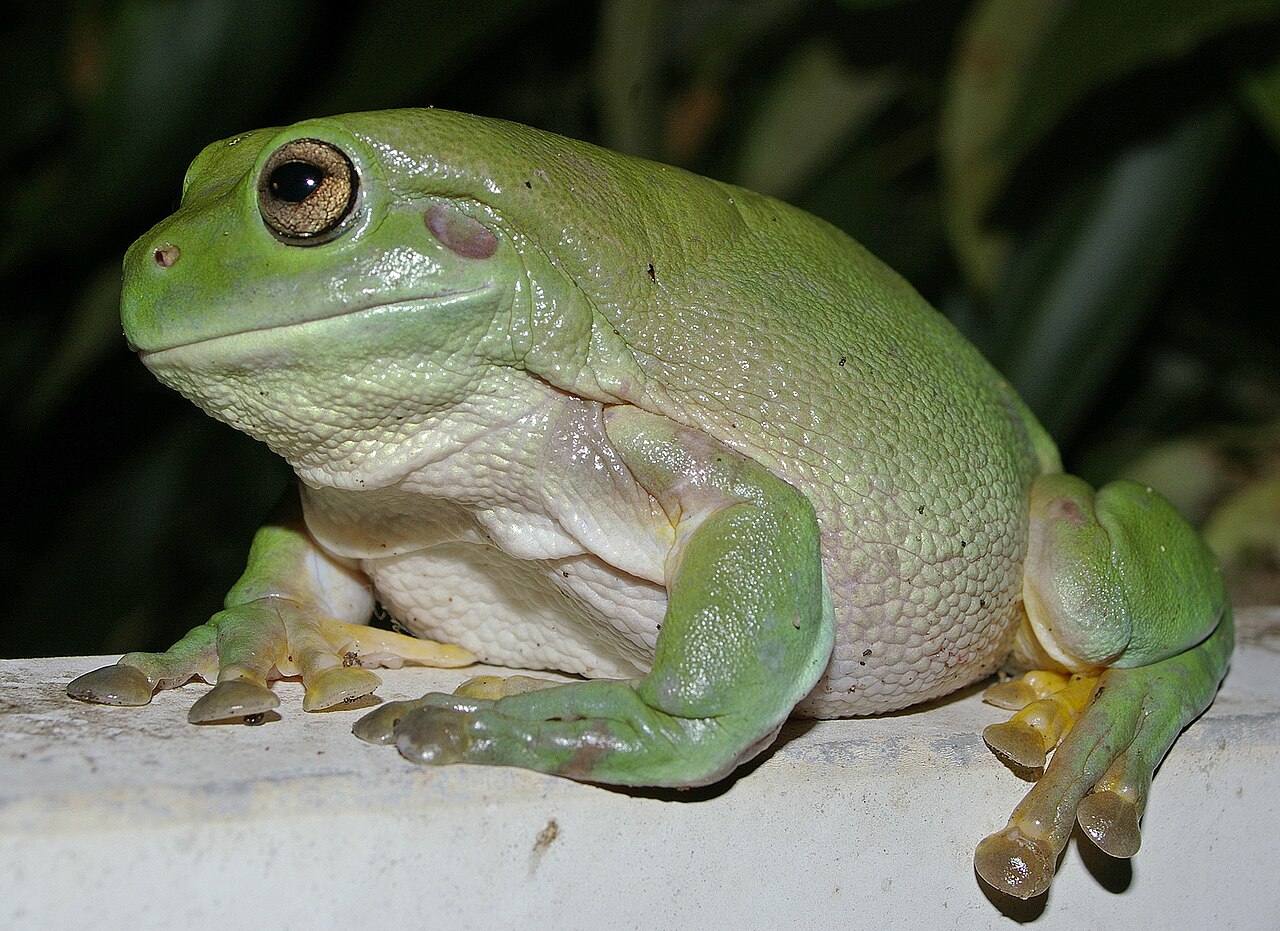
The fatty ridges that give the common name develop with age and condition, appearing above the eyes and along the sides of the head. Moderate ridging is normal in a mature adult, while pronounced ridges that overhang the eyes indicate an overweight frog, which is a distinction keepers should learn early.
Enclosure Setup
Height matters more than floor area because these are arboreal frogs. A single adult needs a minimum of 18 by 18 by 24 in, and a pair or trio wants considerably more, with front-opening glass terrariums working better than top-opening tanks since they reduce the stress of reaching down over the animal.
Furnish it with sturdy climbing structure. Thick branches, cork bark tubes, broad-leaved plants whether live or artificial, and horizontal perches at several heights all get used, and white tree frogs are heavy enough that flimsy decor collapses under them.
Substrate should hold moisture without being soggy. Coconut fiber, sphagnum moss, or a bioactive soil mix all work, and loose gravel or small bark chips should be avoided because frogs swallow substrate while striking at prey and impaction is a real risk. Provide a shallow water dish large enough for the frog to sit in, since they absorb water through the skin rather than drinking, and change it daily because they defecate in it routinely.
Temperature, Humidity, and Water Quality
Aim for 75 to 85 F during the day with a modest drop into the low 70s at night, which most homes achieve with a low-wattage heat source on a thermostat. They tolerate a wider range than most amphibians, but sustained temperatures above 90 F are dangerous.
Humidity should sit around 50 to 70 percent, which is lower than many keepers assume. White tree frogs come from relatively dry country compared with rainforest species, and a constantly saturated enclosure with poor airflow causes bacterial and fungal skin infections. Mist once daily and let the enclosure dry somewhat between mistings.
Water quality is where inexperienced keepers cause harm without realizing. Amphibian skin absorbs whatever it contacts, so chlorine and chloramine in tap water are genuinely toxic and every drop of water entering the enclosure must be dechlorinated or filtered. That applies to the water dish, the misting bottle, and anything used to clean the tank.
Feeding and the Obesity Problem
Adults should eat two or three appropriately sized insects two to three times a week, not daily. Juveniles need feeding more often, roughly every day or two, because they are growing, and the transition to adult frequency should happen as growth slows.
Crickets and dubia roaches form the staple, with hornworms, silkworms, and black soldier fly larvae as variety. Waxworms and mealworms are too fatty for regular use and should be occasional at most. Dust feeders with calcium at most feedings and a multivitamin every few weeks, and gut-load the insects beforehand, as our guide to what crickets eat describes.
Overfeeding is the central husbandry failure with this species and it is driven by the frog’s own behavior. White tree frogs beg persistently, strike at anything moving, and never signal fullness, so a keeper who feeds on demand produces an obese animal within months. Obesity causes fatty liver disease, shortens lifespan substantially, and is difficult to reverse, and the ridges that give the species its name become a diagnostic warning when they overhang the eyes.
Handling
White tree frogs tolerate handling better than almost any other amphibian, which is genuinely unusual and explains much of their popularity. They are slow, placid, and rarely attempt to leap away, and many individuals sit calmly in a cupped hand.
The limits still matter. Amphibian skin is permeable and absorbs oils, soaps, lotions, and residues directly into the bloodstream, so hands must be washed thoroughly with plain water and rinsed completely before contact, with no soap residue remaining. Wetting your hands first prevents removing the protective mucus layer.
Keep sessions short and infrequent, a few minutes at a time rather than extended holding, and wash hands afterward as well since amphibians can carry Salmonella. Children should be supervised and should not handle the frog unsupervised, and any frog showing dark coloration, attempts to escape, or excessive mucus production should be returned to the enclosure immediately.
Health Problems to Watch
Beyond obesity, metabolic bone disease is the most common serious condition and results from inadequate calcium and vitamin D3. Signs include a soft or misshapen jaw, difficulty climbing, tremors, and bone deformities, and prevention through consistent supplementation is far easier than treatment.
Skin infections follow poor water quality or excessive humidity with poor airflow. Red leg syndrome, a bacterial infection showing as reddening on the underside of the legs and belly, is serious and needs veterinary treatment, and its usual root cause is a dirty enclosure.
Two others deserve mention. Impaction from swallowed substrate causes lethargy and refusal to eat and is prevented by substrate choice and feeding from a dish or tongs. Chytrid fungus is a devastating amphibian disease globally, and while captive-bred animals from reputable sources are generally clean, it is another reason never to release a captive amphibian or introduce wild-caught animals to an existing collection. Our guide to what tadpoles eat covers the same disease risk from the wild side.
UVB Lighting
This has shifted in recent years. Older care advice held that nocturnal amphibians do not need UVB because they avoid daylight, and white tree frogs were kept without it for decades.
Current guidance increasingly favors providing low-level UVB. Research on several amphibian species has shown improved calcium metabolism and bone density with UVB exposure, and the practical experience of keepers using it reports better long-term condition, particularly in animals kept for a decade or more.
If you provide it, keep it low output and ensure abundant shaded hiding places so the frog controls its own exposure. A 5 percent tube on a day cycle over part of the enclosure is a common setup. Dietary supplementation with D3 remains necessary either way, and UVB supplements rather than replaces it.
Housing Multiples
White tree frogs can be kept in groups, unlike many amphibians, provided the individuals are of similar size. They are not territorial and will often pile together in the same hide, which is one of the more appealing things about them.
Size matching is the rule that prevents the main problem. A white tree frog strikes at anything that moves and fits in its mouth, and a larger frog will attempt to swallow a smaller one, which kills both. Never house animals of noticeably different sizes together.
Space accordingly. Add roughly 25 to 50 percent more enclosure volume per additional frog, provide multiple hides and perches so animals can separate when they want to, and feed individually with tongs or in separate spots so a dominant feeder does not take everything. Watch for one animal consistently losing weight, which signals it is being outcompeted.
Are They Good First Amphibians?
Yes, and they are among the best options available. They are hardy, tolerate a wider range of conditions than most amphibians, are large enough to be easy to observe and feed, tolerate gentle handling, and are widely available captive-bred.
The commitment is the main caveat. Fifteen to twenty years is a long time, comparable to a dog, and it is a commitment many buyers do not register at purchase. The enclosure and equipment cost more than the animal, and a reptile and amphibian veterinarian should be identified before one is needed.
Buy captive-bred rather than wild-caught, which is both more ethical and more practical since wild animals arrive stressed and parasitized. Resist the temptation to feed on demand, since that single habit determines whether your frog reaches its full lifespan or develops fatty liver disease by year five. Anyone comparing amphibian and reptile options will find useful contrast in our guides to the Pacman frog, the African bullfrog, and the crested gecko.
Related reading: Tomato Frog.
Related reading: Frog Sounds.
Related reading: Tree Frog Sounds.
Frequently Asked Questions
How big do white tree frogs get?
Three to 4.5 in, with females larger than males. They live 15 to 20 years in captivity and some exceed 20, which makes them a longer commitment than many buyers expect.
Can you handle a white tree frog?
Yes, more than almost any other amphibian, but with limits. Wash and rinse hands thoroughly with plain water and no soap residue, wet them first to protect the mucus layer, keep sessions to a few minutes, and wash again afterward since amphibians can carry Salmonella.
How often should I feed a white tree frog?
Adults two or three insects two to three times weekly, not daily. Juveniles every day or two. They beg persistently and never signal fullness, so feeding on demand produces obesity, fatty liver disease, and a substantially shortened lifespan.
How do I know if my frog is overweight?
Look down from above rather than from the side. A healthy frog is pear-shaped with visible narrowing toward the head, while an obese one is a uniform oval with fatty ridges overhanging the eyes. From the side nearly every white tree frog looks round.
What humidity do white tree frogs need?
Around 50 to 70 percent, lower than many keepers assume, since they come from relatively dry country compared with rainforest species. Mist once daily and let the enclosure dry somewhat between mistings, because constant saturation with poor airflow causes skin infections.
Can white tree frogs live together?
Yes, if they are of similar size, since they are not territorial and often pile together. Never house different sizes together, because a larger frog will attempt to swallow a smaller one. Add 25 to 50 percent more space per frog and feed individually.
Do white tree frogs need UVB?
Current guidance increasingly favors low-level UVB, though they were kept without it for decades. Research shows improved calcium metabolism and bone density with exposure. Provide it at low output with plenty of shade, and continue dietary D3 supplementation regardless.