Black Swallowtail Butterfly: Identification and Host Plants
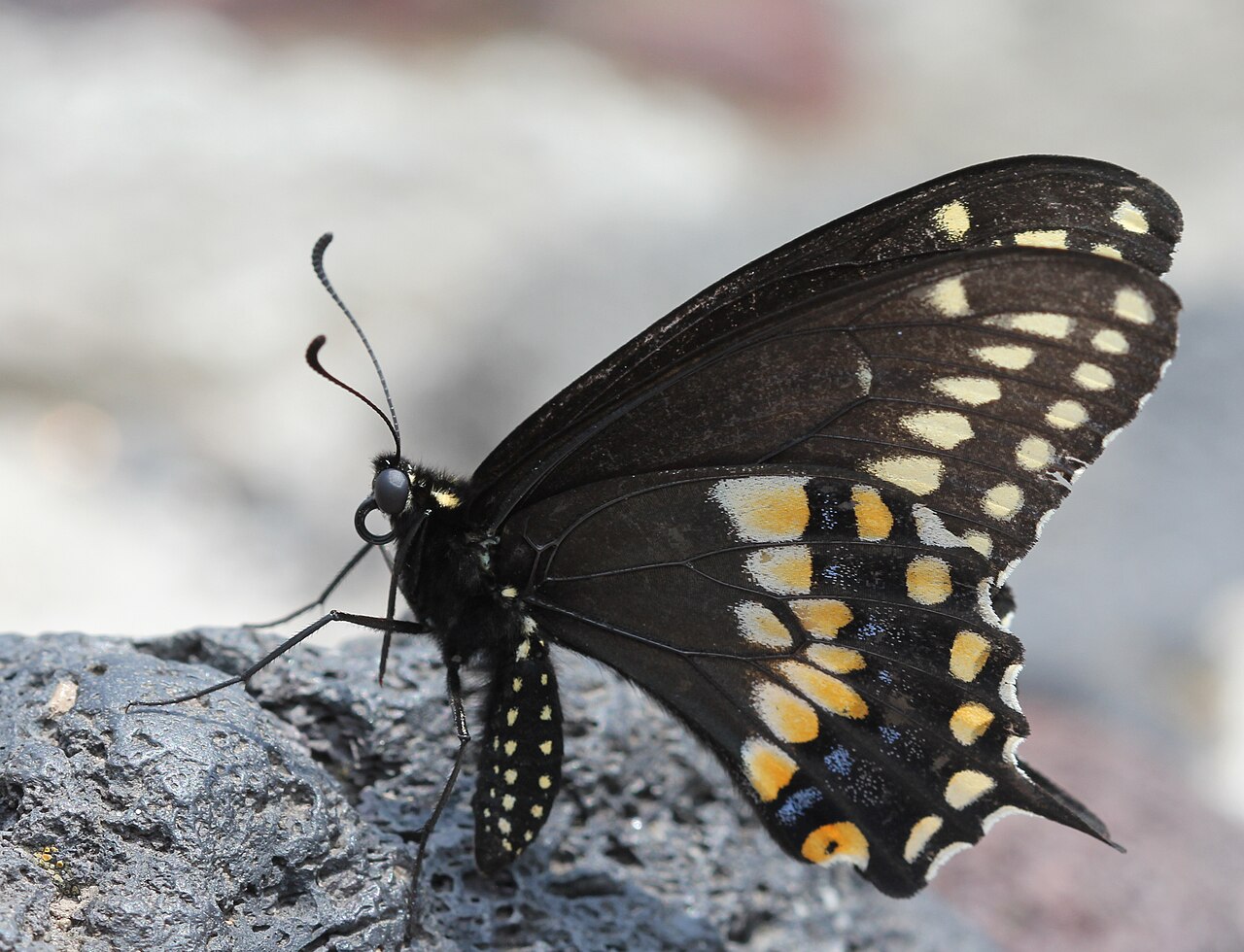
The black swallowtail displays a genuinely distinct pattern among North American swallowtails: predominantly black wings marked with two rows of yellow spots running roughly parallel to the wing edges, plus additional blue and orange markings near the hindwing tail, ranging very broadly across nearly all of the continental United States, considerably wider than either the tiger or giant swallowtail’s more regionally concentrated distribution, making this one of the more commonly encountered large swallowtail species for observers across most of the country.
Beyond its distinctive appearance and broad range, the black swallowtail carries genuine significance for home vegetable gardeners specifically, since its caterpillars feed on plants in the carrot family, including cultivated parsley, dill, carrots, and fennel alongside wild Queen Anne’s lace, making this species a genuinely familiar garden visitor for anyone growing these particular herbs and vegetables. This guide covers the black swallowtail’s identification details, its caterpillar’s specific host plant relationships, the notable sex-based pattern differences, its impressive defensive adaptations, and how to distinguish this species from other dark-patterned swallowtails sharing similar range.
| Fact | Black Swallowtail |
|---|---|
| Wingspan | 3 to 4.5 inches |
| Pattern | Black with two rows of yellow spots |
| Host plants | Carrot family (parsley, dill, carrots, fennel) |
| Range | Nearly all of continental United States |
| Sex differences | Males show bolder yellow spotting than females |
| Defense | Osmeterium (forked scent organ) |
Identifying the Black Swallowtail
The black swallowtail displays predominantly black wings marked with two rows of yellow spots running roughly parallel to the wing edges, a pattern arrangement quite different from the more yellow-dominant tiger swallowtail pattern many people picture first when imagining a large swallowtail butterfly, giving this species an immediately distinctive dark appearance once specifically compared against its more brightly colored relatives.
Beyond the primary yellow spotting, black swallowtails display additional blue and orange markings concentrated near the hindwing tail area, adding further color complexity to this already visually striking pattern, with the specific arrangement and intensity of these blue and orange accents providing useful additional confirmation details beyond the basic black-and-yellow-spotted pattern alone.
With a wingspan typically ranging from 3 to 4.5 inches, black swallowtails fall into a genuinely moderate size range compared to other common swallowtail species, notably smaller than the considerably larger giant swallowtail covered in our companion guide, but comparable in overall scale to the more familiar tiger swallowtail many casual observers already recognize from typical backyard butterfly encounters.
Host Plants: A Genuine Garden Connection
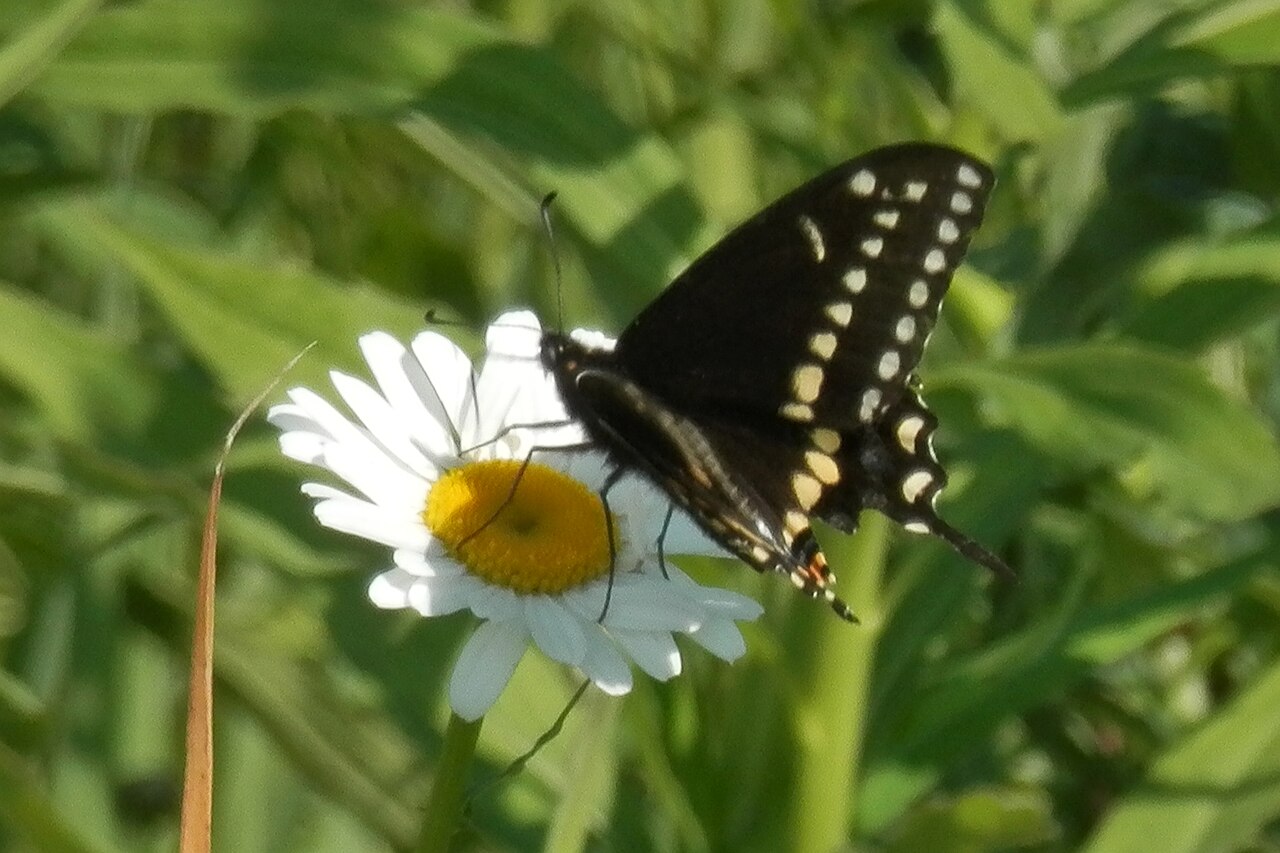
Black swallowtail caterpillars feed specifically on plants in the carrot family, including cultivated parsley, dill, carrots, and fennel alongside wild Queen Anne’s lace, a host plant relationship that makes this species genuinely familiar to many home vegetable gardeners specifically growing these particular herbs and vegetables, connecting casual butterfly appreciation directly to common backyard gardening practices in a way relatively few other swallowtail species achieve so directly.
This carrot family host plant relationship also explains the black swallowtail’s remarkably broad range across nearly all of the continental United States, since these host plants, particularly wild Queen Anne’s lace, grow abundantly across an enormous variety of habitats and climate zones, giving black swallowtail caterpillars considerably more widespread host plant availability than species tied to more geographically restricted host plants like the giant swallowtail’s citrus family dependence.
Home gardeners specifically growing parsley, dill, or fennel should generally expect and welcome some caterpillar feeding as the natural cost of successfully hosting this species, since black swallowtail caterpillars rarely cause serious damage to established plants, and many gardeners specifically plant extra parsley or dill precisely to accommodate black swallowtail caterpillars alongside their own culinary herb harvest needs.
Male vs Female Pattern Differences
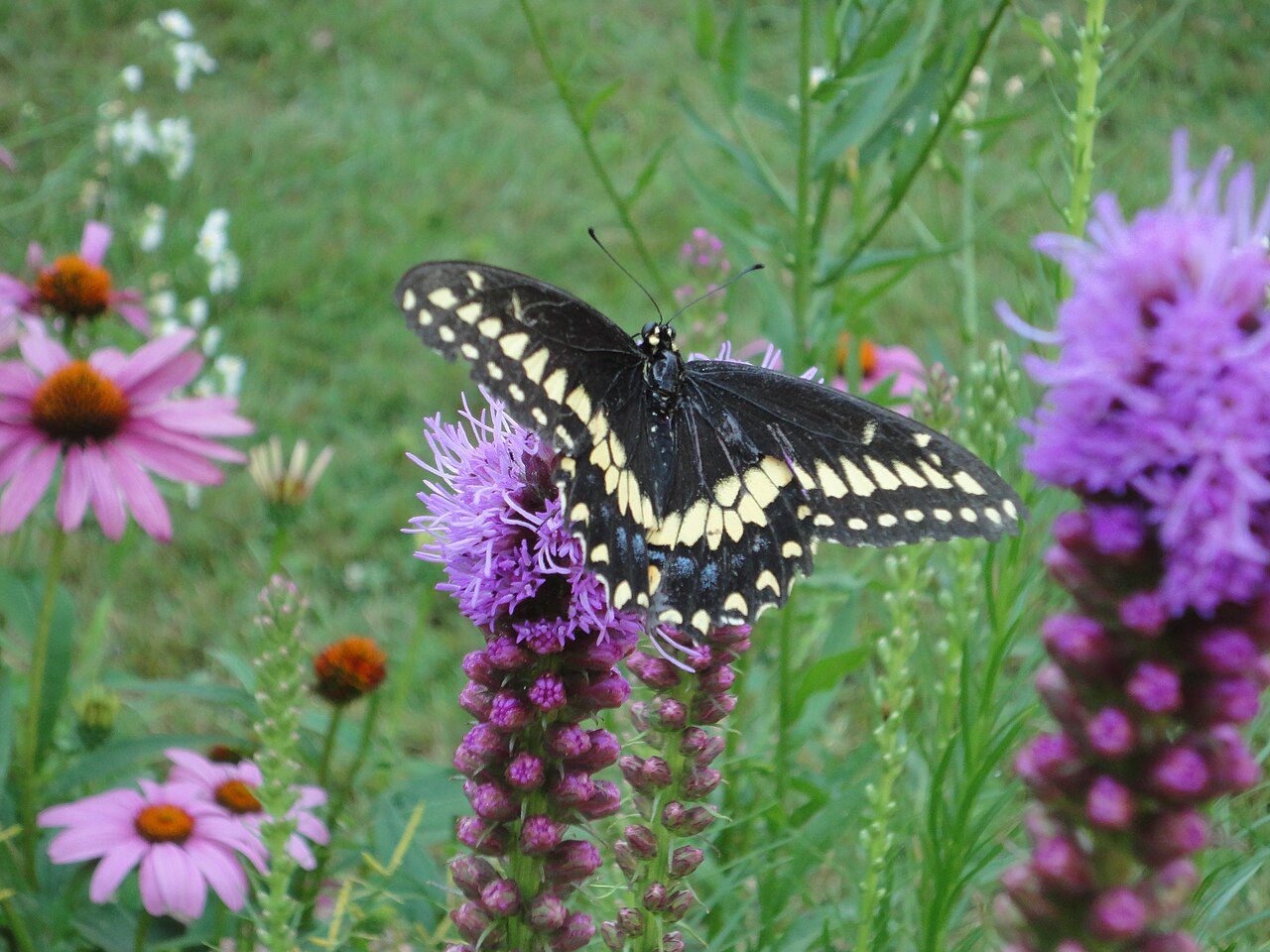
Black swallowtails show a genuinely notable difference in yellow spotting intensity between males and females, with males generally displaying somewhat bolder, more extensive yellow spot patterns than females, whose spots tend to run smaller and less prominent, a sex-based pattern difference subtle enough to require direct comparison but genuinely useful for those interested in distinguishing male and female individuals specifically.
Despite this spotting intensity difference, both sexes clearly share the same overall black-background-with-yellow-spot-rows pattern that distinguishes this species from the other common swallowtails covered throughout our broader swallowtail identification guide, meaning the fundamental identification approach remains consistent regardless of which sex a particular observed individual happens to represent.
This sex-based spotting variation adds a genuinely interesting additional layer for observers specifically interested in more detailed black swallowtail identification beyond basic species-level recognition, though the difference remains subtle enough that most casual observers reasonably focus on the broader pattern and host plant clues covered throughout this guide rather than attempting to determine specific sex during a typical brief garden sighting.
The Osmeterium: A Remarkable Defense
Black swallowtail caterpillars possess a genuinely remarkable defensive structure called an osmeterium, a forked, fleshy, often brightly colored organ that can be rapidly everted from just behind the head when the caterpillar feels threatened, releasing a distinctly unpleasant odor specifically meant to deter potential predators from continuing their attack.
This genuinely dramatic defensive display is often accompanied by the caterpillar dramatically rearing up and presenting the everted osmeterium directly toward whatever threat has been detected, a genuinely striking behavior that can startle human observers unprepared for this sudden defensive response, though the structure itself poses no danger to humans beyond the mildly unpleasant smell it releases when deployed.
This osmeterium defense mechanism is shared broadly across swallowtail caterpillars generally, including the giant swallowtail’s orange dog caterpillar covered in our companion guide, representing a common defensive adaptation across this entire butterfly family rather than something unique to black swallowtails specifically, though observing this behavior firsthand remains a genuinely memorable experience for gardeners who encounter it while tending host plants in their own vegetable patches or herb gardens.
Life Cycle and Seasonal Timing
Black swallowtails typically produce multiple generations per year across most of their range, with adults present from spring through fall in many areas, following the same basic complete metamorphosis life cycle, egg, caterpillar, chrysalis, adult, shared across all swallowtail species, though specific generation timing varies somewhat based on regional climate and length of the growing season.
The chrysalis stage displays effective camouflage, typically appearing as a mottled brown or green structure resembling a broken twig or stem closely enough to avoid predator detection during this vulnerable, immobile developmental stage, a protective strategy that complements the caterpillar’s own osmeterium defense in providing multiple layers of protection across this species’ complete developmental timeline.
Adult black swallowtails, once emerged, feed on nectar from various flowering plants, contributing to pollination alongside their role as one of the more widely distributed and commonly encountered swallowtail species across the country, with adult lifespan typically running several weeks, allowing sufficient time for mating and egg-laying to continue the species’ remarkably broad geographic presence into subsequent generations across gardens, fields, and roadsides nationwide.
Black Swallowtail vs Other Dark Swallowtails
Distinguishing black swallowtails from other dark-patterned swallowtail species sharing overlapping range relies primarily on its distinctive two-row yellow spot pattern, since species like the pipevine swallowtail and spicebush swallowtail, covered in complete comparative detail in our black and blue butterfly guide, display considerably different pattern arrangements, iridescent blue-black coloring or a distinct hindwing patch rather than the black swallowtail’s characteristic parallel spot rows.
Compared to the giant swallowtail specifically, covered in our dedicated giant swallowtail guide, size provides a useful distinguishing feature, since the giant swallowtail runs considerably larger overall, while its distinctive underside X-mark pattern differs entirely from the black swallowtail’s parallel yellow spot row arrangement, making these two species genuinely straightforward to distinguish once both key features are checked together. Neither species shows any risk of genuine confusion once an observer specifically knows to check these two particular diagnostic features side by side.
For readers specifically interested in the broader landscape of similarly patterned butterflies beyond just swallowtails, our black and white butterfly guide and orange and black butterfly guide cover additional dark-patterned species using different color combinations entirely, helping build a genuinely comprehensive identification toolkit across the full range of commonly encountered dark or boldly patterned butterflies found across gardens and woodland edges throughout the country.
Attracting Black Swallowtails to Your Garden
Successfully attracting black swallowtails specifically requires planting carrot family host plants, particularly parsley, dill, or fennel, since this species’ caterpillars depend on these plants for development, making host plant availability the single most important factor determining whether black swallowtails can successfully breed on a given property rather than simply pass through as adults seeking nectar alone.
Because black swallowtail caterpillars generally cause only modest feeding damage to host plants, gardeners can typically grow these caterpillar host plants alongside their intended culinary harvest without significant conflict, though planting extra parsley or dill specifically allocated for caterpillar feeding provides a genuinely simple way to accommodate this species without sacrificing personal culinary herb needs.
Beyond host plants, providing nectar sources through flowering plants supports adult feeding needs, while avoiding broad-spectrum insecticide use near any planted host plants specifically protects the eggs and caterpillars that would otherwise be eliminated before ever reaching the adult stage most gardeners specifically hope to observe and enjoy within their own landscape. Positioning host plants somewhat separately from more heavily trafficked garden areas, and checking for caterpillars before any pruning or harvesting activity, further helps protect developing caterpillars through their complete developmental journey toward the adult butterfly stage this guide has covered throughout.
Related reading: Tiger Swallowtail Butterfly.
Frequently Asked Questions
What does a black swallowtail butterfly look like?
Predominantly black wings marked with two rows of yellow spots running parallel to the wing edges, plus blue and orange markings near the hindwing tail, with a wingspan of 3 to 4.5 inches.
What plants do black swallowtail caterpillars eat?
Plants in the carrot family specifically, including cultivated parsley, dill, carrots, and fennel, along with wild Queen Anne’s lace, making this species a familiar sight in many home vegetable gardens.
How can I tell a male from a female black swallowtail?
Males generally show bolder, more extensive yellow spot patterns than females, whose spots tend to run smaller and less prominent, though both sexes share the same overall pattern arrangement.
What is the strange forked organ on a black swallowtail caterpillar?
This is called an osmeterium, a defensive structure that can be rapidly everted from behind the caterpillar’s head, releasing an unpleasant odor to deter predators when the caterpillar feels threatened.
How can I tell a black swallowtail from a giant swallowtail?
Check size and pattern together: giant swallowtails run considerably larger with a distinctive yellow X-mark on the underside of the hindwing, while black swallowtails show two parallel rows of yellow spots and no X-mark.
Will black swallowtail caterpillars damage my garden?
Generally only modest damage to host plants like parsley or dill, and many gardeners specifically plant extra herbs to accommodate caterpillar feeding alongside their own culinary harvest needs.
Where do black swallowtails live?
Nearly all of the continental United States, one of the broadest ranges among common swallowtail species, reflecting the wide availability of their carrot family host plants across many different habitats and climates.