Baby Cockatoo: Stages, Nest Life, and How to Age One
A baby cockatoo is called a chick, and it hatches almost unrecognizable as the bird it will become: naked or covered in sparse yellow down, eyes sealed shut, and completely dependent on both parents for warmth and food. Depending on the species, a baby cockatoo stays inside a deep tree hollow for 7 to 15 weeks before it ever sees daylight, which is the main reason most people have never seen one in the wild despite cockatoos being common and highly visible birds across Australia and parts of Indonesia and the Philippines.
By the time a young cockatoo leaves the nest it already looks close to adult size, which creates the widespread impression that baby cockatoos simply do not exist. The differences that remain are subtle: a shorter crest, duller plumage, a paler beak, and a dark iris that has not yet developed its adult color. Knowing those markers is what lets you age a cockatoo, whether you are watching a flock in a park or evaluating a bird offered by a breeder.
| Feature | Baby Cockatoo |
|---|---|
| Name for young | Chick (nestling, then fledgling) |
| Condition at hatching | Altricial: blind, naked or sparse down |
| Incubation | 20 to 30 days by species |
| Eyes open | Around 10 to 14 days |
| Time in nest hollow | 7 to 15 weeks |
| Weaning age (hand raised) | 12 to 20 weeks |
| Adult eye and plumage color | Not complete until 2 to 4 years |
What a Baby Cockatoo Looks Like at Each Stage
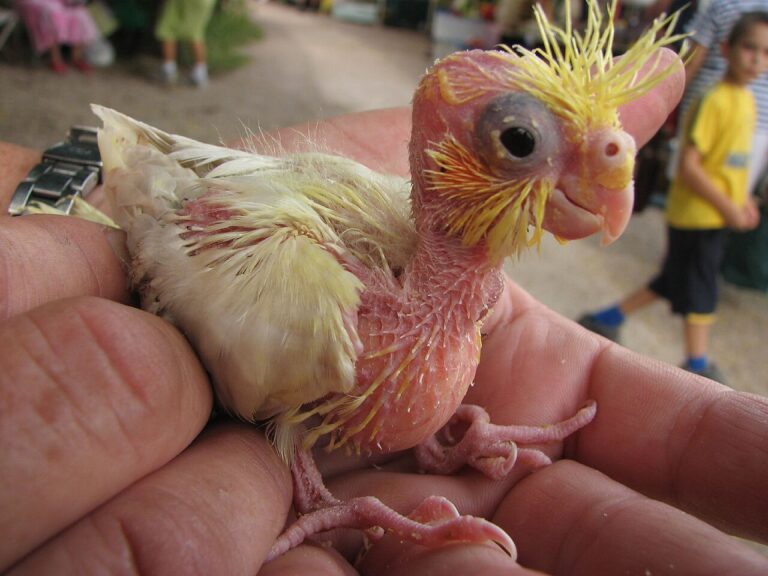
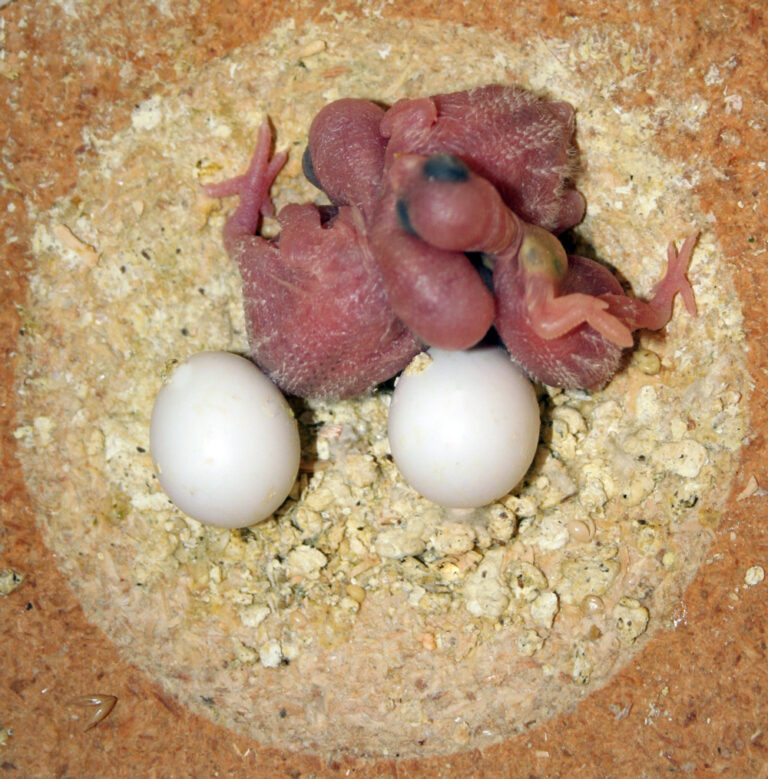
A newly hatched cockatoo weighs only a few grams and looks startlingly reptilian. The skin is pink and translucent, the eyes are closed under fused lids, and the head is disproportionately large relative to the body. Some species hatch essentially bare, while others, including the galah and the sulphur-crested cockatoo, carry a thin covering of yellowish natal down that does almost nothing for insulation. At this stage the chick cannot regulate its own body temperature and relies entirely on a brooding parent.
Between roughly 10 and 14 days the eyes open and the first pin feathers push through the skin. These look like waxy grey quills, and they are one of the more surprising sights for anyone seeing a parrot chick for the first time. Each quill carries a blood supply while it grows, then splits open at the tip so the feather can unfurl. A chick in heavy pin at three to five weeks looks spiky and unfinished, and this is the stage most people picture when they imagine an awkward baby bird. The same sequence plays out across almost every altricial species, which is why our baby bird identification guide leans on stage rather than size.
By six to eight weeks the feathers have largely unsheathed and the bird begins to resemble a small, scruffy adult. The crest is present but shorter and less able to be raised in a full display, and the overall plumage tends to look softer and less crisply defined. If you want a broader reference for reading feather condition and growth stages across species, our guide to identifying feathers covers the same structures in a wider range of birds.
Why You Almost Never See Baby Cockatoos in the Wild
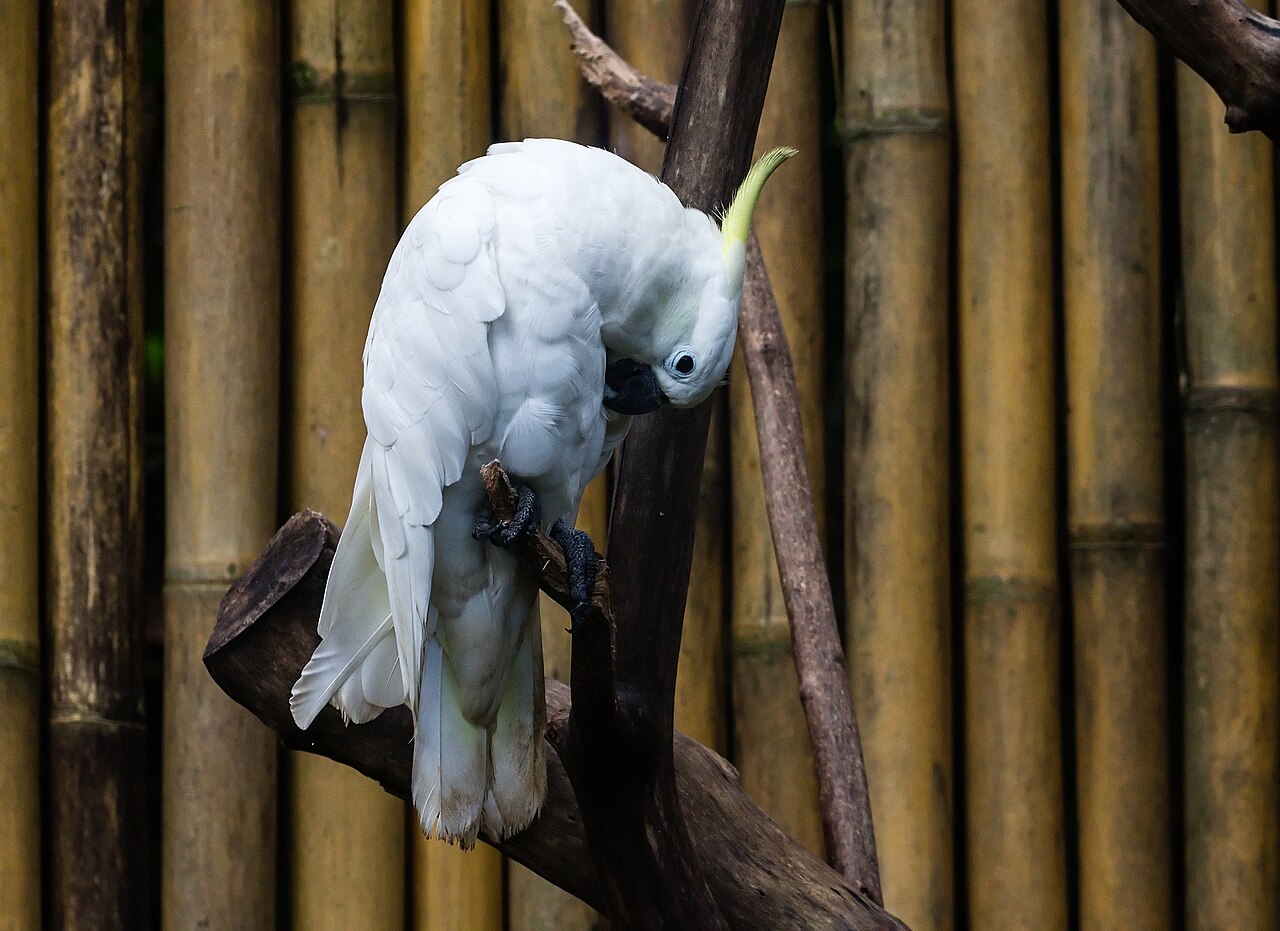
Cockatoos are secondary cavity nesters, meaning they do not excavate their own holes but occupy hollows formed by decay, storm damage, or termite activity in mature trees. In Australia these are overwhelmingly large eucalypts, and a suitable hollow often takes 100 years or more to form. The nest chamber can sit 10 to 30 m above the ground and extend a metre or more below the entrance, so the chicks inside are effectively invisible from any angle.
Because of that architecture, the entire vulnerable period of a cockatoo’s life happens out of sight. The chick that eventually appears at the hollow entrance is already nearly full grown, fully feathered, and capable of flight within days. There is no visible equivalent of the fluffy, ground-hopping stage that makes baby robins and baby ducks so familiar to backyard observers.
The result is a genuine gap in public familiarity. People who see cockatoos daily in city parks may never once encounter an obviously juvenile bird, and the young birds that are present get read as adults. This same hollow-nesting habit is also why competition for nest sites is intense, with cockatoos, corellas, galahs, possums, and introduced honeybees all contending for the same limited number of cavities.
How Long Baby Cockatoos Stay in the Nest
Nestling periods vary widely across the cockatoo family, and the pattern tracks body size fairly closely. Galahs are among the fastest, with chicks fledging at roughly 7 weeks. Sulphur-crested cockatoos take considerably longer, generally 9 to 12 weeks. The large Moluccan and black cockatoos are slowest of all, with some black cockatoo chicks remaining in the hollow for 11 to 15 weeks before their first flight.
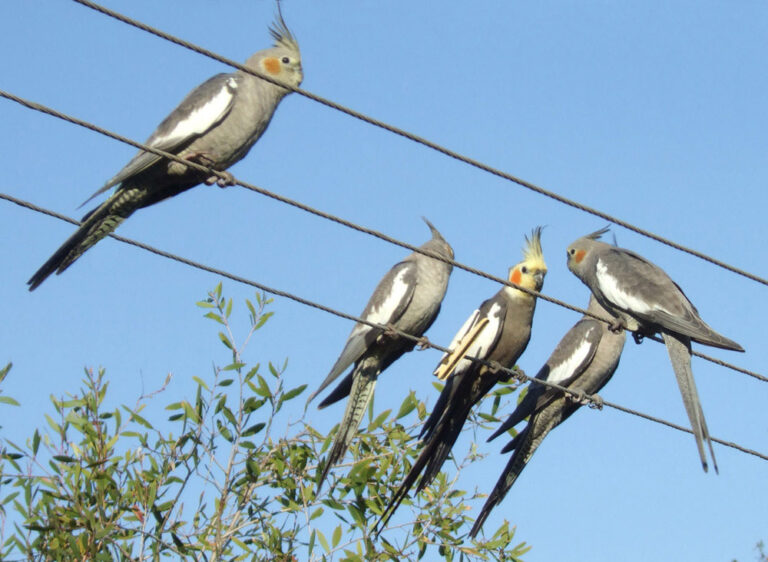
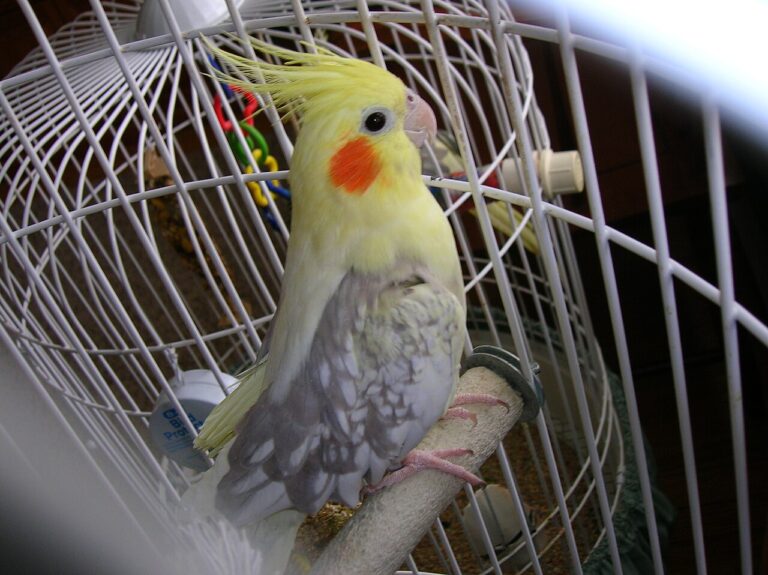
Incubation shows the same size relationship. Cockatiels, the smallest members of the cockatoo family, incubate for about 18 to 21 days and their chicks fledge at 4 to 5 weeks, as covered in our baby cockatiel guide, while sulphur-crested cockatoos incubate around 25 to 27 days and the larger black cockatoos closer to 28 to 30 days. Both parents typically share incubation duties, which is unusual among parrots and one of the distinguishing behavioral traits of the family.
Fledging is not independence. Young cockatoos continue to beg from and follow their parents for weeks or months after leaving the hollow, learning where food is, which trees are safe, and how the flock’s social structure works. In some species the young join loose creches of similarly aged birds while parents forage, a strategy that spreads predator watch duties across several adults.
What Baby Cockatoos Eat and How They Are Fed
Parent cockatoos feed their chicks by regurgitation, delivering a partly digested slurry of seeds, nuts, fruit, and plant material directly into the chick’s crop. Unlike pigeons, parrots do not produce true crop milk, so the nutritional quality of the food a chick receives depends entirely on what the adults are eating. In seasons of poor seed set, chick growth slows measurably and brood reduction becomes more common.
Hand-raised chicks are fed a commercial formula mixed to a specific consistency and temperature. Getting this wrong is the single most common cause of serious injury in hand-raised parrots. Formula served too hot can cause crop burn, a full-thickness thermal injury that can perforate the crop wall, while formula served too cool slows crop emptying and invites bacterial or yeast overgrowth. The crop should visibly empty between feedings rather than staying persistently full.
The Association of Avian Veterinarians consistently advises that hand-feeding be left to experienced breeders and that pet owners buy birds only after weaning is complete. Aspiration, where formula enters the airway instead of the crop, can kill a chick in seconds and is not reliably survivable even with immediate veterinary care. For a general sense of how varied parrot and wild bird diets are, our overview of what birds eat sets the wider context.
How to Tell a Baby Cockatoo from an Adult
Eye color is the most reliable ageing marker in several species. In sulphur-crested cockatoos and galahs, adult females develop a reddish or reddish-brown iris while adult males keep a very dark brown to black iris. Juveniles of both sexes have a dark iris, so a bird with a clearly reddish eye is an adult female, while a dark-eyed bird could be either a male of any age or a young female. That colour change generally takes 2 to 4 years to complete.
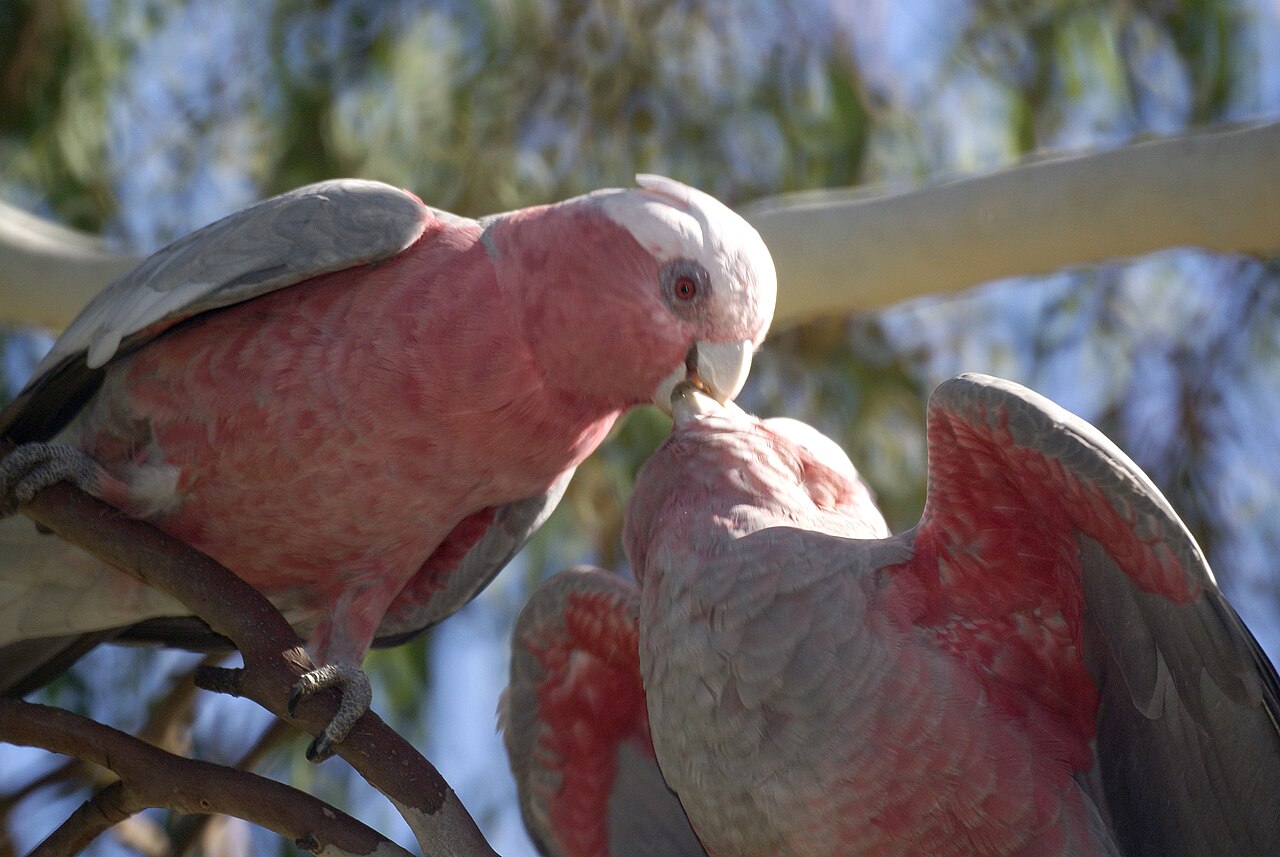
Beak color and texture give a second clue. Young cockatoos often have a paler, smoother, and slightly softer-looking beak that darkens and roughens with age. Crest length is a third: juvenile crest feathers are shorter and the full fan display that adults use in alarm and courtship is less impressive in a bird under a year old.
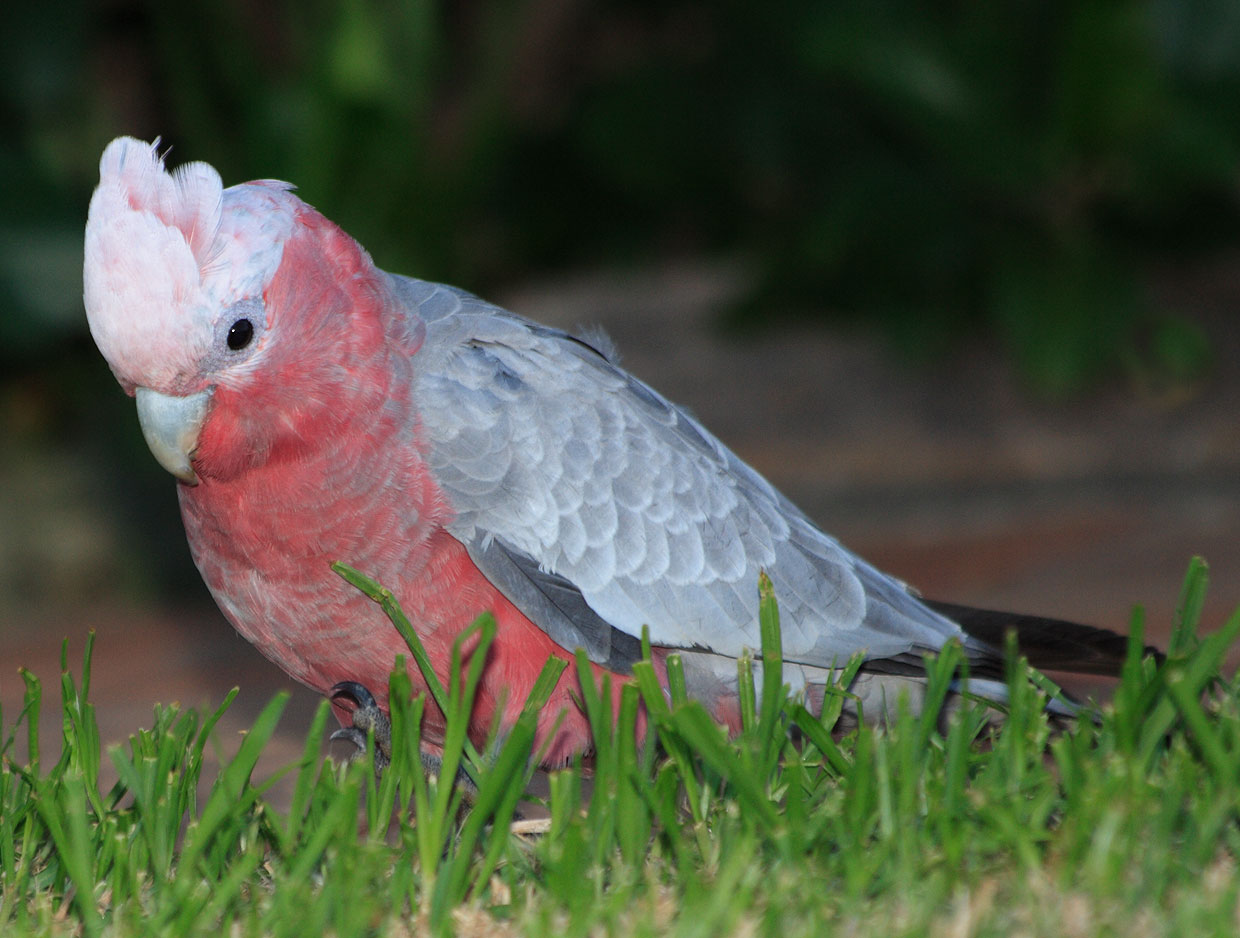
Plumage tone rounds out the picture. Juvenile galahs show a greyer, less saturated pink on the chest and a duller grey cap compared to the crisp rose of an adult. Juvenile black cockatoos often show more extensive barring or spotting than adult males of the same species. If crest structure interests you more broadly, our roundup of birds with crests covers how crests function across unrelated families.
Baby Cockatoo Sounds and What They Mean
Nestling cockatoos produce a persistent, rasping begging call whenever a parent lands at the hollow entrance. It is rhythmic, hoarse, and surprisingly loud for the size of the bird, and it intensifies as the chick approaches fledging age. Field researchers frequently locate active hollows by this sound alone, since the calls carry further than any visual sign of occupancy.
After fledging, young cockatoos keep begging for weeks, and the call gradually shifts toward the adult contact call of the species. Sulphur-crested cockatoos develop the familiar harsh, drawn-out screech, galahs a sharper two-note squeak, and black cockatoos a mournful wailing note that carries several kilometres. Young birds practice these calls imperfectly at first, producing cracked or half-formed versions that flock members clearly recognise as juvenile.
Volume is worth taking seriously for anyone considering a cockatoo as a pet. Large cockatoo screams have been measured at levels comparable to a chainsaw at close range, and this is normal, healthy behavior rather than a fault to be trained out. A hand-raised bird that has bonded to a person will often scream specifically when that person leaves the room, which is the most common complaint that lands adult cockatoos in rescue.
What Owning a Baby Cockatoo Actually Involves
Cockatoo lifespans are the first thing to understand. Smaller species commonly reach 40 years, and larger species regularly pass 60 with documented individuals well beyond that. A chick bought by a person in their thirties is very likely to outlive them, which is why avian rescues consistently recommend naming a caretaker for the bird in a will. Our overview of how long birds live puts those numbers alongside other species.
Cockatoos also produce powder down, a fine white keratin dust that coats surfaces throughout the home and can aggravate asthma and other respiratory conditions in sensitive people. Air filtration and frequent bathing of the bird reduce it but do not eliminate it. Households where someone has a diagnosed respiratory condition should discuss the exposure with a physician before acquiring one.
The behavioral demands are the real hurdle. Cockatoos are highly social, highly intelligent birds that in the wild spend most of their waking hours in flock company and active foraging. Confinement without adequate enrichment reliably produces screaming, feather destructive behavior, and self-mutilation in some individuals. Their problem-solving ability is genuinely impressive, as covered in our list of the smartest birds, and that same intelligence is what makes an under-stimulated cockatoo so difficult to live with.
Common Mistakes with Hand-Raised Baby Cockatoos
Premature weaning is the most damaging and least visible error. A chick pushed onto solid food before it is behaviorally ready may eat enough to survive but often develops persistent food insecurity, expressed later as excessive begging, screaming, and difficulty settling. Abundance weaning, where formula continues to be offered until the bird refuses it on its own, produces measurably calmer adult birds and is the approach most experienced breeders now use.
Over-cuddling is the second common mistake. Constant petting along the back and under the wings stimulates reproductive behavior in mature cockatoos and contributes to hormonal aggression, chronic egg laying in females, and frustration-driven screaming. Head and neck scratching is the appropriate contact, and setting that pattern while the bird is young makes adolescence considerably easier.
Finally, buying an unweaned chick to “bond better” is a misconception worth retiring. Bonding in cockatoos is driven by consistent daily interaction over years, not by who delivered the formula. What buying an unweaned chick reliably produces is a first-time owner attempting a technically demanding veterinary procedure with no training, and it is a leading cause of preventable chick death.
Related reading: Baby Macaw.
Related reading: Baby Parrot.
Related reading: Female Cockatiel.
Frequently Asked Questions
What is a baby cockatoo called?
A baby cockatoo is called a chick. While still inside the nest hollow it is more precisely a nestling, and once it has left the hollow but is still being fed by its parents it is a fledgling. There is no separate folk name for young cockatoos comparable to duckling or gosling.
Why don’t you see baby cockatoos?
Cockatoos nest deep inside tree hollows, often 10 to 30 m above the ground, and the chicks stay hidden for 7 to 15 weeks. By the time a young cockatoo appears at the entrance it is already close to adult size and fully feathered, so it reads as an adult to almost any observer.
How can you tell how old a cockatoo is?
Eye color is the most useful marker in sulphur-crested cockatoos and galahs, where adult females develop a reddish iris over 2 to 4 years while juveniles of both sexes stay dark-eyed. Paler beaks, shorter crests, and duller plumage all point toward a young bird. Precise ageing beyond a few years is not possible from appearance alone.
Can a baby cockatoo talk?
Not initially. Most cockatoos that learn to mimic speech begin doing so somewhere between 8 months and 2 years of age, and many never talk at all. Cockatoos are generally weaker mimics than African greys or amazons, and they favour whistles, contact calls, and short repeated words over long phrases.
How long do baby cockatoos need hand feeding?
Hand-fed cockatoo chicks typically require formula for 12 to 20 weeks depending on species, with the larger species at the long end of that range. Feeding should continue until the bird consistently refuses formula on its own rather than being stopped on a fixed schedule.
Do cockatoos bond with one person?
Yes, and strongly. Cockatoos form intense pair-style bonds and hand-raised birds frequently direct that bond at a single household member, sometimes becoming aggressive toward everyone else. Deliberately involving several people in daily handling from a young age reduces but does not eliminate this pattern.
Is a cockatoo aggressive?
Cockatoos are not inherently aggressive, but sexually mature birds, especially males of the larger species, can deliver serious bites when hormonal or frustrated. A cockatoo beak generates enough force to break a finger. Most reported aggression traces back to hormonal stimulation, inadequate enrichment, or an unmanaged single-person bond rather than temperament.