Female Turkey: How to Tell a Hen from a Tom
A female turkey is called a hen, and she differs from a male in almost every visible feature except overall shape. Hens are roughly a third smaller, weighing 8 to 12 pounds against a tom’s 16 to 24, they have dull brown to grey feathering without the iridescent bronze and green sheen, they have a dull blue-grey head with light feathering rather than a bare red and white one, and their breast feathers are tipped brown instead of black.
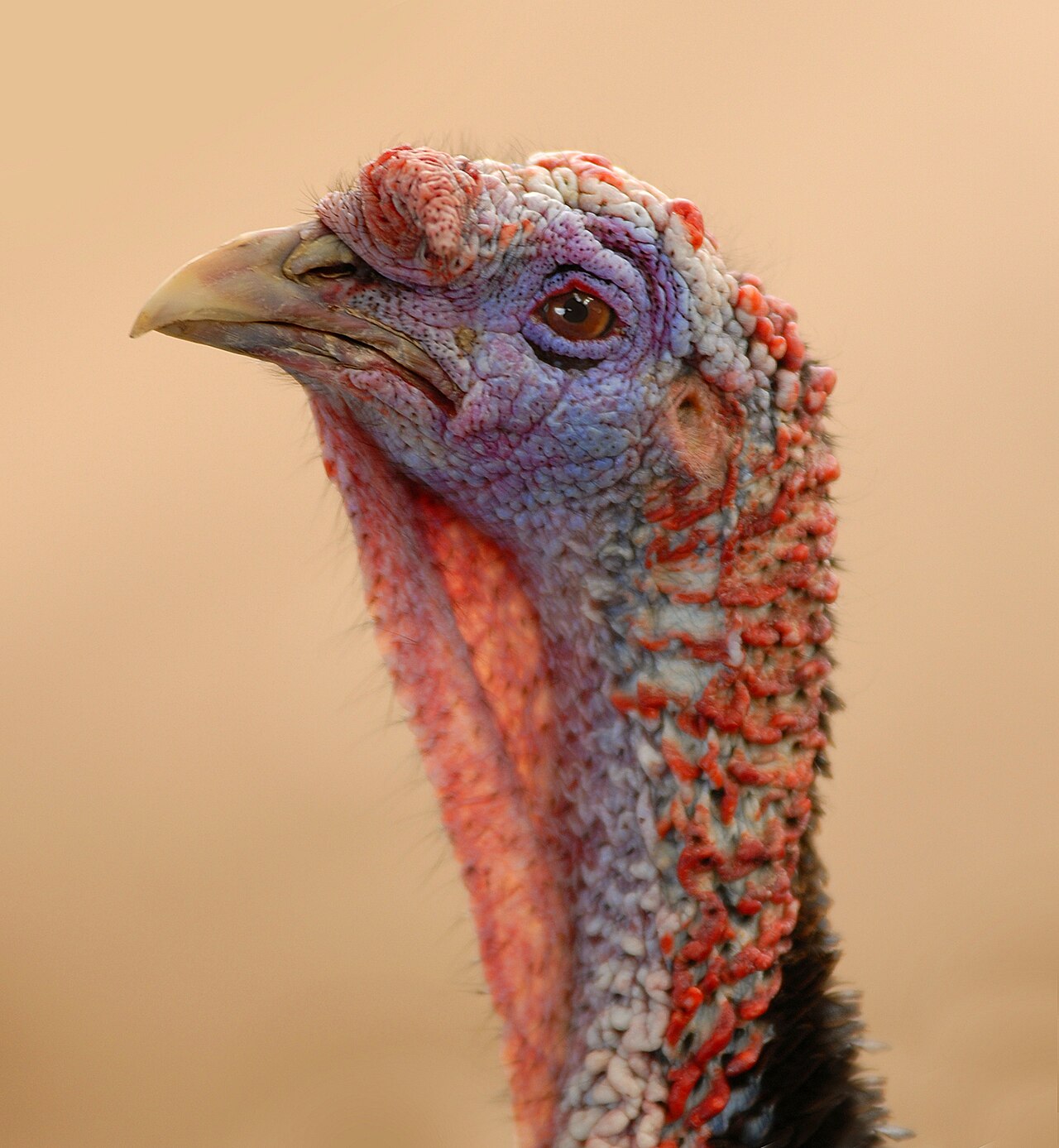
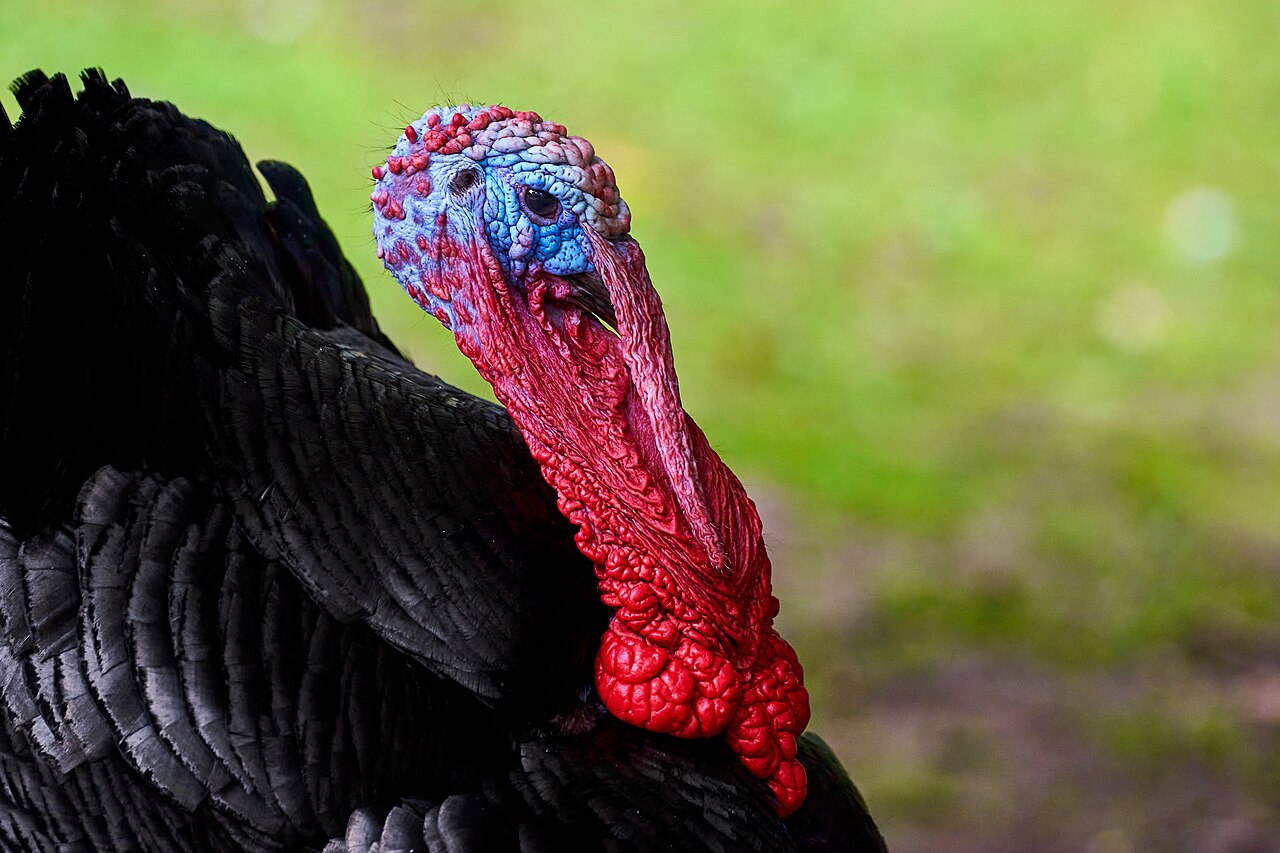
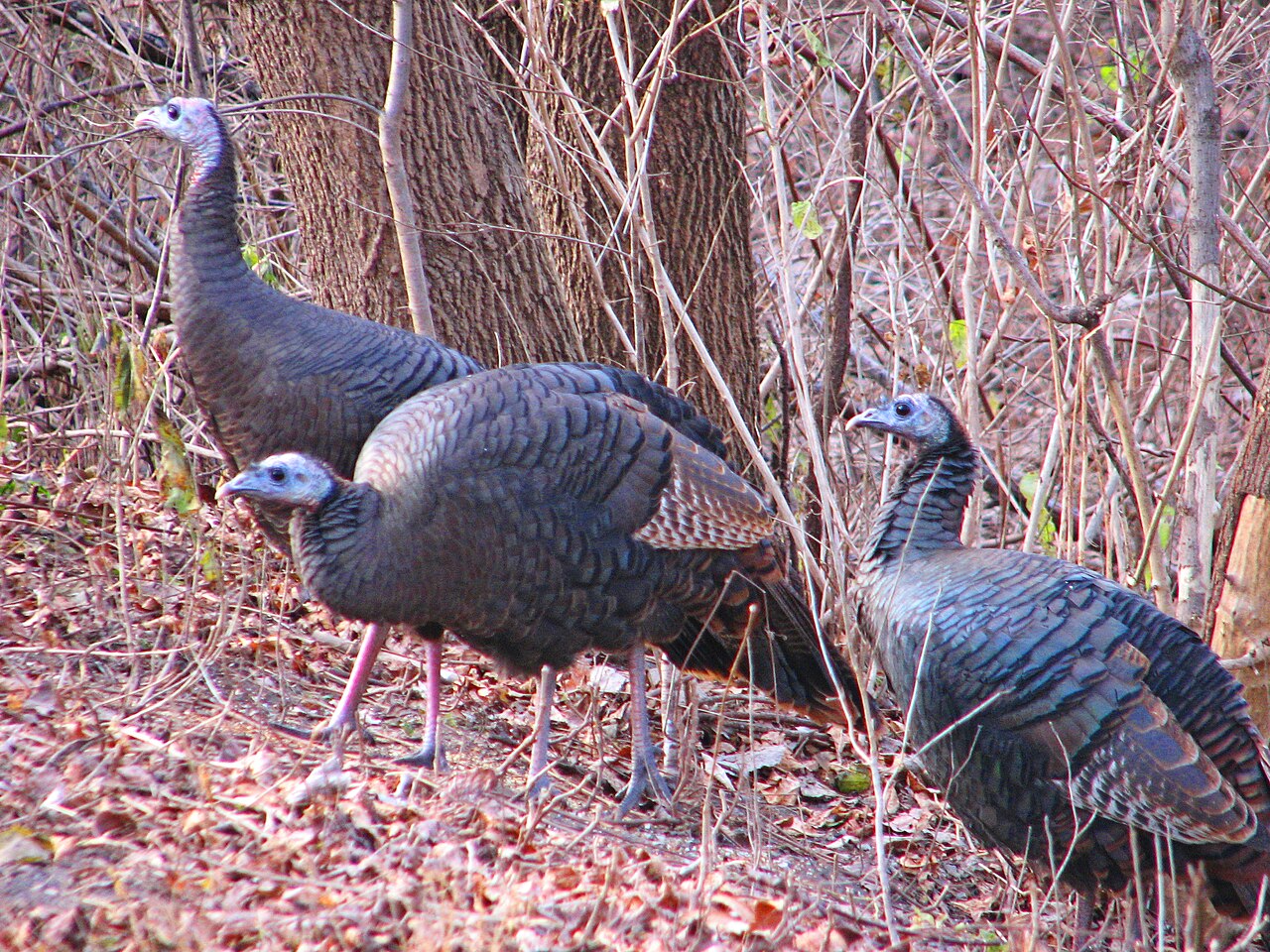
The single fastest field mark is the head. A tom’s head is bare, warty, and shifts through red, white, and blue with mood. A hen’s head is smaller, duller, and carries a thin covering of small dark feathers that give it a fuzzy grey look at any distance. That difference holds year round and does not depend on the bird displaying.
| Feature | Hen (Female) | Tom (Male) |
|---|---|---|
| Weight | 8 to 12 lb | 16 to 24 lb |
| Head | Grey-blue, lightly feathered | Bare, red, white and blue |
| Plumage | Dull brown and grey | Iridescent bronze and green |
| Breast feather tips | Brown or buff | Black |
| Beard | Absent in about 90 percent | Present, 6 to 10 inches |
| Spurs | Absent or vestigial | Present, 0.5 to 1.5 inches |
| Droppings | Coiled or spiral | Straight, J-shaped |
What a Female Turkey Looks Like
A wild turkey hen is a large brown bird with a small, dull, grey-blue head and a body that reads as uniformly drab at distance. Up close the feathers show fine barring and a subtle sheen, but nothing approaching the metallic bronze, copper, and green of a tom in good light. The overall impression is a bird designed to disappear against leaf litter, which is exactly what a ground-nesting female needs.
Head feathering is the most reliable single mark. Hens carry small dark feathers over the crown and upper neck, producing a fuzzy grey appearance, while toms have entirely bare skin covered in caruncles, the fleshy bumps that flush red during display. A hen’s head does change colour slightly with excitement but stays within a narrow blue-grey range.
Size difference is obvious when both sexes are together and harder to judge on a lone bird. A hen stands around 30 to 37 inches long against a tom’s 39 to 49, and the weight gap is proportionally larger. Our full species guide to the wild turkey covers the range and habitat behind these numbers.
The Breast Feather Test
Hunters and wildlife biologists use breast feather tips as a definitive check because it works on a bird in hand and does not depend on lighting or angle. Male turkeys have breast feathers tipped in solid black. Female turkeys have breast feathers tipped in brown, buff, or a pale rust colour. The distinction is crisp with no intermediate.
This works on juveniles as well as adults, which matters because young males in autumn can be similar in size to adult hens. A bird with black-tipped breast feathers is male regardless of how small it is, and one with buff tips is female regardless of size or beard. The same logic of using a single hard structural mark rather than overall impression underpins our female cardinal guide.
The Massachusetts Division of Fisheries and Wildlife and other state wildlife agencies publish this test in spring hunting guidance specifically because size and behaviour mislead in the field. It is the check that resolves the cases where every other mark is ambiguous.
Do Female Turkeys Have Beards?
Some do, and this surprises most people. Roughly 10 to 20 percent of wild turkey hens grow a beard, the bristly modified feather cluster projecting from the centre of the breast. Bearded hens are entirely normal, healthy, and fertile, and the trait appears to have a genetic basis that runs in local populations.
Hen beards differ from tom beards in ways that make them recognisable. They are shorter, typically 3 to 6 inches against a mature tom’s 8 to 10, they are thinner and sparser, and they are often lighter in colour. A short thin beard on an otherwise dull grey-headed bird is a bearded hen, not a young male.
This matters legally in states where spring seasons are restricted to bearded birds. Hunters relying on the beard alone can and do take hens in spring, which is why state agencies emphasise the head and breast feather checks over the beard. Spurs are the more reliable male marker, since hens almost never develop functional spurs.
How to Tell a Turkey’s Sex in the Field
Work through the marks in order of visibility at distance. Head colour and feathering comes first and resolves most birds immediately: bare and red means tom, fuzzy grey means hen. Body sheen comes second, since iridescence is visible in sunlight from a considerable distance while beards are not.
Behaviour helps but misleads more often than people expect. Strutting, fanning the tail, and gobbling are male behaviours, but hens occasionally fan the tail and rarely produce a gobble-like call. Group composition is a better behavioural clue: outside the breeding season hens and young birds form flocks separate from groups of toms. Sex-based flocking of this kind is common in birds where the sexes look different, as our female grackle guide describes.
Droppings settle the question when no bird is visible. Hen droppings are coiled or spiral shaped, tom droppings are straight and often hooked into a J. This distinction is reliable enough that it is standard in wildlife survey work, and it is the basis of the planned separate guide to turkey droppings.
What a Female Turkey Is Called
The adult female is a hen. She is not a jenny, which is a female donkey, and the confusion likely comes from the fact that the female of several other bird species has its own name. A young female turkey is a jenny in some domestic poultry usage, but the standard ornithological term for the immature female is a jenny only in a minority of sources, with juvenile hen being clearer.
The male is a tom or gobbler, and a young male is a jake. A chick of either sex is a poult. A group of turkeys is a flock or, in older usage, a rafter. These terms appear in state hunting regulations, so they carry practical weight in places.
Domestic turkey terminology matches the wild usage for adults, and the domestic breeds descend from the same species, Meleagris gallopavo, domesticated in Mesoamerica. Our guide to types of turkeys covers the wild subspecies and the main domestic breeds.
Female Turkey Nesting and Eggs
Hens nest on the ground in a shallow scrape at the base of a tree, under a shrub, or in dense grass, lining it with whatever leaf litter is at hand. Clutch size runs 10 to 14 eggs, laid roughly one per day, and incubation begins only after the clutch is complete so the poults hatch together.
Incubation lasts about 26 to 28 days, during which the hen sits nearly continuously and leaves only briefly to feed. This is when her drab plumage earns its keep, since a nesting hen is essentially invisible from a few metres away and nest predation is the single largest source of turkey mortality.
Poults are precocial. They hatch covered in down, eyes open, and leave the nest within 24 hours to follow the hen and forage for themselves, mostly on insects for the first weeks. They cannot fly for roughly 10 to 14 days, which is the most dangerous window of their lives. Our guide to what turkeys eat covers the diet shift from insects to seeds and mast.
Can a Female Turkey Lay Eggs Without a Male?
Yes, in the same sense that a hen chicken does. A female turkey ovulates and lays on her own cycle regardless of whether a male is present, and those eggs are simply unfertilised and will not develop. Domestic hens kept alone lay through the spring season without any tom.
Turkeys are also one of the few bird species in which parthenogenesis has been documented, meaning unfertilised eggs occasionally develop without any male contribution. The phenomenon was studied extensively in domestic turkey flocks in the mid twentieth century, the resulting embryos are always male, and survival to hatching is very low.
Wild hens typically produce one clutch per year, with a replacement clutch if the first is destroyed early in the season. Turkey eggs are edible and taste similar to chicken eggs, but hens lay far fewer of them across a much shorter season, which is why they never became a commercial product.
Female Turkey Sounds and Behaviour
Hens are vocal, and their calls are the ones most turkey hunters imitate. The yelp is the basic contact call, a series of 3 to 8 notes used to locate other birds. The cluck is a single short note, the purr is a soft rolling sound made by content feeding birds, and the kee-kee is the whistling call of lost young.
Hens do not gobble in the normal sense. The gobble is a male display call, and while occasional gobble-like sounds from hens are documented they are rare enough that a gobbling bird is safely assumed to be a tom. Our guide to turkey sounds covers the full vocal repertoire of both sexes.
Social structure shifts through the year. Hens with poults form brood flocks in summer, these merge into larger mixed winter flocks, and in spring hens separate to nest while toms establish display areas. A lone hen in April or May is almost certainly nesting nearby and is best left alone.
Related reading: Female Pheasant.
Related reading: Female Cowbird.
Related reading: Female Red-Bellied Woodpecker.
Frequently Asked Questions
How do you tell if a turkey is female or male?
Check the head first: hens have a small grey-blue head with fine dark feathering, toms have a bare red, white and blue head with fleshy caruncles. Then check breast feather tips, which are brown or buff on hens and solid black on toms. Size, plumage sheen, spurs, and dropping shape confirm it.
Is a female turkey called a jenny?
No. An adult female turkey is a hen. A jenny is a female donkey. Some poultry keepers use jenny for a young female turkey, but the standard term across ornithology and state wildlife regulations is hen for adults and poult for chicks of either sex.
Do female turkeys have beards?
Roughly 10 to 20 percent do. Hen beards are shorter, thinner, and often lighter than a tom’s, typically 3 to 6 inches against 8 to 10. Bearded hens are healthy and fertile, and their existence is why hunters in bearded-bird-only seasons are advised to check the head and breast feathers rather than relying on the beard.
Can a female turkey lay eggs without a male?
Yes. Hens lay on their own cycle whether or not a tom is present, and those eggs are simply unfertilised. Turkeys are also among the few birds in which parthenogenesis has been documented, where unfertilised eggs begin developing, though the embryos rarely survive to hatch.
How many eggs does a wild turkey hen lay?
Typically 10 to 14 eggs per clutch, laid about one per day, with incubation beginning only once the clutch is complete so all poults hatch together. Incubation runs 26 to 28 days. Wild hens usually raise one brood per year, with a replacement clutch if the first is lost early.
What month do turkeys start mating?
Breeding activity begins in early spring, generally March in southern parts of the range and April further north, triggered by increasing day length. Gobbling and strutting peak around the same period, and most nesting starts within a few weeks of first breeding.
Do we eat male or female turkeys?
Both, and commercial birds are sold by weight class rather than by sex. Smaller whole birds under about 16 pounds are typically hens and larger ones toms. The difference in eating quality between them is negligible compared with the difference between breeds and rearing methods.