Red Butterfly: Which Species Are Actually Red
Truly red butterflies are uncommon, and most of what people call a red butterfly is orange. The species most often meant in North America are the red admiral, the monarch, and the painted lady, all of which read as red in flight but are orange-red rather than true red on close inspection. Genuinely red species exist, including the red lacewing and the postman butterfly, but they are tropical and are seen mainly in butterfly houses.
The reason is pigment chemistry. Butterfly reds and oranges come from ommochromes, pigments derived from tryptophan, and the range they produce runs from yellow through orange to reddish-brown far more readily than to a saturated scarlet. Blue and green in butterflies are usually structural rather than pigmented, which is why they can be so intense while red rarely is.
| Species | Where and How Red |
|---|---|
| Red admiral | Widespread, red-orange bands on black |
| Monarch | Widespread, deep orange read as red |
| Painted lady | Widespread, salmon-orange with black tips |
| Red-spotted purple | Eastern US, red spots on the underside |
| Ruddy daggerwing | Florida and the tropics, rich orange-red |
| Red lacewing | Asia, genuinely scarlet, butterfly houses |
| Postman butterfly | Central and South America, red bands |
Which Butterflies Are Actually Red
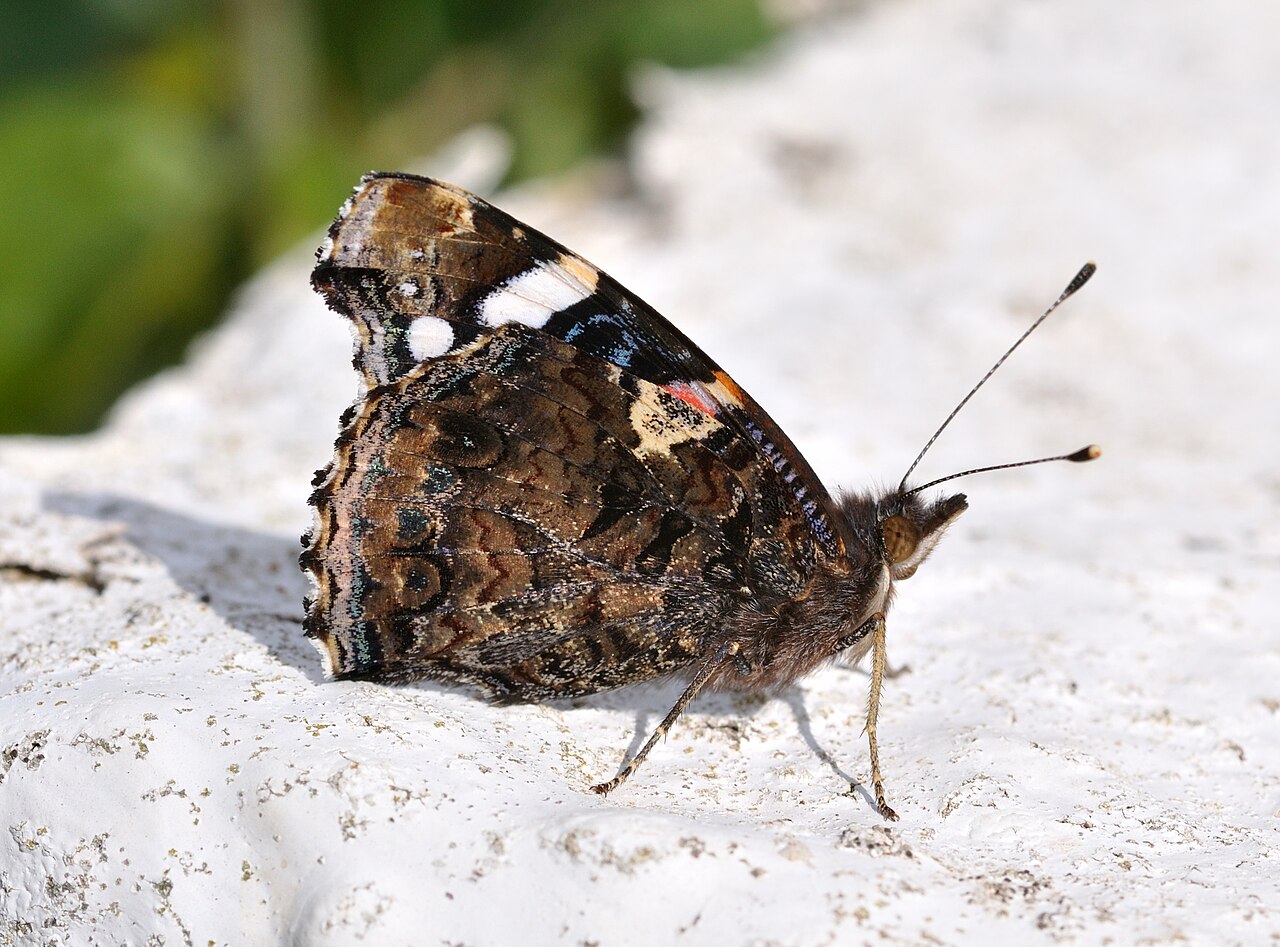
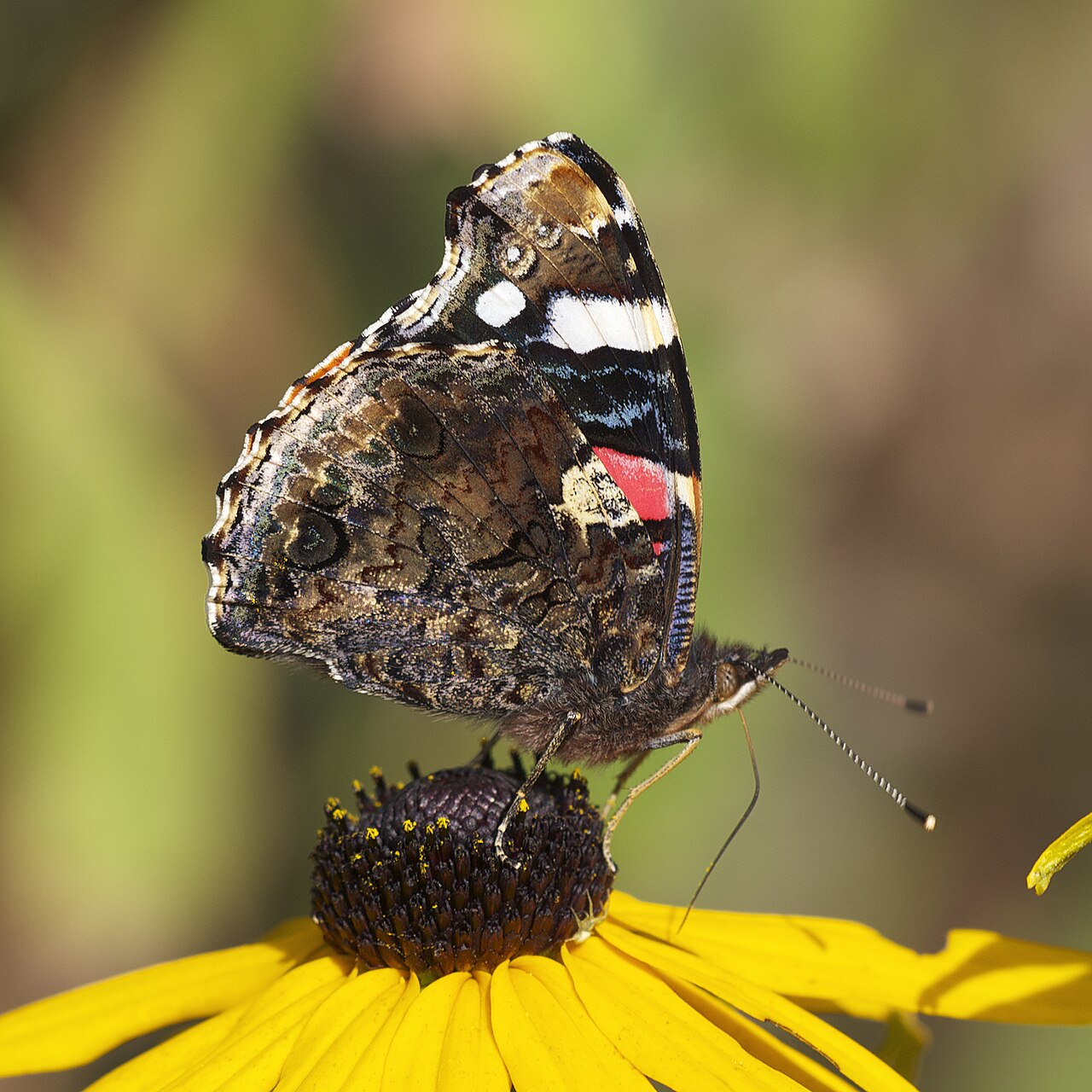
The red admiral, Vanessa atalanta, is the closest thing to a red butterfly across most of North America and Europe. It is black with a broad red-orange band running diagonally across each forewing and another along the hindwing margin, plus white spots near the forewing tips. It is common, widespread, and one of the more approachable butterflies.
Monarchs and painted ladies are the two most often reported as red. Monarchs are deep orange with heavy black veining and read as red at a distance, particularly in low afternoon light. Painted ladies are paler, a salmon or apricot orange with black and white forewing tips, and they are among the most widespread butterflies on earth.
Beyond those, the ruddy daggerwing in Florida and the tropics is a rich orange-red with long tails, and the red-spotted purple carries orange-red spots on an otherwise dark blue-black wing. Our guides to the painted lady, the viceroy, and the red-spotted purple cover the individual species.
The Red Admiral in Detail
Red admirals are unusual among butterflies for being genuinely approachable. They perch on walls, tree trunks, and paths, often return to the same spot repeatedly, and males defend small territories in sunlit clearings, darting out at passing insects and even at people before returning to the perch.
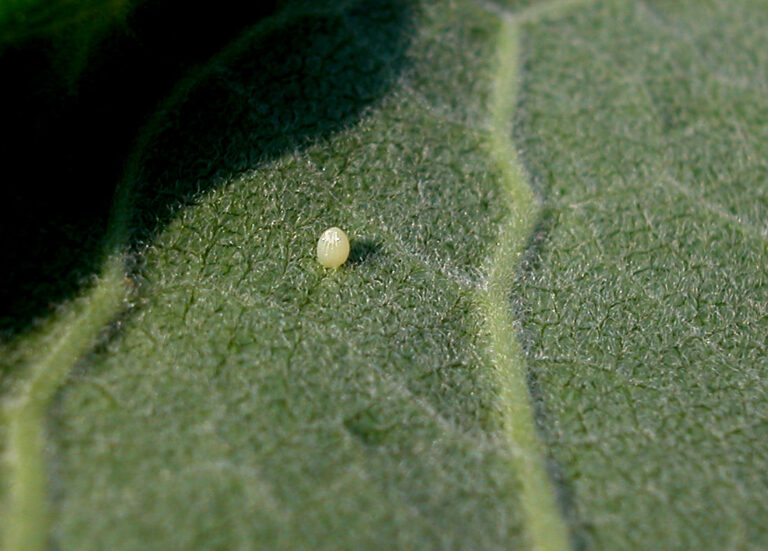
Their host plants are nettles, which is why they are common in disturbed ground, hedgerows, and neglected corners rather than in tidy gardens. Caterpillars build shelters by folding a nettle leaf and sealing it with silk, and the presence of these folded leaves is a reliable sign of local breeding.
Adults feed on rotting fruit, tree sap, and dung as readily as on nectar, and in autumn they are frequently found on fallen apples and pears. They migrate, moving north through spring and summer and retreating south in autumn, and the northern parts of the range are recolonised each year rather than holding a resident population.
Is It Rare to See a Red Butterfly?
Not at all, if orange-red counts. Red admirals, monarchs, and painted ladies are among the most commonly encountered butterflies across North America and Europe, and in a good year painted ladies undertake mass migrations involving millions of individuals.
A saturated scarlet butterfly is genuinely rare in temperate regions. The red lacewing, postman, and various Heliconius species come closest, and all are tropical. Anyone in the United States or Europe who sees a truly scarlet butterfly outdoors has almost certainly seen an escapee from a butterfly house or misjudged the colour.
Worn individuals add another source of confusion. Butterfly scales rub off with age, and a late-season monarch or painted lady with thinned wings can look noticeably deeper and more brick-red than a fresh one, since the underlying wing membrane shows through. A butterfly that looks unusually red in September is often simply an old one.
What is genuinely uncommon is a red butterfly in winter. Red admirals overwinter as adults in parts of their range and can appear on warm days in January or February, which is startling enough that these sightings generate a large share of the questions about rarity. The butterfly is common, the timing is not.
Red Butterfly vs Orange Butterfly
The distinction people are really drawing is between deeper and lighter warm tones, and it depends heavily on light. Direct low sun makes a monarch look red, overcast midday light makes the same insect look clearly orange, and photographs vary enormously with white balance.
Three checks separate the common candidates regardless of light. Heavy black veining across the whole wing means a monarch or a viceroy. A diagonal band on a mostly black wing means a red admiral. Black and white patterned forewing tips over a paler mottled ground mean a painted lady.
Viceroys add a fourth possibility and are the classic monarch mimic, distinguished by a black line crossing the hindwing veins that monarchs lack. Our guide to the orange butterfly covers the full orange group, and moth versus butterfly covers separating them from day-flying moths with similar colouring.
What a Red Butterfly Means
Across contemporary folklore red butterflies carry a mix of powerful and cautionary associations. Positive readings centre on passion, deep love, transformation through intensity, and vitality, and in several traditions a red butterfly is read as a message from a departed loved one, particularly a partner or parent.
The cautionary readings are older and more regional. Some European and Central American folk traditions treat a red butterfly as a warning or as an omen tied to conflict, and in a few versions it is associated with a witch or a spirit rather than with a benign visitor. These readings persist alongside the positive ones rather than having been displaced by them.
Butterfly symbolism generally centres on transformation because of the life cycle, and colour modifies rather than replaces that base meaning. Red intensifies it, adding urgency and emotional weight to a message otherwise read as change. Our guides to what it means when a butterfly lands on you and butterfly tattoo meaning cover the symbolism in more depth.
Why Butterflies Land on People
Salt, almost always. Butterflies obtain sodium and other minerals from damp soil, sweat, and tears, a behaviour called puddling, and human skin after any exertion is a concentrated source. A butterfly landing on an arm or a shoulder is feeding rather than communicating.
Colour plays a part in the approach. Butterflies are drawn to bright colours resembling flowers, and people wearing red, orange, yellow, or purple attract more landings than those in neutral tones. Red admirals in particular are curious and will investigate almost any stationary object in a sunlit clearing.
Both explanations can hold at once. Knowing that a butterfly is after salt does not require anyone to discard the meaning they take from the encounter, and it does explain why the landings cluster on warm days after exercise rather than randomly.
How to Attract Red Butterflies
Host plants determine whether butterflies breed on a property, and each species needs a specific one. Red admirals need nettles, monarchs need milkweed, and painted ladies use thistles, mallows, and hollyhocks. Without the right host plant the property will only ever get passing visitors.
Nectar plants keep adults present. Buddleia, coneflower, zinnia, verbena, joe-pye weed, and asters all work, and a succession of blooms from spring through autumn matters more than any single species. Late-flowering plants are especially valuable for migratory species fuelling up in autumn, when red admirals and painted ladies are moving south and need dense energy sources within a short flight of one another.
Two additions punch above their weight. A shallow damp patch of gravel or sand gives puddling habitat that nectar cannot replace, and a dish of overripe fruit in dappled shade brings in red admirals, question marks, and commas that ignore flowers. Avoiding broad-spectrum insecticides matters more than any planting choice.
Red Butterflies Around the World
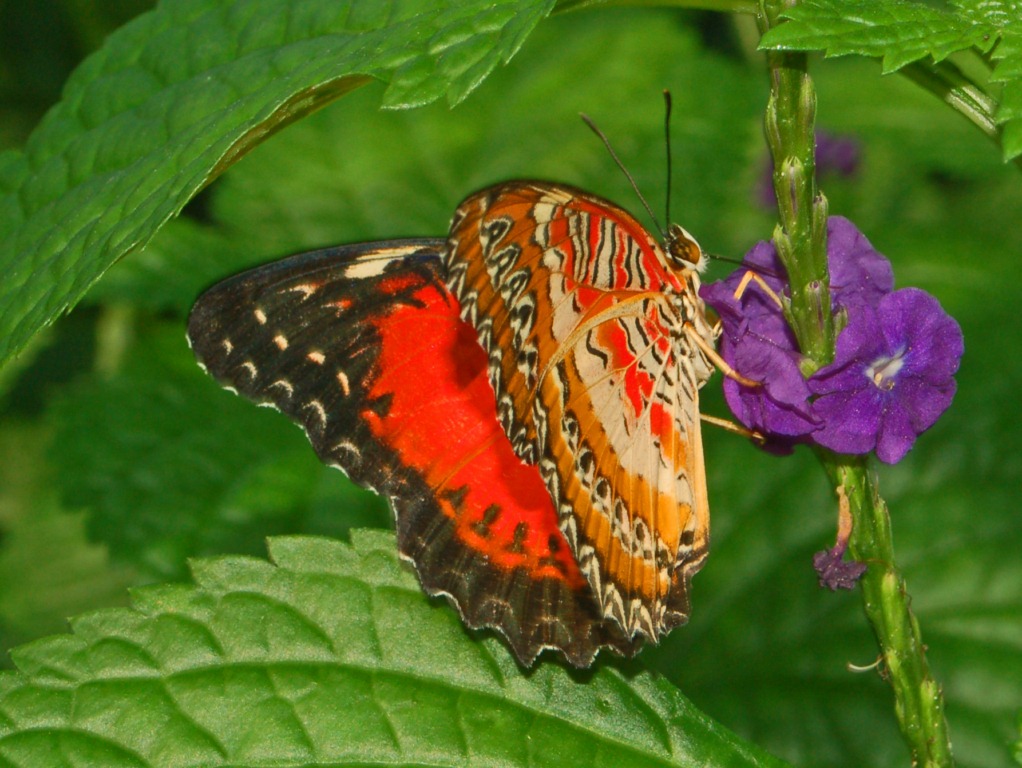
The genuinely scarlet species are concentrated in the tropics. The red lacewing of Southeast Asia is a strong orange-red with black lacework markings and is a staple of butterfly houses worldwide. The postman butterfly of Central and South America carries bold red bands on black wings and is toxic, advertising the fact with that colouring.
Heliconius butterflies more broadly form one of the best-studied mimicry systems in biology, with dozens of species converging on shared red and black warning patterns across overlapping ranges. Predators that learn one pattern avoid all species carrying it, which benefits every member.
In Africa and Asia several Cymothoe and Vindula species produce strong reds, and the Indian red admiral extends the familiar temperate pattern into the Himalayas. Almost all of these share the same ommochrome pigment chemistry, which is why the tropical reds tend toward crimson and brick rather than the pure scarlet found in some flowers and birds.
Related reading: Red Admiral Butterfly.
Frequently Asked Questions
What type of butterflies are red?
In North America and Europe the red admiral comes closest, with red-orange bands on black wings. Monarchs and painted ladies read as red in certain light but are orange. Genuinely scarlet species such as the red lacewing and the postman butterfly are tropical and mostly seen in butterfly houses.
Is it rare to see a red butterfly?
No, if orange-red counts. Red admirals, monarchs, and painted ladies are among the most common butterflies across their ranges. A truly scarlet butterfly outdoors in a temperate region is rare and usually means an escapee. What is genuinely unusual is a red admiral on a warm winter day.
What does it mean if you see a red butterfly?
Contemporary folklore reads red butterflies as symbols of passion, intense transformation, and vitality, and often as a message from a departed loved one. Older regional traditions in Europe and Central America treat them more cautiously, as a warning or an omen tied to conflict.
Are red butterflies good luck?
Interpretations are divided. Most modern readings are positive, centring on love, energy, and messages from those who have died. Some older folk traditions treat a red butterfly as a warning rather than a blessing, so unlike the broadly favourable readings given to blue or white butterflies, red is ambiguous.
Why do butterflies land on you?
They are after salt. Butterflies take sodium and minerals from damp soil, sweat, and tears in a behaviour called puddling, and human skin after exertion is a concentrated source. Bright clothing in red, orange, or yellow also attracts more landings by resembling flowers.
What is the difference between a red admiral and a monarch?
Pattern. A red admiral is mostly black with a single diagonal red-orange band across each forewing and white spots at the tips. A monarch is orange across the whole wing with heavy black veining throughout. They are also different sizes, with monarchs noticeably larger.
How do I attract red butterflies to my garden?
Plant the host plants, since each species needs a specific one: nettles for red admirals, milkweed for monarchs, thistles and hollyhocks for painted ladies. Add nectar plants that bloom in succession from spring to autumn, a damp gravel patch for puddling, and a dish of overripe fruit in shade.