Iguana Poop: Identification, Risks, and Cleanup
Iguana poop is a large, dark, sausage-shaped dropping two to three inches long and up to three quarters of an inch thick, topped with a distinct white or cream urate cap, and it is startlingly big for a lizard. On a pool deck or a seawall it is regularly mistaken for dog or raccoon droppings, and that misidentification is the single most common question people in south Florida have when they find it. The white cap and the fibrous plant content settle it immediately.
Green iguanas are an established invasive species across south Florida, and their droppings are a genuine nuisance rather than a curiosity: they foul pool decks, docks, seawalls, patios, and boats, they stain concrete permanently, and they carry Salmonella. This guide covers identification, how to tell iguana droppings from raccoon and dog waste, the real health risk including water contamination, how to clean and remove them, and how to make a property less attractive to the animals producing them.
Iguana poop is a dark sausage-shaped dropping 2 to 3 inches long with a white urate cap at one end, containing visible plant fiber. It is far larger than most people expect from a lizard and is often mistaken for dog or raccoon droppings. It carries Salmonella, stains concrete permanently, and should be removed with gloves and disinfectant.
| Feature | Iguana Poop |
|---|---|
| Length | 2 to 3 in, sometimes longer |
| Diameter | Up to 0.75 in |
| Key feature | White or cream urate cap at one end |
| Contents | Fibrous plant matter, leaf fragments |
| Where found | Pool decks, seawalls, docks, patios, boats |
| Confused with | Dog, raccoon, opossum droppings |
| Health risk | Salmonella; stains concrete permanently |
What Do Iguana Droppings Look Like?
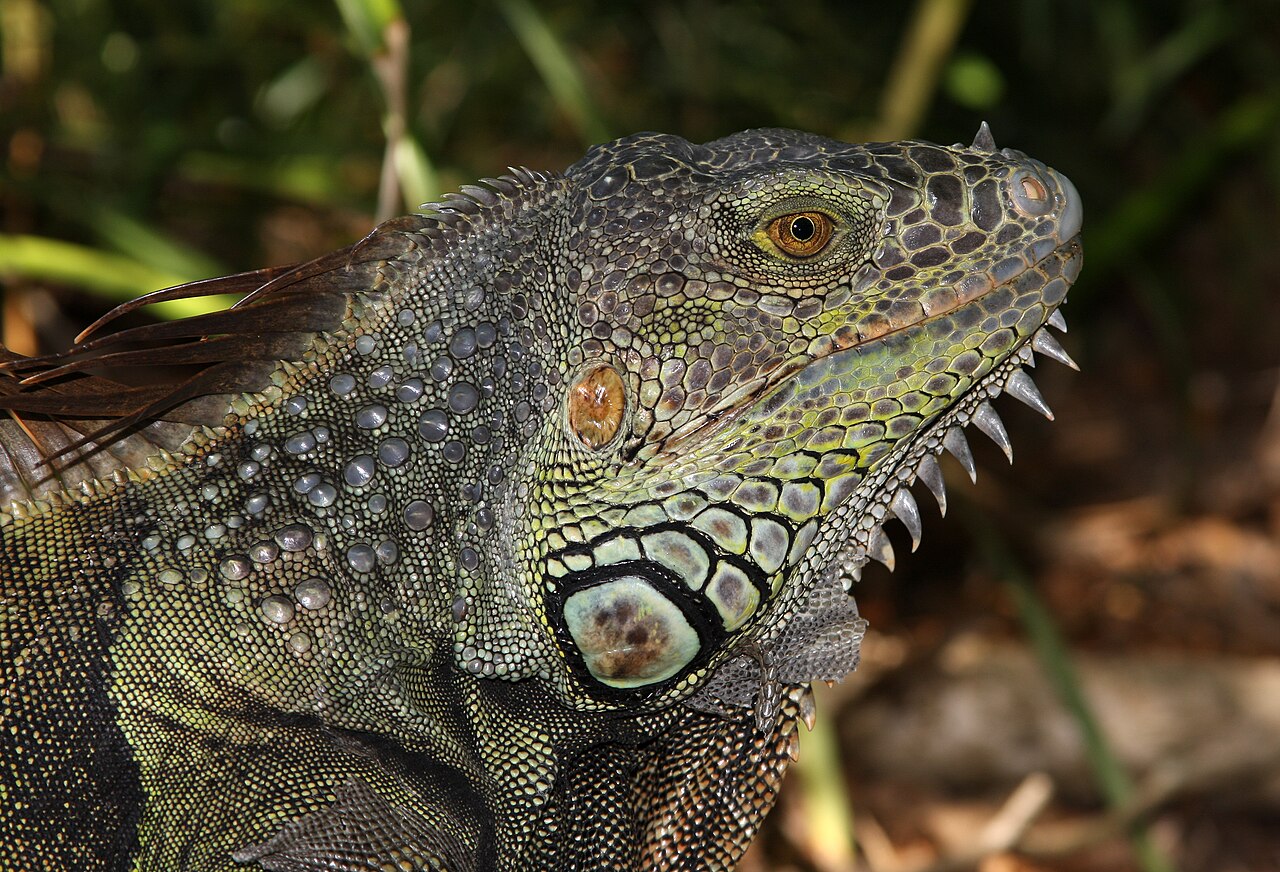
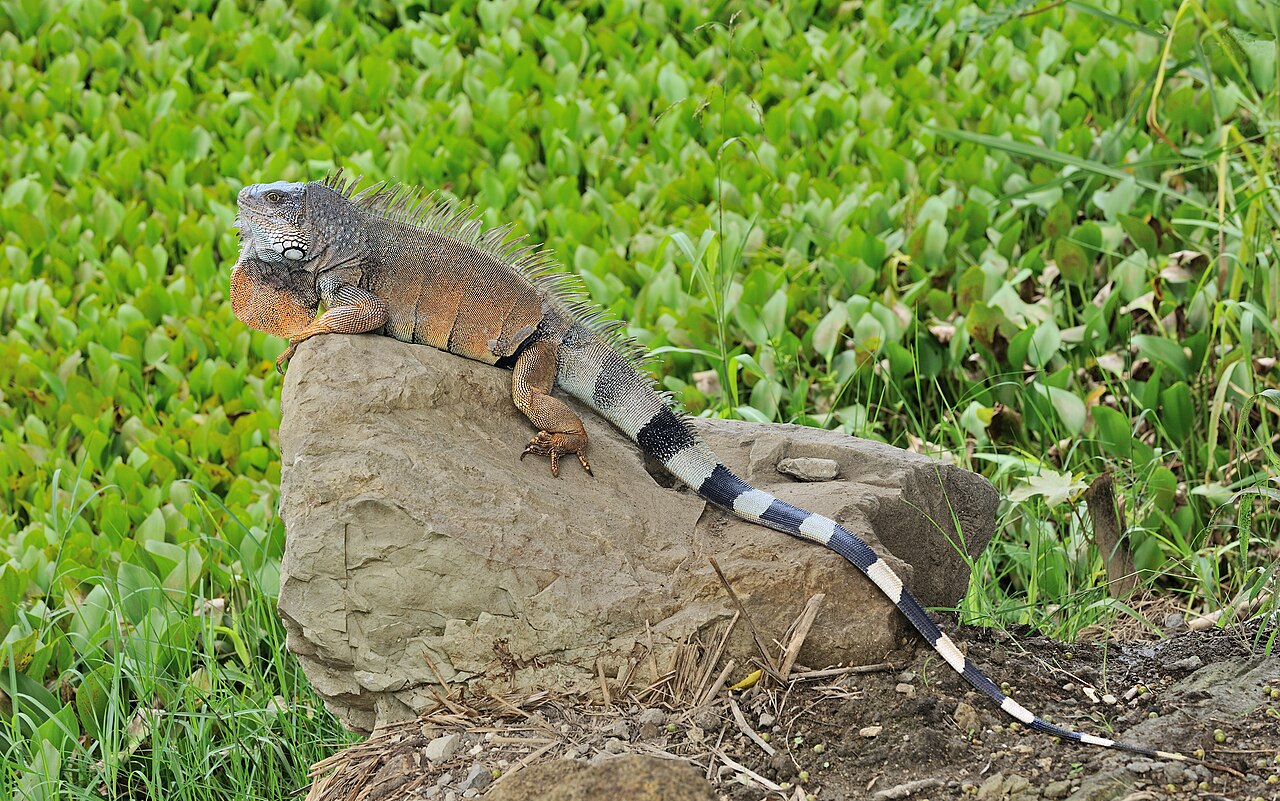
Iguana droppings are dark brown to black cylinders two to three inches long and up to three quarters of an inch thick, with a distinct white or cream cap of urate at one end. Large adult males, which can exceed five feet including the tail and weigh 15 to 20 pounds, produce correspondingly large droppings, and a single deposit from a big male genuinely resembles a medium dog’s in bulk.
The white cap is the identifying feature and the fastest way to rule out any mammal. Reptiles excrete nitrogen waste as uric acid rather than as urea dissolved in water, and the semi-solid urate is passed together with the feces from the same opening. No mammal dropping has that two-tone structure, so a large dropping with a chalky white end is a reptile every time.
Content is the second confirmation. Green iguanas are almost entirely herbivorous as adults, eating leaves, flowers, and fruit, and their droppings are packed with visible plant fiber, often with recognizable leaf fragments. There is no fur, no bone, and no insect chitin. Broken open, a dried iguana dropping looks like compressed vegetation, which distinguishes it from raccoon scat packed with seeds and berries and from dog waste, which is uniform and processed.
Iguana Poop vs Raccoon and Dog Droppings
Raccoon droppings are the most consequential lookalike, because raccoon scat can carry Baylisascaris procyonis roundworm eggs, which are genuinely dangerous to humans and can cause severe neurological damage. Raccoon droppings are two to three inches long with blunt ends, no white cap, and are packed with undigested berries, seeds, corn kernels, and insect parts. Raccoons also use communal latrines, so droppings accumulate repeatedly in one spot at a tree base, on a deck, or in an attic.
Dog droppings are uniform and smooth inside because commercial food is fully processed, they taper rather than ending bluntly, and they have no white cap. They also break down and lose shape far faster than iguana droppings, which dry hard and adhere firmly. Opossum droppings are smaller, one to two inches, often curled, and lack the white urate section.
Location narrows it further. Iguanas bask on seawalls, docks, pool decks, boat covers, and flat roofs, unlike the wall-climbing house geckos that leave much smaller droppings in the same region, and they defecate where they bask, so droppings appear on hard sunny surfaces near water. Raccoons prefer sheltered spots, and dogs go on grass. Finding large droppings with white caps scattered across a pool deck in south Florida is iguana with near certainty. The possum poop guide and the lizard poop guide cover the two most likely alternatives.
Is Iguana Feces Toxic?
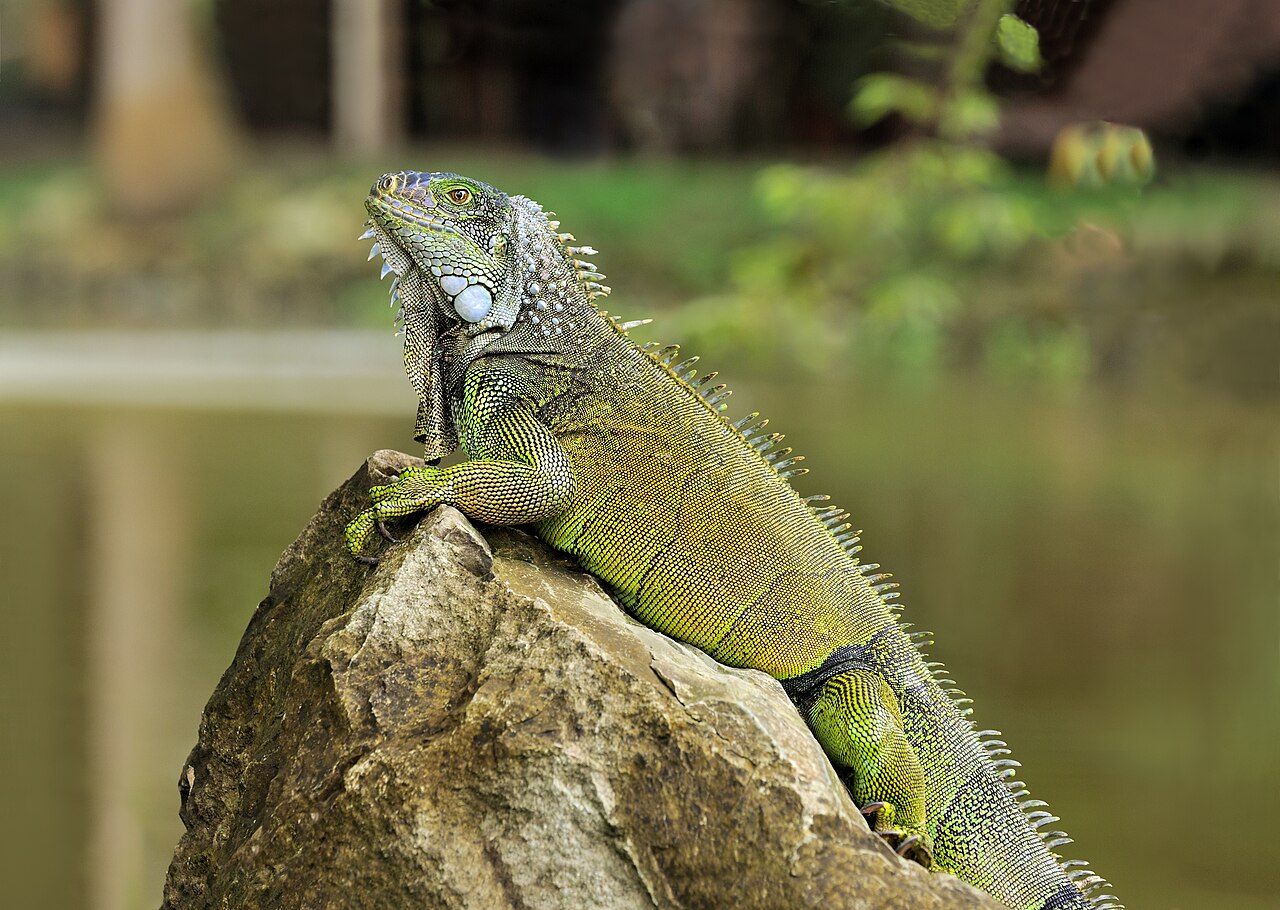
Iguana feces is not toxic in the chemical sense, but it carries Salmonella and should be treated as a biohazard. Reptiles commonly carry Salmonella in their digestive tracts without appearing ill, and the bacteria are shed in feces. The Centers for Disease Control and Prevention (cdc.gov) documents regular outbreaks linked to reptile contact and advises thorough handwashing after touching reptiles, their environments, or anything they have contaminated.
The water contamination angle is what makes iguanas different from most yard wildlife. Iguanas frequently defecate into swimming pools, and pool contamination by reptile waste requires the same response as any fecal incident: remove the material with a net, dispose of it in the trash rather than rinsing it back in, verify that free chlorine is at least 1 part per million with pH between 7.2 and 7.5, and run the filter. Formed stool is a relatively low-risk contamination event when chlorination is adequate.
Children are the population most at risk, since transmission is by hand to mouth and children playing on a contaminated deck or in a pool are the likeliest to ingest bacteria. Children under five, adults over 65, pregnant women, and immunocompromised people should avoid contact entirely. Dogs that eat iguana droppings can also pick up Salmonella and pass it on, which is an underappreciated route into a household.
How Do You Remove Iguana Poop?
To remove iguana droppings, wear disposable gloves, spray the dropping with water or a disinfectant to soften it and prevent dust, scoop it with a shovel or thick paper towels into a sealed bag, and put it in the trash. Then disinfect the surface with a bleach solution of roughly one third cup of household bleach per gallon of water, allow contact time, and rinse. Wash hands thoroughly afterward.
Staining is the harder problem. Iguana droppings contain plant pigments and acidic urates that penetrate porous concrete, and a dropping left for a few days in Florida sun leaves a mark that ordinary washing will not remove. Prompt removal is by far the most effective approach. For existing stains, a concrete cleaner or an oxygen bleach product with a stiff brush works better than chlorine bleach, and pressure washing handles seawalls and pool decks.
Boat owners face the same issue on canvas and vinyl. Enzymatic cleaners of the kind sold for pet stains work better than detergent on those surfaces, and covers should be cleaned promptly rather than left. Never dry sweep large accumulations, and never wash droppings into a pool, a storm drain, or directly into a canal, since that simply moves the contamination.
How Do You Stop Iguanas From Pooping in Your Yard?
The only approach that works is making the property less attractive, since iguanas defecate where they bask and feed. Remove the food: iguanas eat hibiscus, bougainvillea, orchids, roses, impatiens, and most soft ornamental foliage, along with fallen mangoes, figs, and other fruit. Replacing preferred plants with ones iguanas avoid, such as citrus, oleander, croton, and most tough-leaved natives, reduces the draw substantially.
Remove the shelter next. Iguanas dig burrows in loose soil along canal banks, under seawalls, sidewalks, and foundations, and those burrows undermine structures over time. Filling burrows with sand or concrete when they are unoccupied, clearing dense ground cover, and trimming overhanging branches that give roof access all help. Sheet metal collars on trees prevent climbing.
Physical exclusion works where habitat modification is not enough. Screening around docks and under decks, mesh over drain openings, and pool cages all keep iguanas out of specific areas. Motion-activated sprinklers are among the more effective deterrents, since iguanas dislike sudden water. Commercial repellents based on garlic, neem, or capsaicin have limited and short-lived effect, and habitat change outperforms all of them.
Are Iguanas Bad to Have in Your Yard?
In Florida, yes, and that assessment comes from the state rather than from opinion. Green iguanas are a non-native invasive species, established since the 1960s from escaped and released pets, and populations across the southern peninsula and the Keys have grown enormously. They damage landscaping, and their burrowing undermines seawalls, sidewalks, foundations, and canal banks, causing real structural costs.
The ecological effects are also documented. Iguanas eat the nickerbean that supports the endangered Miami blue butterfly, and they consume native vegetation broadly. They have been recorded eating tree snails and bird eggs despite their largely herbivorous diet, and their burrows are used by other invasive reptiles. In 2010 and again in 2022, cold snaps caused mass iguana die-offs across south Florida, producing the widely reported phenomenon of stunned iguanas falling from trees, but populations recover.
Florida classifies the green iguana as a prohibited species and permits homeowners to remove them from their own property year-round without a permit, and the Florida Fish and Wildlife Conservation Commission (myfwc.com) encourages it. Removal must be humane, and the state does not pay bounties to homeowners, though it has funded contractor removal programs. Iguanas are protected by anti-cruelty law, so poisoning, drowning, and freezing are illegal.
What Do Iguana Droppings Say About Their Diet?
Iguana droppings are almost pure plant fiber, reflecting a diet that is roughly 95 percent or more vegetation in adults. Green iguanas eat leaves, shoots, flowers, and fruit, and they are hindgut fermenters with an enlarged colon housing microbes that break down cellulose, similar in principle to a horse. Juveniles eat some insects, but adults are essentially strict herbivores.
The gut microbes are acquired rather than inherited, and young iguanas obtain them partly by consuming adult droppings, a behavior called coprophagy that is normal and necessary in this species. This matters for keepers of pet iguanas, since a young animal raised in complete isolation may struggle to establish proper gut flora, and it is one reason captive iguana diets so often go wrong.
Diet also explains the volume. Leaves are low in calories, so an iguana must process large quantities, and output is correspondingly large. Basking is directly tied to digestion: an iguana needs to reach roughly 85 to 95 degrees Fahrenheit for its gut microbes to function, which is why the animals spend hours on seawalls and roofs in the sun, a requirement shared with every reptile covered in the guide to what lizards eat, and why the droppings appear exactly where they bask. The baby iguana guide covers the juvenile stage and its different requirements.
Frequently Asked Questions
What do iguana droppings look like?
Iguana droppings are dark cylinders 2 to 3 inches long and up to three quarters of an inch thick with a white or cream urate cap at one end, packed with visible plant fiber. They are far larger than most people expect from a lizard.
Is iguana feces toxic?
Not chemically toxic, but it carries Salmonella like all reptile waste, and transmission is by hand to mouth. Wear gloves, disinfect the surface, and wash hands. Children and immunocompromised people should avoid contact entirely.
How do you tell iguana poop from raccoon poop?
The white urate cap, which raccoons never have, and the content. Iguana droppings are fibrous plant matter; raccoon scat is packed with berries, seeds, and insect parts. Raccoon scat can carry a dangerous roundworm, so the distinction matters.
How do you remove iguana poop?
Wear gloves, wet the dropping to soften it, scoop it into a sealed bag for the trash, then disinfect with a bleach solution and rinse. Remove it promptly, since the pigments and urates stain concrete permanently once baked in the sun.
How do I stop iguanas from pooping in my yard?
Remove what draws them: replace hibiscus, bougainvillea, and other preferred plants, pick up fallen fruit, fill burrows, clear dense ground cover, and install motion-activated sprinklers. Commercial repellents have limited and short-lived effect.
Are iguanas bad to have in your yard?
In Florida they are a prohibited invasive species. They damage landscaping, and their burrowing undermines seawalls, sidewalks, and foundations. Homeowners may remove them humanely from their own property year-round without a permit.
Does Florida pay you to remove iguanas?
Not for homeowners. The state has funded contractor removal programs, but there is no bounty for private individuals. Removal on your own property is permitted year-round and must be humane, since anti-cruelty law still applies.