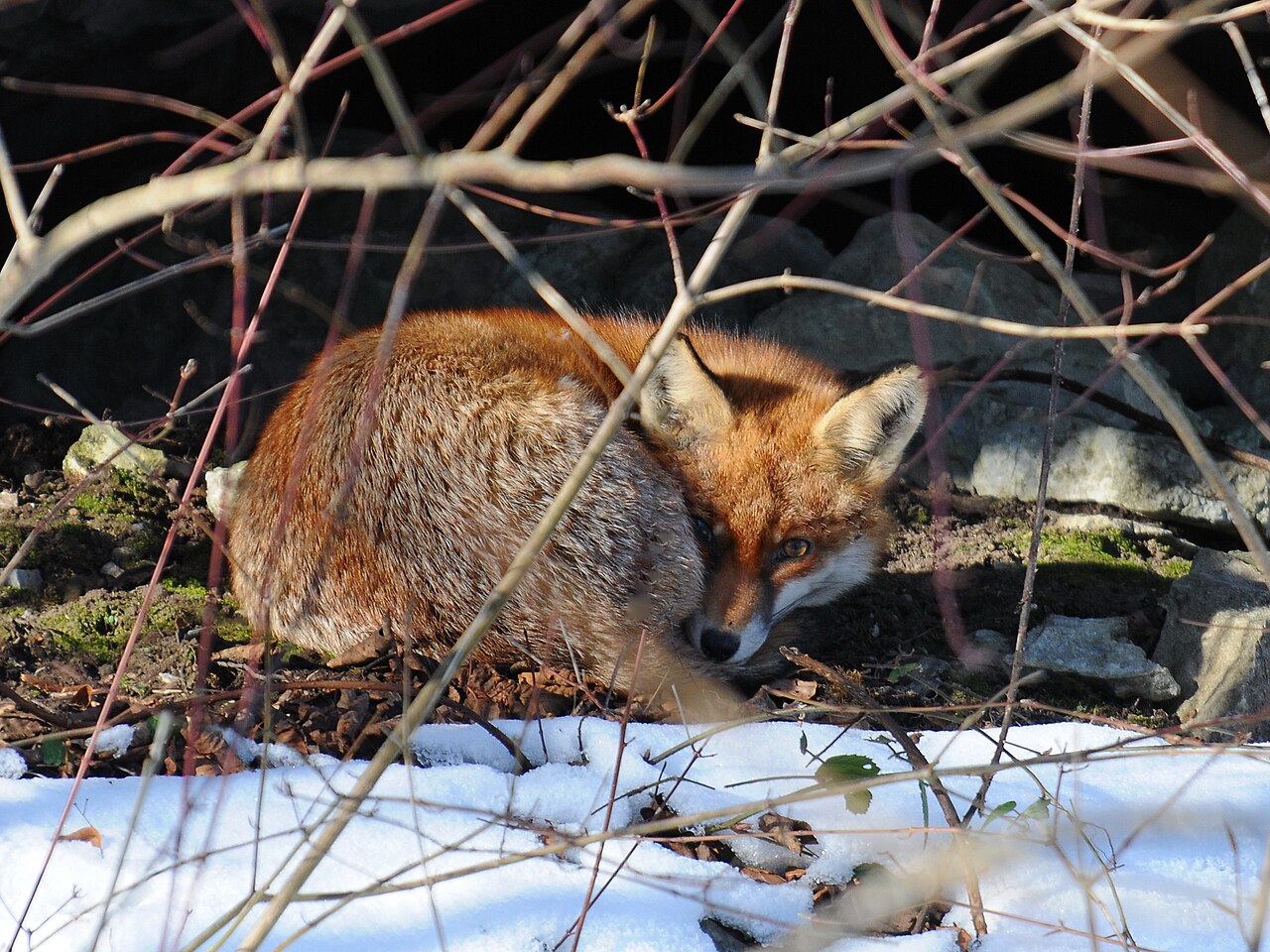
What Is a Female Fox Called? Vixen and Other Fox Terms
A female fox is called a vixen. A male is a dog fox, also called a reynard or, less commonly, a tod, and the young are kits, cubs, or pups depending on region. Vixen is one of the few animal terms that has entered general English as a description of a person, meaning a sharp-tongued or quarrelsome woman, and that secondary sense has become better known than the original in some circles.
The word itself is a linguistic curiosity: vixen is the only surviving English word that preserves an old southern dialect pronunciation in which initial f was voiced to v. The regular form would have been fixen, and vixen survived instead because the southwestern dialect form happened to be the one that made it into standard written English. This guide covers the full vocabulary, how to actually tell a vixen from a dog fox in the field, and what a vixen does that a male does not.
A female fox is called a vixen. Males are dog foxes, also called reynards or tods, and young are kits or cubs. Vixen comes from an old southern English dialect form of fixen, preserving a voiced initial f. The sexes look nearly identical, so a single fox usually cannot be reliably sexed by sight in the field.
| Term | Meaning |
|---|---|
| Vixen | Female fox |
| Dog fox, reynard, tod | Male fox |
| Kit, cub, pup | Young fox |
| Litter | A group of young from one vixen |
| Earth or den | The fox’s burrow |
| Typical litter size | 4 to 6 kits |
| Sexual dimorphism | Minimal; males about 15 percent larger |
Why Is a Female Fox Called a Vixen?
A female fox is called a vixen from an Old English word for a female fox, fyxen, formed from fox with a feminine suffix. The reason it begins with v rather than f is a genuine quirk of English dialect history. In the southern and southwestern dialects of Middle English, an initial f was regularly pronounced as v, so fox became vox and fyxen became vixen. Standard English mostly kept the northern forms, but a handful of southern words slipped through.
Vixen is the clearest surviving example, and vat, from fat meaning a container, is another. Almost every other word that underwent this shift was later standardized back to f, which is why vixen looks so anomalous. The word is essentially a fossil of a dialect boundary that has otherwise disappeared from the written language.
The secondary meaning came later. By the sixteenth century, vixen was being applied to a sharp-tempered or shrewish woman, drawing on the fox’s reputation for slyness and on the aggression of a vixen defending cubs. That sense is now common enough that some people meet it before they encounter the animal. The group of foxes guide covers the related term skulk, which comes from the same set of assumptions about fox character.
What Is a Male Fox Called?
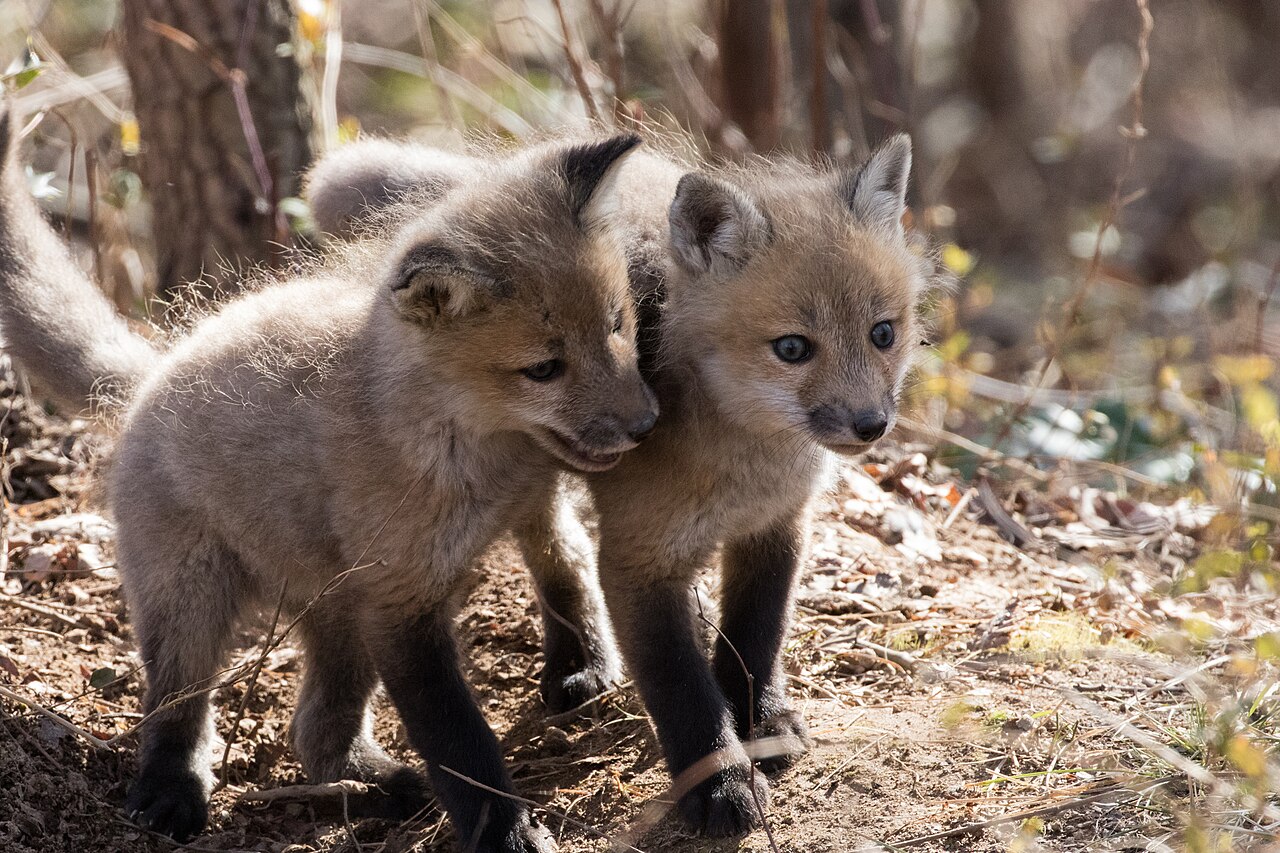
A male fox is called a dog fox, which is the standard and least ambiguous term. Reynard is a literary alternative, taken from the medieval European beast fables about Reynard the Fox, a trickster whose stories circulated across France, Germany, and England from the twelfth century onward and were popular enough that in French the ordinary word for fox, renard, replaced the older goupil entirely.
Tod is a third term, chiefly Scottish and northern English, and it appears in place names and in older hunting literature. Todhunter as a surname means fox hunter. None of these carries any technical distinction; dog fox, reynard, and tod all mean the same animal, and dog fox is the one used in wildlife management and by anyone who works with foxes.
There is no age-based split of the kind that separates a colt from a stallion. A young male is a kit or a cub like any young fox, and he becomes a dog fox once mature, at around ten months. Foxes reach breeding age in their first winter, which is why populations can rebound quickly from losses despite the animals rarely living past three or four years in the wild.
How Do You Tell a Vixen From a Dog Fox?
With difficulty. Red foxes show minimal sexual dimorphism, with males averaging perhaps 15 percent heavier at 10 to 15 pounds against a vixen’s 8 to 12, and a slightly broader head and thicker neck. The overlap is substantial and a single animal seen at distance generally cannot be sexed reliably. Anyone claiming certainty from one glimpse is guessing.
Spring offers the one clear field clue. A nursing vixen has visible teats through her belly fur from March through June, and her coat often looks thin and ragged during that period from the demands of feeding a litter. A fox with an obviously rough spring coat and visible teats crossing a garden in May is a vixen with cubs somewhere nearby.
Behavior helps at a den. The vixen stays with the cubs and does most of the direct care while the dog fox brings food to the den entrance and does not usually enter, so the animal seen arriving with prey in its mouth and departing quickly is more likely the male. In practice, wildlife researchers sex foxes by capture, camera trap image quality, or genetics rather than by eye. The baby fox guide covers the den period when these differences are most visible.
What Does a Vixen Do That a Dog Fox Does Not?
The vixen gives birth and does the great majority of direct cub care, staying underground with the litter almost continuously for the first two to three weeks while the cubs are blind, deaf, and unable to regulate their own temperature. During this period she depends entirely on the dog fox bringing food to the den, and a vixen that loses her mate at this stage will usually lose the litter.
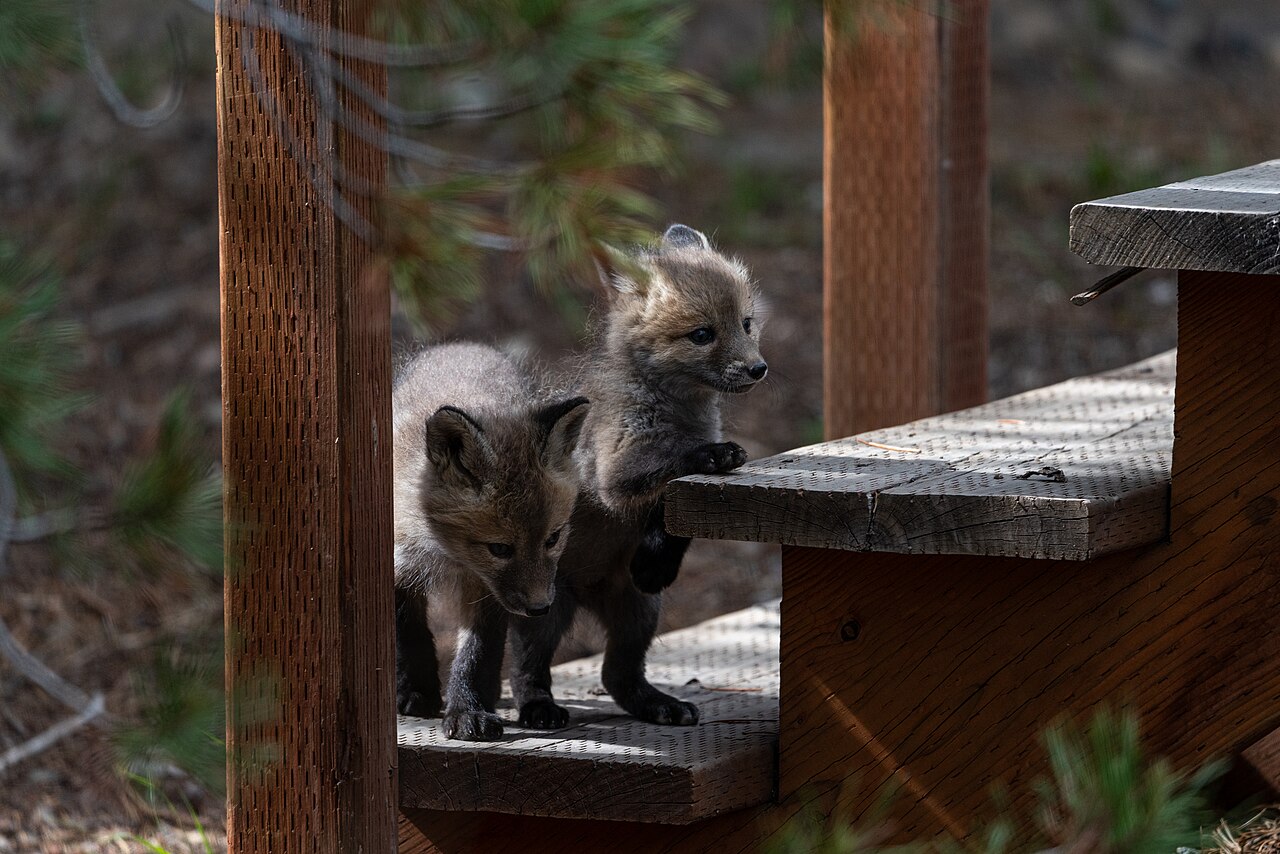
Gestation is about 52 days, and litters average four to six kits, with as many as twelve recorded where food is exceptionally abundant. Cubs are born with short dark gray fur that bears no resemblance to the adult coat, and their eyes open at around two weeks. The vixen moves the whole litter to a backup den if she detects disturbance, carrying them one at a time by the scruff.
The vixen is also the source of the scream that alarms people on winter nights. The vixen’s scream, a harsh, drawn-out shriek that sounds disturbingly human, is produced mainly during the December to February breeding season and is one of the most commonly reported unexplained night sounds in Britain and North America. Dog foxes bark, a sharp triple note, and both sexes use a wide range of other calls. The fox sounds guide covers the full repertoire.
Do Vixens Get Help Raising Cubs?
Sometimes, and this is one of the more interesting aspects of fox social life. In food-rich environments, particularly urban ones and some rural populations in Britain, a breeding vixen may be joined by one or more subordinate adult females, usually her own daughters from a previous year, that do not breed themselves but help feed and guard the cubs.
These helpers bring food, groom the cubs, and stand watch, and their presence measurably improves cub survival. The arrangement occurs where territories are small and food is abundant enough to support several adults, which is exactly the situation in cities where discarded food, rodents, and deliberate feeding by residents create unusually high fox densities. Urban red fox densities in some British cities are among the highest recorded anywhere.
Where food is scarce, the arrangement disappears and a pair raises cubs alone. This flexibility is one reason the red fox has the widest natural distribution of any wild land mammal, occurring across North America, Europe, Asia, and North Africa and introduced to Australia. The same species can be a solitary hunter on tundra and a semi-social suburbanite in London.
Are There Different Terms for Other Fox Species?
No, vixen and dog fox apply across all fox species. A female arctic fox, fennec fox, gray fox, kit fox, or swift fox is a vixen, and the young of all of them are kits or cubs. The terminology attached to the type of animal rather than to any individual species, which is the usual pattern in English animal vocabulary.
The species themselves differ considerably. Arctic foxes turn white in winter and have the best insulation of any mammal, tolerating temperatures to minus 70 degrees Fahrenheit before their metabolism rises, and they produce the largest litters of any wild canid, averaging six to twelve kits and occasionally exceeding twenty in peak lemming years. Fennec foxes, the smallest at two to three pounds, have enormous ears for heat dissipation.
Gray foxes are the North American oddity: they can climb trees, using hooked claws to ascend trunks and even to den in hollows well above ground, which no other American canid does. They are also genetically the most ancient living canid lineage. The arctic fox guide and the fennec fox guide cover the two extremes of the family.
Terminology for Other Female Animals
Vixen is unusual in being specific to foxes. Most female animal terms are shared across several species: doe covers deer, rabbits, goats, ferrets, kangaroos, and mice, and sow covers pigs, bears, badgers, and guinea pigs. Cow covers cattle, elk, moose, whales, elephants, and seals. Hen covers chickens, turkeys, ducks, and several other birds.
The single-species terms are the memorable ones. Vixen for foxes, jenny for donkeys, mare for horses, ewe for sheep, and pen for swans each belong to one animal, and using them correctly is the quickest way to signal familiarity. Bitch is the correct term for a female dog and remains standard in kennel club usage despite its wider connotations.
Fox terminology is also worth knowing because foxes are so widely encountered. Red foxes now live in cities across North America and Europe in numbers most residents never suspect, hunting rodents, scavenging, and denning under sheds and decks. Recognizing a vixen with cubs in a garden and understanding that she will move them herself within weeks is the difference between an interesting spring and a call to pest control. The guide to whether foxes are dangerous covers what a fox in the yard actually means, and the female deer guide covers the other common doe.
Frequently Asked Questions
What is a female fox called?
A female fox is called a vixen. Males are dog foxes, also called reynards or tods, and the young are kits, cubs, or pups. The same terms apply to every fox species.
Why is a female fox called a vixen?
From Old English fyxen, a feminine form of fox. The initial v comes from a southern Middle English dialect that voiced initial f, and vixen is the clearest surviving example of that shift in standard English.
What is a male fox called?
A dog fox, the standard term. Reynard comes from the medieval beast fables and tod is a Scottish and northern English alternative. None carries a technical distinction from the others.
How can you tell a vixen from a male fox?
Usually you cannot from a single sighting. Males average about 15 percent heavier with a broader head, but the overlap is large. In spring a nursing vixen shows visible teats and a ragged coat, which is the one reliable field clue.
What is a baby fox called?
A kit, cub, or pup, with kit most common in North America and cub in Britain. Litters average four to six after about 52 days of gestation, and cubs are born blind with dark gray fur unlike the adult coat.
What sound does a vixen make?
The vixen’s scream, a harsh drawn-out shriek that sounds startlingly human, produced mainly during the December to February breeding season. It is one of the most commonly reported unexplained night sounds.
Do vixens raise cubs alone?
The dog fox brings food while the vixen stays with the cubs. In food-rich areas, especially cities, a vixen may also be helped by non-breeding adult daughters from a previous year, which improves cub survival.