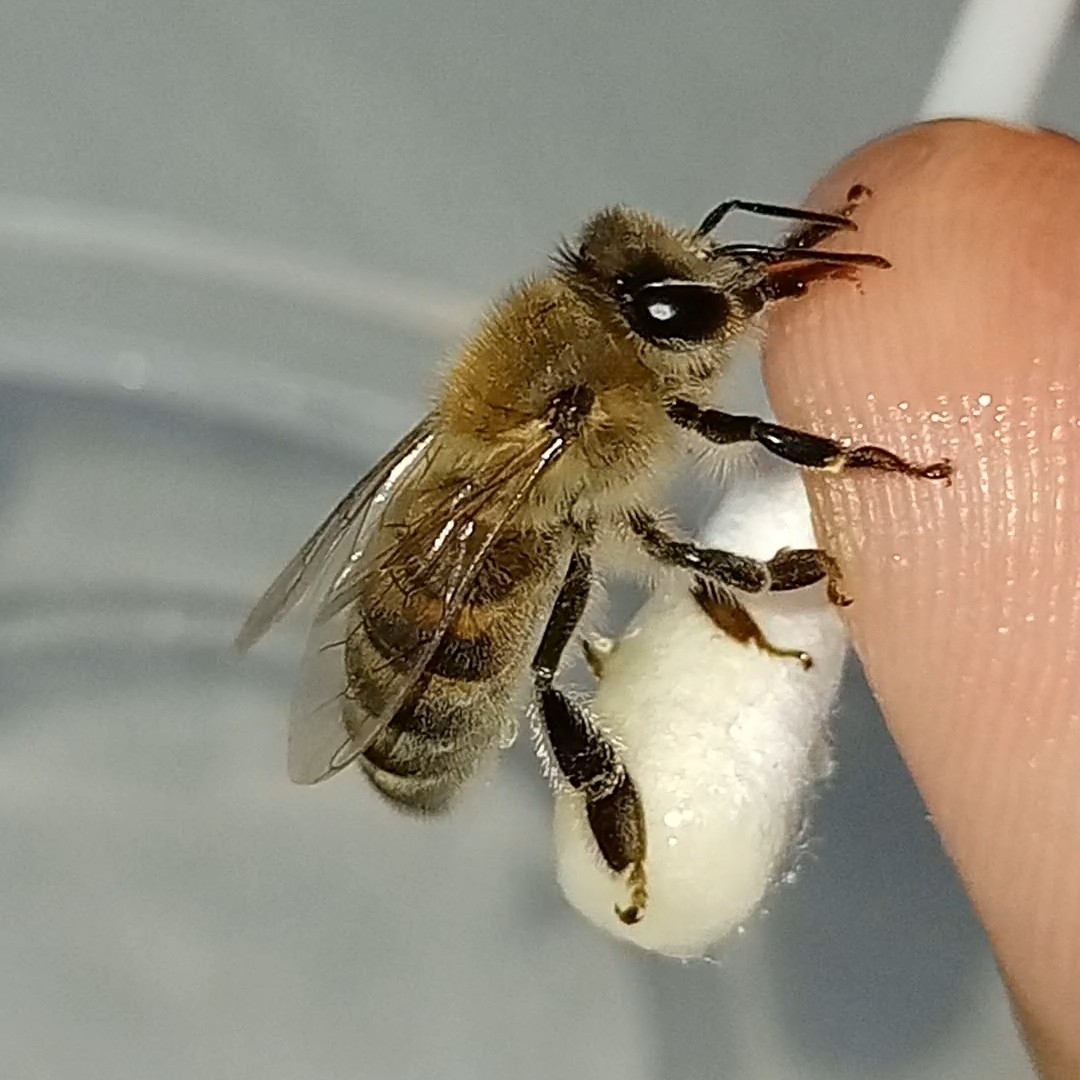
Bee Lands on You: Meaning, Symbolism, and Why It Happens
When a bee lands on you, it traditionally means good fortune, productivity, and the arrival of something you have worked toward, and in many folk traditions it is read as a message from a departed loved one. The bee is one of the most consistently positive omens across cultures, associated with industry, community, sweetness, and prosperity, which is unusual: most insects that land on people carry mixed or negative symbolism.
The practical answer matters just as much. A bee landing on you is almost never a prelude to being stung. Honeybees away from their hive are focused on foraging and are extremely reluctant to sting, because a worker honeybee dies when she stings, and the insect is far more likely investigating the salt in your sweat, a floral scent on your skin, or the color of your clothing. This guide covers both the symbolism and what the bee is actually doing.
A bee landing on you traditionally means good luck, prosperity, and hard work about to pay off, and many people read it as a sign from someone who has died. Practically, the bee is drawn to the salt in your sweat, a floral or sweet scent, or bright clothing. A foraging honeybee will almost never sting unless trapped or squashed.
| Element | Traditional Meaning |
|---|---|
| Bee lands on you | Good luck, prosperity, effort rewarded |
| Lands on your head | Success, recognition, rising status |
| Lands on your hand | Money or opportunity arriving |
| Bee in the house | A visitor or news coming |
| Spiritual reading | Message from a departed loved one |
| Real reason | Salt in sweat, scent, or bright color |
| Sting risk | Very low if you stay still |
What Does It Mean When a Bee Lands on You?
A bee landing on you is traditionally read as a sign of good fortune and of work about to bear fruit. The symbolism draws directly from what bees do: they are the archetype of industry, they produce something sweet from patient collective effort, and they are essential to the abundance of everything that flowers. A creature associated with all of that landing on a person naturally became a favorable omen.
Specific placements carry specific readings in folk tradition. A bee landing on the head is the most auspicious, taken as a sign of success, recognition, or rising status, and there are classical stories of bees settling on the lips or head of infants who grew up to be great speakers or poets, including tales told of Plato and of Saint Ambrose. A bee on the hand is read as money or an opportunity arriving.
Many people also read a bee visit as contact from someone who has died, and this reading has become the most common one in contemporary usage. It sits alongside similar interpretations of butterflies, dragonflies, and ladybugs landing on a person, and the appeal is the same: a small, harmless, deliberate-seeming visitor at a moment when you are thinking of someone.
Why Do Bees Land on Me?
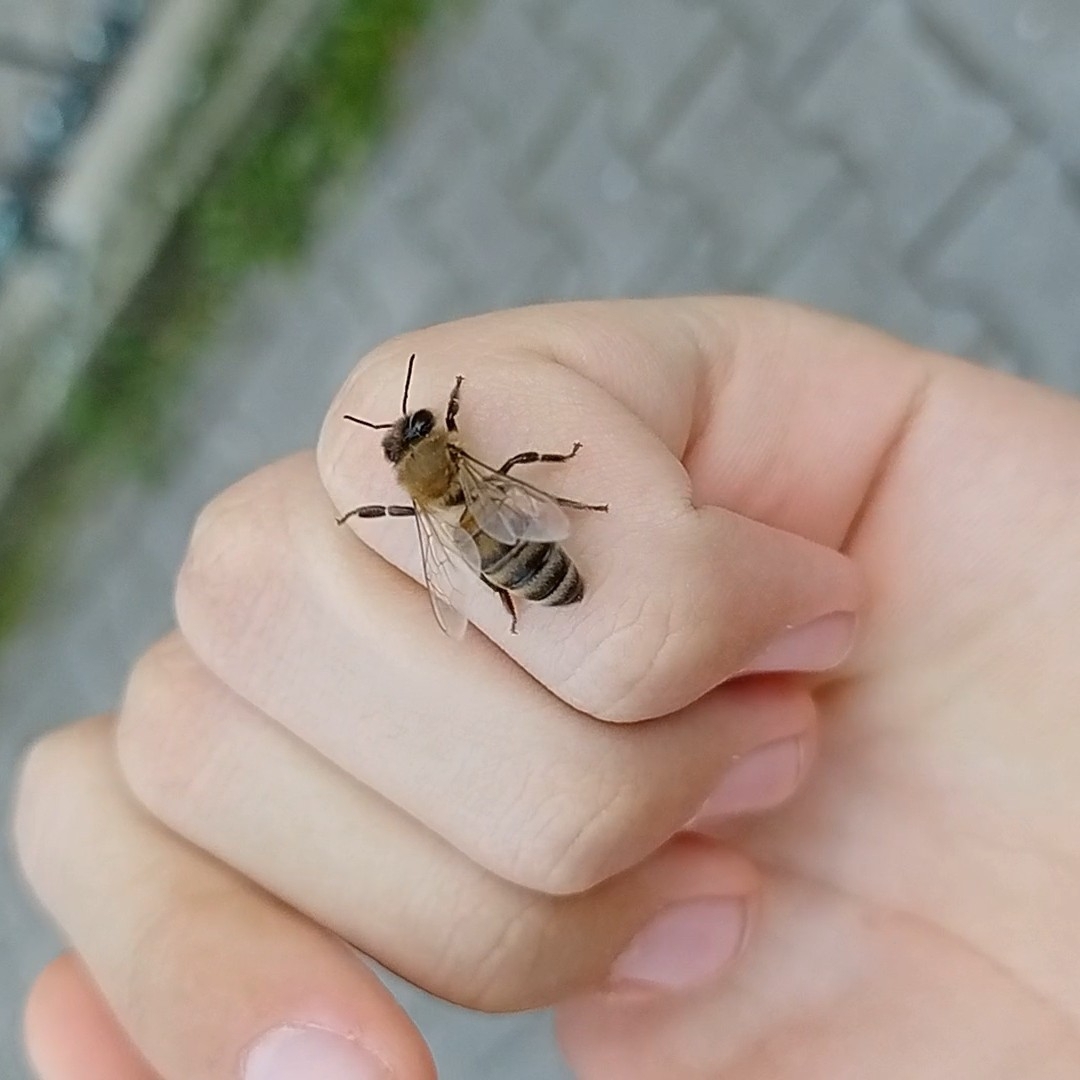
Bees land on people for entirely practical reasons, and the most common is salt. Bees need sodium and minerals that nectar does not supply, and human sweat is a convenient source, which is why bee landings increase on hot days and during exercise. This is the same behavior that produces puddling in butterflies, where insects gather on damp ground and even on sweat to extract minerals.
Scent is the second driver. Floral perfumes, scented shampoos, sunscreens, fabric softeners, and anything with a sweet or fruity note read as flowers to a foraging bee. Sugary drinks and food are especially attractive, though the insects most persistent about a soda can are usually yellowjackets rather than honeybees, and the difference matters because yellowjackets are far more willing to sting.
Color and pattern play a role too. Bees see ultraviolet and are drawn to blue, purple, and yellow, and bright floral prints genuinely attract more attention than plain neutral clothing. A bee that lands, walks around for a few seconds, and leaves has simply checked whether you were a flower and concluded that you were not.
Will a Bee Sting You if It Lands on You?
Almost certainly not, provided you stay still. A foraging honeybee away from her hive has no reason to sting and a strong reason not to: a worker honeybee’s barbed sting tears free when she stings a mammal, killing her. Stinging is a last-resort defense of the colony, not a response to being near a person, and honeybees away from the hive are among the least defensive stinging insects.
The behaviors that actually cause stings are swatting, brushing the bee off, trapping it against skin or in clothing, and stepping on it barefoot. Waving arms and running triggers defensive responses in some species and achieves nothing useful. The correct response to a bee on your skin is to stay still and let it leave, or to gently encourage it onto a leaf or a piece of paper if it lingers.
The picture changes near a hive or a nest. Honeybees defend a colony vigorously, and disturbing a hive, a wasp nest, or a ground nest produces a genuinely dangerous situation. Africanized honeybees in the southern United States respond far more aggressively and in far greater numbers than European honeybees, though the individual sting is no more potent. The guide to ground bees covers the nesting situations where caution is warranted.
Is It a Bee, a Wasp, or a Hornet?
The distinction matters because it changes the risk entirely. Honeybees are fuzzy, golden-brown and black, roughly half an inch long, with a rounded body and visible hair, and they can sting only once. Bumblebees are larger, rounder, and very hairy, and are exceptionally docile away from the nest. Both are focused on flowers and are unlikely to bother a person eating outdoors.
Wasps and yellowjackets are smooth, shiny, and brightly marked, with a narrow waist and no obvious hair, and they can sting repeatedly. Yellowjackets are the insects that hover around picnic food, soda cans, and trash bins in late summer, when their colonies peak and natural food runs short, and they are far more prone to sting than any bee. Most people stung at a barbecue were stung by a yellowjacket and reported it as a bee.
Hornets are larger wasps, with the bald-faced hornet, actually a yellowjacket, and the European hornet being the common North American species. All are defensive near nests. If the insect landing on you is smooth-bodied and interested in your drink rather than your skin or a flower, it is a wasp, and the symbolic reading people apply to bees does not traditionally transfer. The hornet vs wasp guide covers the identification in detail.
What Does a Bee in the House Mean?
A bee entering a house is traditionally a sign of good news or an approaching visitor, and in some versions of the folklore the visitor’s temperament matches the bee’s: a calm bee means a welcome guest and an agitated one means trouble. Killing a bee that enters the house is said to reverse the luck entirely, which is one of the more consistent elements across European traditions.
The custom of telling the bees is the most striking piece of bee folklore. In parts of England, Ireland, and New England, beekeepers traditionally informed their hives of major household events, particularly a death in the family, sometimes draping the hives in black crepe. Failing to tell the bees was believed to cause the colony to die or abandon the hive, and the practice is documented into the twentieth century. Hives at Buckingham Palace were reportedly informed of Queen Elizabeth II’s death in 2022.
Practically, a bee indoors is lost. Honeybees navigate by sun and landmarks and become disoriented by windows, and the humane response is to open a window and let it find its way out, or to cover it with a glass and slide paper underneath. A bee that has been indoors for hours may be exhausted and can be revived with a drop of sugar water on a spoon, which is worth doing given how much the pollinators are struggling.
What Does a Dead Bee Mean?
Finding a dead bee is traditionally read as a warning or a period of difficulty rather than as anything catastrophic, and in most interpretations it signals a setback in work or finances rather than personal loss. Some traditions treat it as a sign that effort is being wasted somewhere and should be redirected. Killing a bee deliberately is regarded as bad luck across many European traditions.
There is a straightforward biological explanation for finding dead bees that is worth knowing. Worker honeybees live only about six weeks in summer, working themselves to death, and colonies discard dead workers outside the hive, so dead bees near a hive are normal. Large numbers of dead bees on a lawn or path, however, can indicate pesticide exposure and are worth reporting.
The broader context gives the symbolism a sharper edge than it once had. Pollinator populations have declined substantially, with managed honeybee colonies suffering high annual losses and many wild bee species in decline from habitat loss, pesticides, disease, and climate disruption. Roughly a third of global food production depends on animal pollination. A dead bee as an omen of trouble reads differently in that light.
Bee Symbolism Across Cultures
The bee is one of the oldest and most consistently positive symbols in human culture. In ancient Egypt, bees were said to have been born from the tears of the sun god Ra, and honey was used in ritual and medicine; the bee appeared in the royal titulary of the pharaohs. In Greek myth, bees were associated with the Muses and with prophecy, and priestesses at Delphi were called Melissae, meaning bees.
Christian tradition took up the bee as a symbol of industry, chastity, and the ordered community, and the beehive became an emblem of a well-run church or state. The hive appears on the coat of arms of Manchester, on the flag of Utah, and in Freemasonry as a symbol of cooperative labor. Napoleon adopted the bee as a personal emblem, deliberately reaching past the Bourbon fleur-de-lis to the golden bees found in the tomb of the Frankish king Childeric.
Across Celtic, Slavic, and Native American traditions, bees are similarly associated with community, diligence, and messages between worlds. This near-universal positivity is rare. Most insects that land on people, including moths and flies, carry ambiguous or ominous readings, and the bee’s standing reflects a genuinely uncommon relationship: an insect humans have kept, depended on, and admired for thousands of years. The bee tattoo meaning guide covers how that symbolism is used today.
How to Help Bees Instead of Fearing Them
If bees keep landing on you, the most useful response is to give them somewhere better to go. Planting flowering species that bloom in succession from early spring to late autumn matters more than the total number of plants, because the hardest periods for bees are early spring before most gardens flower and late summer when many have finished. Native plants generally support native bees better than ornamental hybrids.
Water helps as much as flowers. A shallow dish with pebbles or marbles for the bees to stand on gives them a safe drinking spot and reduces the interest in your sweat. Avoiding pesticides, particularly neonicotinoids and any spray applied to flowering plants, is the single most consequential thing a gardener can do. Leaving some bare soil and hollow stems provides nesting habitat for the solitary bees that make up the large majority of species.
Most bees are not honeybees. North America has roughly 4,000 native bee species, the great majority of them solitary ground or cavity nesters that do not form hives, do not produce honey, and are extremely reluctant to sting; many cannot sting effectively at all. The bee that lands on your arm in a garden is far more likely to be one of these than a honeybee, and it is essentially harmless. The guide to birds that eat bees covers where they sit in the wider food web.
Frequently Asked Questions
What does it mean when a bee lands on you?
Traditionally it means good luck, prosperity, and hard work about to pay off, and many people read it as a message from a departed loved one. A bee landing on the head is considered especially auspicious.
Why do bees keep landing on me?
Usually the salt in your sweat, which supplies minerals nectar does not. Floral or sweet scents from perfume, sunscreen, and shampoo, and bright blue, purple, or yellow clothing also attract foraging bees.
Should I stay still if a bee lands on me?
Yes. Staying still is the correct response and almost always results in the bee leaving within seconds. Swatting, brushing it off, or trapping it against skin is what causes stings.
Will a bee sting me if it lands on me?
Very unlikely. A foraging honeybee dies when she stings a mammal, so stinging is a last-resort colony defense rather than a response to being near a person. Most picnic stings come from yellowjackets, not bees.
What does a bee landing on your head mean spiritually?
It is the most auspicious placement in folk tradition, read as a sign of success, recognition, or rising status. Classical stories describe bees settling on the heads of infants who became great speakers.
What does a bee in the house mean?
Good news or an approaching visitor. Killing it is said to reverse the luck. Practically, an indoor bee is disoriented by windows and should be released by opening a window or covering it with a glass.
What does a dead bee mean?
A minor setback or wasted effort in most traditions, rather than anything serious. Biologically, dead bees near a hive are normal since workers live only about six weeks, but many dead bees on a lawn can indicate pesticide exposure.