Turkey Poop: How to Tell a Tom From a Hen by Droppings
Turkey poop tells you the sex of the bird that left it. Male turkey droppings are elongated, J-shaped or hooked, and usually one to three inches long, while female droppings are looped, coiled, or spiral, often described as a bulbous blob. Both are dark brown to greenish-black with a white cap of uric acid, and both are far larger than any other bird dropping a person is likely to find in the woods.
That difference is the single most useful field sign in turkey hunting and one of the few cases where droppings reliably indicate sex in any bird. It comes down to anatomy: the male’s cloaca shapes the dropping into a straight extrusion, while the female’s produces a coil. This guide covers identification, what droppings say about the flock, disease risk, cleanup, and how to read a scouting site properly.
Turkey poop identifies the bird’s sex: male droppings are straight, J-shaped, or hooked and one to three inches long, while female droppings are coiled, looped, or spiral. Both are dark brown to greenish-black with a white uric acid cap. Fresh droppings are moist and shiny; older ones are dull, pale, and crumbly.
| Feature | What It Indicates |
|---|---|
| J-shaped or straight, 1 to 3 in | Male (tom or jake) |
| Coiled, looped, or spiral blob | Female (hen) |
| Small versions of either shape | Poults, so a hen with a brood |
| Moist, shiny, dark | Fresh, within a day |
| Dull, pale, crumbly | Several days old or more |
| Concentrated under trees | Roost site, not a feeding area |
| White cap | Uric acid; normal in all birds |
What Do Turkey Droppings Look Like?
Turkey droppings are large, dark, and unmistakable once you have seen one. They run from about one to three inches long, are dark brown, greenish-black, or nearly black depending on diet, and carry a chalky white cap or streak of uric acid at one end, which is the bird equivalent of urine excreted along with the faeces.
Colour varies with the season and what the birds have been eating. Turkeys feeding heavily on green vegetation in spring produce darker, greener droppings that are softer and less well formed. Birds on acorns, corn, and seeds in autumn and winter produce firmer, browner droppings that hold their shape better and are easier to sex.
Size distinguishes them from almost everything else in the woods. Grouse droppings are far smaller and usually curled fibrous cylinders, and no songbird produces anything approaching this volume. The main confusion is with goose droppings, which are cylindrical, green, and roughly cigar-shaped, and which occur on lawns and shorelines rather than in forest.
How Do You Tell a Tom From a Hen by Droppings?
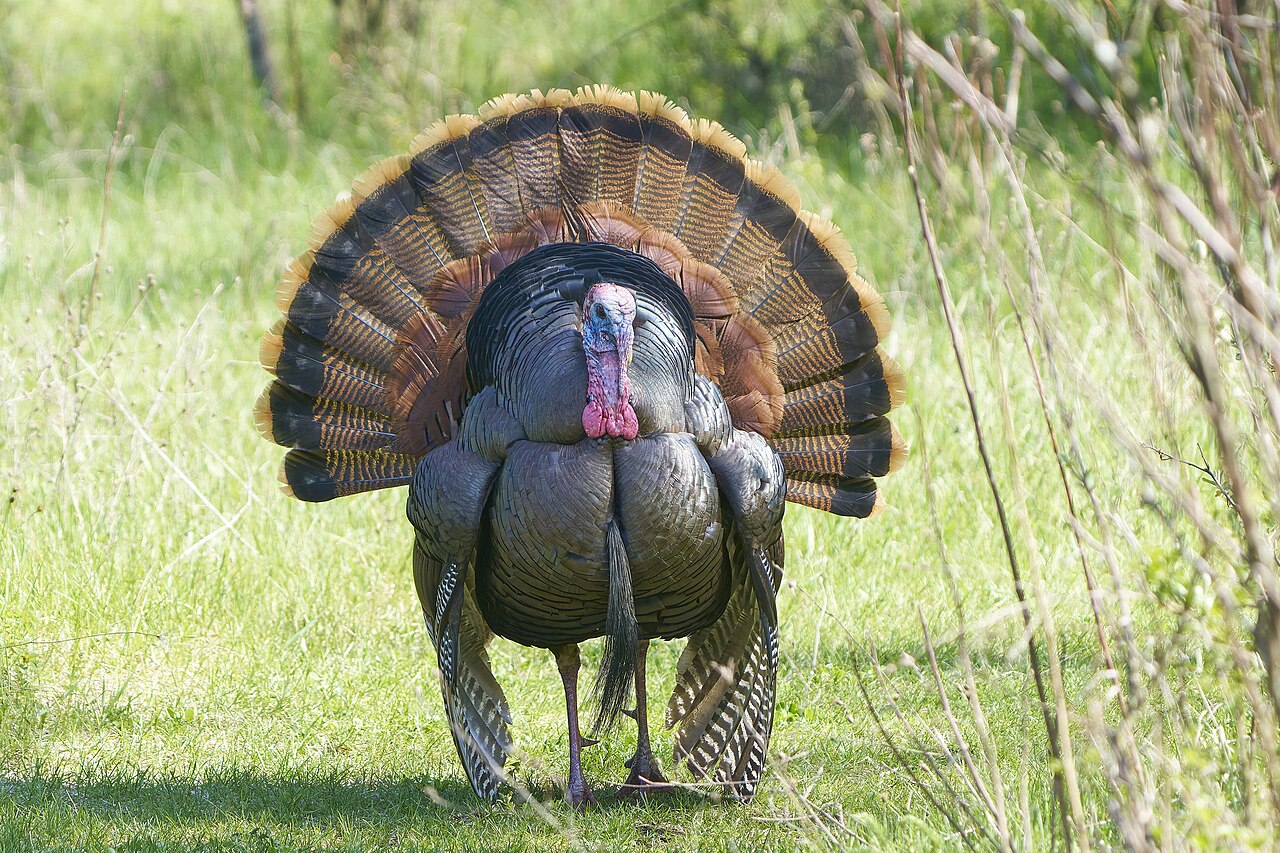
Shape is the test, and it is reliable. A male turkey, whether a mature tom or a younger jake, leaves a dropping that is elongated and straight or bent into a J or hook, typically one to three inches long and about the thickness of a pencil. Toms produce the longest and thickest examples.
A hen leaves a coiled, looped, or spiralled dropping that reads as a blob or a small pile rather than a length. The material is the same; only the extrusion differs, and the difference comes from the shape of the cloaca and the way the dropping is expelled in each sex. It is consistent enough that hunters use it as the primary sign for deciding whether a site is worth working.
Poult droppings follow the same rule at a smaller scale, so a scatter of small coils and small hooks together indicates a hen with a brood rather than a mixed adult flock. The one situation where the sign is unclear is very soft spring droppings on lush green feed, which lose their shape as they land. The female turkey guide covers the other field marks that separate hens from toms.
What Does Turkey Poop Tell You About the Flock?
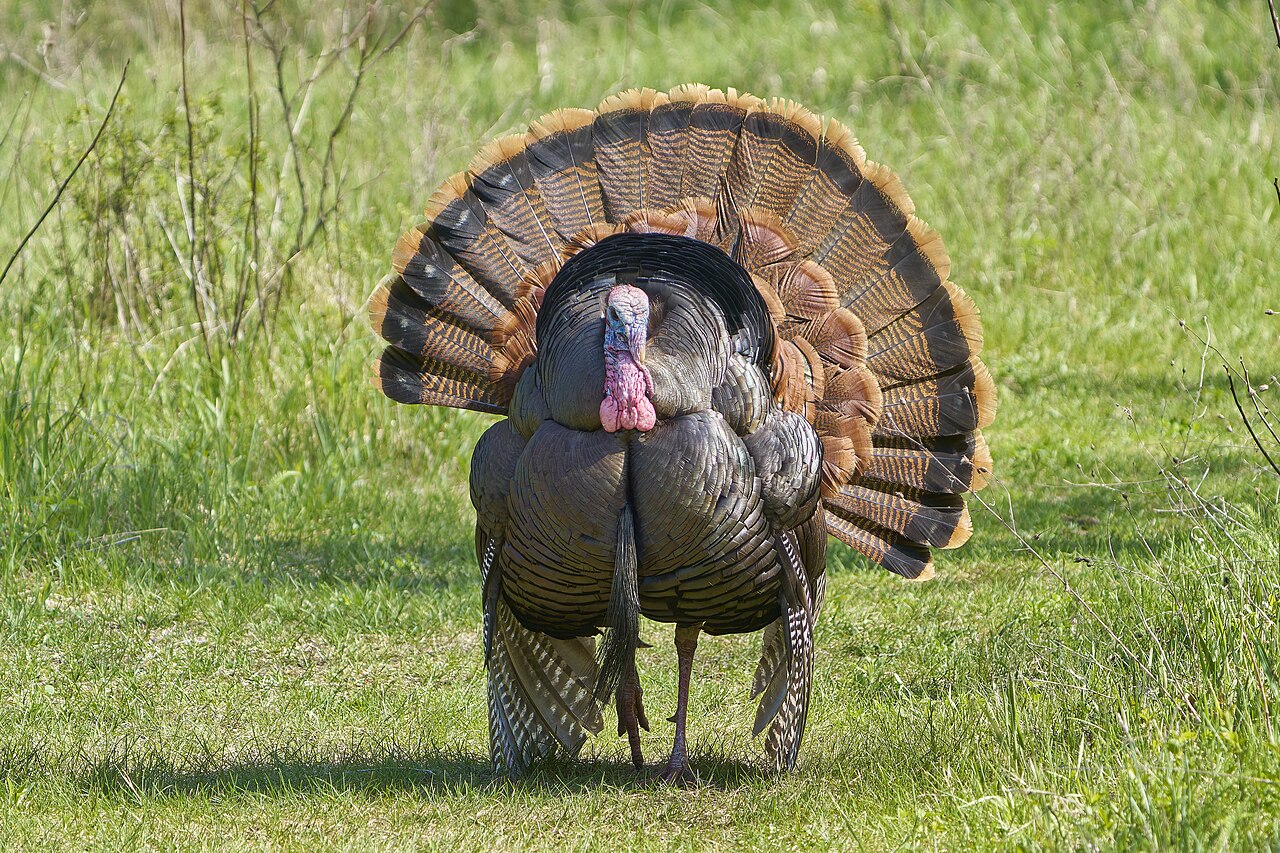
Concentration and location matter as much as shape. A heavy accumulation of droppings under a group of mature trees, often with feathers and scratched ground, marks a roost site, and turkeys use the same roosts repeatedly. That is a location to hunt near at dawn or dusk, not to sit in.
Scattered droppings among scratched-up leaf litter mark a feeding area. Turkeys scratch backward with both feet to expose acorns, seeds, and insects, leaving crescent-shaped bare patches, and droppings mixed among fresh scratchings indicate active current use. Old scratchings with weathered droppings mean the flock has moved on.
Freshness reads easily. A dropping deposited within a day is moist, dark, and glossy with a bright white cap; after two or three days it dulls, pales, and begins to crumble; after a week or more in dry weather it is grey and breaks apart when touched. Rain resets the appearance, so weather has to be factored in. The wild turkey guide covers seasonal movement patterns in more detail.
Is Turkey Poop Dangerous?
Wild turkey droppings carry the same general risks as other bird droppings, which means they are worth handling sensibly rather than fearing. The organisms of concern are Salmonella, Campylobacter, and Histoplasma capsulatum, the fungus that causes histoplasmosis and grows in soil enriched by accumulated bird droppings.
Histoplasmosis is the one worth taking seriously, and the risk comes from disturbing large old accumulations rather than from a dropping on a trail. Sweeping or power-washing dried droppings under a long-used roost tree, in a barn, or in an attic aerosolises spores, and most reported cases trace to exactly that. Wetting the material first and wearing an N95 respirator eliminates most of the risk.
For domestic flocks the practical concern is different and mostly about the birds themselves. Wild turkeys can carry blackhead disease, a protozoal infection that is mild in turkeys but often fatal in chickens, transmitted through the caecal worm in droppings. That is the main argument against running domestic turkeys and chickens on the same ground, and it applies equally to wild birds visiting a run, so a flock in an area with wild turkeys calling nearby is worth fencing properly.
What Are the Signs of a Sick Turkey?
Droppings are one of the earliest indicators in domestic and captive birds. Healthy turkey droppings are firm with a distinct white cap, and roughly every tenth dropping is a caecal dropping, which is looser, lighter brown, and foul-smelling; that one is normal and is often mistaken for illness.
Warning signs include persistent watery droppings, sulphur-yellow or bright green droppings, blood in the faeces, or droppings that are entirely white liquid. Sulphur-yellow droppings in particular are the classic sign of blackhead disease in turkeys, and bloody droppings suggest coccidiosis, which is common in young birds on damp bedding.
Behaviour confirms it. A sick turkey stands hunched with drooping wings and ruffled feathers, stops feeding, isolates itself from the flock, and may show a darkened or bluish head. Birds hide illness until it is advanced, so a bird that looks obviously unwell needs attention immediately. Poultry extension programmes such as the University of Georgia (uga.edu) publish diagnostic guidance for backyard flocks.
How Do You Clean Up Turkey Droppings?
Never sweep or blow dried droppings. Dry material sends spores and bacteria into the air, which is the main exposure route for histoplasmosis, and a leaf blower on a deck covered in droppings is the worst possible approach. Wet the area thoroughly first and let it soak for several minutes.
The working method is to spray with water or a disinfectant solution, scrape or shovel the softened material into a bag, then wash the surface and disinfect it. A dilute bleach solution or a commercial poultry disinfectant works on hard surfaces, though bleach is inactivated by organic matter, so the gross material has to be removed first.
Protection matters for large accumulations. Gloves, an N95 respirator, and clothing that goes straight into the wash are appropriate for cleaning out a roost area, a coop, or an attic. Small amounts on a lawn need nothing beyond hosing off and normal handwashing afterwards.
How Do You Keep Turkeys Off Your Property?
Remove the food first. Wild turkeys visit yards for spilled birdseed, fallen fruit, pet food left outdoors, and compost, and a flock that finds a reliable food source returns daily and quickly becomes habituated. Taking down feeders for a couple of weeks resolves most turkey complaints on its own.
Turkeys are also drawn to reflective surfaces in spring, and a male displaying at a car door, a patio window, or a hubcap is attacking what he takes to be a rival. Covering the surface or parking elsewhere for a few weeks ends it, since the behaviour stops with the breeding season. It is not aggression toward people and does not predict it, though it frequently gets reported that way.
Hazing works on birds that are not yet bold. Turkeys respond to being chased, sprayed with a hose, or startled by an umbrella opened suddenly, and consistency matters more than intensity: every person in the household has to do it every time. A motion-activated sprinkler handles this without supervision.
Aggressive males in spring are a genuine issue in suburbs, since turkeys treat humans as flock members and test dominance. The correct response is to stand your ground and make yourself large rather than retreating, because backing away confirms the bird’s rank. Feeding turkeys is what creates the situation, and in several states it is prohibited for that reason. The guide to what turkeys eat covers the attractants worth removing.
Can You Use Turkey Manure in the Garden?
Yes, but only composted. Fresh turkey manure is high in nitrogen and will burn plant roots and foliage on contact, and it carries pathogens that can transfer to produce. It is a strong fertiliser, comparable to chicken manure and richer than cow or horse, which is why it needs handling.
Composting for at least six months, or hot composting at 130 to 150 degrees Fahrenheit with regular turning, resolves both problems. Mixing with carbon-rich material such as leaves, straw, or wood shavings balances the nitrogen and produces a usable amendment rather than a caustic pile.
For food crops, standard guidance is to apply composted manure no later than 90 to 120 days before harvest, with the longer interval for crops in contact with soil such as lettuce, carrots, and strawberries. Wild turkey droppings collected from a yard are not worth gathering for this, since the volume is trivial and mixing them into a compost pile as they land in the grass achieves the same thing.
Frequently Asked Questions
What do turkey droppings look like?
One to three inches long, dark brown to greenish-black, with a chalky white cap of uric acid. Male droppings are straight, J-shaped, or hooked; female droppings are coiled or spiral blobs.
How do you tell a tom from a hen by droppings?
Shape. Males leave elongated straight or J-shaped droppings about pencil-thick; hens leave looped or coiled ones. Poults follow the same pattern at a smaller size, so small coils indicate a hen with a brood.
How fresh are the droppings?
Fresh droppings are moist, dark, and glossy with a bright white cap. After two or three days they dull and pale, and after a week in dry weather they turn grey and crumble. Rain resets the appearance.
Is turkey poop dangerous?
It can carry Salmonella, Campylobacter, and the fungus behind histoplasmosis. The real risk comes from disturbing large dried accumulations, so wet the material before cleaning and wear an N95 respirator.
What do sick turkey droppings look like?
Persistently watery, sulphur-yellow, bright green, bloody, or entirely white liquid. Sulphur-yellow suggests blackhead disease and blood suggests coccidiosis. Loose light-brown caecal droppings every tenth time are normal.
Does turkey poop mean turkeys are nearby?
Heavy accumulations under mature trees mark a roost that is used repeatedly. Droppings scattered among fresh scratchings in leaf litter mark an active feeding area. Weathered droppings with old scratchings mean the flock moved on.
Can you put turkey manure in the garden?
Only after composting for at least six months, since fresh manure burns roots and carries pathogens. Apply composted manure 90 to 120 days before harvest for crops that touch the soil.