Earless Monitor Lizard: Borneo’s Trafficked Survivor
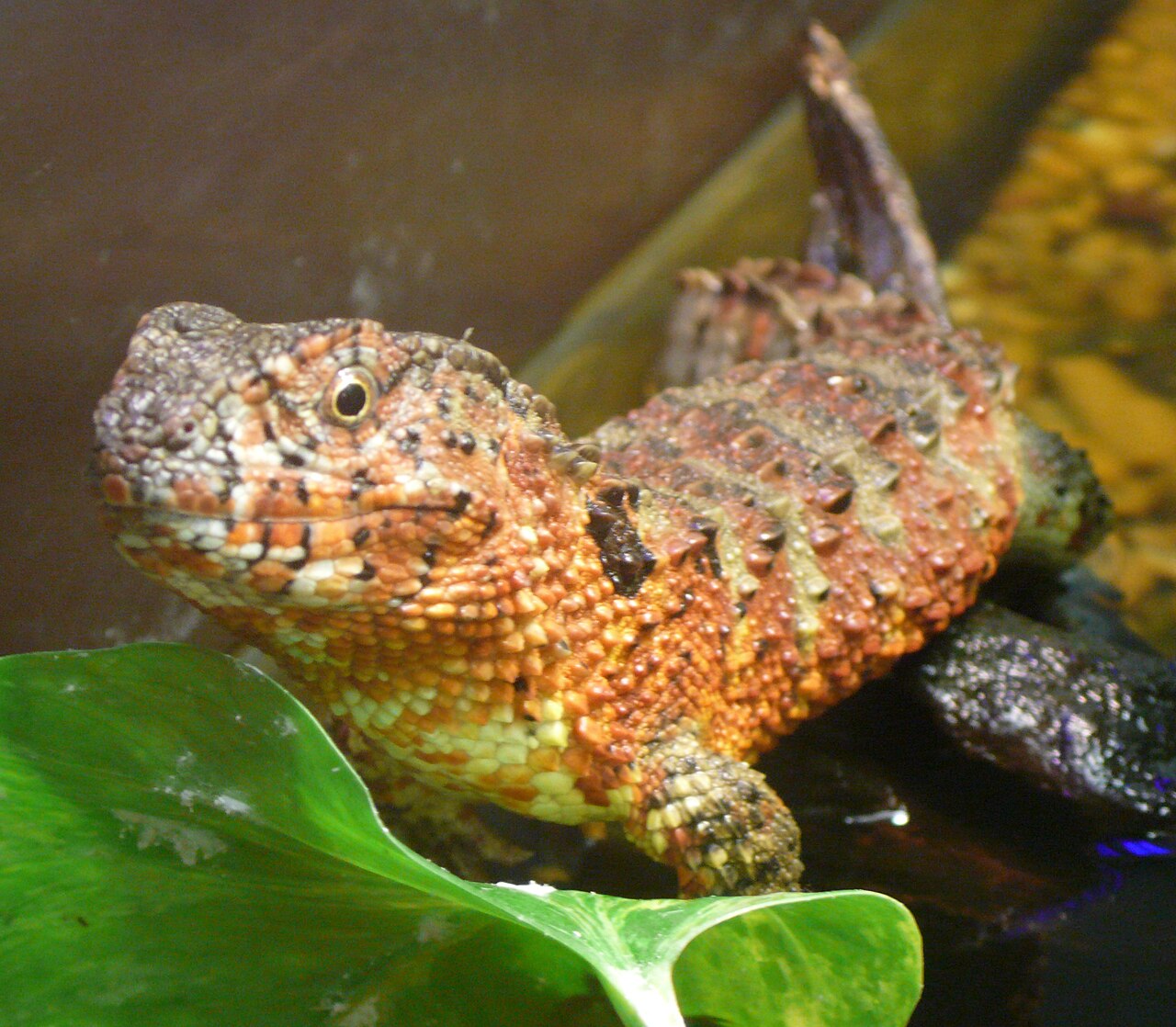
The earless monitor lizard is a small, semi-aquatic, nocturnal reptile found only in Borneo, growing to about eight inches of body length with a heavily armoured brown body, tiny eyes, and no external ear openings. It is not actually a monitor lizard: it is the only living member of the family Lanthanotidae, a lineage that split from true monitors tens of millions of years ago.
It is also one of the most trafficked reptiles in the world relative to how few exist. After decades in which almost nothing was known about it, a handful of specimens reached European and Japanese collectors around 2012, prices reached thousands of dollars per animal, and all three range countries and CITES moved to restrict trade. This guide covers what it is, whether it is venomous, the legality question, and why it matters.
The earless monitor lizard, Lanthanotus borneensis, is a small nocturnal semi-aquatic reptile endemic to Borneo and the only living species in its family. It is not a true monitor and has no external ear openings. It is not venomous. Trade is restricted under CITES Appendix II and banned outright by Indonesia, Malaysia, and Brunei.
| Feature | Earless Monitor Lizard |
|---|---|
| Scientific name | Lanthanotus borneensis |
| Family | Lanthanotidae; only living member |
| Size | About 8 in body, 16 to 20 in total |
| Range | Borneo only: Sarawak, Kalimantan, Brunei |
| Habits | Nocturnal, semi-aquatic, burrowing |
| Venom | None demonstrated |
| Legal status | CITES Appendix II; export banned by range states |
What Is an Earless Monitor Lizard?
A small brown lizard with a long body, short limbs, small eyes, and rows of raised keeled scales running down the back that give it a distinctly armoured, prehistoric appearance. Adults reach around eight inches of snout to vent length, or roughly sixteen to twenty inches including the tail.
The name is doubly misleading. It is not a monitor lizard, belonging to its own family rather than to Varanus, and it is not earless in the functional sense: it has no external ear opening or visible tympanum, but it hears, using internal structures. The closest living relatives are true monitors and the Chinese crocodile lizard, and the lineage is ancient.
It was described in 1878 and then almost ignored. For over a century it was known from a handful of preserved specimens, and basic facts about its behaviour, diet, and reproduction were unknown until captive observations in the last fifteen years, which is remarkable for an animal of this size. The guide to what lizards eat covers the group more broadly.
Where Does It Live?
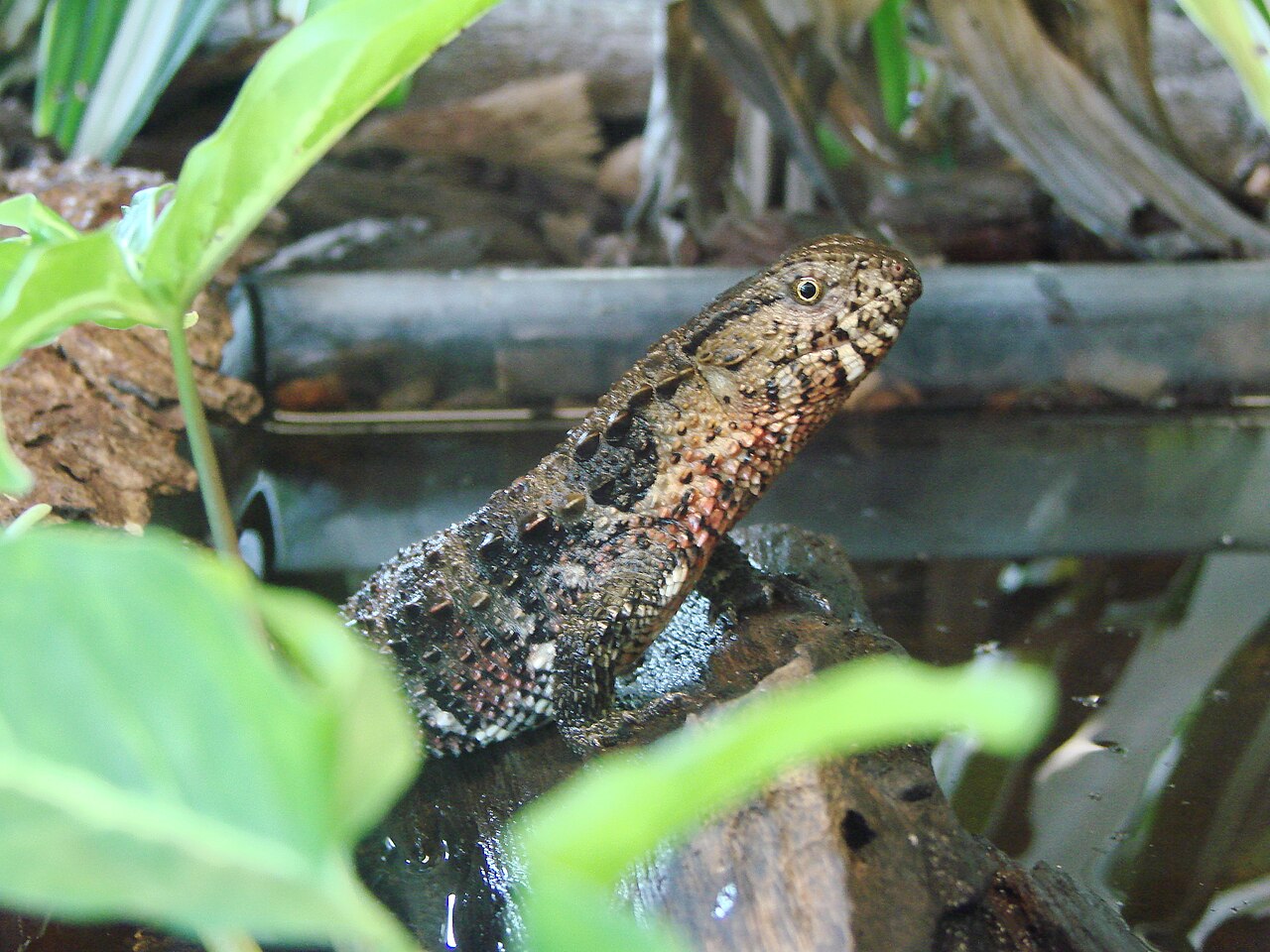
Borneo, and nowhere else. Records come from Sarawak in Malaysian Borneo, from West and Central Kalimantan in Indonesia, and from Brunei, in lowland rainforest associated with clear, cool, shallow streams.
The habitat requirement is specific and is part of why it is vulnerable. The lizard is semi-aquatic and nocturnal, spending daylight hidden in burrows and under rocks and roots along stream banks, emerging at night to forage in and beside the water. It swims well using undulating body movements.
Lowland Bornean rainforest is also among the most rapidly cleared habitat in the world, converted for oil palm, logged, and fragmented, and stream systems degrade with sedimentation from clearance upstream. Habitat loss, rather than collection, is the underlying long-term threat even though trafficking is the more visible one.
Is It Venomous?
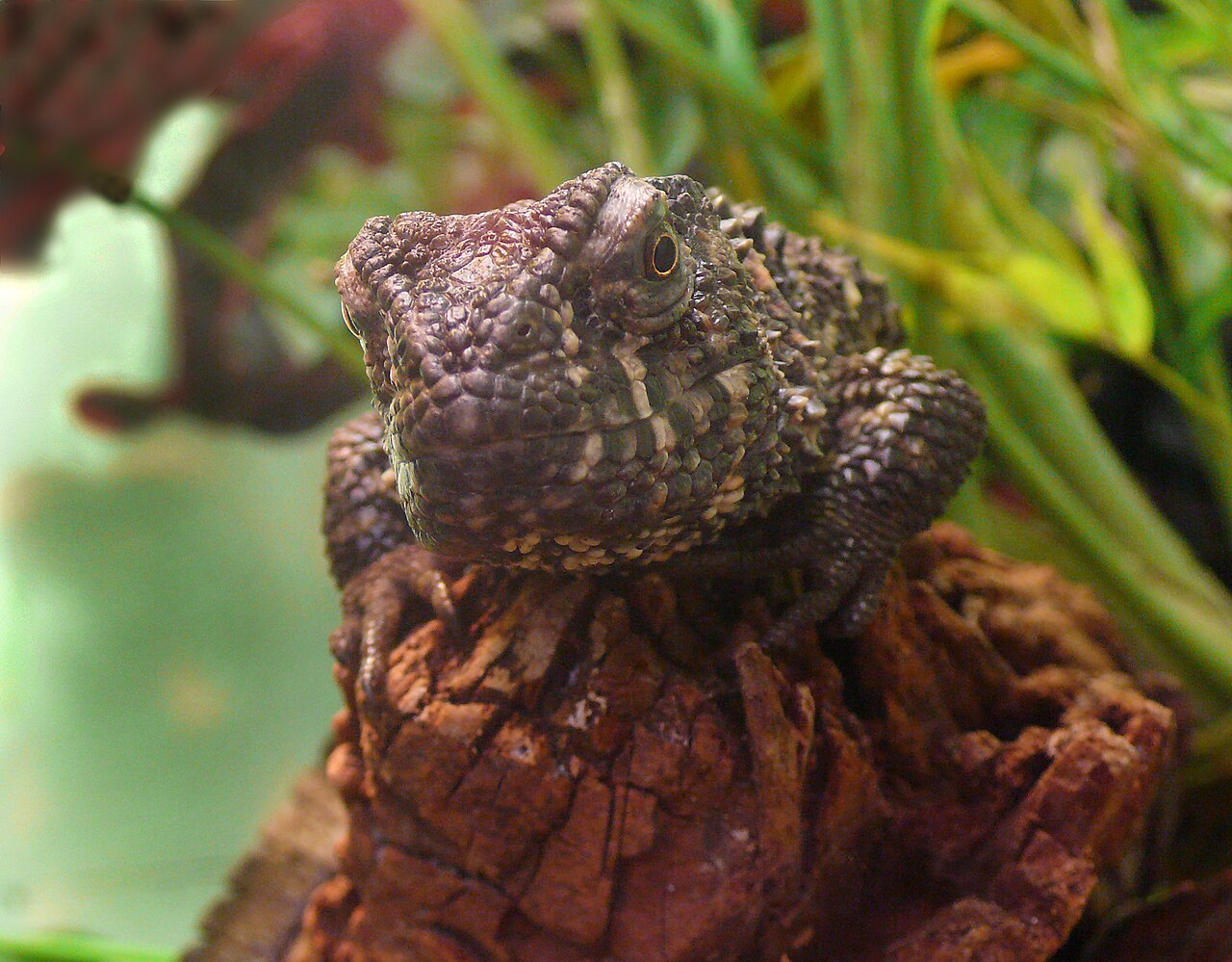
No venom has been demonstrated. The question comes up because the earless monitor sits within the Toxicofera clade, the group that includes monitors, iguanians, and snakes, and some members of that group produce oral secretions with venom-like proteins.
Related lizards do have them. Monitor lizards including the Komodo dragon have glands producing proteins that affect blood clotting, and the Gila monster and beaded lizards have genuine venom delivery. Whether the earless monitor has anything comparable has not been established, and there are no documented cases of medically significant bites.
What it does have is a strong bite for its size and a tendency to hold on. Reports from keepers describe it clamping and not releasing readily, which is a mechanical problem rather than a toxicological one. The Gila monster bite guide covers the North American lizard where venom is genuinely established.
Can You Keep One as a Pet?
Legally, almost certainly not, and that is the point. Indonesia, Malaysia, and Brunei all prohibit export, and the species was listed on CITES Appendix II in 2016, which means international commercial trade requires permits that range states do not issue for wild-caught animals.
Animals offered for sale in Europe, Japan, and the United States have therefore been smuggled at some point in the chain, even where a seller presents paperwork claiming captive breeding. Enforcement actions and seizures have followed in several countries, and possession legality varies by jurisdiction and often depends on documented provenance that most animals cannot supply.
The market drove the problem. Prices reported in the years after 2012 ran into the thousands of dollars per animal, sometimes over eight thousand, and that price signal reached collectors in Borneo who had previously had no reason to look for the species. A lizard that was almost unknown became commercially targeted within a couple of years of appearing in the hobby.
What Does It Eat?
Soft-bodied aquatic and terrestrial invertebrates, principally earthworms, along with small fish, crustaceans, and possibly amphibian eggs. Captive animals take earthworms readily, and worms appear to be the core of the natural diet.
Feeding behaviour is slow and deliberate. The lizard forages at night in shallow water and along banks, and its low metabolic rate means it eats infrequently compared with an active diurnal lizard of similar size, which is consistent with a semi-aquatic ambush and probing lifestyle.
Reproduction was undocumented in the wild until captive observations. Females lay small clutches, reported at around two to six eggs, and incubation appears long, with captive hatchings recorded only in the last decade. Almost everything known about breeding comes from a small number of captive animals, which is itself a consequence of the trade rather than a justification for it.
How Rare Is It?
Genuinely hard to say, which is part of the problem. The IUCN has listed the species as Endangered, and while there is no reliable population estimate, the combination of a restricted range, specific habitat requirements, low reproductive output, and targeted collection is a poor set of circumstances.
Detection is difficult. The species is nocturnal, aquatic, burrowing, cryptically coloured, and lives along streams in dense forest, so absence of records means little and presence is discovered largely by accident. Local people in some areas knew it long before science paid attention.
Recent field surveys have found it in more locations than previously known, which is encouraging without being reassuring, since finding a species in more places usually reflects better searching rather than more animals. The IUCN and the CITES Secretariat (cites.org) remain the authoritative sources on status and trade rules, and the lizard sign guide covers how cryptic reptiles are usually detected in the field.
Why Does It Matter Scientifically?
Because it is the only survivor of its lineage. Lanthanotidae contains one living species, and losing it would remove an entire family from the tree of life rather than one species from a genus, which is the kind of loss that cannot be compensated for by related species elsewhere.
Its position also matters for understanding snake origins. The earless monitor’s combination of an elongated body, reduced limbs, burrowing habits, and a flexible skull has made it a reference point in debates about how snakes evolved, and its anatomy has been cited in arguments on both sides of the aquatic versus terrestrial origin question.
Beyond that, it is a straightforward case study in how the internet changes conservation problems. A species that survived unmolested for a century because nobody had heard of it became a trafficking target within two years of appearing in online reptile forums, and the regulatory response took another four. That pattern has repeated with other newly publicised species. The crested gecko guide covers a species that went the other way and became genuinely established in captivity.
What Is It Related To?
True monitor lizards are the closest living group, followed by the Chinese crocodile lizard, and together with the helodermatids, the Gila monster and beaded lizards, they form the anguimorph branch of the lizard tree. The earless monitor’s own family split from that line a very long time ago.
Estimates of the divergence vary but place it in the range of tens of millions of years, which makes Lanthanotidae comparable in age to entire orders of mammals while containing a single species. That is what conservation biologists mean by evolutionary distinctiveness, and it is the argument for prioritising species with no close relatives.
The fossil record is thin and disputed. Several extinct forms have been proposed as relatives, and the group has been shuffled repeatedly in reptile phylogenies as molecular data has accumulated. What has held is that the earless monitor sits alone at the end of a long branch. The Mediterranean house gecko guide covers a species at the opposite extreme, spread worldwide by human transport.
What Can Be Done?
Habitat protection is the substantive answer, and it is the harder one. Lowland Bornean rainforest and its stream systems are under pressure from conversion and logging, and protecting stream corridors within production landscapes matters more for this species than any enforcement action against collectors.
On trade, the CITES listing and range state export bans give enforcement a basis, and seizures in Europe and Japan have followed. Demand reduction is the other half: a market that treats a smuggled endangered endemic as a status object is what created the problem, and buyers rather than collectors are where the money originates.
For anyone outside the region, the useful contributions are not buying rare wild-origin reptiles, supporting Bornean forest conservation organisations, and treating any newly fashionable rare species in the reptile trade with suspicion. The pattern is predictable enough that scepticism is usually justified. The leopard gecko guide covers a species where captive breeding genuinely removed pressure from wild populations.
Related reading: Monitor Lizard as a Pet.
Frequently Asked Questions
What is an earless monitor lizard?
A small nocturnal semi-aquatic reptile from Borneo, about eight inches of body length, and the only living member of the family Lanthanotidae. It is not a true monitor lizard.
Are earless monitors venomous?
No venom has been demonstrated. They sit in the same broad clade as monitors and snakes, some of which produce venom-like secretions, but there are no documented medically significant bites.
Can earless monitor lizards be pets?
Legally, essentially no. All three range countries ban export and the species is on CITES Appendix II, so animals in the trade have been smuggled at some point in the chain.
How much does an earless monitor lizard cost?
Prices reported after 2012 ran into thousands of dollars per animal, sometimes over eight thousand, and that price signal is what turned an obscure species into a trafficking target.
Where do earless monitor lizards live?
Borneo only, in Sarawak, Kalimantan, and Brunei, in lowland rainforest along clear shallow streams. They burrow by day and forage in and beside water at night.
What do they eat?
Mainly earthworms, plus small fish, crustaceans, and other soft-bodied invertebrates. They forage slowly at night and have a low metabolic rate, eating infrequently for their size.
Why does the species matter?
It is the sole survivor of an entire family, so losing it removes a whole lineage. Its anatomy is also a reference point in scientific debate about how snakes evolved.

Similar Posts
Are Foxes Dangerous? Risks to People, Pets, and Poultry
Foxes pose almost no risk to people and little to cats and dogs, but they are a serious threat to chickens. Here is what each risk actually looks like.
What Do Fish Eat? Wild, Pond & Aquarium Diet Guide
What fish eat in the wild, in ponds, and in aquariums, how temperature affects feeding, and the most common feeding mistakes.
Hognose Snake
Hognose snakes are small, harmless North American snakes famous for playing dead and mimicking cobras. Here is how to identify them, what they eat, and whether they make good pets.
What Do Beavers Eat? Bark, Cambium, and Winter Caches
Beavers do not eat wood, they eat the cambium beneath the bark. Here is the seasonal diet, the underwater winter cache, and why they never eat fish.
Orchid Mantis: Facts, Care, Size, and the Camouflage Myth
The orchid mantis does not actually hide in orchids. Here is what research found, plus size, life cycle, care, and why blue orchid mantises are fake.
Frog Sounds: What Each Call Means and Who Makes It
Frogs peep, trill, croak, snore, quack and scream, and only one species actually says ribbit. Every major call explained, plus how to identify a species by ear.