Black and Yellow Caterpillar: Species Identification Guide
A black-and-yellow caterpillar crossing your patio or clinging to a parsley plant is usually one of a small handful of species, and the exact banding pattern, the presence of spines or hairs, and what plant it’s sitting on will get you to a confident answer fast. These caterpillars show up across nearly every US region, though which species you’re likely to encounter shifts depending on climate and what’s growing in the immediate area.
Most of these caterpillars are harmless to handle, but a few carry stinging hairs worth knowing about before you pick one up. This guide covers the most common black-and-yellow species found in US yards and gardens, how to tell them apart, and what each one eventually becomes.
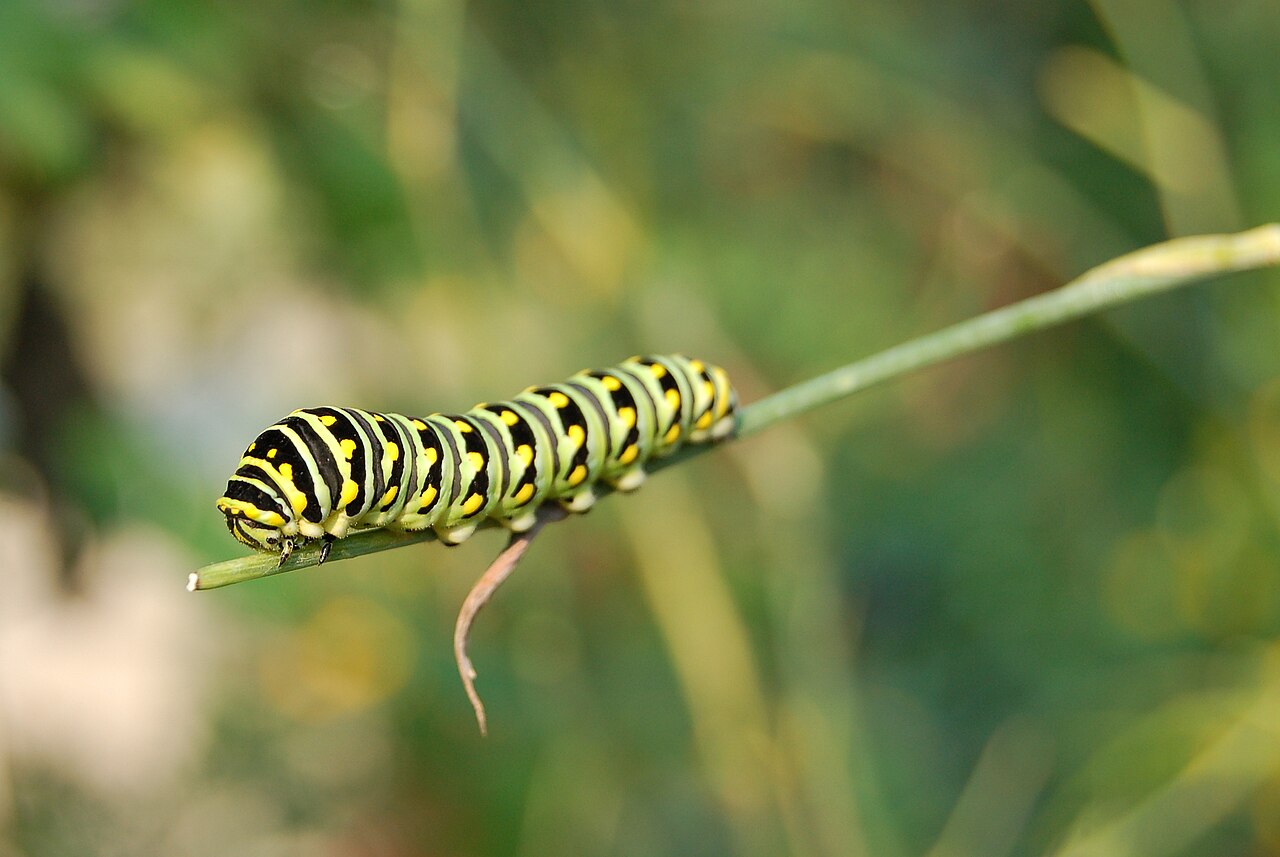
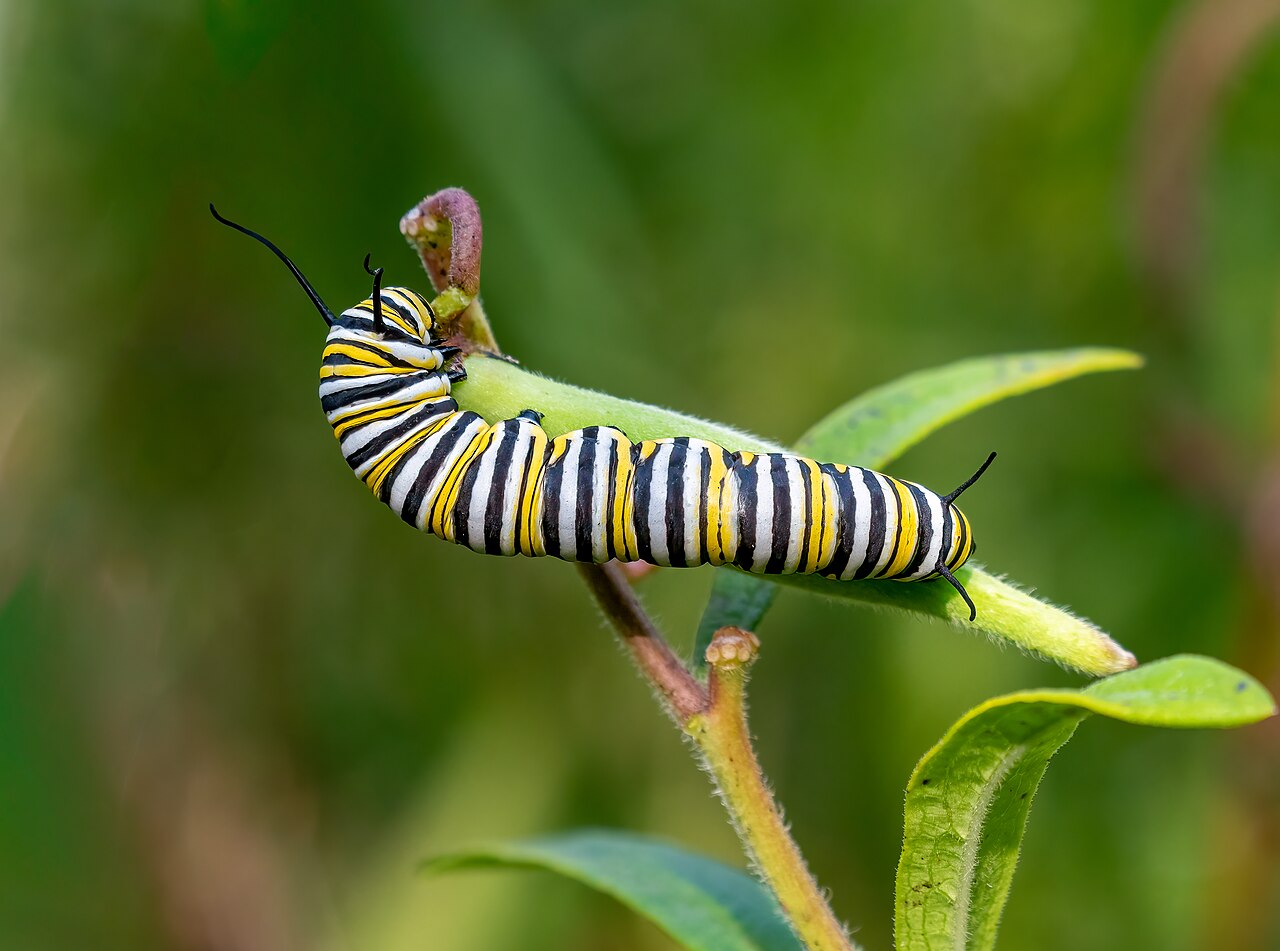
The most common black-and-yellow caterpillar in US gardens is the black swallowtail, banded black and yellow-green with small yellow spots, usually found on parsley, dill, or fennel. Monarch caterpillars add white to the same black-and-yellow pattern and feed only on milkweed.
| Species | Key Feature |
|---|---|
| Black Swallowtail Caterpillar | Black bands with yellow spots, found on parsley family plants |
| Monarch Caterpillar | Black, yellow, and white bands, found only on milkweed |
| American Lady Caterpillar | Black and yellow bands with branching black spines |
| Yellow-Necked Caterpillar | Black body with a bright yellow band behind the head |
| Cinnabar Moth Caterpillar | Bold black and yellow-orange bands, feeds on ragwort |
| Zebra Swallowtail Caterpillar | Green with black and yellow bands, found on pawpaw |
| Spotted Tussock Moth Caterpillar | Dense black and yellow-orange tufted hairs |
How to Tell Black-and-Yellow Caterpillars Apart
Three details narrow the list fastest: whether the body is smooth or covered in hairs and spines, whether the bands run as stripes across the body or as isolated spots, and what plant you found it on. Smooth, banded caterpillars on parsley-family herbs point straight to black swallowtail, while a hairy or tufted caterpillar rules that species out immediately. Host plant is often the single fastest clue, since several of these species feed on only one or two specific plants and won’t be found anywhere else. Size matters too: a freshly hatched caterpillar barely a few millimeters long looks very different from the same species in its final instar, so young caterpillars are often harder to pin down than mature ones and may need a second look a few days later once they’ve grown and colored up further.
Black Swallowtail Caterpillar
The black swallowtail caterpillar is the species most people mean when they search for a black-and-yellow caterpillar. Early instars are small and black with a white saddle that mimics a bird dropping, an effective disguise against predators while the caterpillar is at its most vulnerable size, but by the final instar the caterpillar turns green with black bands studded with small yellow spots. It feeds exclusively on plants in the carrot family, parsley, dill, fennel, and Queen Anne’s lace, which makes a home herb garden one of the most reliable places to find one. When threatened, the caterpillar extends a forked orange organ called an osmeterium from just behind its head, releasing a citrus-like odor that deters small predators like ants and spiders, though it poses no risk at all to a curious human.
Monarch Caterpillar
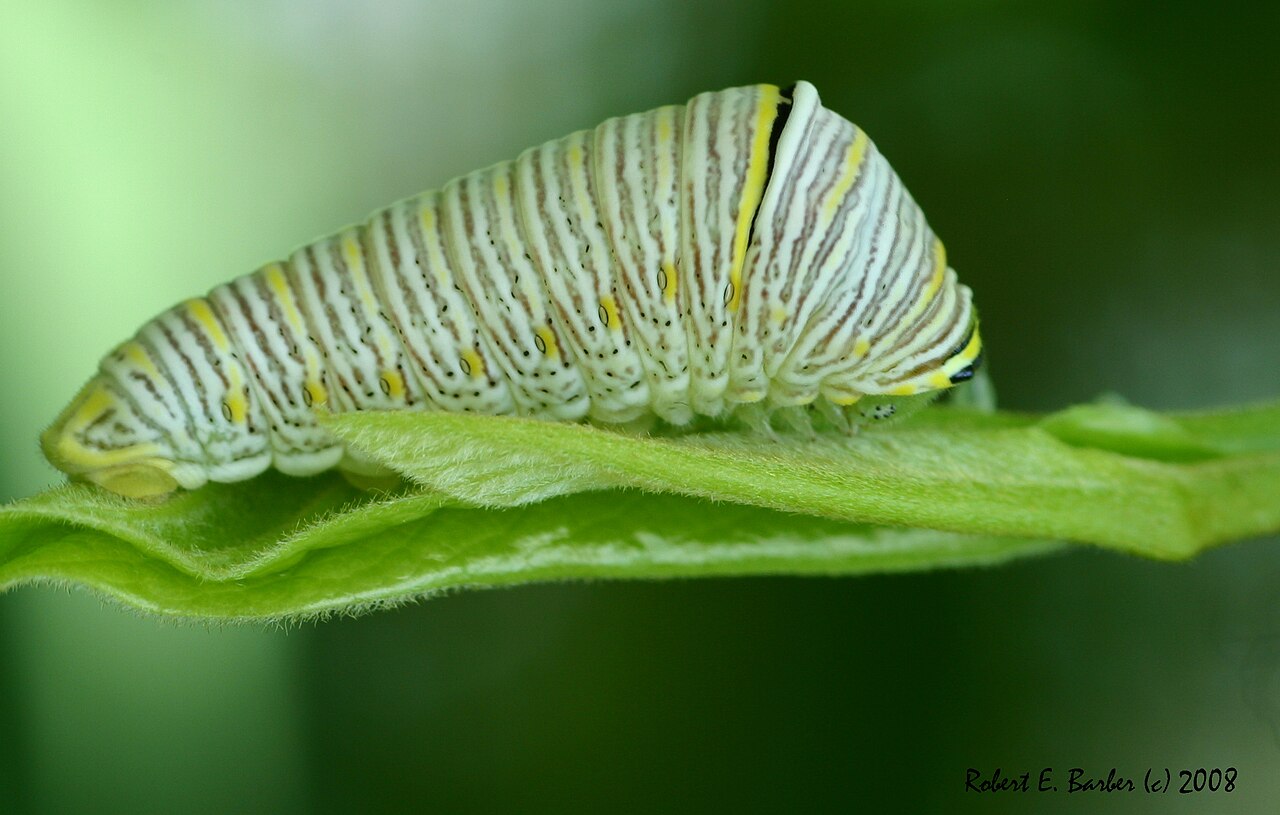
The monarch caterpillar adds a third color to the same basic pattern, alternating bands of black, yellow, and white along its entire length, with a pair of black filaments at both the head and tail end. Unlike the black swallowtail, monarchs feed exclusively on milkweed, and finding one anywhere else in a yard is essentially impossible. The caterpillar absorbs toxic compounds from milkweed sap that make both it and the adult butterfly unpalatable to most predators, a defense so effective that several other, harmless species have evolved to mimic the same coloring for protection they don’t actually chemically possess. According to the Xerces Society, monarch caterpillars complete their entire larval stage in as little as two weeks under warm conditions, molting through five instars before forming a chrysalis.
American Lady Caterpillar
American lady caterpillars show black and yellow banding broken up by rows of branching black spines that look intimidating but aren’t capable of stinging. They feed on everlasting and pussytoes plants, spinning loose silk webbing over the leaves they’re actively eating, which is often the first visible sign of their presence before the caterpillar itself is spotted. The webbing serves a defensive purpose too, since the caterpillar retreats inside it when disturbed rather than dropping off the plant the way many other species do.
Yellow-Necked Caterpillar
Yellow-necked caterpillars are mostly black with a bold yellow-orange band directly behind the head, and they feed in groups on tree foliage, including oak, birch, and fruit trees. When disturbed, the whole group raises both ends of their bodies in a defensive posture, a behavior that’s often more startling than any actual threat the caterpillar poses. Because they feed communally, a single cluster can strip a branch of leaves within days, which is usually how homeowners first notice them, well before spotting the caterpillars themselves tucked against the bark.
Cinnabar Moth Caterpillar
Cinnabar moth caterpillars show some of the boldest banding on this list, alternating black and orange-yellow stripes along the full length of the body. The species was deliberately introduced to parts of the Pacific Northwest as a biological control for tansy ragwort, and it feeds almost exclusively on that plant, so finding one usually means ragwort is growing nearby. Like the monarch, cinnabar caterpillars absorb toxic alkaloids from their host plant, and the bold striping functions as a warning signal to predators rather than camouflage.
Zebra Swallowtail Caterpillar
The caterpillar that becomes the zebra swallowtail is green rather than black-based, but its black and yellow banding across the body is distinctive enough that it’s frequently searched under this color combination. It feeds exclusively on pawpaw trees, and its presence is one of the more reliable signs that a pawpaw is nearby, since the caterpillar rarely wanders far from its single host plant. Pawpaw leaves contain natural compounds that make the caterpillar, like the monarch, distasteful to most predators once it accumulates enough of the chemical through feeding.
Spotted Tussock Moth Caterpillar
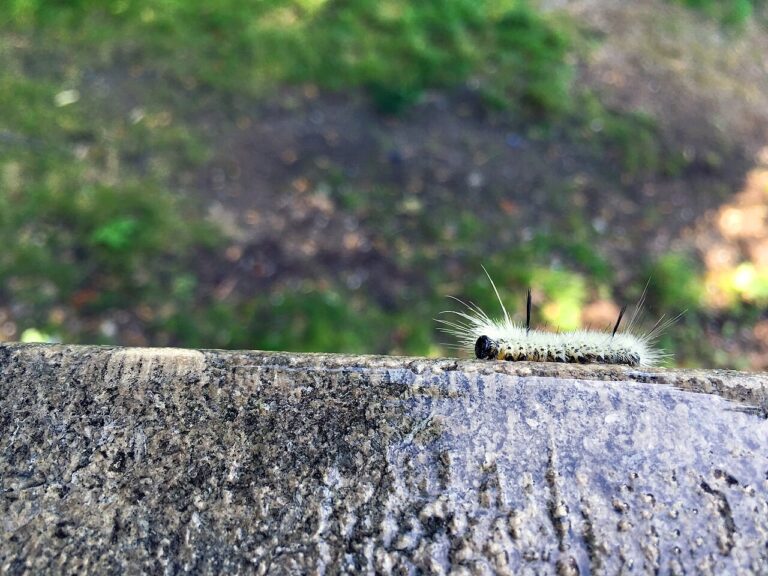
Also called the yellow woollybear, the spotted tussock moth caterpillar is densely covered in black and yellow-orange tufted hairs rather than a smooth banded body. It’s a relative of the more famous woolly bear caterpillar, but where the woolly bear is banded black and reddish-brown, this species runs black and yellow-orange, and it feeds on a wide range of trees and shrubs rather than a single host plant. From a distance it can also be confused with an entirely black fuzzy caterpillar, though a closer look almost always reveals at least some yellow or orange showing through the dense hair.
Sawfly Larvae Mistaken for Caterpillars
Several sawfly larvae show black-and-yellow banding similar enough to true caterpillars that they’re commonly misidentified, including species that feed communally on rose bushes and pine trees. The easiest way to tell them apart is counting prolegs, the fleshy stubs along the abdomen: true caterpillars have five or fewer pairs, while sawfly larvae typically have six or more. Sawflies aren’t moths or butterflies at all but a type of wasp relative, and their larvae won’t turn into anything resembling a butterfly regardless of how similar they look at this stage. Birds that hunt true caterpillars generally target sawfly larvae just as readily, since the proleg count that separates the two groups scientifically makes no difference to a hungry bird.
Is It Safe to Touch a Black-and-Yellow Caterpillar?
Every species covered on this page is safe to handle, none carry stinging spines or urticating hairs. That said, general caution is still worth applying to any unfamiliar caterpillar, since a small number of unrelated species elsewhere in the US, like the saddleback and io moth caterpillars, do sting, and they’re easiest to avoid simply by not handling any caterpillar you can’t confidently identify first. A useful rule of thumb: caterpillars with dense, uniform fuzz or visible spine clusters, rather than a mostly smooth body, deserve a closer look before touching, since that’s the general profile most stinging species share.
What Black-and-Yellow Caterpillars Turn Into
Every species on this list becomes a butterfly or moth, but the timeline varies considerably. Black swallowtails typically complete the transformation in two to three weeks during warm weather, while monarchs take a similar span before emerging as the familiar orange-and-black adult. Species that overwinter as a chrysalis or cocoon, which several swallowtails do in northern climates, pause the process entirely until spring, sometimes stretching a single generation’s development across many months. In warmer parts of the country, some of these species manage two or even three generations in a single year, while a single northern generation might take the full season from spring hatch to fall chrysalis formation before winter finally interrupts development.
Male vs Female: Why Colors Can Vary Slightly
Within most of these species, males and females look nearly identical as caterpillars even when the adult forms differ sharply in color and pattern, since sexual dimorphism in butterflies and moths typically develops only at metamorphosis. A monarch caterpillar, for instance, gives no visible clue about whether it will emerge as a male or female butterfly, and the same holds true for black swallowtails and most of the other species on this list. The one exception worth noting is size: female caterpillars of several species tend to grow slightly larger in their final instar, since they need to store more resources for egg production once they reach adulthood.
Why Finding One Is a Good Sign for Your Garden
A garden hosting several of these species usually means a healthy mix of native and cultivated plants, since most of these caterpillars are picky about host plants and won’t show up in a yard that’s all lawn and ornamental shrubs. Herb gardens draw black swallowtails, milkweed patches draw monarchs, and a mature pawpaw tree draws zebra swallowtails, so seeing any of these caterpillars is often a useful signal about what’s already growing well in a specific corner of the yard.
Frequently Asked Questions
What do black and yellow caterpillars turn into?
Most become swallowtail or other butterfly species, or in the case of cinnabar and tussock moth caterpillars, moths. The exact species dictates the specific adult form, and matching the caterpillar to its host plant is usually the fastest way to guess correctly before it even finishes transforming.
Can you touch a black and yellow caterpillar?
Yes, all of the species covered here are safe to handle, since none carry stinging hairs or spines, though washing hands afterward is still good practice with any wild animal, and handling any caterpillar gently reduces stress on an animal that’s still a few weeks from maturity.
What does a black swallowtail caterpillar turn into?
It becomes a black swallowtail butterfly, a mostly black butterfly with blue and orange markings near the tail, typically within two to three weeks of reaching its final larval stage in warm weather, though cooler temperatures can extend that timeline noticeably.
Should I bring a caterpillar inside to protect it?
It’s generally better to leave caterpillars on their natural host plant outdoors, since indoor conditions rarely match the humidity and temperature they need, and moving a caterpillar away from its food source can cause it to stop eating entirely rather than adapt to a substitute.
Why did all my caterpillars disappear from the plant?
Predation by birds and parasitic wasps accounts for most losses, and it’s normal for only a small fraction of caterpillars on a plant to survive to the adult stage, even on a plant that seemed to be hosting a healthy, thriving group just days earlier.
How long does a caterpillar stay in this stage before changing?
Most species covered here spend two to four weeks as a caterpillar before forming a chrysalis or cocoon, though the exact timing depends heavily on temperature, food availability, and how many instars the specific species goes through before reaching full size.