Hummingbird Sounds: The Chitter-Chatter and What It Means
Hummingbird sounds are squeaks, chips and twitters, and the bird at your feeder makes far more noise than its size suggests. The everyday call of a Ruby-throated hummingbird is a soft, high “tchew”, and a chase turns it into a rapid, squeaky “tchew-tchew-tchew” twitter.
Most hummingbird sounds you hear are a squeaky chitter-chatter in chases and sharp chip notes that keep contact. Add the hum of the wings, which comes from wingbeats rather than the voice, and in some males a scratchy song and sharp sounds made by tail feathers in courtship dives.
What Hummingbird Chitter-Chatter and Chirping Mean
The sound you hear every day is the chitter-chatter, a burst of rapid, squeaky twitters given during chases. It is a territorial warning. A feeder is a rich patch of food, and the bird that claims it chatters at every rival that comes close. It usually stops when one bird leaves.
Chip notes are the quieter half of the vocabulary. A single sharp chip, repeated now and then, keeps contact or flags mild alarm. Chips are often given while a bird feeds, and chatter follows when a rival approaches.
Female hummingbirds chip and chatter like males, but they sing no courtship song. A female defending her nest gives sharp, scolding chips at birds, cats or people that come too close.
Baby hummingbirds make thin, high begging peeps when the female returns to the nest with food. The peeps are faint, so you hear them only close to the nest, and they end when the young fledge at about 3 weeks old.
The Macaulay Library at the Cornell Lab of Ornithology holds free recordings of calls, chase twitters and dive sounds for North American hummingbird species.
Courtship Songs, Dive Sounds and the Famous Hum
The hum that gave the bird its name comes from wingbeats of roughly 50 per second in a Ruby-throated hummingbird, fast enough to sound like a buzz. In some species the male’s wings add a sound of their own. Broad-tailed hummingbirds (Selasphorus platycercus) are the clearest example, because adult males produce a loud metallic trill with their wingtips in flight.
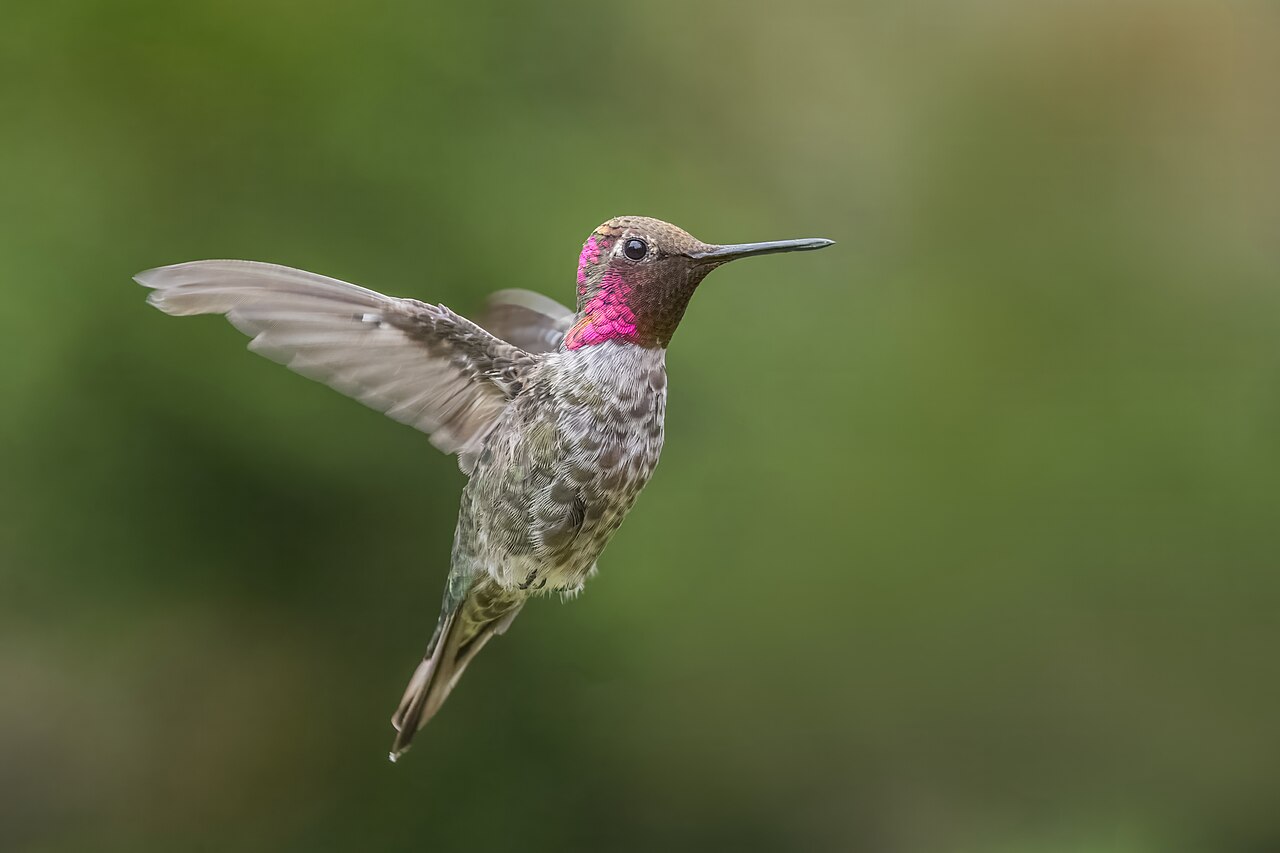
Anna’s hummingbirds (Calypte anna) are the best-known singers among North American hummingbirds. Males sing a scratchy, squeaky song from exposed perches, and they keep singing through the winter along the Pacific Coast. Most other North American species sing little or not at all, and many of their display sounds come from feathers instead. Costa’s and Calliope males also sing.
Courtship dives produce some of the sharpest sounds a hummingbird makes. A male climbs high above a female, then plunges past her, and air rushing through his spread tail feathers makes a sharp chirp at the bottom of the dive. Calliope hummingbirds (Selasphorus calliope) end their dives with a short buzz and a sharp zing.
| Species | Signature sound | Made by |
|---|---|---|
| Ruby-throated | Soft “tchew” chips, squeaky chase twitters; males add a high wing whine | Voice and wings |
| Anna’s (Calypte anna) | Scratchy song from perches; sharp chirp at the bottom of the dive | Voice and tail feathers |
| Broad-tailed | Loud metallic trill from flying males | Wings |
| Black-chinned (Archilochus alexandri) | Low dull hum from the male’s wings, plus soft chips | Wings and voice |
| Allen’s (Selasphorus sasin) | Sharp trill at the bottom of the courtship dive | Tail feathers |
| Calliope | Short buzz and a sharp zing at the end of the dive | Tail feathers and voice |
Do Hummingbird Calls Attract Them?
Recorded calls rarely lure hummingbirds to a yard. Hummingbirds find food mostly by sight, and bright colors such as red draw their attention. A speaker playing chatter at a feeder may even backfire, because it can sound like a rival. The American Birding Association’s Code of Birding Ethics asks birders to limit the use of recordings to attract birds.
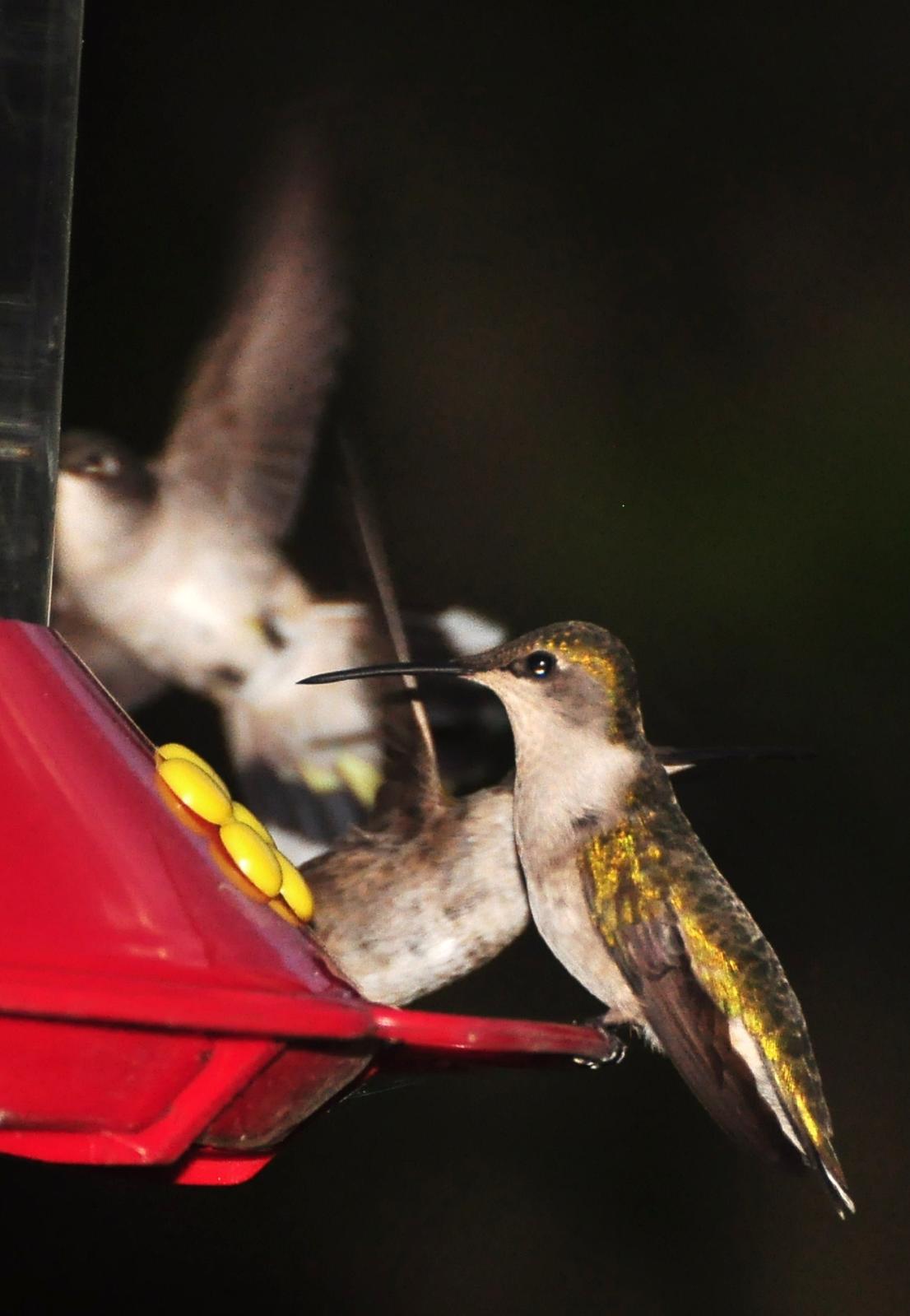
What works is food. Fresh nectar and tubular flowers bring them in, and the chitter-chatter starts once two birds want the same spot. The best hummingbird feeders make that easier with red parts, simple cleaning and several ports.
Your ears help too. Ruby-throated hummingbirds (Archilochus colubris), the only breeding species across most of the East, chip as they approach. Listen for those chips near shrubs and you can spot the bird before it reaches the feeder.
Frequently Asked Questions
Do hummingbirds make sounds at night?
No, hummingbirds typically fall silent at night. On cold nights or when energy runs low, they enter torpor, a deep energy-saving state in which body temperature and heart rate drop. A sound from a feeder after dark is probably an insect or another animal.
Can you tell a hummingbird’s hum from a big bee by ear?
Yes. A hummingbird’s hum rises and falls as it darts, hovers and darts again, while a large bee drones at a more even pitch while it works a flower. Watch the source for a second. A hummingbird hovers, backs up and shoots sideways, and its hum shifts with every move.
Sources
- Cornell Lab of Ornithology, Merlin Bird ID sound identification
- Cornell Lab of Ornithology, Anna’s Hummingbird sounds
- Cornell Lab Celebrate Urban Birds, Calliope Hummingbird