Seeing a Black Butterfly Meaning: Omen or Message?
As a sign, a black butterfly crossing your path points to a turning point, an ending that clears room for a new start, not a threat. Change is the thread that runs through seeing a black butterfly meaning, whether the insect lands on your arm, circles you in the yard, or drifts past a window. The dark wings mark a close. The flight marks what comes next.
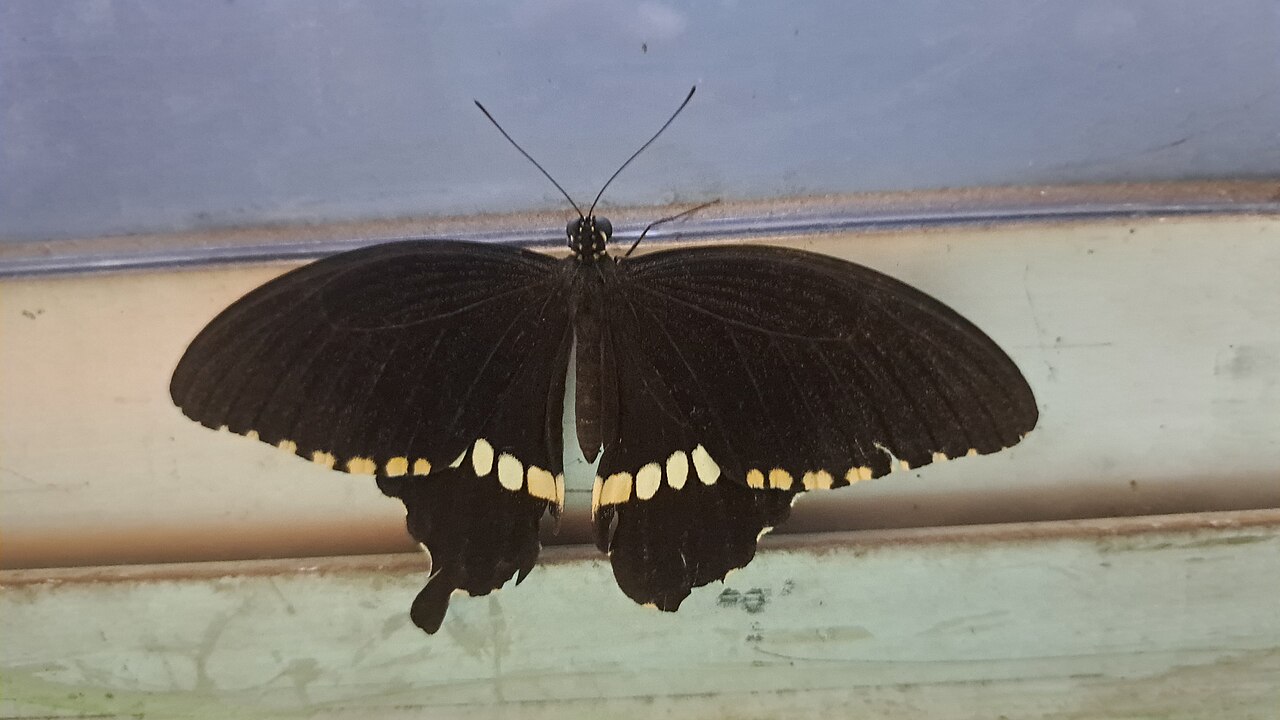
The encounter also has a plain physical side. Black butterflies in American yards include swallowtails and the mourning cloak, and they come close for salt, warmth, or a flower near you. Knowing the insect keeps the meaning honest.
Spiritually, a black butterfly that visits you stands for transformation and closure. It marks the end of a chapter or a season of grief, and the start of something new. A landing points to a close, personal message, and a sighting after a loss points to remembrance.
What Does It Mean When a Black Butterfly Visits You?
A black butterfly that visits you points to a turning point in your own life. The visit asks what you are ready to finish, because black is the color of the closing chapter and the butterfly is the creature of the new form. A visit during a move, a breakup, or a job change fits that meaning closely. A visit on an ordinary day points to a smaller ending, such as a habit or a worry you can drop.
The spiritual meaning of seeing butterflies of any color rests on their life cycle. A caterpillar breaks down most of its body inside the chrysalis and comes out with wings, so the insect stands for change, farewell, and a fresh start in one body. The black butterfly leans toward the farewell part of that cycle. It honors what ends before it celebrates what begins.
Black butterflies carry a wider symbolic range than a single visit, from rebirth to protection. A visit narrows that range to you and to this week. Notice where it happened and what you were thinking about. That detail carries more weight than the color alone.
Is a Black Butterfly a Sign From a Loved One or Death?
After a loss, a black butterfly points to remembrance of the person, and it does not point to a death to come. In ancient Greek the word psyche meant both soul and butterfly, an old pairing that still colors how a dark butterfly near a grave, a garden, or a favorite chair is read. The comfort of that moment is real.
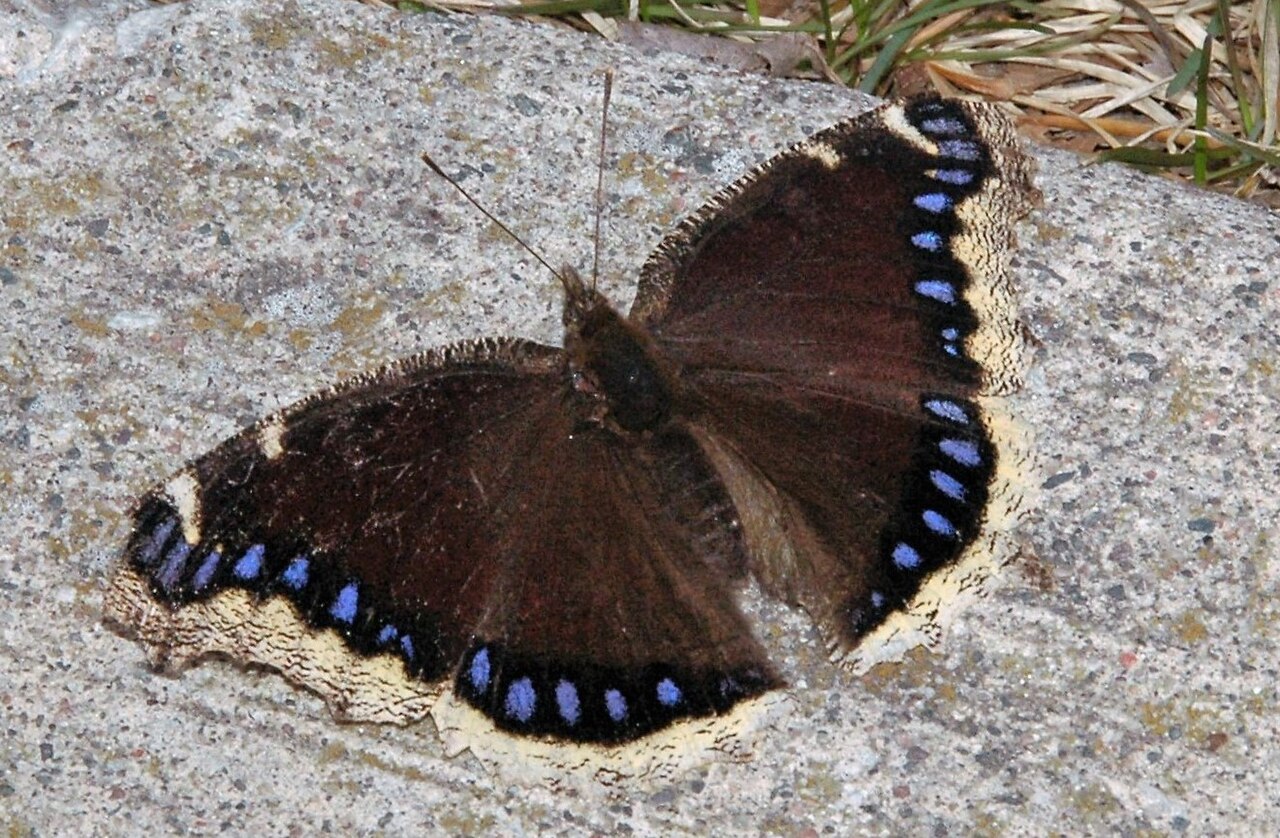
The mourning cloak (Nymphalis antiopa) carries grief in its common name. Its deep maroon wings with a pale yellow border look like a dark garment with a trim. Adults spend the winter tucked in bark and woodpiles and fly on the first warm days of spring. A mourning cloak in March arrives at the exact moment winter breaks, and that timing is part of why it feels like a visit.
A white butterfly on your path points toward peace and reassurance, while the black butterfly points toward the ending itself. Neither one predicts a death. Treat a black butterfly after a funeral as an invitation to remember the person, to speak their name, or to visit a place you shared. That is a meaning you can act on without needing certainty.
Are Butterflies Messages From Angels or God?
Scripture reports angels bringing messages in words, not through insects. Hebrews 1:14 calls angels ministering spirits sent forth to serve, and Luke 1:26 to 38 shows Gabriel speaking to Mary in plain sentences about the birth of Jesus. Those passages are the model the Bible gives for a message from heaven.
The King James Bible contains no butterfly, and no verse gives the butterfly a meaning. No biblical text presents a butterfly as the sign of an angel. What the Bible does describe is a change of heart and new life, as in 2 Corinthians 5:17, which says that in Christ old things are passed away and all things are become new, and the butterfly’s own body acts out that idea.
When God sends you a butterfly, in the sense of one arriving at the moment you pray or grieve, it works as a reminder to return to those words. Let it point you to the passage, the prayer, or the person you need to call. Test any sense of a message against what scripture actually says.
Can a Black Butterfly Be a Warning Sign?
Yes, butterflies can be warning signs, and in biology some black species are exactly that. The pipevine swallowtail (Battus philenor) feeds on pipevine plants as a caterpillar and stores their toxic compounds, so birds that eat one learn to avoid its dark wings. Its iridescent blue hindwings are an advertisement, not a decoration.
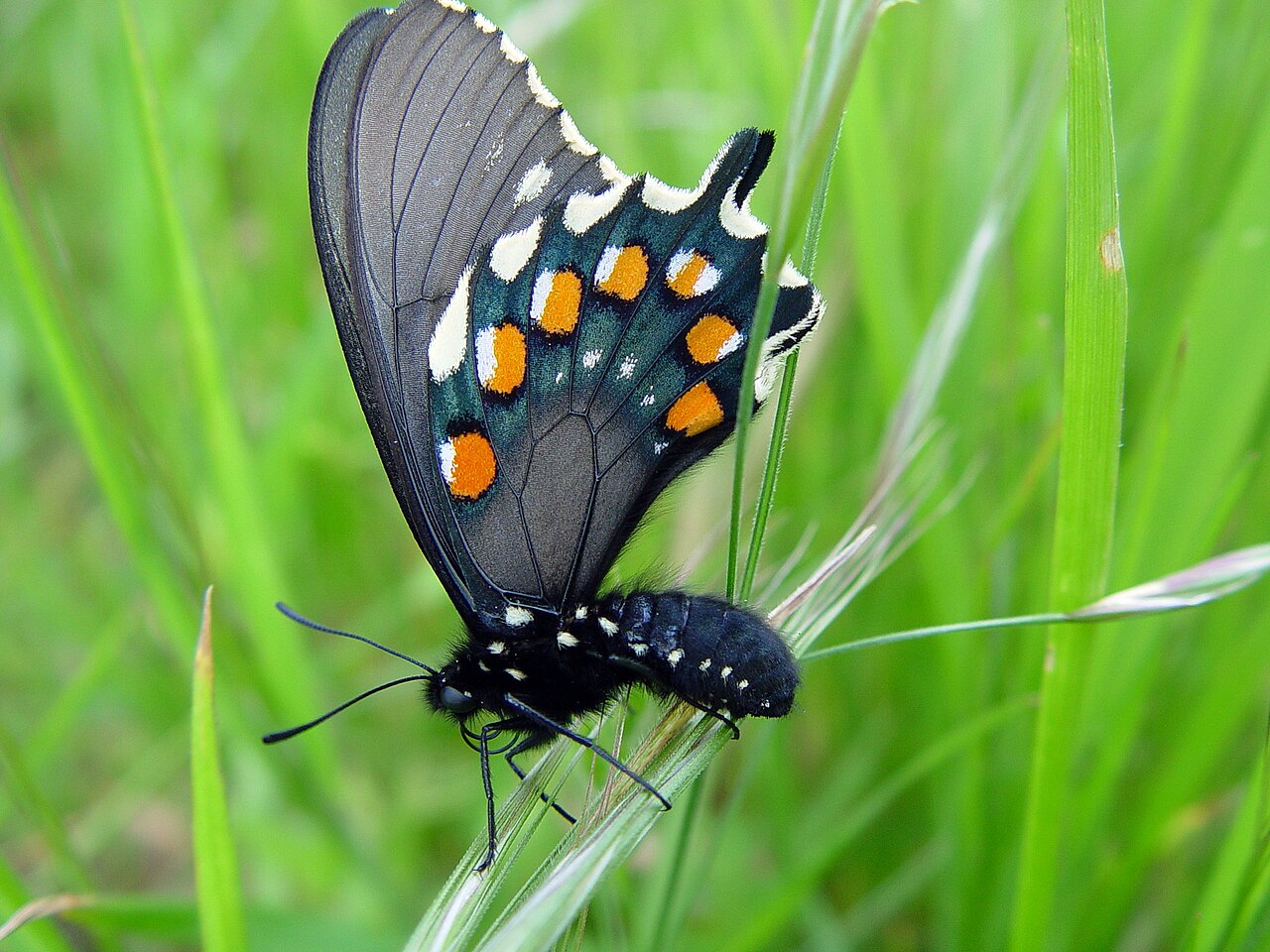
Several other black butterflies copy that pattern for protection, including the black swallowtail, the red-spotted purple, and the dark form of the female eastern tiger swallowtail. The University of Florida pipevine swallowtail profile covers the species and its host plants. A bird that has tasted one pipevine leaves the lookalikes alone too.
A black butterfly crossing your path points to caution, not prophecy. Slow down on a decision you were rushing. Check the detail you skipped.
Is It Rare for a Butterfly to Land on You?
It is uncommon but not rare for a butterfly to land on you, and the reason is your skin. Butterflies practice puddling, drinking from damp ground to collect salt and minerals, and sweat offers the same salts. A warm, still arm on a summer afternoon is an easy stop.
The landing still counts as a personal moment. A black butterfly on your hand points to a close, direct message about the change you are already in. Stay still and it stays longer.
A brown butterfly that lands on you is after the same salt, so the biology is identical across colors. Only the meaning shifts, with brown pointing toward home and stability. The black one points toward closure.
Which Butterfly Color Is Lucky, and What About Black and White?
Yellow points to hope and good news, white to peace, blue to calm, and black to change, so yellow is the luckiest butterfly color. Black is not unlucky. It marks a necessary ending, and good fortune follows an ending you choose.
A black and white butterfly points to balance between an ending and a new beginning. The two colors together suggest that the change in front of you has a clear line, with something to leave and something to keep. Seeing one at a crossroads fits that meaning well.
Black and white butterflies in the US include the zebra swallowtail (Protographium marcellus), with long tails and bold stripes. Identifying the species tells you whether you saw a black butterfly with pale marks or a true striped one. That difference moves the meaning from closure to balance.
Black Butterfly Species You Are Likely to See
The black butterflies you are likely to see are the black swallowtail, the dark form of the eastern tiger swallowtail, the pipevine swallowtail, and the mourning cloak. A dark insect resting with its wings spread flat, or flying at night, is more likely a moth. Butterflies have thin antennae with a club at the tip, while most moths have feathery or tapered antennae.
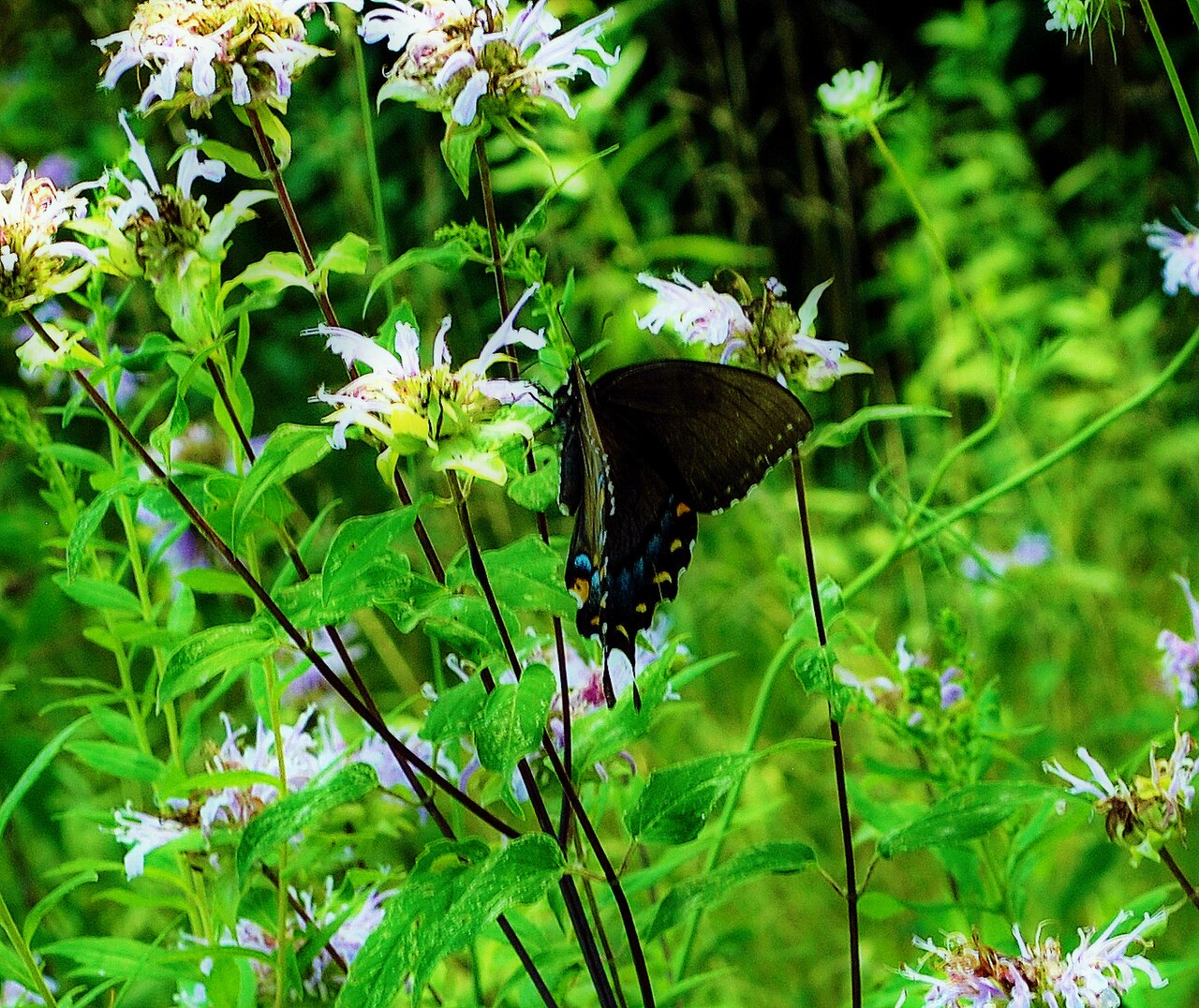
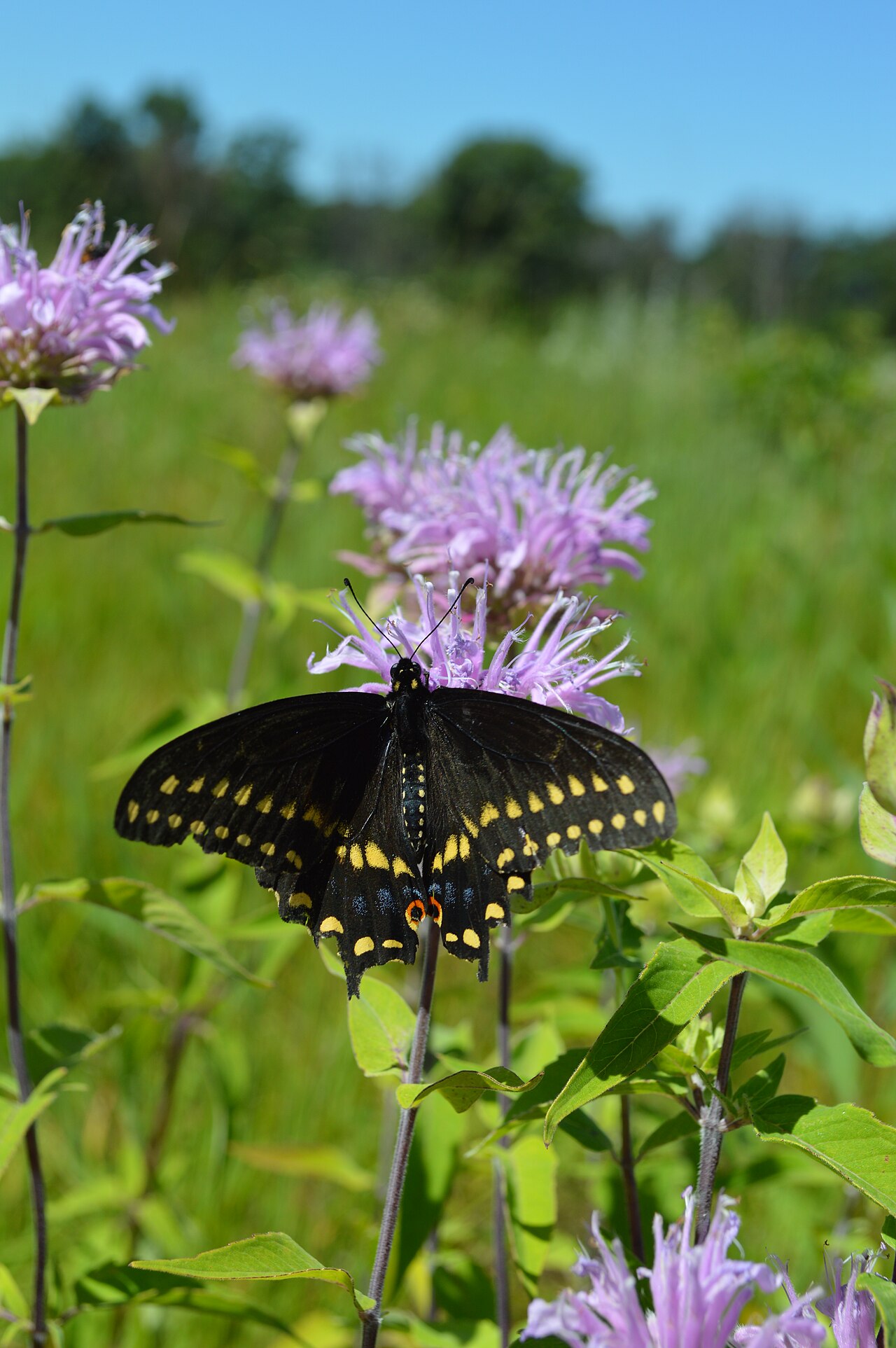
The black swallowtail (Papilio polyxenes) shows rows of yellow spots, blue scales on the hindwing, and an orange eyespot near each tail. Its caterpillars feed on parsley, dill, and fennel, so it turns up in vegetable gardens. Female eastern tiger swallowtails (Papilio glaucus) in the dark form still show faint tiger stripes in the right light.
Black and blue butterflies such as the pipevine swallowtail and the red-spotted purple (Limenitis arthemis astyanax) add iridescent blue to the black. The mourning cloak stands apart with its yellow border and no tails. Those three marks, blue sheen, yellow spots, and a pale border, sort almost every black butterfly in a US yard.
Black Butterfly Encounters at a Glance
Each type of encounter points to a different side of change. Location and timing weigh more than color. A visit at home relates to family, and a visit on a walk relates to a path you are choosing.
| Encounter | What it points to | What to do |
|---|---|---|
| Crosses your path | A turning point ahead | Finish the task you keep postponing |
| Lands on you | A close, personal message | Stay still until it leaves |
| Flies into the house | Change arriving at home | Guide it out with a glass and a card |
| Circles you | A decision that needs attention | Pause before you commit |
| Appears after a loss | Remembrance of the person | Visit a place you shared |
| Flies at night | Most likely a moth | Check the antennae for a club tip |
Frequently Asked Questions
What does a black butterfly in the house mean?
A black butterfly in the house points to change arriving close to home, in family life or daily routine. The insect itself got lost, drawn in through an open window or by a light. Cover it gently with a glass, slide a card underneath, and release it outside.
How long does a black butterfly live?
A mourning cloak adult can live up to about 11 months because it spends the winter as an adult, which makes it one of the longest lived butterflies in North America. A black swallowtail adult lives only a few weeks, long enough to mate and lay eggs on dill, parsley, or fennel.
Is a black butterfly poisonous?
No, a black butterfly is harmless to touch. The pipevine swallowtail carries toxic compounds from its host plants that make it distasteful to birds, but handling one does not harm people. Wash your hands afterward and keep wild insects away from the mouths of pets and small children.
Is a black butterfly at night really a butterfly?
No, in most cases it is a moth, because butterflies fly by day. The black witch (Ascalapha odorata), a large brown and black moth, turns up on porches and walls in the southern US and strays farther north in summer. People mistake it for a bat or a butterfly.
Should you touch a black butterfly that lands on you?
No, let it rest without grabbing it. Its wings are covered in fine scales that rub off easily, and rough handling can damage the wings it needs to fly. Keep your hand still and let it leave on its own. If you must move, offer a finger from below.
Is a dead black butterfly a bad omen?
No, a dead black butterfly is not a bad omen. Most adult butterflies live only weeks, so finding one at the end of its life is common in late summer. It marks a cycle that has already completed, a change behind you rather than one still ahead.
Sources
- University of Florida Featured Creatures, Pipevine Swallowtail
- University of Florida Featured Creatures, Black Swallowtail
- University of Florida Featured Creatures, Mourning Cloak
- Bible Gateway, Hebrews 1:14 (KJV)
- Bible Gateway, Luke 1:26 to 38 (KJV)
Explore more: Insect Spiritual Meanings: 15 Bugs and What They Signal