Cicada Symbolism: Spiritual Meaning, Rebirth and Omens
Cicada symbolism stands for rebirth, transformation and a voice that arrives at the right moment. A cicada spends most of its life underground as a nymph, then climbs into daylight and sheds its skin. Few animals act out a new beginning so plainly.
Cicada symbolism centers on rebirth, transformation and immortality. The insect spends years underground, emerges into daylight, sheds its shell and sings. Seeing one is a sign of renewal and good timing, a prompt to leave an old phase behind and let your own voice be heard.
| Encounter | Meaning | What to do |
|---|---|---|
| Live cicada lands on you | A personal change is close | Name what you are waiting for |
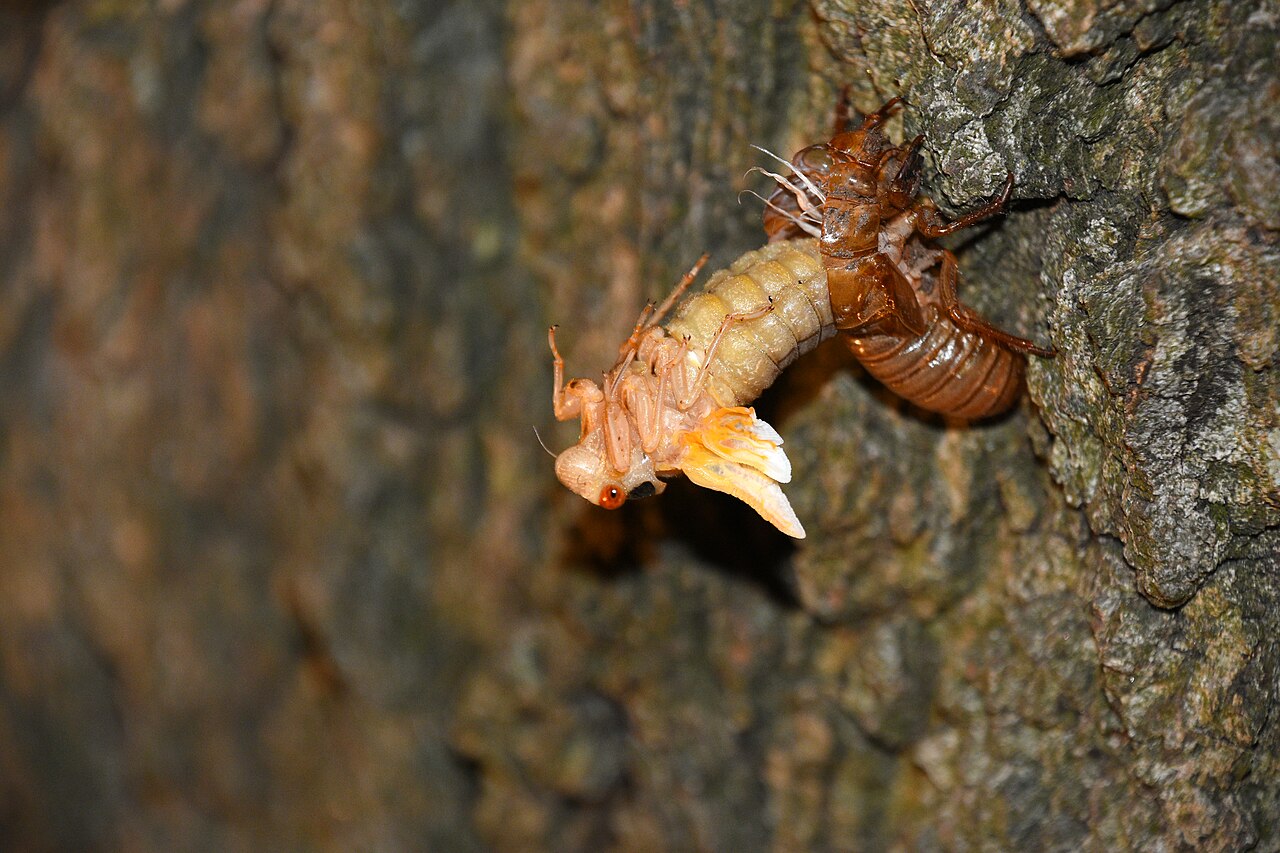
| Empty shell on bark | An old self left behind | Drop one habit that no longer fits |
| Loud chorus at dusk | Speak up and be heard | Say what you held back |
| Chorus suddenly stops | A pause before the next phase | Slow down for a day |
| Cicada at your door | Renewal arriving at home | Make room for the change |
| Dead cicada | An ending, a cycle completed, not a threat | Close one loose end |
Spiritual Meaning of the Cicada and Rebirth
The spiritual meaning of the cicada is rebirth. A nymph climbs out of the soil, grips a tree trunk and splits its back open. The adult pulls free, pale and soft, and leaves a perfect empty shell behind. That shell is the image people keep, an old self left intact and no longer needed. Blue butterflies are commonly read as a sign of transformation too.
The years underground matter as much as the emergence. The nymph feeds on root sap in the dark and grows slowly, unseen. Nothing about that time looks like progress, yet it is the whole preparation. Blue dragonflies also begin life hidden, as nymphs under water, and their meaning shares that slow ripening.
Meeting a cicada carries a personal message. It is time to step into the light after a dark or quiet stretch and show your own voice. A butterfly crossing your path brings a related message, but the butterfly changes once, hidden in a chrysalis. The cicada changes in the open and then gets loud. Ancient China and Greece both read that return as a sign of immortality.
What the Cicada’s Song Symbolizes
The cicada’s song symbolizes self-expression and confidence. Few insects announce themselves so loudly, and the sound fills hot afternoons as surely as the heat. That makes the cicada a symbol of summer abundance and of life at full volume. In Japan the cry of the semi is a haiku season word for summer, and Matsuo Bashō’s 1689 haiku at Yamadera sets it against the stillness of rock.
Only male cicadas produce the loud song, using tymbals on the abdomen, mostly to draw in females, as the University of Connecticut cicada research group describes. Read spiritually, it says that what you want to attract starts with being heard.
A full chorus carries the strongest message. Cicada sounds differ by species, from a steady buzz to rising whines and sharp clicks.
Cicadas in Myth, Folklore and Omens
Most readings of the cicada are positive, especially renewal and immortality in Greek and Chinese traditions. Eos, the Greek goddess of dawn, is the deity most tied to the cicada. She won immortality for her mortal lover Tithonus but forgot to ask for eternal youth, and in later tellings he shrank with age until he became a cicada. In Plato’s Phaedrus, cicadas serve the Muses. They were once humans who loved singing so much that they forgot to eat.
In Han dynasty China (206 BC to AD 220), carved jade cicadas were placed on the tongue of the dead as a wish for rebirth, as the Smithsonian’s National Museum of Asian Art explains. In Japan the empty shell, utsusemi, became a word for the fleeting world and names a chapter of The Tale of Genji.
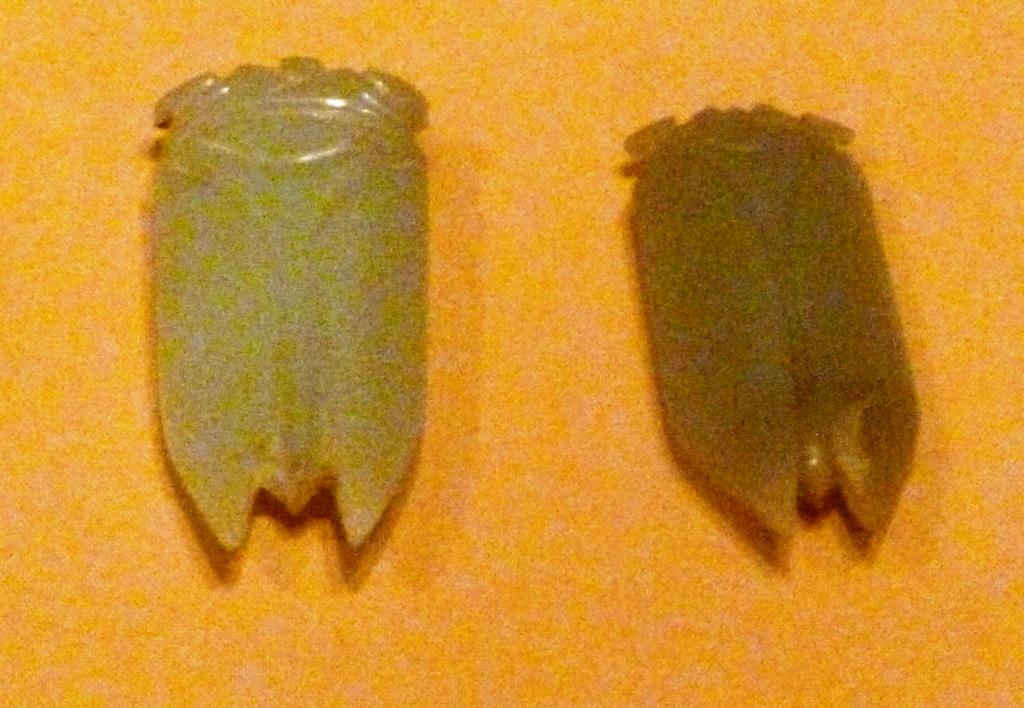
Bad readings are the minority, but they are real. In older American folklore, mass emergences of periodical cicadas were read as a plague, and the dark W in their wing veins as a warning of war. Today most people read a swarm or a dead cicada as a hard ending, not a threat.
Beetle symbolism carries the same rebirth idea through the Egyptian scarab, which stood for the sun reborn each morning.
Frequently Asked Questions
What is the symbolic meaning of a cicada tattoo?
A cicada tattoo stands for resilience and for finding your voice. Designs modeled on Han dynasty jade cicadas carry the older Chinese wish for life after death, while designs with open wings point to the song.
Is it rare to see a cicada?
No. Annual cicadas appear every summer across much of the United States, so seeing one is common. Periodical cicadas are the rare sighting. They emerge only every 13 or 17 years, and only in the central and eastern United States, so the same yard sees a brood a handful of times in a lifetime.
Explore more: Insect Spiritual Meanings: 15 Bugs and What They Signal