Red Moth Identification: 5 US Species and Whether Any Are Poisonous
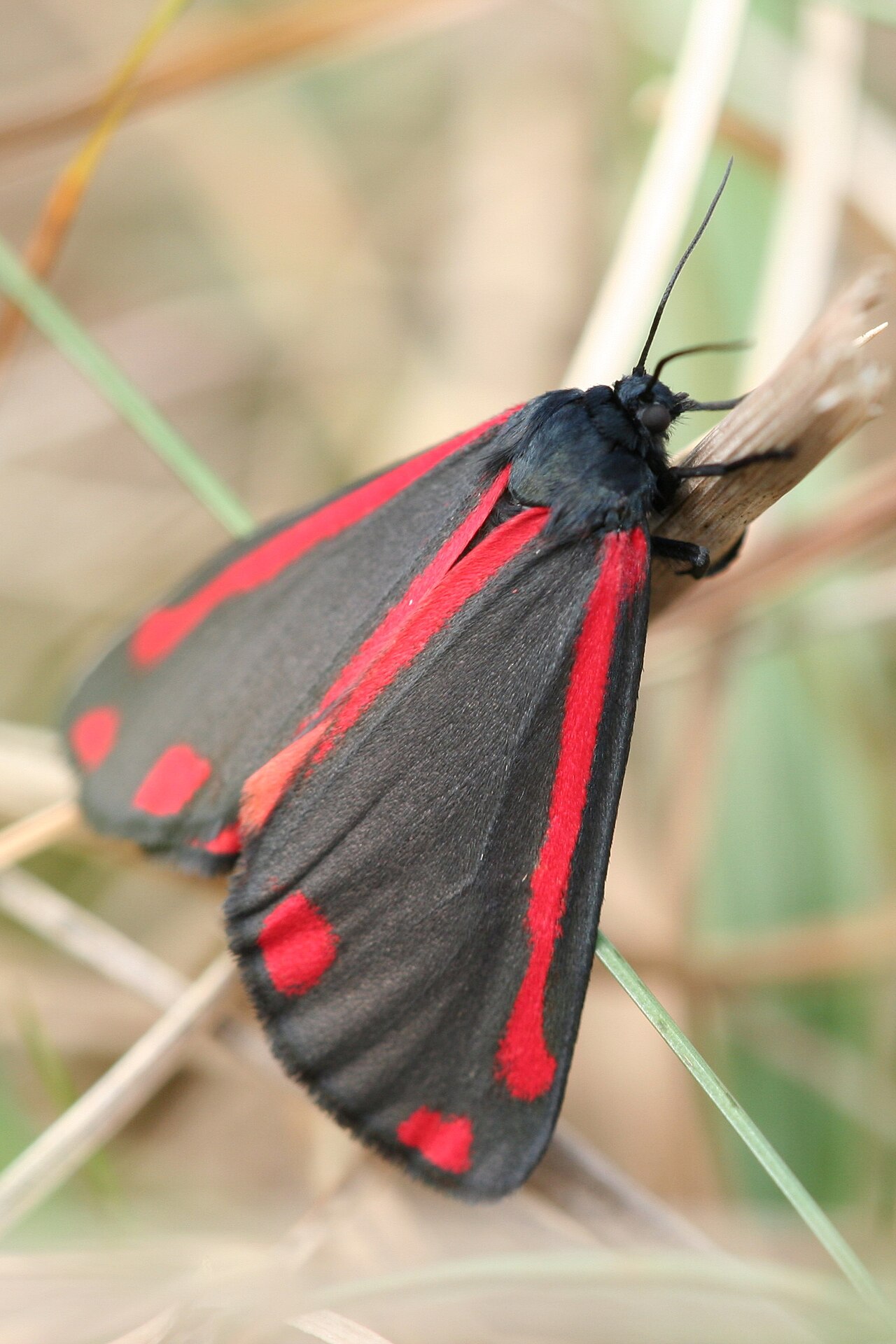
A red moth in the United States is almost always one of five species, and none of them can sting or bite you. Most sightings are a cinnabar moth in the Pacific Northwest, a rosy maple moth at an eastern porch light, or a cecropia moth with rust red bands across its body.
Size, wing position and region narrow it down in seconds. The table covers the red moths that actually turn up in American yards.
The red moths you are most likely to see in the US are the cinnabar moth (Tyria jacobaeae), rosy maple moth (Dryocampa rubicunda), cecropia moth (Hyalophora cecropia), ruby tiger moth (Phragmatobia fuliginosa) and scarlet-bodied wasp moth (Cosmosoma myrodora). No adult moth stings or bites. Only a few caterpillars carry toxins or irritating hairs.
| Species | Where the red is | Wingspan | US range |
|---|---|---|---|
| Cinnabar moth | Scarlet hindwings, red stripe on black forewings | 1.3 to 1.7 in (32 to 42 mm) | Pacific Northwest |
| Rosy maple moth | Pink and yellow wings | 1.3 to 2 in (32 to 50 mm) | Eastern states |
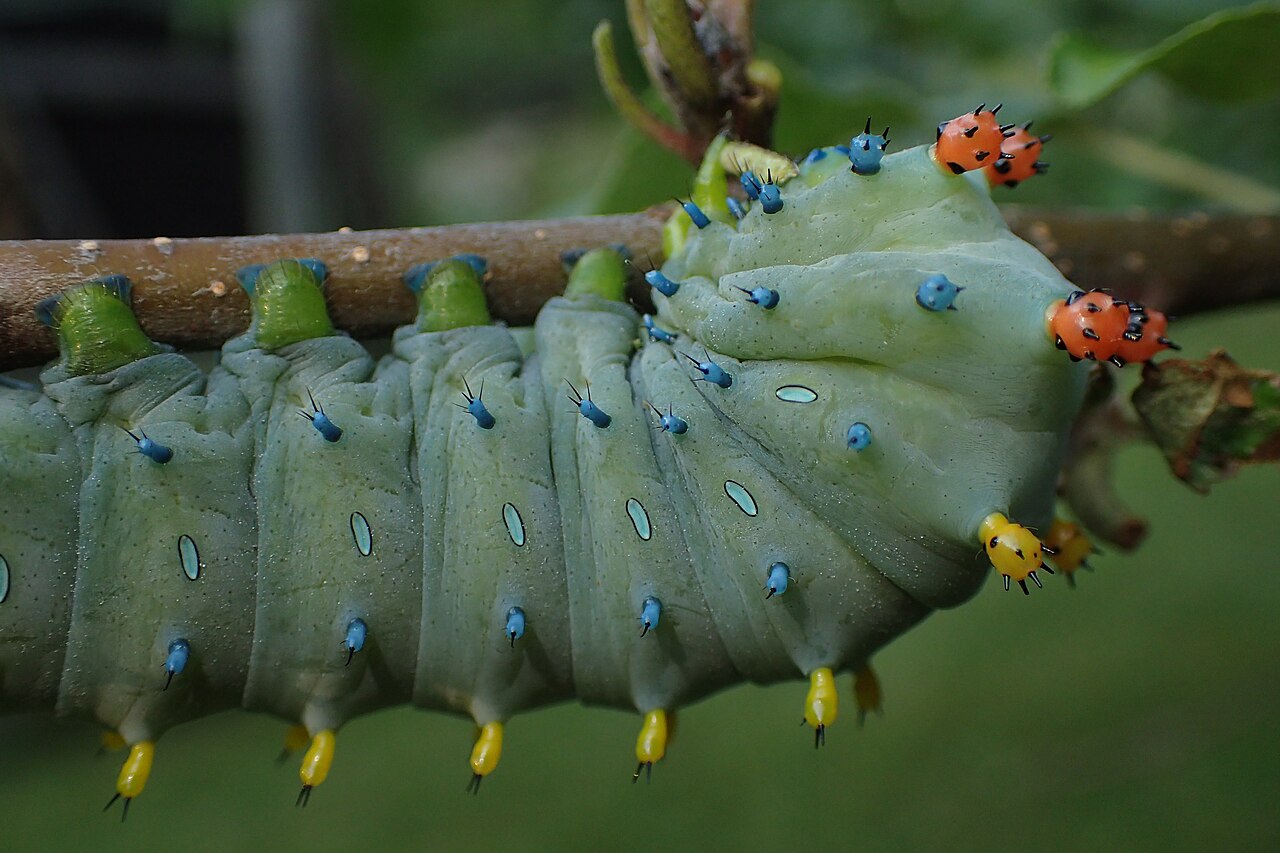
| Cecropia moth | Rust red body bands and wing bases | 4.3 to 7 in (110 to 180 mm) | East of the Rockies |
| Ruby tiger moth | Plain red brown forewings, furry red thorax | 1.1 to 1.4 in (28 to 35 mm) | Northern states |
| Scarlet-bodied wasp moth | Scarlet abdomen, clear wings | About 1.2 in (30 mm) | Florida, Gulf Coast |
Are Red Moths Harmful?
No adult red moth in North America is venomous, and none can break skin. Moths do not sting, and the worst an adult does is leave wing scales on your fingers. The safety question belongs to the caterpillar stage instead.
Cinnabar moth caterpillars are banded orange and black and carry toxins taken from tansy ragwort, so they are dangerous to eat rather than to touch; our guide to the red and black caterpillar places a banded larva fast. The larvae that do hurt are the puss caterpillar and the io moth, whose hollow hairs sting on contact. See also Smithsonian BugInfo.
What Kind of Moth Is Red? Five Species to Know
Note where the red sits, because that one detail separates them. The cinnabar moth has black forewings with a red stripe and two red spots over solid scarlet hindwings, and it flies by day, which is why it gets reported so often. The rosy maple moth is the small pink and yellow silkmoth that lands on eastern porch lights in June and July.
The cecropia moth is unmistakable by size alone, the largest native moth in North America; anything large but plainly tan belongs with the common brown moths. The ruby tiger moth looks like a worn carpet moth until its pink red hindwings show, and the scarlet-bodied wasp moth of Florida is a day flier people search for as a red and black wasp.
Red Moth Lookalikes: Cinnabar Moth vs Ruby Tiger Moth
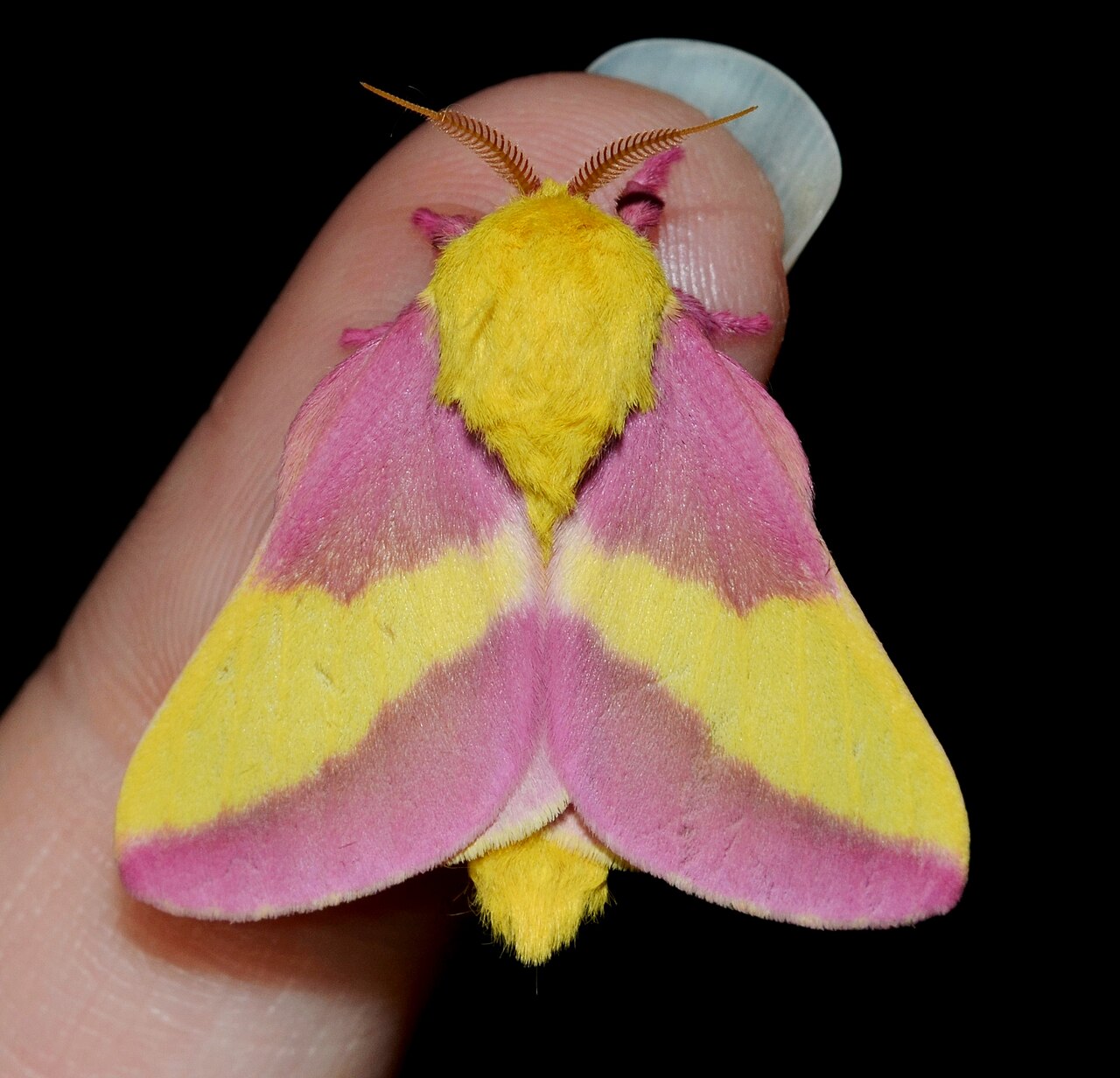
These two cause most of the mix-ups, and the forewing settles it. The cinnabar moth is boldly marked in black with a red stripe and two spots; the ruby tiger moth is plain reddish brown with a furry red thorax. Their ranges barely overlap.
Plenty of reported red moths are not moths at all. Boxelder bugs and several beetles are red and black and fly clumsily to lights, covered in our guide to the red and black beetle. Day fliers with clubbed antennae belong with red butterflies, and an unmarked moth with no red with the black and white moths.
What Does It Mean When You See a Red Moth?
Biologically it means timing and habitat. A cinnabar moth tells you tansy ragwort is flowering nearby, and a cecropia moth at the window means hardwoods within a few hundred yards. The big silkmoth adults never feed and live about two weeks, so sightings come in short bursts.
Folk tradition reads them as a message or a visit from someone who has died, with red tied to passion or warning. That is belief rather than biology. What a red moth reliably tells you is that its host plant still grows nearby.
Frequently Asked Questions
Is it rare to see a cecropia moth?
Not rare, but seldom seen. Cecropia moths are widespread east of the Rockies, yet adults fly only at night, never feed, and live about two weeks. Most people meet one once or twice in a lifetime, on a wall near an outdoor light.
Why shouldn’t you touch moths?
Handling rubs off the scales a moth needs for insulation and for escaping webs, and the stress can stop a short-lived adult from breeding. Touching is a risk to the moth, not to you. The exception is caterpillars with hairs that sting.
What is the deadliest moth in the world?
The giant silkworm moth Lonomia obliqua of South America. Its caterpillars carry a venom that interferes with blood clotting, and clustered stings have killed people. No moth in the United States is dangerous to that degree, and no adult moth anywhere is.
Why is the Atlas moth illegal in the US?
Live Atlas moths (Attacus atlas) are restricted because the US Department of Agriculture treats them as a potential pest if they escape and establish. Keeping live specimens needs a permit. Dead, mounted ones are generally allowed, which is why framed specimens sell freely.