Spiritual Meaning of Seeing a Skunk at Night: Good Omen?
The spiritual meaning of seeing a skunk at night is a call to guard your boundaries and carry yourself with quiet confidence, and the sighting is a good omen rather than a curse. Spiritually, the skunk stands for self-respect without aggression. It walks slowly and typically gives warning signals, but a startled skunk can spray without warning.
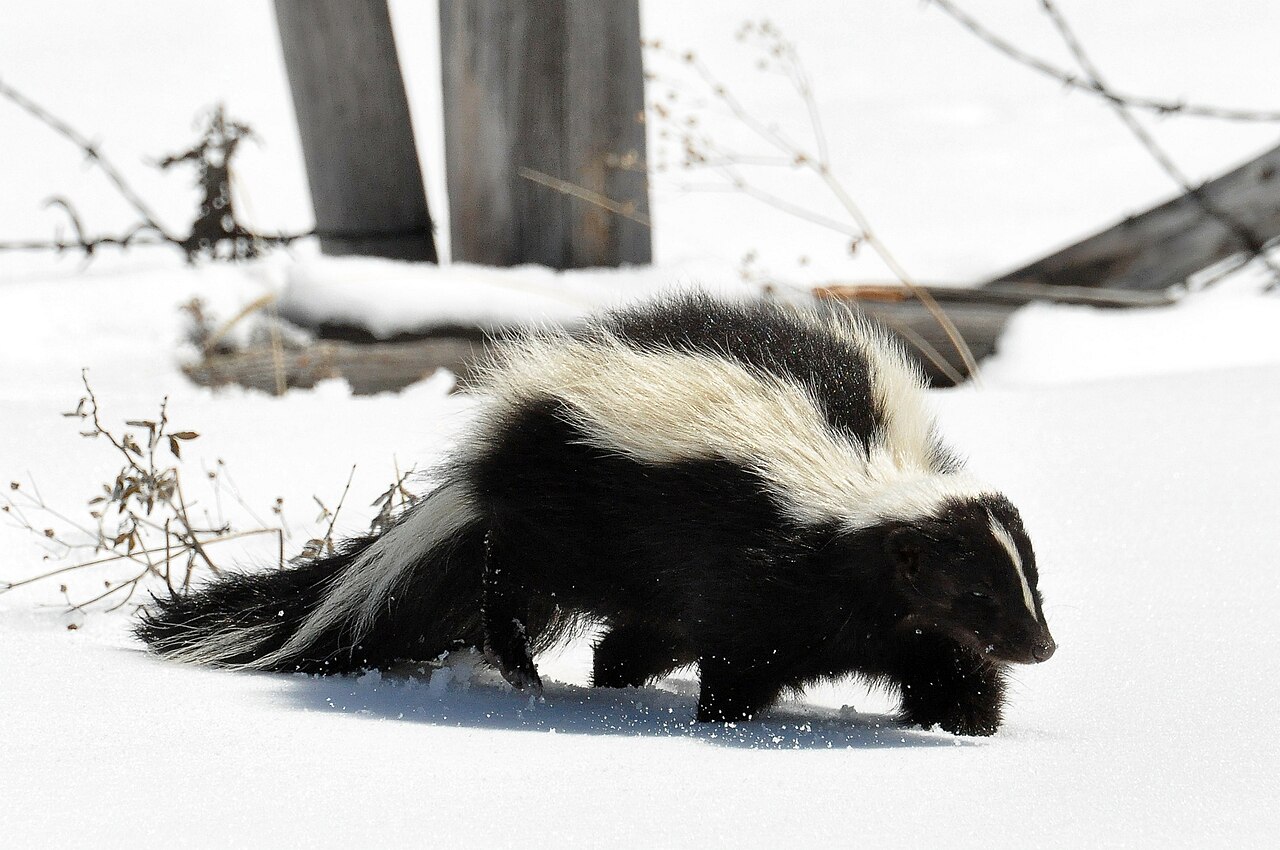
The night setting fits the animal. The striped skunk (Mephitis mephitis) forages after dark for grubs, insects, eggs and fallen fruit. A skunk near your porch late in the evening is on its normal shift. The message lies in how you respond to it, calmly and from a distance.
As a sign, a skunk at night is a good omen, not bad luck. It points to boundaries, self-respect and calm confidence. The animal is nocturnal, so a night sighting is normal behavior. Treat it as a nudge to protect your space, and keep pets and food sources away from where it forages.
| Sighting | Symbolic meaning | What it tells you in practice |
|---|---|---|
| Skunk crossing the yard at night | Boundaries held without a fight | Normal foraging, no action needed |
| Skunk under the porch or deck | Home and what you let in | Possible den, check for young before sealing |
| Skunk out in daylight | Patience and a season of growth | Normal for mothers in spring, watch for odd behavior |
| Skunk stamping with tail raised | A limit you are about to cross | Back away slowly, leash the dog |
| Skunk in a dream | Reputation or an avoided conflict | Check where your limits are being tested |
| Skunk returning night after night | A lesson not yet acted on | Remove food sources and close gaps |
Spiritual Symbolism of a Skunk at Night
A skunk at night symbolizes boundaries kept without a fight. The animal has a strong defense, but given an escape route it prefers to retreat rather than fight. It moves through the dark at its own pace, and that steadiness is the core of the message. When one crosses your evening, it points to a place in your life where you need to state a limit and hold it.
Darkness adds a second layer. Night is the hour of solitude, reflection and the things you avoid in daylight. A skunk working alone in that hour points to self-reliance and to the value of being at ease in your own company. It also points to discernment, with a warning display that tells other animals to give it space.
The smell belongs to the symbol too. A skunk’s reputation runs far ahead of the animal, so the sighting also speaks to reputation and to how others see you. You do not need to prove your strength every day if people already know where you stand. The word skunk comes through Massachusett from roots meaning “urinate” and “fox or fox-like animal”, according to Merriam-Webster. Skunk symbolism with omens and dreams covers the broader picture, from the animal’s name to its role as a totem.
What Omen Is a Skunk?
A skunk is an omen of self-protection and respect. It appears as a reminder that your energy is yours to guard. As a nocturnal visitor, it pairs that reminder with patience.
The details shift the omen. A skunk that ignores you and keeps foraging points to calm coexistence and to letting others go about their business. A skunk that stops, faces you and stamps points to a boundary you are about to cross, in the yard and in your life. A mother with a line of young behind her points to family, protection and a season of growth.
A skunk crossing your path carries its own reading about direction and timing. For a sighting near the house, the omen stays close to home. It concerns the people under your roof and what you allow through the door.
Is a Skunk Good Luck or Bad Luck?
A skunk is a good omen of self-respect and protection, while its warning display adds a caution about crossed boundaries. The smell contributes the theme of reputation: how others perceive you and how firmly you hold your ground.
A black cat crossing your path shares the themes of night, uncertainty and judging by appearances. The skunk adds a clear lesson about giving and respecting warnings.
In daily life, the skunk is a practical hint. It tells you something about your yard, such as open trash, spilled birdseed or a gap under the deck. Fix that, and the luck improves for you and for the skunk.
Seeing a Skunk During the Daytime
A daytime skunk sighting does not automatically mean the animal is sick. Mothers may forage by day while raising young, particularly in spring. Steady walking and searching for food can be normal behavior, but watch from a distance for the warning signs below.
Warning signs are specific. Stumbling, circling, dragging the hind legs, strange tameness, aggression without provocation or a skunk that walks toward people all deserve attention. Skunks are among the animals most frequently found with rabies in the U.S., according to the CDC, alongside bats, raccoons and foxes.
Keep your distance, bring pets inside and do not try to trap or feed the animal. Call local animal control or your state wildlife agency and describe what you saw and where. A skunk that acts sick belongs to professionals, not to a broom or a garden hose.
Are Skunks Dangerous to People?
A skunk can bite, scratch or spray when threatened. Rabies spreads primarily through bites or scratches from an infected animal, so such contact needs prompt medical advice. Spray typically irritates the eyes and nose, according to MassWildlife, and also warrants keeping your distance. More than 90% of reported animal rabies cases in the U.S. occur in wildlife, and USDA APHIS lists skunks among the wild animals that have replaced the domestic dog as the primary reservoir.
Once symptoms appear, rabies is nearly always fatal. The time between exposure and the first symptoms can last weeks to months, so a bite needs action right away, not after symptoms. Post-exposure care includes wound care, immune globulin and a series of four or five vaccines, and it is nearly 100% effective when given after exposure.
Perspective helps. Rabies is rare in people in the United States, with fewer than 10 deaths reported each year, and around 100,000 Americans receive vaccines after a potential exposure. Rabies can be successfully prevented with vaccines given shortly after an exposure, so clean any bite or scratch and call a doctor the same day.
A Skunk Near Your House: Sign or Problem?
A skunk near your house may be passing through or looking for food or shelter; repeated visits can also bring digging and encounters with pets. Skunks den under porches, decks, sheds and crawl spaces, and they visit yards for grubs, pet food, garbage and birdseed. The symbolic reading points to home boundaries, and the practical fix follows the same line.
Keep a skunk away without traps or poison. Store trash in lidded bins, feed pets indoors and clean up fallen fruit and birdseed. Close gaps under structures only after confirming that all animals, including dependent young, are gone. An adult leaving at night or a tracking patch remaining undisturbed does not by itself establish that no young remain. In winter, inactive skunks may stay inside for longer periods. If occupancy is uncertain, ask a wildlife professional to assess the den before sealing it.
Mothers with young need a different plan. In spring and early summer, a den under a deck can hold a litter, and sealing it traps the young inside. Call a licensed wildlife control operator or your state wildlife agency for a humane exclusion. A black beetle in the house carries a related threshold meaning for creatures that cross from outside into your space.
How a Skunk Warns You Before It Sprays
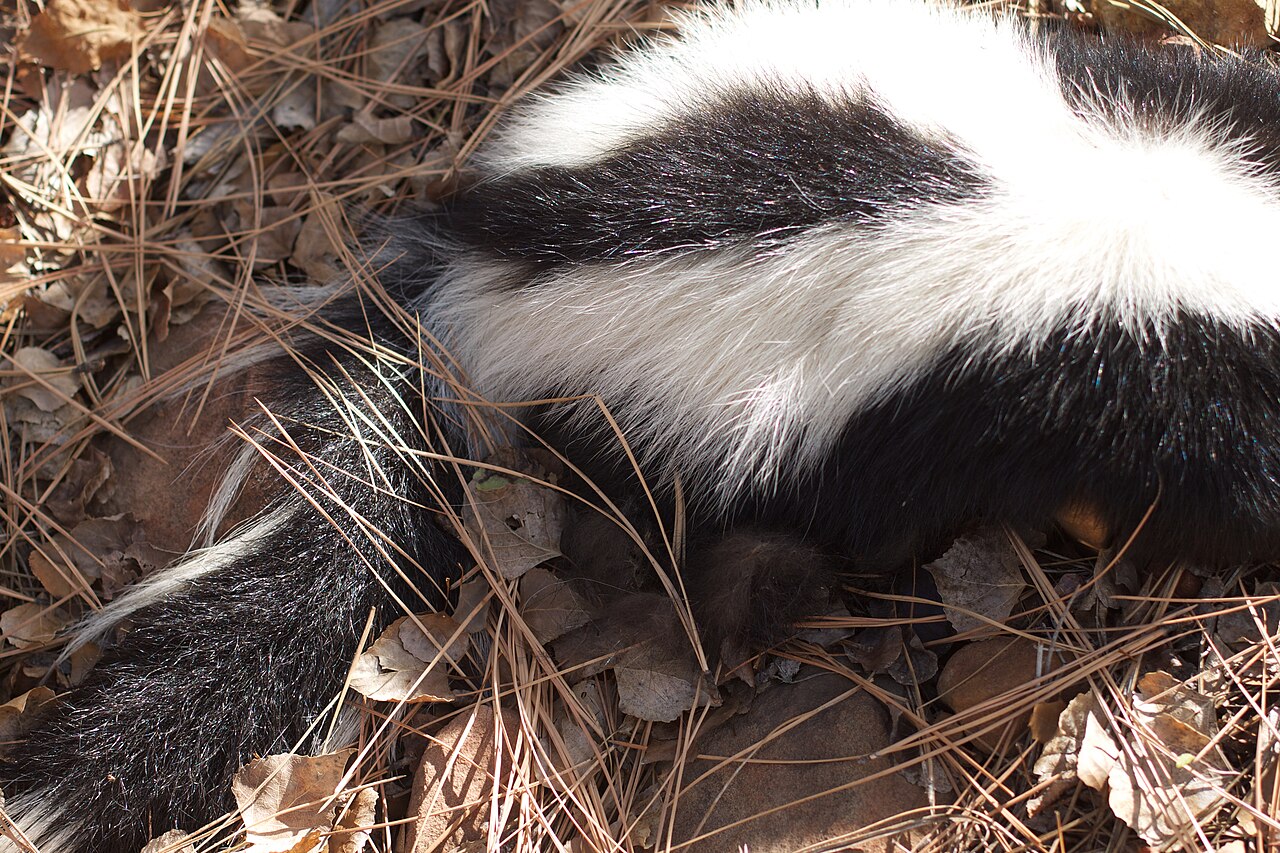
A skunk typically warns you by stamping its front feet, hissing, raising its tail and turning its hindquarters toward you. A striped skunk may bend into a U so it can watch the threat while aiming its rear toward it. These signals are not a fixed sequence, and a startled skunk can spray without warning. Back away at the first signal rather than waiting for another.
The eastern spotted skunk (Spilogale putorius) adds a handstand. It rises on its front feet, lifts its hind body and tail into the air and can walk forward in that position. The display looks comic, but it signals the same thing as the striped skunk’s stamp.
Read the warning as an instruction. Stop, keep your voice low and step back slowly the way you came. Do not throw anything or run at the animal, and keep dogs on a leash, since dogs ignore the stamp and take the spray. A clear, fair warning is the center of the skunk’s symbolism too.
Skunk Dream Meanings at Night
A skunk in a dream points to boundaries, reputation or a conflict you avoid. In modern dream interpretation, the situation decides the meaning more than the animal itself.
A skunk that sprays you points to a conflict that already spilled over, or to words that will linger. A calm skunk walking past points to self-assurance and to a situation that resolves if you leave it alone. A skunk inside your house points to a boundary at home that someone has crossed, or one you need to set.
A black cat dream shares the night setting and the theme of a misjudged animal. Hold the dream against your waking week. If someone is pushing past your limits, the dream skunk is the part of you that wants to stamp its feet.
What It Means When a Skunk Keeps Coming Back
A skunk that returns night after night points to a lesson you have not acted on yet, and in practical terms the yard still offers food or shelter. Both readings ask for the same response. Find the open door and close it.
Look for the signs of a regular visitor. Small cone-shaped holes in the lawn mark grub digging, a musky smell near a deck points to a den, and tipped bins show a food route. Each one tells you where the skunk finds what it needs.
Repeat visits also raise a personal question. Where in your life do you keep allowing the same intrusion? Set that limit, and remove food sources and access to shelter to make further visits less likely.
Frequently Asked Questions
What month are skunks most active?
February and March are notable months for increased roaming by striped skunks during mating season, but the busiest month depends on species, climate and location. Young accompanying their mothers can make skunks more noticeable in early summer, while late summer and fall bring feeding before winter. In Texas, striped skunks can be more active in winter than in summer.
Do skunks hibernate?
No. Skunks do not truly hibernate. They enter torpor, a lighter state of reduced activity, and wait out cold spells in dens. On mild winter nights they come out to forage, so a skunk seen in January is not a sign of illness on that basis alone.
What time of night are skunks most active?
Skunks are primarily active around dusk, during the night and around dawn; the exact peak varies with species, season and location. That timing explains why encounters cluster around the moments people let a dog out late in the evening or leave the house early in the morning.
Can a skunk get inside a house?
Yes. A skunk can enter through a pet door, an open garage or a gap into a crawl space. Leave an outside door open, keep people and pets away and let it exit on its own. Seal the entry points only after you are sure the animal is gone.
Is a skunk out at night a sign of rabies?
No. Skunks are nocturnal, so a night sighting alone is normal behavior. The warning signs are stumbling, circling, strange tameness and unprovoked aggression. If you see those, keep pets inside and call local animal control instead of approaching the animal yourself.
Should you feed a skunk that visits every night?
No. Feeding a skunk ties it to your yard, brings it closer to pets and people and raises the chance of a bite or a spray. Remove food sources instead, and let the animal return to its natural diet of insects, grubs and fallen fruit.
Sources
- CDC, About Rabies
- USDA APHIS, National Rabies Management Program
- Public Health Seattle and King County, Raccoons and Disease