Ferret Symbolism: Spiritual Meaning and Signs
Ferret symbolism centers on curiosity, resourcefulness and play. Symbolically, the ferret is the animal that goes into the tunnel first, finds what is hidden and comes back out wiggling. It does not wait for permission, and it does not stay still for long.
The behavior behind the symbol is real. The domestic ferret (Mustela putorius furo) is a tamed form of the European polecat, bred for centuries to flush rabbits from burrows. It plays hard when awake and collapses into deep sleep when the play ends.
As a sign, a ferret stands for curiosity, quick problem solving and the nerve to explore hidden places. The animal is a domesticated European polecat bred to flush rabbits from burrows, so searching and squeezing through tight spaces are its core skills. Its message is to investigate what puzzles you, then rest without guilt.
What Does a Ferret Symbolize Spiritually?
A ferret symbolizes curiosity, resourcefulness and playful courage. It explores every gap in a room and treats a closed cupboard as a question rather than a wall. That makes it the symbol of the seeker who keeps looking after others give up. The ferret also stands for lightness. It works, then plays, then sleeps, and it never seems to carry yesterday into today.
The name adds a sly edge. Ferret comes through Old French furet from Late Latin furo, and that word traces back to fur, the Latin for thief. A ferret in your path points to something taken or hidden that you can still recover. It also asks whether you are slipping past a duty you would rather avoid.
Art gave the ferret’s family a nobler face. Leonardo da Vinci painted Cecilia Gallerani holding a white mustelid around 1490, and the work is known as Lady with an Ermine. The ermine is the stoat in its white winter coat, a slim cousin of the ferret. Leonardo’s own notebooks link the ermine with moderation and purity.
Skunks belong to the family Mephitidae, while ferrets belong to Mustelidae, even though both animals have a low build and a strong scent.
| Trait | Ferret behavior | Symbolic meaning |
|---|---|---|
| Curiosity | Investigates every bag, box and gap | Seeking hidden answers |
| Tunneling | Bred to flush rabbits from burrows | Getting to the root of a problem |
| Play | Hops sideways with an arched back | Joy without self-consciousness |
| Rest | Deep sleep between short bursts of action | Recharging before the next search |
| Escape skill | Slips through small openings | Finding a way out of a tight spot |
| Family | Jill raises her kits alone | Protecting what you build |
Ferret Family Life and Behavior
A female ferret is a jill, a male is a hob and the young are kits. A jill carries her kits for about 42 days and raises the litter alone. The hob plays no part in rearing. Kits are born blind and deaf and open their eyes after several weeks.
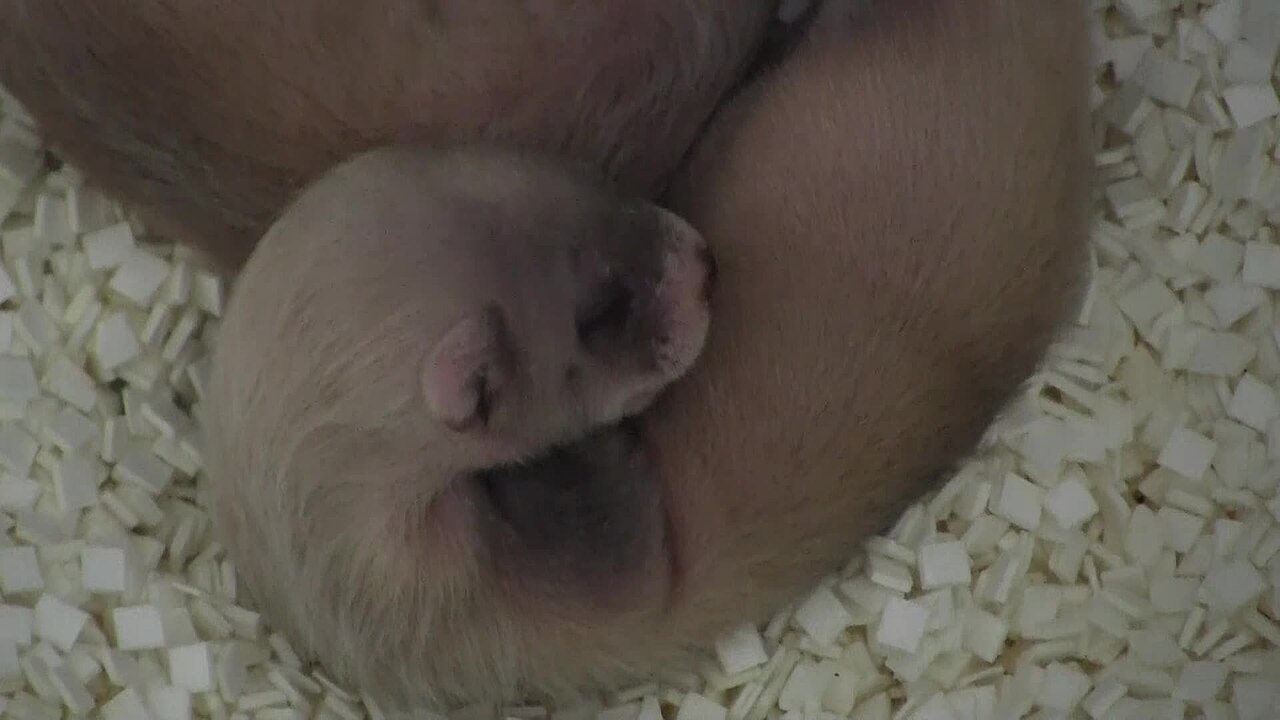
Ferrets are social, and compatible pet ferrets do well in pairs or small groups. They sleep in a heap, groom each other and wrestle in play. Persistent hiding, biting or fighting can indicate conflict. A jill carries her kits by the scruff when moving them between nesting places.
The family picture stands for loyalty inside a small, close circle. Black cat symbolism covers another household animal whose meaning grew out of life beside people.
How Intelligent Are Ferrets?
Ferrets are capable learners that can master trained tasks and household routines. They can learn tricks and use a litter box with consistent training. In visual discrimination experiments, ferrets learned to select a reward port according to whether dots on a screen moved left or right. That gives a concrete example of learning beyond their familiar escape skills.
Their intelligence shows most clearly in escapes. A ferret can investigate fastenings and squeeze through surprisingly small gaps, so its enclosure needs secure closures. Owners ferret-proof a room the way parents childproof one, by checking every opening.
That mind stands for practical intelligence rather than book learning. Octopus symbolism carries a similar message from an escape artist of the sea.
Ferret Totem and Dream Meaning
The ferret as a totem marks a curious, restless person who is quick to laugh. This person sees openings others miss and recovers from setbacks fast. The shadow side is scattered energy. Ten projects get started and two get finished.
In modern dream interpretation, a ferret points to something hidden that wants your attention. A ferret running through a house signals a restless search, often for information someone keeps from you. A biting ferret points to a sharp remark or a small betrayal close to home. A sleeping ferret asks you to rest before the next push.
Squirrel symbolism shares the theme of quick movement and careful stashing, so the two dreams make a useful pair.
What Are Ferrets Known For?
Ferrets are known for hunting rabbits, for their musky scent and for nonstop play. Ferreting, the practice of sending a ferret into a warren to drive rabbits into nets, gave English the phrase to ferret out. The scent comes from glands in the skin, so it stays even in descented pets.
Ferret sounds add to the reputation, from soft chuckles to a sharp hiss when a ferret is annoyed.
Cool and Surprising Facts About Ferrets
Ferrets typically sleep for much of the day, and a deeply asleep ferret can be hard to wake. An excited ferret makes a soft chuckling sound called dooking. It also performs the weasel war dance, a burst of sideways hops with an arched back and open mouth that is play, not aggression.
The wild black-footed ferret (Mustela nigripes) is a separate North American species. It was thought extinct until a ranch dog turned one up near Meeteetse, Wyoming, in 1981. The Smithsonian’s National Zoo now breeds the species for release.
The 3-3-3 Rule for Adopting a Ferret
For ferrets, the 3-3-3 rule is an informal adoption guide borrowed from dog adoption: roughly 3 days to decompress, 3 weeks to learn the routine and 3 months to feel at home. It is not a ferret standard or a fixed timetable. Individual ferrets adjust at different speeds, so use the milestones as reminders to offer patience, predictable routines and time to explore.
Frequently Asked Questions
Why do ferrets show you their babies?
A jill may be relocating her kits when she carries them toward you. Videos of a mother pulling a person’s hand toward her babies show a different behavior. Ferret expert Shannan Skitch, writing in the IAABC Foundation Journal, suggests that hand dragging can be resource caching: a familiar hand provides food, grooming and play, making it something valuable to bring into the nest.
What is a ferret called in Greek?
In modern Greek, a ferret is called κουνάβι (kounávi). The word can also refer more loosely to other mustelids, so the scientific name Mustela putorius furo identifies the domestic ferret precisely.
What is a group of ferrets called?
A group of ferrets is called a business. The name fits the busy impression made by several ferrets exploring, playing and stashing objects together.
What does the weasel symbolize?
The weasel symbolizes cunning, stealth and quick wits. In the Greek myth retold in Ovid’s Metamorphoses, Book 9, Galanthis, a servant of Alcmene, tricks the goddess Lucina at the birth of Hercules and is turned into a weasel. Weasels and ferrets share the family Mustelidae but carry separate meanings.
Are ferrets legal everywhere in the US?
No. Ferrets are illegal to keep as pets in California and Hawaii. New York City bans them as well. Other cities and many landlords set their own limits, so check local rules and your lease before a ferret comes home.
Sources
- Animal Diversity Web, University of Michigan, Mustela putorius furo
- Animal Diversity Web, University of Michigan, Mustela nigripes
- Smithsonian’s National Zoo and Conservation Biology Institute, Black-footed ferret