Black Beetle in House Spiritual Meaning: Good or Bad Omen?
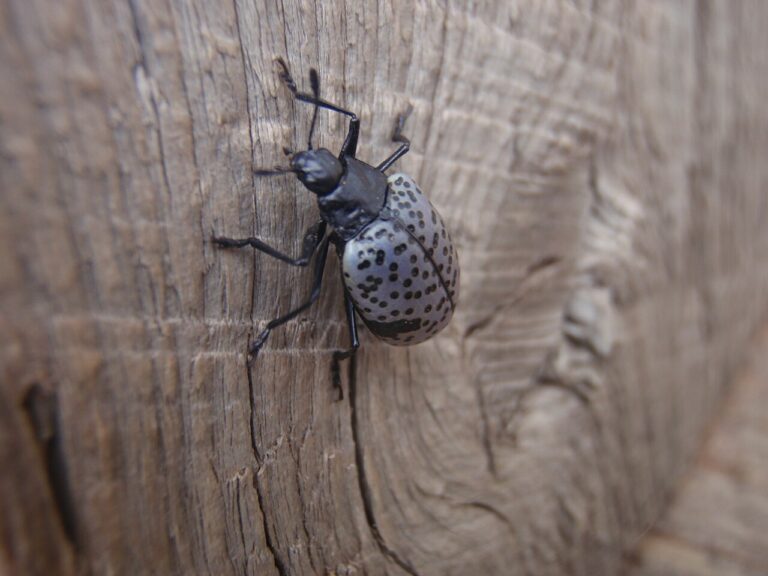
A black beetle in your house is a sign of transformation and protection, not a bad omen. That is the core black beetle in house spiritual meaning. The beetle works close to the ground and keeps going. People who find one indoors take that steady persistence as a message about change already underway at home.
Most black beetles that wander inside are harmless to people. The meaning draws on Egypt’s scarab god Khepri, early Christian writing and the deathwatch beetle of English folklore.
Spiritually, a black beetle indoors is read as a good sign: change underway at home and a shield for the household. One calm beetle counts as luck, while many beetles or damage point to neglect. The reading goes back to ancient Egypt, where the scarab god Khepri pushed the sun into the sky each morning.
What a Black Beetle in Your House Means Spiritually
A black beetle in your house means transformation. The change is slow and already underway, the kind you notice only after it has happened. Beetles pass through complete metamorphosis, from grub to pupa to armored adult, and that life cycle gives the symbol its weight. The beetle in your hallway is a reminder that home life is shifting, even if nothing looks different yet.
The black shell adds a second layer, protection. Dark armor absorbs light, and in symbolic terms it absorbs negative energy before it reaches the household. A beetle that walks across your floor without hurry signals grounding. It asks you to stay steady while the change runs its course.
Location inside the home matters. A beetle met on a trail outdoors speaks to your path in the world, but one inside speaks to family and private life. Beetle symbolism in general spans scarabs, stag beetles and tattoo designs, while the indoor black beetle keeps its focus on the house itself.
Good Luck or Bad Luck? How to Read the Sign
Most modern readings treat a black beetle as a sign of luck and renewal rather than doom. They lean toward renewal and a cycle closing so a new one can open. A single beetle crossing a quiet room is a sign that hard work is about to pay off.
The warning side exists, and it has a specific focus. Some beetles feed on decaying matter, so symbolic readings link a sighting to clutter, neglect or a part of life you have stopped tending. That warning fits best when the beetle appears in a corner you avoid cleaning or a room you rarely use.
Context decides between the two. One calm encounter is a blessing, while many beetles or visible damage shift the meaning toward neglect. A ladybug in the house carries luck that depends on its color. The black beetle works differently, and its luck depends on the situation.
Why Black Beetles Carry a Different Message Than Other Beetles
Black beetles carry a heavier, more inward message than bright beetles because black belongs to soil and the unseen. The color points to what lies below the surface, both in the ground and in yourself. A black beetle brings that hidden layer into view.

This is shadow work territory. The beetle asks you to face what you avoid looking at, an old resentment or a habit you defend. It does not judge. It turns up in the place you would rather not check.
Green, gold and red beetles get lighter, outward readings, while the black shell points inward. A beetle in the house of another color is read by its shade, gold for wealth and red for passion.
Where You See It: Kitchen, Bedroom, Bathroom, Doorway and Night
The room where a black beetle appears tells you which part of life the message concerns. Each space in a home has its own job, and the beetle borrows it.
Kitchen A black beetle in the kitchen concerns nourishment and money flow. It asks what feeds the household, in food and income. Check whether spending and saving are in balance.
Bedroom In the bedroom, the beetle points to rest, intimacy and dreams. It often marks something unsaid between partners. Restless sleep or distance at night belongs here.
Bathroom The bathroom is a place of release and cleansing. A beetle here asks you to let old habits drain away. Whatever you keep rinsing off and picking up again is the target.
Doorway or Window A beetle at a door or window stands on a threshold. A change is entering or leaving your life. The beetle marks a change you carry alone.
At Night A black beetle seen at night speaks to intuition. Messages from the subconscious surface after dark, when the mind is quiet. Notice the first thought that comes to you when you spot it.
When Black Beetles Keep Appearing Indoors
Black beetles that keep appearing carry a message you have not acted on yet. One sighting is a nudge. Repeated sightings are the same nudge, louder. The beetle returns because the change it points to is still waiting for a decision.
The room narrows the meaning. A beetle in the same room each time ties the message to that area of life, the kitchen to money, the bedroom to the relationship, the entry to a coming change. Keep a short log with the room, the time and your mood in that moment. After a few entries, a pattern shows up.
Small black beetles that return to the same spot every day are usually breeding nearby, in stored food or fabric, while ground beetles turn up singly after rain or a cold night.
| Situation | Common spiritual reading | Practical cause to rule out |
|---|---|---|
| One beetle crossing the living room | Transformation underway at home | Firewood or potted plants brought in from outside |
| Beetle in the kitchen | Money flow and nourishment | Open bag of flour, cereal or birdseed |
| Beetle in the bedroom | Unspoken tension or vivid dreams | Natural fiber rug or under-bed storage left undisturbed |
| Beetle in the bathroom | Releasing old habits | Leaking pipe or wet grout |
| Beetle at a door or window | A change entering or leaving | Worn door sweep or torn screen |
| Beetle seen at night | Intuition and dream messages | Porch light pulling insects toward the entry |
| Dead beetle on the floor | A phase that has ended | A wanderer that dried out in low humidity |
When a Black Beetle Visits You or Lands on You
A black beetle that lands on you carries a personal message rather than a household one. Direct contact narrows the meaning from the home to you alone.
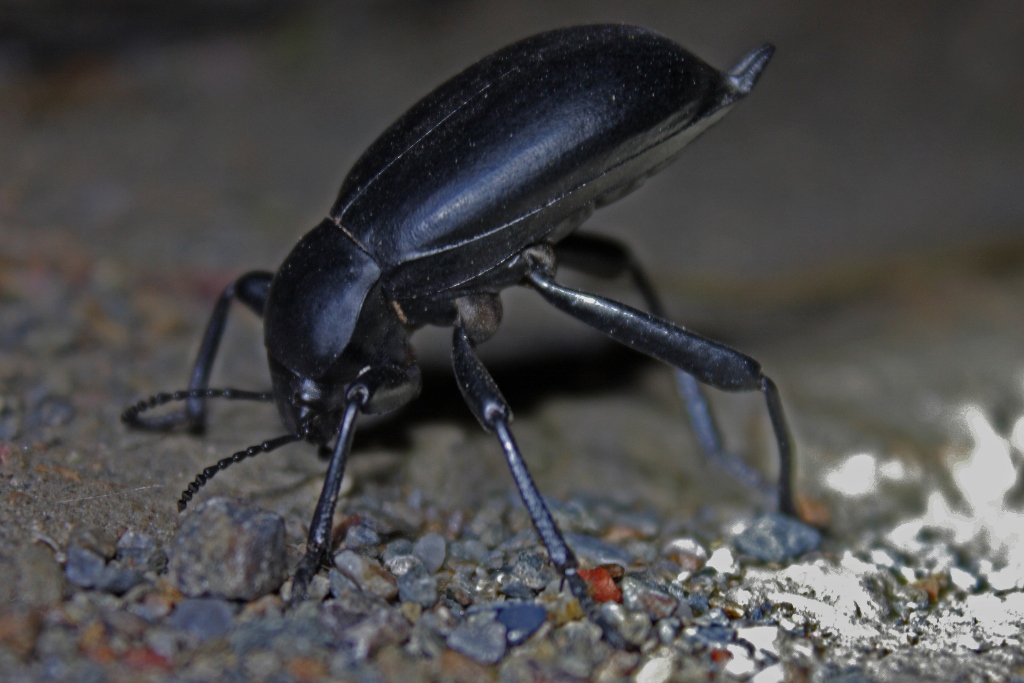
Where it lands shapes the reading. On your hands, it concerns work and creative effort, the things you build. On your clothing, it concerns identity and the image you show others.
A calm approach is reassurance. A beetle that walks onto you without hurry during a hard stretch says the effort is holding.
Finding a Dead Black Beetle in the House
A dead black beetle in the house marks an ending. A phase, a worry or a tie has run its course. The transformation the living beetle announces is now complete.
A dead beetle is not a death omen. That fear belongs to older English beliefs about tapping beetles in old timber, not to current readings. The dead beetle closes a chapter. It does not threaten anyone in the house.
Remove it with respect. Lift it with a tissue and place it outside, in soil or under a plant. Then clean and clear that spot, open a window and let fresh air in.
Ancient Egypt: The Scarab, Khepri and Rebirth
Ancient Egyptians saw the scarab beetle as a symbol of rebirth and the rising sun. The sacred scarab, Scarabaeus sacer, rolls a ball of dung across the ground. It is itself a black beetle. Egyptians compared that ball to the sun, pushed across the sky each day by a divine beetle.
That divine beetle was Khepri, the scarab-headed god of the morning sun. His name comes from the Egyptian word for coming into being, and he stood for self-creation and renewal. Young beetles seem to emerge from the dung ball on their own, and that fit the idea of life arising from itself. Each sunrise was Khepri’s work.
Scarab amulets were among the most common amulets in Egypt. The living wore them for protection, and the dead were buried with them for the journey to rebirth. The heart scarab, a larger stone amulet, was laid over the heart of the mummy and inscribed with a spell from the Book of the Dead asking the heart not to testify against its owner at judgment.
Black Beetle Symbolism in the Bible and Christianity
Only the King James Version has “the beetle after his kind” (Leviticus 11:22), and the verse is about food, not omens. It lists “the beetle after his kind” among the winged insects the Israelites were allowed to eat. The locust, the bald locust and the grasshopper stand beside it in the same verse.
Modern translations read the Hebrew word differently. The ESV renders it as “cricket”. The NIV lists “locust, katydid, cricket or grasshopper”, and other versions give a kind of locust or grasshopper. The original insect was probably a jumping insect, not a beetle in today’s sense. No verse in either testament ties a black beetle to an omen.
The Christian beetle tradition grew from a different verse. The Greek Septuagint renders Habakkuk 2:11 as the beetle out of the timber that shall answer, and Saint Ambrose of Milan in the 4th century read it as Christ on the cross, calling him the good scarab who cried out from the wood. That reading carried the scarab’s old meaning of rebirth into Christian symbolism.
English Folklore: The Deathwatch Beetle in Old Houses
The deathwatch beetle, Xestobium rufovillosum, gave old English houses their darkest beetle belief. Its larvae bore into old timber, especially oak, in English churches and houses. The adults tap their heads against the wood in spring.
In quiet rooms, that tapping carried far. People sitting up through the night with a dying relative heard it as a clock counting down, and the beetle took its name from that death watch. A tapping wall became a death omen in England.
The biology is plain. The tapping is a mating signal between adult beetles. The deathwatch beetle itself is brown, not black, but its omen attached to any beetle heard in old walls.
Black Beetle Meaning in Love and Relationships
In love, a black beetle stands for loyalty and steady effort rather than fast romance. A beetle works the same patch of ground patiently. That patience is the message for a relationship.
If something between you has gone unsaid, raise it before it hardens. The beetle’s armor is a reminder that protection works only when it does not shut the other person out.
For single readers, the beetle promises a slow, grounded bond rather than a sudden spark. Twin flame seekers take it as a sign that the connection grows through work, not fate. Both value staying power over intensity.
Should You Worry? What Attracts Black Beetles Inside
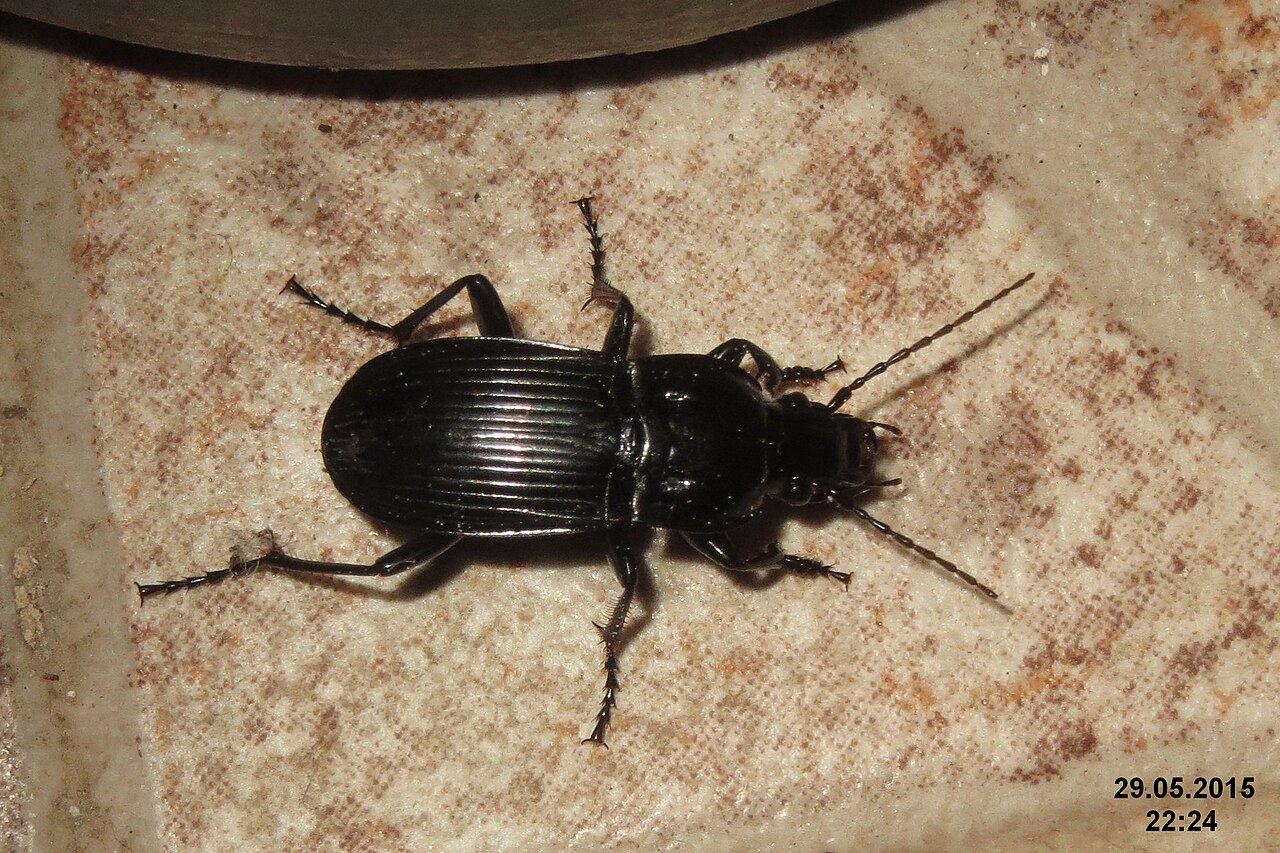
Most black beetles in a house are no cause for worry. Black beetles indoors typically fall into a few common groups, including ground beetles, carpet beetles and pantry beetles. Ground beetles such as Pterostichus melanarius wander in from gardens and lawns, are harmless to people and do not breed indoors.
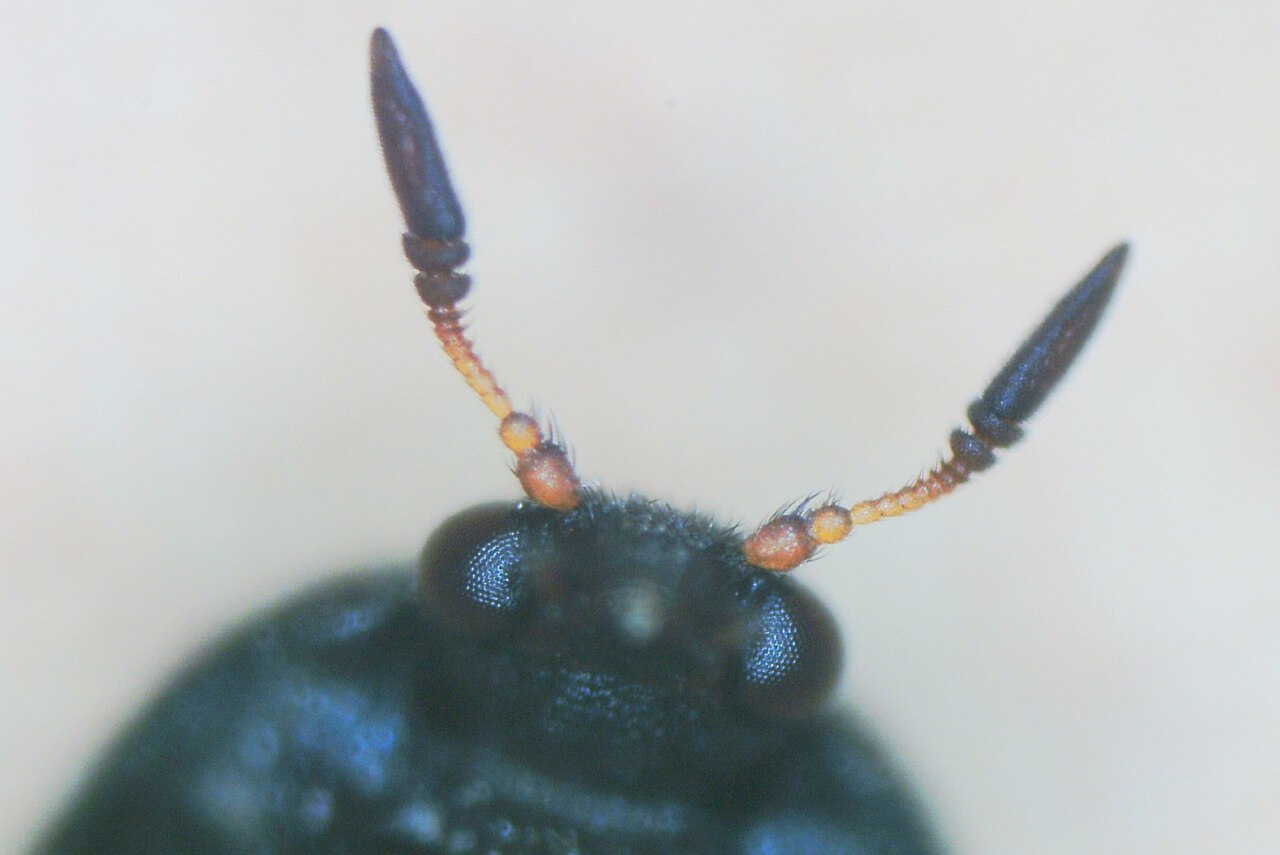
The black carpet beetle, Attagenus unicolor, is the one to take seriously. The adults are small and harmless, but the larvae feed on wool, fur, feathers and stored fabrics. Holes in sweaters or rugs point to them. Pantry beetles form the third group, and they point to old flour, grain or pet food.
Four things draw black beetles inside. Outdoor lights attract them at night, damp spots keep them alive, gaps under doors let them in and stored food feeds them. Ground beetles are drawn to outdoor lights, so sealing gaps and switching porch lights from bright white to yellow bulbs typically reduces how many beetles get in. Ongoing damage to fabrics or food calls for a pest professional.
Frequently Asked Questions
Is a black beetle a cockroach?
No. A beetle has hard wing covers that meet in a straight line down the middle of its back. A cockroach has leathery wings that overlap, long antennae and a flat body built for speed. Spiritually, the two carry different messages, and the beetle is the gentler sign of the pair.
Should you kill a black beetle you find in your house?
No. In most spiritual readings, killing the beetle cuts its message short. There is a practical reason too: many ground and darkling beetles release a strong-smelling defensive fluid when crushed or handled roughly.
What does a black beetle mean in a dream?
A black beetle in a dream points to a hidden worry rising to the surface. A beetle crawling on you in a dream suggests the worry is personal, while a swarm points to small problems piling up.
Is the black beetle a spirit animal or totem?
Yes, for many people. In spirit animal and totem traditions, the black beetle stands for persistence and patient work. People who claim it value steady progress over quick wins. It shows up as a guide during long projects, slow recoveries and any stretch where results come later than effort.
What does a large black beetle in the house mean?
A large black beetle carries a more urgent version of the same message. The change it points to is bigger or closer than you think. Size scales the message, not its tone, so a large black beetle still counts as a good sign.
Can a black beetle be a sign from a loved one who passed?
Yes, many grieving people experience it that way. A calm insect visit, especially soon after a loss, feels like a sign of presence. The reading feels strongest when the beetle appears on a date tied to the person, such as a birthday or the anniversary of the loss.
Explore more: Insect Spiritual Meanings: 15 Bugs and What They Signal