Hornet Nest Removal: What Works, What to Skip, and Cost
Hornet nest removal is safe to do yourself only when the nest is small, reachable from the ground, and nobody in the house is allergic to stings. Anything larger than a softball, anything above head height, and anything inside a wall or roof cavity belongs to a professional. Hornets defend their nest as a group, they can sting repeatedly, and a disturbed colony will pursue an intruder for 50 to 100 ft (15 to 30 m).
The good news is that timing does most of the work. Work after dark when every forager is home and the colony is sluggish, use a jet spray rated for wasps and hornets, and stay off ladders. Those three rules separate a five minute job from an emergency room visit.
Remove a hornet nest at night, when all workers are inside and temperatures are lower. Wear full cover clothing, spray a wasp and hornet jet aerosol into the nest entrance from 15 to 20 ft (4.5 to 6 m) away, wait a full 24 hours, then knock down and bag the nest. Call a professional for nests above head height, nests inside walls, or if anyone nearby is sting allergic.
| Situation | Do it yourself? |
|---|---|
| Nest under 4 in (10 cm), ground reachable | Yes, with jet spray at night |
| Nest in a shrub or low fence | Yes, with an exit route planned |
| Nest above head height or on a ladder | No, call a pro |
| Nest inside a wall, soffit, or attic | No, call a pro |
| Anyone in the household sting allergic | No, call a pro |
| Late fall, nest already quiet | Wait for a hard freeze |
Can You Remove a Hornets Nest Yourself?
You can, within limits. A nest smaller than a softball early in the season holds a queen and a handful of workers, and a single application of jet aerosol usually ends it. By midsummer the same nest may hold 200 to 400 workers, and a bald faced hornet colony at peak can exceed 700, which is a different job entirely.
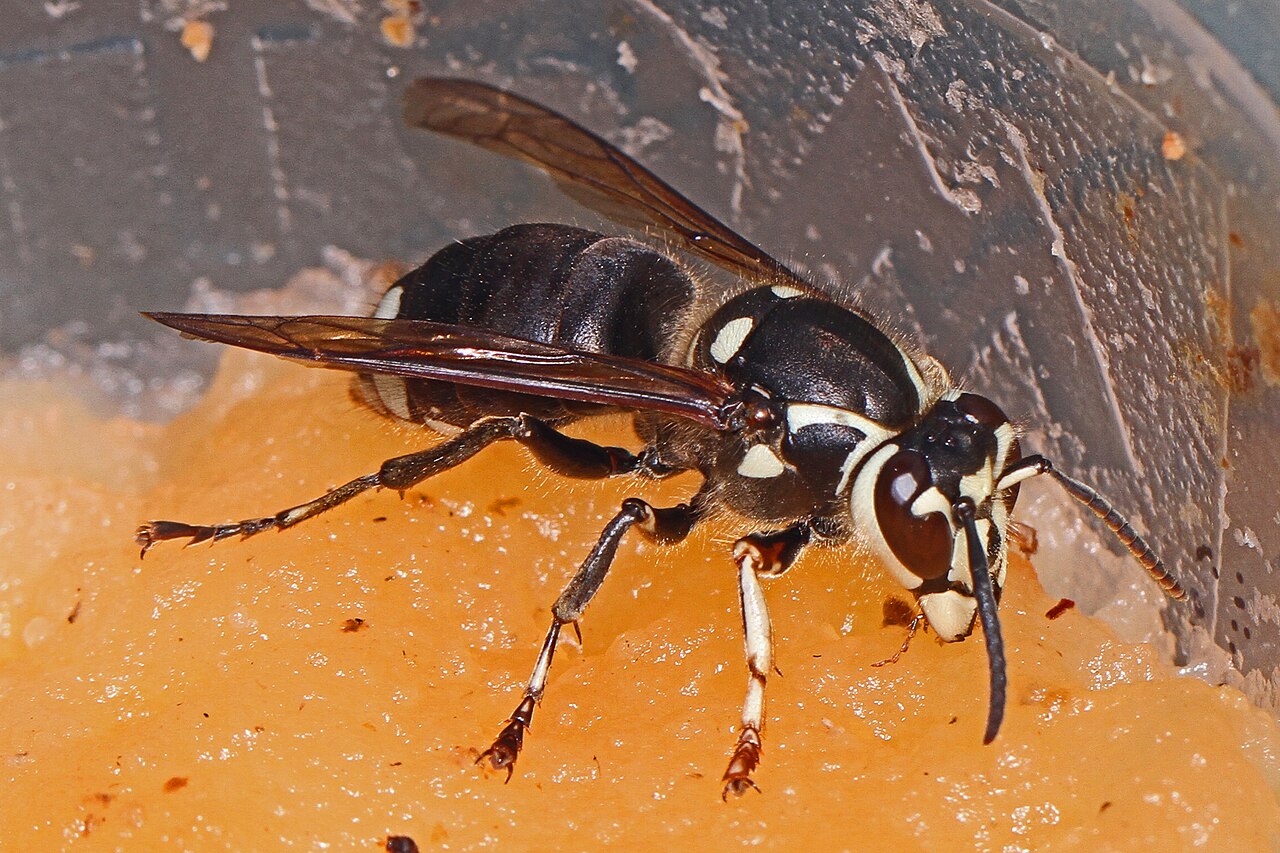
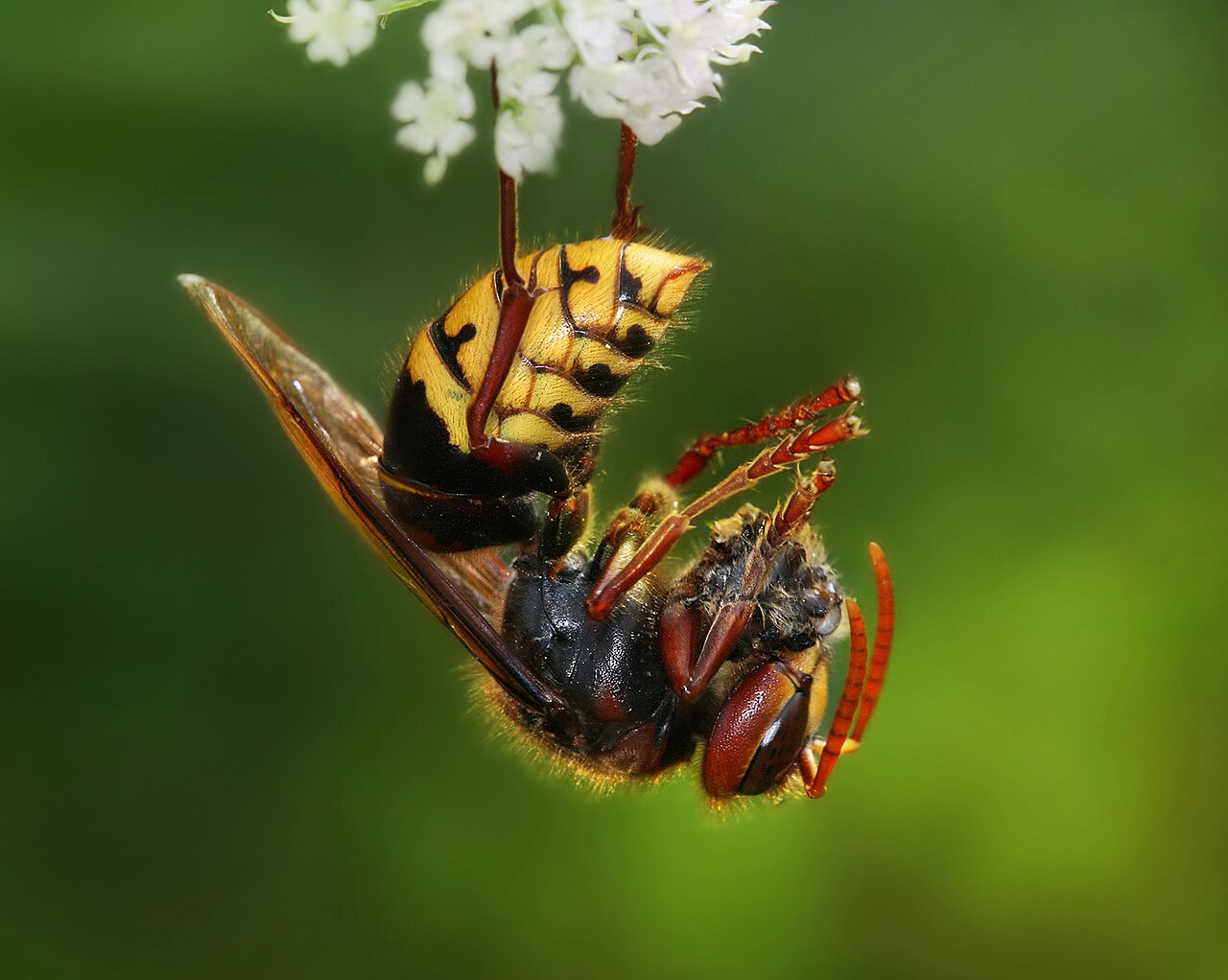
Identify what you have before you commit. True hornets in the United States mean the European hornet (Vespa crabro), while the familiar gray football hanging from a branch belongs to the bald faced hornet (Dolichovespula maculata), which is technically a yellowjacket. Those two build in different places and react differently, and the hornet versus wasp comparison sorts out which insect you are actually looking at. Paper wrapped and exposed comb nests are not the same target either, which the nest comparison covers in detail.
What Kills a Hornets Nest?
Pressurized wasp and hornet aerosols are the standard answer. They contain pyrethroid insecticides such as prallethrin or lambda cyhalothrin, deliver a stream 15 to 20 ft (4.5 to 6 m), and kill on contact while leaving a residue at the entrance that takes out returning foragers. This is what nearly every professional starts with too.
Insecticidal dusts are the better choice for nests in wall voids or ground cavities, because workers track the dust deeper into the nest than a spray can reach. Soapy water works on very small exposed nests by breaking the insects’ surface coating, but it needs direct saturation and gives you no standoff distance. Read and follow the product label, which is a legal document, and the EPA pest control guidance explains what the label language means.
How to Remove a Hornet Nest Step by Step

Start at least an hour after sunset. Wear a long sleeved shirt, long pants tucked into socks, closed shoes, gloves, and eye protection, with a hood or hat over the head. Use a red filtered flashlight or set the light on the ground pointed at the nest rather than holding it, because hornets fly at a light source.
Plan your exit before you spray, then empty the can into the nest entrance in one sustained burst and walk away immediately without running or swatting. Do not spray from a ladder. Wait a full 24 hours with no activity at the entrance, then knock the nest into a trash bag, seal it, and dispose of it. If activity continues after 48 hours, treat once more or hand it off.
What Does WD-40 Do to Wasps?
WD-40 will kill a wasp on contact by coating and suffocating it, and a film sprayed under eaves does discourage new nest building for a while. That is where the useful part ends. It is not registered as an insecticide, it has no knockdown speed against a defending colony, and the stream does not carry far enough to keep you out of range.
It is also flammable, which rules out the common suggestion of lighting it. Burning a nest is the worst option available: it sends a whole colony out at once, damages siding and soffits, and is a genuine fire risk against a wooden structure. Use a product designed for the job.
Do Hornets Come Back After You Remove Their Nest?
Not to that nest. Hornet and yellowjacket colonies are annual. Workers die in fall, only mated queens overwinter, and no colony ever reoccupies last year’s paper. An old nest still hanging in a tree in January is empty and harmless.
Sites do get reused, though, because whatever made the spot attractive is still there. A sheltered soffit, an undisturbed shed corner, or a cavity in a stone wall will draw a new queen the following spring. Scrape off old nest material, seal gaps larger than a quarter inch, and check the area in April and May. Note that an abandoned paper structure in a shrub is sometimes not an insect nest at all, and nest identification by shape and material settles it fast.
What Does Hornet Nest Removal Cost?
Professional removal typically runs 100 to 500 USD, with most straightforward jobs landing in the 150 to 300 range. Price tracks difficulty rather than the insect: an accessible aerial nest in a yard tree is at the low end, while a nest inside a second story wall that requires opening the cavity and repairing it afterward reaches the top of the range and beyond.
Expect an upcharge for height, for structural access, and for emergency same day service. Many companies will also quote removal of the physical nest separately from treatment, so ask whether the price includes hauling the nest away or only killing the colony. For homeowners with a documented sting allergy, the cost is not the deciding factor.
When to Leave a Hornet Nest Alone
Leave it if it is out of the way. A nest 20 ft up in a mature tree at the back of a lot poses little risk, and the colony is a heavy predator of caterpillars, flies, and garden pests through the whole season. It dies on its own at the first hard freeze and never comes back.
Leave it also if you cannot reach it safely, if it is in a wall, or if the discovery happens in September, when colonies are at their largest and most defensive. Waiting six weeks costs nothing. What you should never leave is a nest beside a door, a playset, or a mower path, since vibration alone triggers defense. Large unfamiliar nests are worth a second look before you act, given the ongoing attention to the northern giant hornet in the Pacific Northwest. If you simply want to know what you found, the hornet nest identification guide walks through shape, location, and size.
Related reading: Bald Faced Hornet Nest.
Frequently Asked Questions
What is the fastest way to get rid of a wasp nest?
A pressurized jet aerosol applied after dark, straight into the nest entrance, is the fastest safe method. The colony is fully home and inactive, the spray reaches from 15 to 20 ft (4.5 to 6 m) away, and most nests are dead within a day. Speed comes from timing more than from the product.
What kills a wasp nest instantly?
Nothing kills a whole nest instantly. Contact aerosols knock down exposed wasps in seconds, but insects deep in the comb and foragers returning later take hours to a full day. Anyone promising instant results is describing the wasps you can see, not the colony.
Will wasps come back if you destroy their nest?
Surviving workers will hover around the site for a day or two, which is why the nest should not be removed until activity stops. They will not rebuild in the same season in the same place if the entrance was treated. A new queen may choose the same sheltered spot next spring.
What smell do wasps hate the most?
Peppermint oil has the best support among home deterrents, with clove, lemongrass, and geranium oil also showing repellent effects in testing. Sprayed on eaves and railings, these discourage nest founding. None of them will drive out an established colony, so treat scent as prevention only.
How long should you wait to knock down a nest after spraying?
Wait a full 24 hours and watch the entrance in daylight before touching it. Foragers that were away during treatment return over the following hours and pick up the residue, so a nest that looks dead at dawn may still have arrivals by noon. If any traffic continues after 48 hours, treat again.
What is the best homemade wasp killer?
A mix of about one part dish soap to four parts water in a spray bottle kills wasps on contact by breaking down their protective coating. It is fine for one or two insects or a golf ball sized starter nest within arm’s reach. It has no range and no residual effect, which makes it the wrong tool for anything larger.