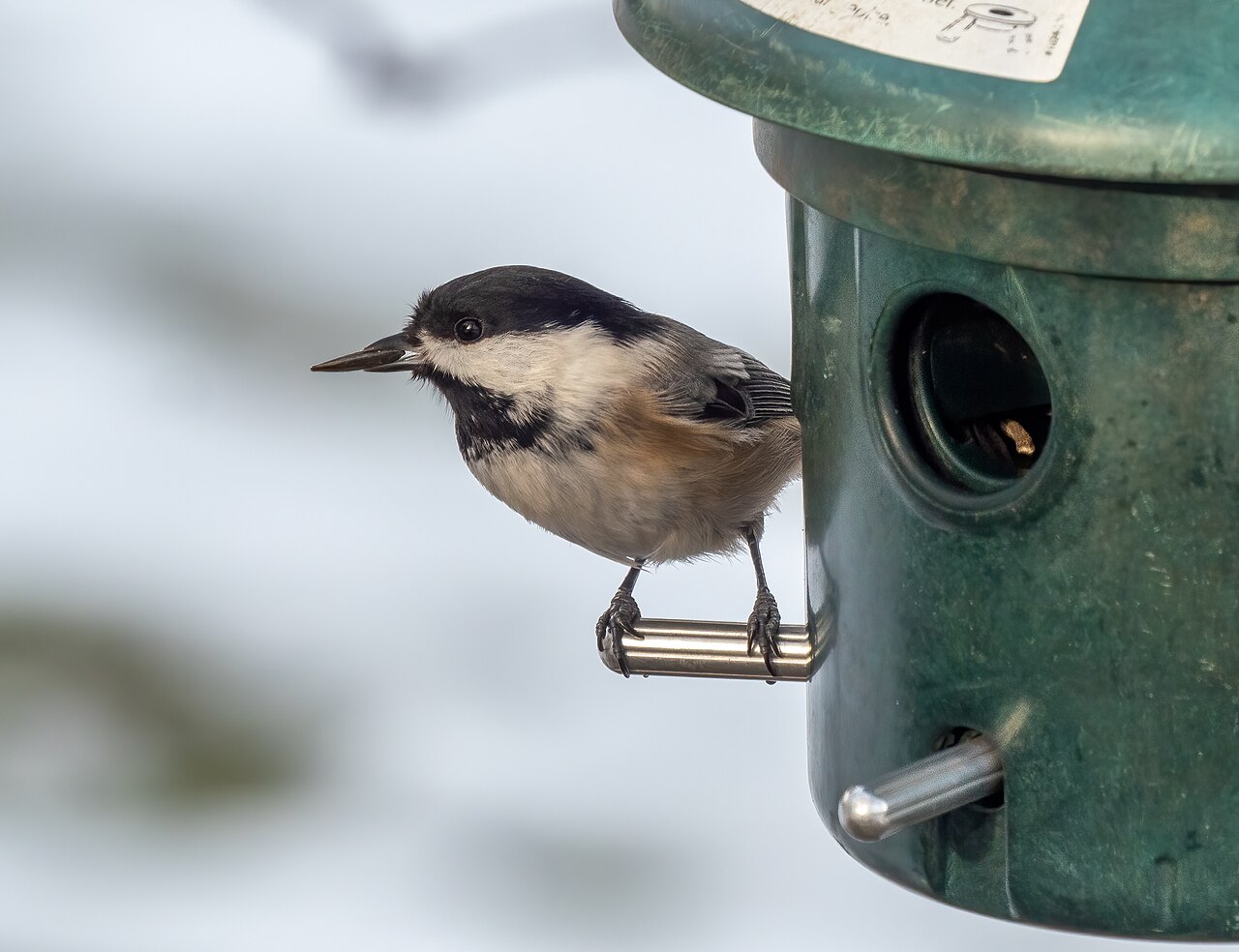
Chickadee Sound: 6 Calls and What Each One Signals
The chickadee sound most people know is the scolding chick-a-dee-dee-dee that gives the bird its name, but that call is only one item in a vocabulary of more than a dozen. The number of dee notes at the end is not random: it is a threat rating, and the birds around it respond accordingly.
Learning the chickadee sound pays off beyond one species. Nuthatches, titmice, kinglets, and warblers all listen to chickadee alarm calls and join the mob, so a single small bird is broadcasting the safety status of your whole yard.
Chickadees make two main sounds: a clear two-note whistle, fee-bee, used as a song, and the buzzy chick-a-dee-dee-dee call used for contact and alarm. More dee notes signal a more dangerous predator, with up to 12 recorded for a small, agile hawk at close range.
| Sound | What it sounds like | What it means | Season |
|---|---|---|---|
| Fee-bee song | Two clear whistles, second one lower | Territory and mate attraction | Late winter into spring |
| Chick-a-dee-dee | Buzzy, scratchy, 2 to 12 end notes | Contact, flock cohesion, alarm | Year round |
| Seet | Very high, thin, drawn out | Flying hawk, freeze and hide | Year round |
| Gargle | Fast, low, jumbled warble | Squabble at a feeder | Year round |
| Begging call | Rapid buzzy rasping | Fledgling asking to be fed | May to July |
| Broken dee | Single soft dee notes | Pair staying in contact | Nesting season |
What Sounds Does a Chickadee Make?
A black-capped chickadee (Poecile atricapillus) uses at least 15 distinct vocalizations, which is a large repertoire for a bird weighing less than half an ounce (11 to 14 g). Four of them account for almost everything you will hear from a backyard feeder.
Those four are the fee-bee whistle, the namesake chick-a-dee call, the thin seet alarm, and the gargle used in disputes. Everything else is a variation on contact between mates or between parents and young. Our wider guide to chickadee calls and what they signal covers the rarer ones.
The Chick-a-dee-dee Call and What the Dees Mean
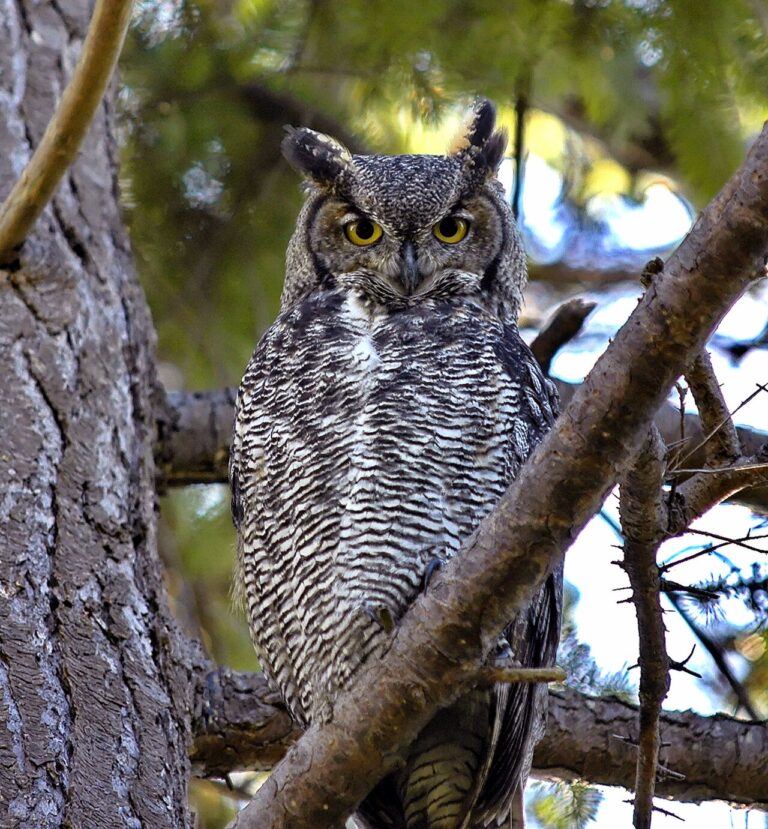
The chick-a-dee call is a coded alarm, not just a name tag. Research at the University of Washington and elsewhere showed that the number of dee notes tracks predator threat: a great horned owl, too big and slow to catch a chickadee, draws two or three, while a pygmy owl or a sharp-shinned hawk draws eight to twelve.
Other species read the code. Nuthatches respond to the higher-count calls with the same urgency chickadees do, which is why a single alarmed chickadee can produce a mob of six species in under a minute. In calm conditions the same call simply keeps a foraging flock together.
The Fee-Bee Whistle: The Bird That Says Hey Sweetie
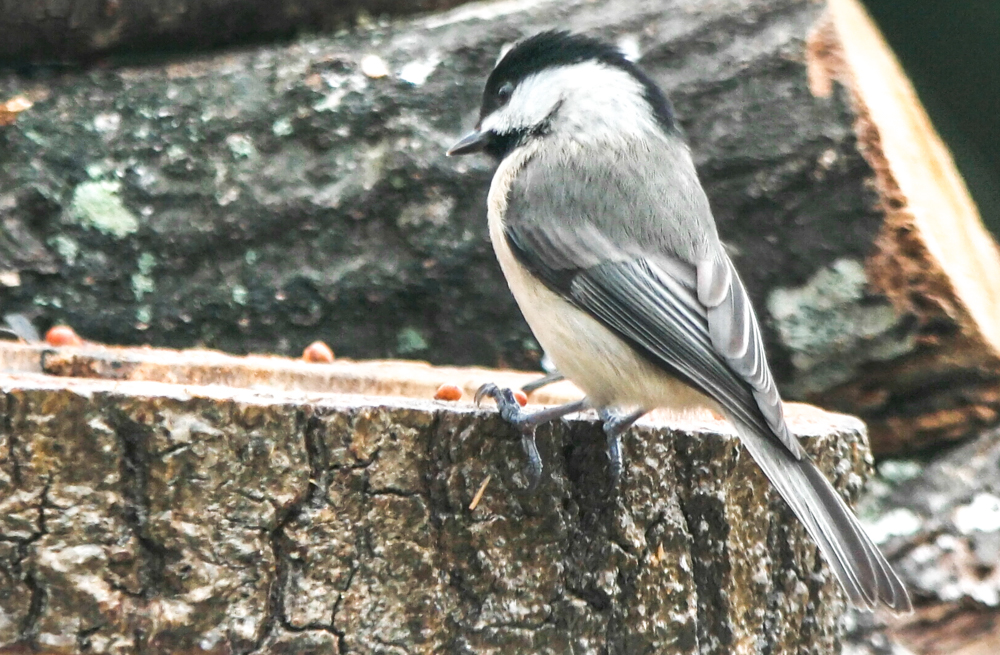
The black-capped chickadee’s song is two clear whistled notes, the first higher than the second, often written fee-bee and just as often heard as hey, sweetie or cheese-bur-ger. When people ask which bird says “hey sweetie,” this is the answer.
The bird can shift the whole song up or down in pitch while holding the interval constant, a trick almost no other songbird manages. Males sing most in late winter and early spring, and a male that keeps losing pitch battles with a neighbor tends to lose paternity as well.
What Do the Different Chickadee Sounds Mean?
Each sound maps to a job. The song claims territory and attracts a mate, the chick-a-dee call handles group cohesion and ground-based threats, the seet handles aerial threats, and the gargle handles rank disputes within the flock.
The split between seet and chick-a-dee is the most useful one to learn. Seet means a hawk is in the air and everything should freeze; chick-a-dee with many end notes means a perched predator has been found and should be harassed. Watching which one the flock chooses tells you where to look.
Black-capped vs Carolina Chickadee Sound
Black-capped chickadees whistle two notes; Carolina chickadees (Poecile carolinensis) usually whistle four, a faster fee-bee-fee-bay. The Carolina’s chick-a-dee call is also quicker and higher, with the notes crowded together.
The two ranges meet in a narrow band from New Jersey through Kansas, and in that zone birds learn each other’s songs, hybridize, and defeat identification by ear entirely. North or south of the overlap, the note count is reliable.
Mountain Chickadee Sound
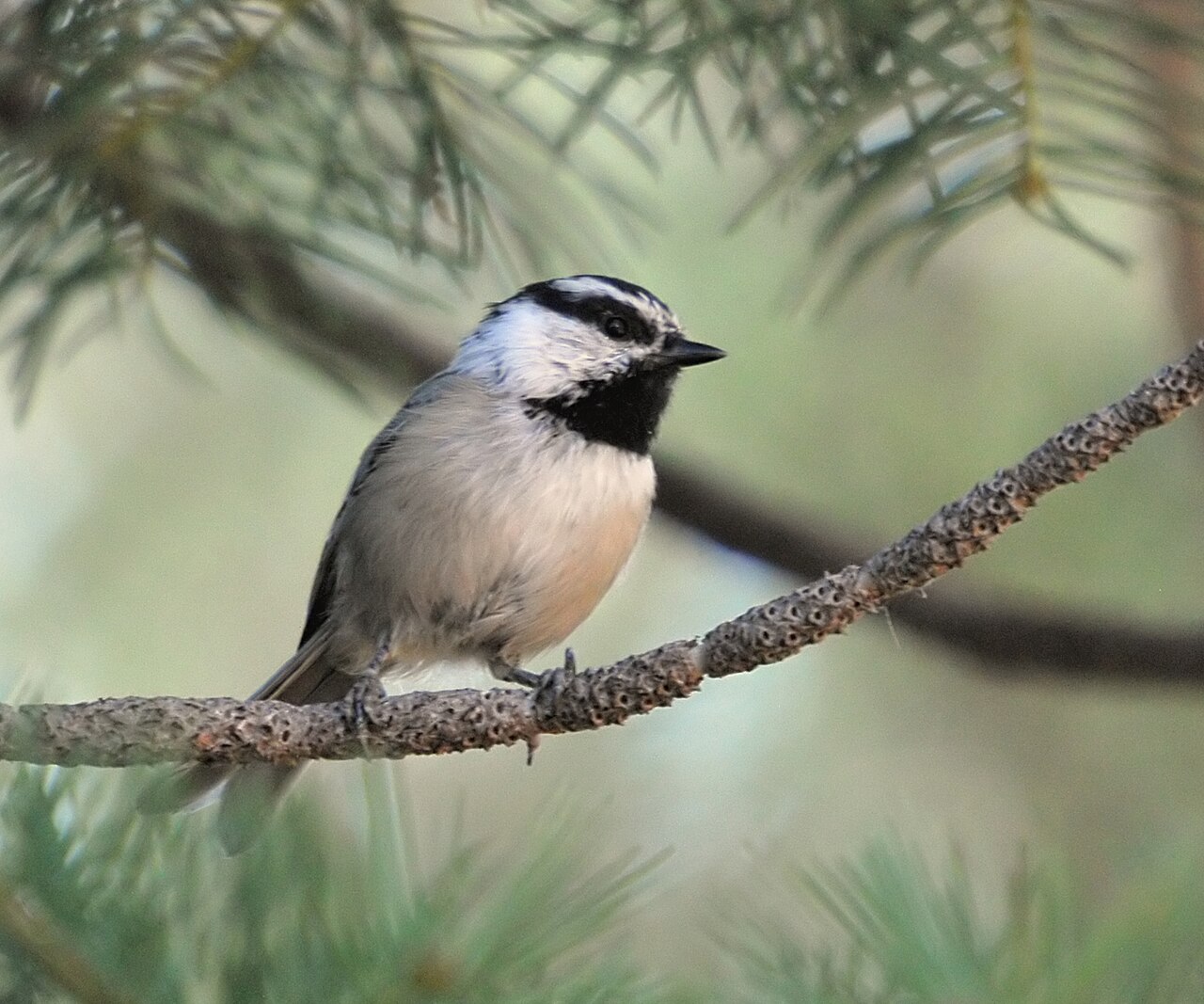
Mountain chickadees (Poecile gambeli) of the western conifer forests sing a hoarser, three-note or four-note whistle that sounds like a black-capped with a cold. Their chick-a-dee call is noticeably raspier and lower.
They are the chickadee you hear in ponderosa pine and spruce from the Rockies to the Sierra, usually above 5,000 ft (1,500 m). The white eyebrow stripe confirms what the rough voice suggests.
Nuthatch vs Chickadee Sound
White-breasted nuthatches give a nasal, honking yank-yank that is flatter and more metallic than anything a chickadee produces. Red-breasted nuthatches sound like a tiny tin horn, higher and more insistent.
The confusion is understandable because the two travel together all winter in the same mixed flocks and respond to the same alarms. The rule of thumb: chickadee notes are buzzy and scratchy, nuthatch notes are nasal and honking. A Carolina wren in the same woods will be louder than both.
Female Chickadee Sound: Does She Sing?
Female black-capped chickadees rarely sing the fee-bee song, but they use the full call repertoire, including alarm and gargle notes, and they answer the male’s song with calls during pair formation.
Females also produce a soft, broken dee from inside the nest cavity, plus a loud hissing snake display when a predator reaches the entrance hole. That hiss startles researchers reaching into nest boxes, which is precisely its purpose.
Baby Chickadee Sounds
Nestlings beg with a fast, buzzy rasping that intensifies each time an adult lands at the cavity. Once they fledge, the begging becomes a louder, more insistent version delivered from open branches, often for two to three weeks after the young leave the nest.
Juveniles also practice a rough, off-pitch version of the fee-bee song in late summer, which sounds broken to a trained ear. They refine it over their first winter by listening to adult neighbors.
What Birds Are Mistaken for Chickadees?
Tufted titmice share the chickadee’s flock, its feeders, and part of its call structure, but their song is a loud repeated peter-peter-peter. Juncos and black-throated gray warblers get confused visually more than vocally.
By sound, the two real traps are the Carolina chickadee in the overlap zone and the mountain chickadee at western elevations where both species occur. Everything else separates cleanly once you have the buzzy dee quality fixed in your ear, the same way the cardinal’s whistled call does at the other end of the size scale.
When and Where to Hear Chickadees
Chickadees call year round and do not migrate, which makes them one of the few reliable winter voices across most of the United States. Song output rises sharply in January and February, months before most songbirds start.
They are loudest at dawn in mixed woods, suburban yards with mature trees, and anywhere sunflower seed is on offer. Because they cache thousands of seeds each fall and remember the locations, a yard that feeds them in October usually keeps them through the winter. Compare their daylong chatter to the blue jay’s alarm calls, which often share the same feeder.
Frequently Asked Questions
What does it mean if a chickadee visits you?
In practical terms it means your yard offers cover, seed, or both, and that the bird has judged you low risk. Chickadees habituate to people faster than nearly any other wild songbird and can be trained to take seed from a hand within a few weeks of steady feeding.
What bird call sounds like peek a boo?
The clear two-note chickadee whistle is the usual answer, although the second note falls rather than rises. Mourning doves and northern cardinals also get described this way. The Cornell Lab’s black-capped chickadee account has reference recordings for direct comparison.
Do chickadees sing in winter?
Yes, and they start earlier than almost anything else. The fee-bee song picks up on mild days in January, two months before most resident songbirds begin, because chickadees hold territories through the cold season rather than reforming them in spring.
What is the most annoying bird noise?
Most complaints in the United States go to northern mockingbirds singing all night, followed by blue jays and European starlings at feeders. Chickadees rarely make the list, since their calls are quiet at distance and they go silent at dusk. Persistent noise problems are covered in our guide to sound-based bird deterrents.
How far does a chickadee call carry?
The fee-bee whistle carries roughly 100 to 200 yards (90 to 180 m) in open woodland, while the buzzy chick-a-dee call fades much sooner, usually within 50 yards (45 m). The thin seet alarm is pitched high specifically so hawks have trouble locating its source.
Can chickadees recognize individual people?
Evidence suggests they can. Studies on related corvids and on hand-feeding chickadees show birds returning selectively to individuals who have fed them and avoiding those who have disturbed nests. Their spatial memory, which tracks thousands of cached seeds, makes that kind of recognition plausible.