Blue Tree Frog: Why It Is Blue, How Rare It Is, and Is It Safe to Touch
A blue tree frog is almost never its own species. In nearly every case it is an ordinary green tree frog that was born without yellow pigment, so the blue layer underneath its skin shows through unfiltered. Keepers and biologists call this condition axanthism, and it turns up in White’s tree frogs, American green tree frogs, and a handful of wild populations in Australia and East Africa.
That matters for the two questions people ask first: how rare the animal really is, and whether it is safe to pick up. A blue tree frog carries exactly the same skin chemistry as its green siblings, which is nothing like the blue poison dart frogs sold in the same pet stores. The color tells you about pigment cells, not about toxins.
A blue tree frog is a green tree frog with a genetic mutation called axanthism, which removes the yellow pigment cells and leaves the blue structural layer visible. It is not a separate species and not venomous. Handling is safe with wet hands, though the skin absorbs oils and soap residue.
What Is a Blue Tree Frog?
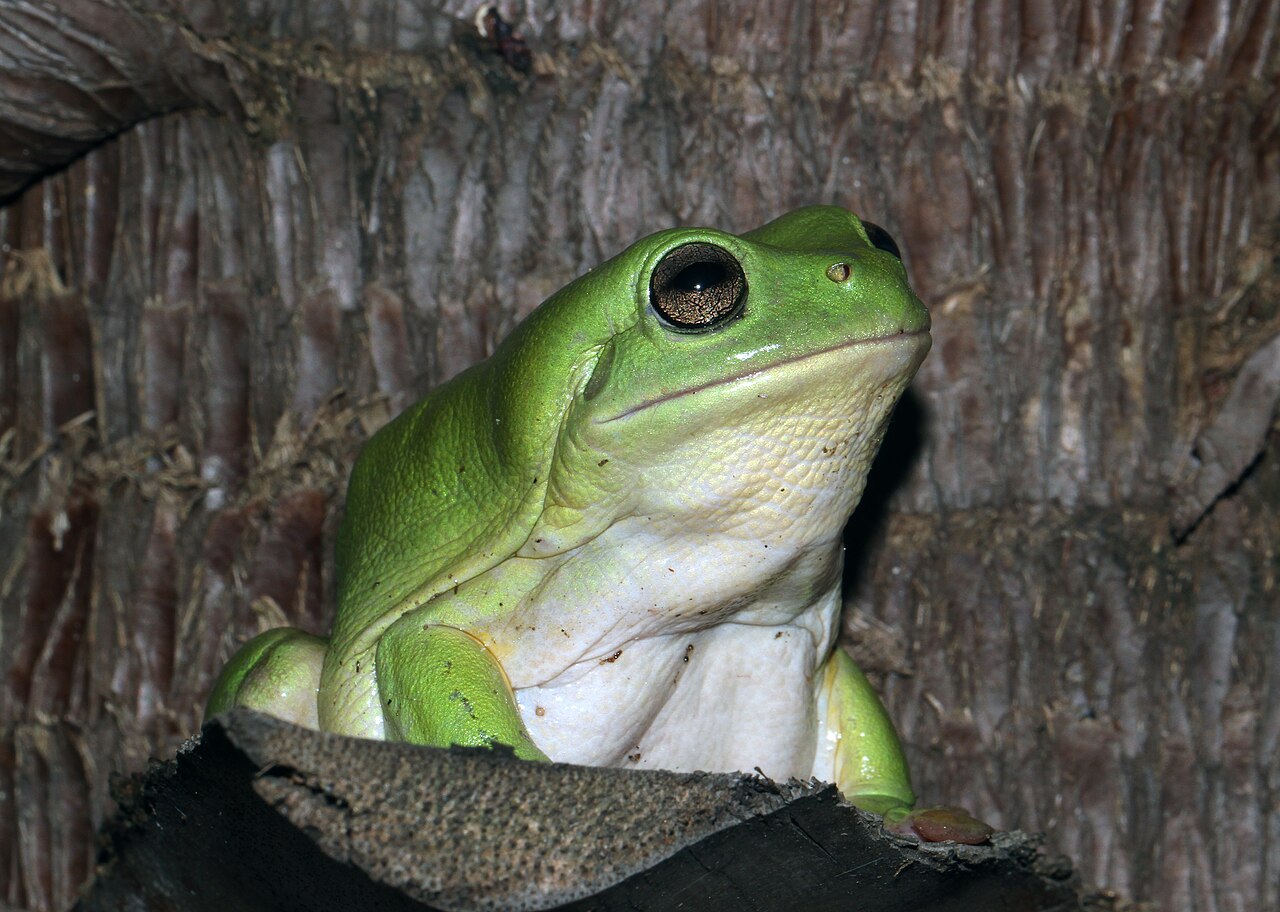
A blue tree frog is a color morph, which means a naturally occurring variant within a species rather than a species of its own. The most commonly sold one is the blue morph of White’s tree frog (Litoria caerulea), the same heavy bodied Australian frog that usually appears mint green. Breeders also produce blue morphs of the American green tree frog (Hyla cinerea).
Confusingly, the species name caerulea does mean blue. The frog earned it in 1790 because the preserved specimen shipped to England had faded to blue in alcohol, which destroys the yellow pigment exactly the way the mutation does. The living animal was green the whole time. If you are comparing pet species, the full care profile for White’s tree frog covers the normal green form these blue animals come from.
Why Some Tree Frogs Turn Blue
Frog skin builds green out of two stacked layers of pigment cells. Iridophores sit deeper and scatter blue light back at you. Xanthophores sit above them and act as a yellow filter, and blue light passing through a yellow filter reads as green to the human eye. Remove the yellow layer and the frog looks blue or turquoise.
Axanthism is the loss of those yellow cells, usually through a recessive mutation. The blue itself is structural, produced by the physical arrangement of crystals inside the cell rather than by a blue pigment, which is why it shifts slightly with light angle. The same trick gives a blue morpho butterfly its color. Almost no animal on earth makes true blue pigment.
How Rare Is a Blue Tree Frog?
In the wild, axanthic tree frogs are rare enough that most field biologists never photograph one. Published estimates for color mutations of this kind in wild amphibian populations sit at roughly one animal in several thousand, and a blue individual is conspicuous to predators, so few of them reach adulthood. Reports cluster around Queensland and New South Wales in Australia.
In captivity the picture flips. Because the trait is heritable, breeders pair known carriers and produce blue clutches on purpose, which is why a blue White’s tree frog costs 150 to 400 USD while a green one costs 30 to 60 USD. The animal is uncommon, not extraordinary. Prices track breeder supply, not scarcity in nature.
Blue Tree Frog Species and Morphs You Can Actually See
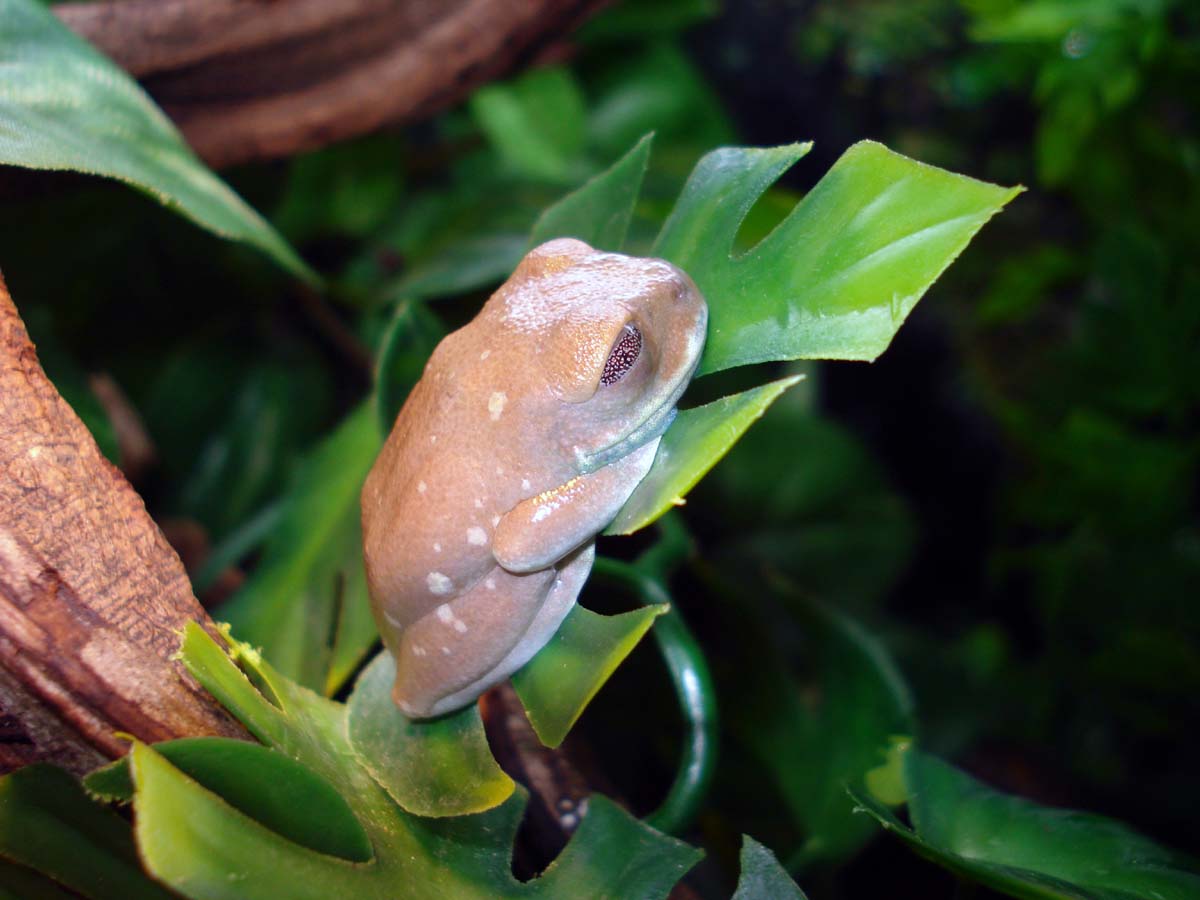
Four animals account for most blue tree frog sightings, and only one of them is reliably blue as a species rather than as a mutation. The Uluguru forest tree frog (Leptopelis uluguruensis) from Tanzania is genuinely turquoise in life, with white spotting, and it is the frog behind many of the viral photographs labeled simply as blue tree frog.
| Frog | Source of the blue | Native range | Safe to handle |
|---|---|---|---|
| White’s tree frog (Litoria caerulea) | Axanthic morph | Australia, New Guinea | Yes, wet hands |
| American green tree frog (Hyla cinerea) | Axanthic morph | Southeastern US | Yes, wet hands |
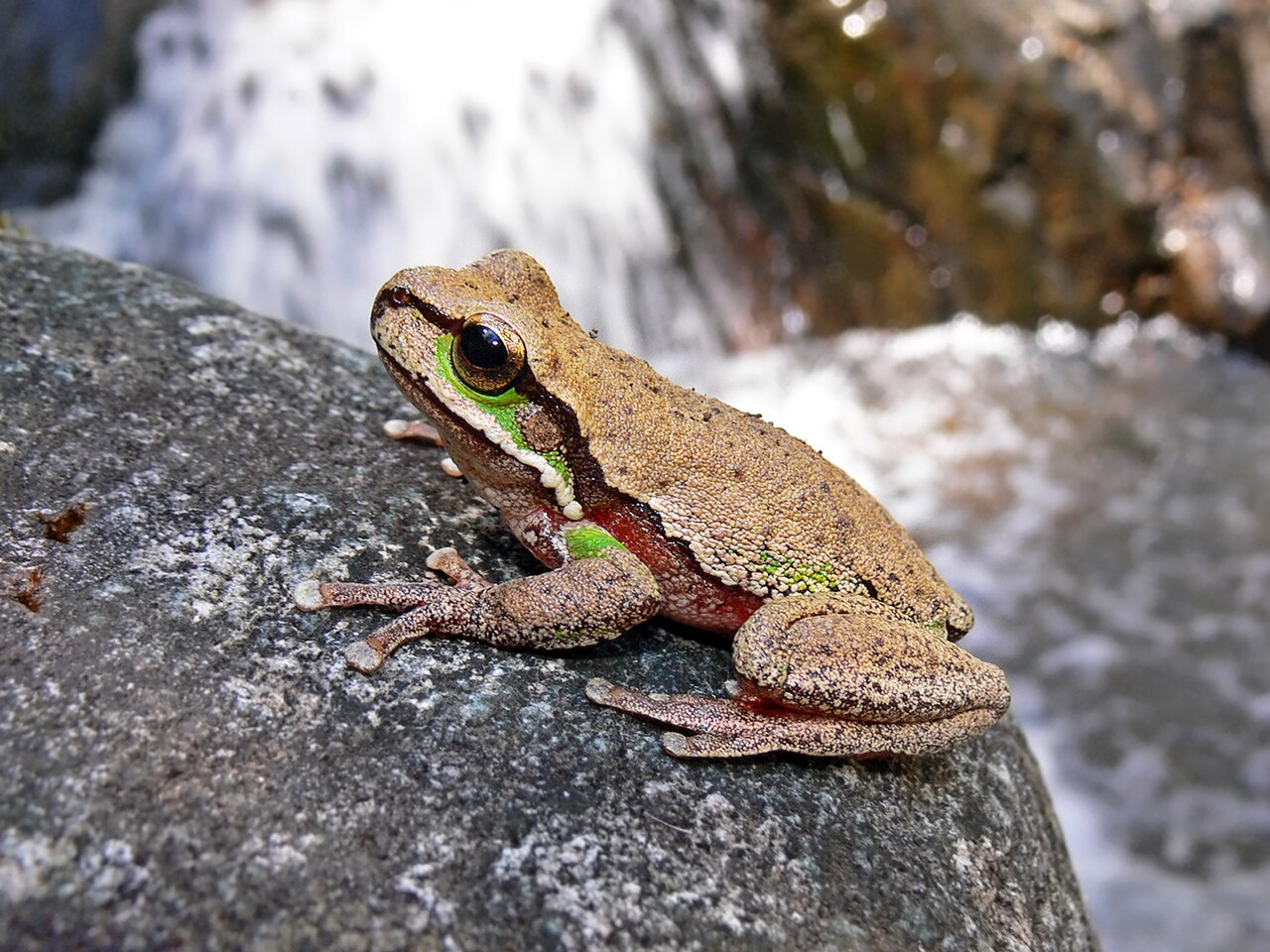
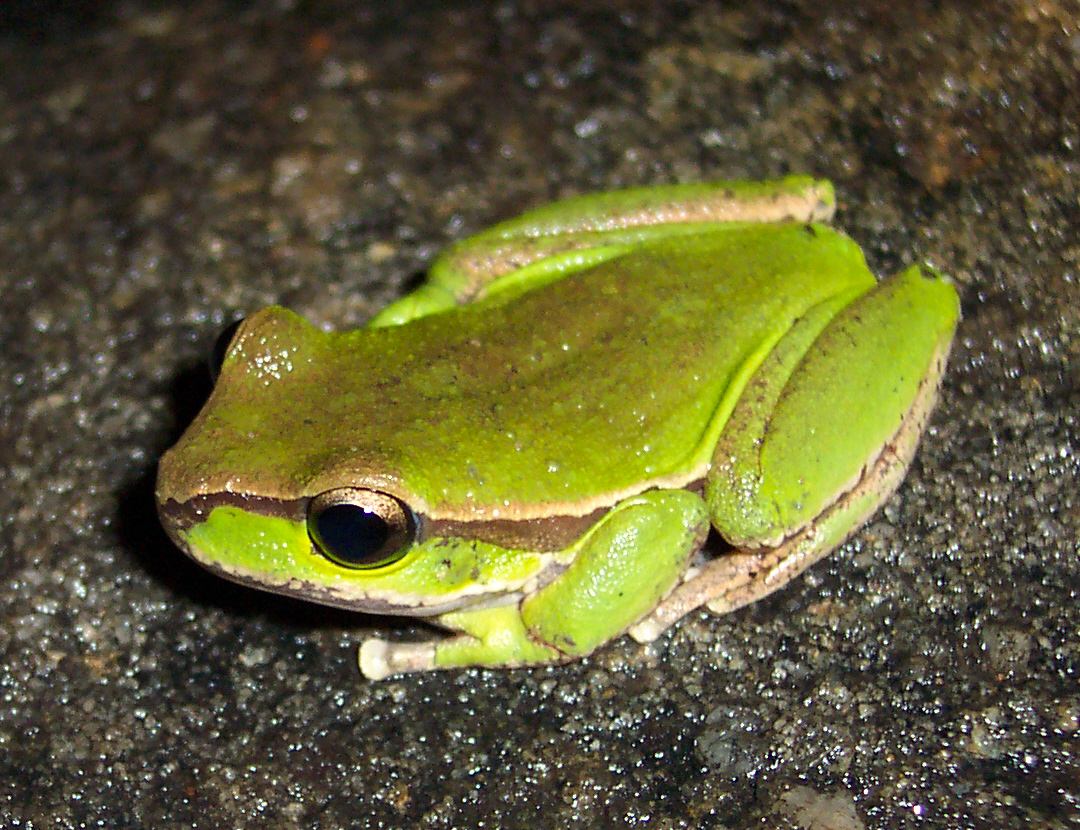
| Blue Mountains tree frog (Litoria citropa) | Blue flank wash, natural | New South Wales | Yes, wet hands |
| Uluguru forest tree frog (Leptopelis uluguruensis) | Species color, natural | Tanzania | Yes, rarely kept |
| Blue poison dart frog (Dendrobates tinctorius) | Species color, natural | Suriname, Brazil | Not a tree frog, wild ones toxic |
Is a Blue Frog Venomous?
No frog on earth is venomous in the strict sense. Venom has to be injected through fangs, spurs, or a stinger, and frogs have no delivery system for it. The two known exceptions, the Brazilian Corythomantis greeningi and Aparasphenodon brunoi, push bony head spines through toxin glands, and neither one lives anywhere near the US.
Poisonous is the correct word for frogs, and it means the toxin only matters if the animal is eaten or if the secretion reaches your mouth, eyes, or an open cut. Blue tree frogs, green or blue, secrete mild peptides that deter predators and can sting broken skin. They are not a medical concern for a healthy adult who washes up afterward.
Can You Touch a Blue Frog?
You can, but the risk runs in the other direction: handling is far more dangerous to the frog than the frog is to you. Amphibian skin absorbs water, salts, and oxygen directly, so hand lotion, soap film, insect repellent, and even the salt on dry skin pass straight into the bloodstream. Hands should be rinsed and wet, never soapy.
Keep sessions under a minute or two and never handle a frog you found outdoors and then a frog you keep, because chytrid fungus and ranavirus travel on hands and nets. Wash afterward for your own sake as well, since amphibians carry Salmonella. A blue tree frog has no teeth worth worrying about, unlike the odontoid fangs of a Pacman frog.
Which Frog Is Safe to Touch?
As a rule of thumb, any dull colored North American frog is safe to touch briefly with clean wet hands. That includes green frogs, leopard frogs, bullfrogs, gray tree frogs, and green tree frogs in both their normal and blue forms. The danger threshold in amphibians is almost always a warning color plus a tropical origin.
The frogs to leave alone are the brightly patterned dart frogs of Central and South America, mantellas from Madagascar, and any toad you plan to handle before rubbing your eyes. Cane toads deserve special caution in Florida, Hawaii, and South Texas because their parotoid secretion kills dogs that mouth them.
What Kind of Blue Frog Isn’t Poisonous?
Every blue tree frog in the pet trade falls into the harmless group. Blue morph White’s tree frogs, blue American green tree frogs, and Blue Mountains tree frogs all produce only mild skin peptides. So do the axanthic morphs of Cuban tree frogs, which turn up occasionally in Florida where the species is invasive.
Even the famous blue poison dart frog is not poisonous in captivity. Dart frogs build their alkaloid toxins from the mites, ants, and other arthropods they eat in the wild, and captive bred animals raised on fruit flies never acquire them. A store bought Dendrobates tinctorius is, chemically, a harmless frog in a dangerous looking costume.
Can You Have a Blue Tree Frog as a Pet?
Yes, and the blue morph of White’s tree frog is one of the easier amphibians to keep. It wants an 18 by 18 by 24 in (46 by 46 by 61 cm) vertical enclosure, 75 to 85 F (24 to 29 C) daytime temperature, humidity around 50 to 70 percent, and a diet of dusted crickets and roaches two or three times a week for adults.
The single most common mistake is overfeeding, because White’s tree frogs beg constantly and obese animals develop fat deposits over the eyes. Expect 10 to 16 years of life from a well kept animal. Indoor frogs never experience a cold season, so questions about whether frogs hibernate apply to wild populations, not to a heated tank.
What Is the Most Toxic Frog on Earth?
The golden poison frog (Phyllobates terribilis) of Colombia’s Pacific coast holds that title by a wide margin. A single wild adult carries roughly 1 mg of batrachotoxin, which is enough to be lethal to several adults, and the compound works by locking sodium channels open so nerves cannot reset. The frog is about 2 in (5 cm) long.
Three Phyllobates species were used by Emberá hunters to tip blowgun darts, which is where the whole family’s common name comes from. The Smithsonian’s National Zoo and Conservation Biology Institute keeps captive bred specimens that are completely nontoxic, which is the clearest demonstration that the poison is dietary.
Are There Any Poisonous Frogs in the US?
Yes, though none of them approach dart frog territory. The pickerel frog (Lithobates palustris) is the only native North American frog considered genuinely poisonous, and its skin secretion kills other amphibians kept in the same container and irritates human skin. Do not put one in a bucket with other frogs you collected.
Beyond that, American toads and Fowler’s toads secrete bufotoxins from their parotoid glands, the invasive cane toad in Florida and Hawaii is dangerous to pets, and the Colorado River toad secretes 5-MeO-DMT. Native tree frogs, including the red eyed tree frog kept by hobbyists, are all in the mild category.
How to Tell a Blue Tree Frog From a Blue Poison Dart Frog
Size settles it fastest. A blue White’s tree frog is a chunky 3 to 4.5 in (8 to 11 cm) animal with visible toe pads the size of a pencil eraser and drooping folds of skin above the eyes. A blue poison dart frog is 1.5 to 2 in (4 to 5 cm), slim, and marked with irregular black spots on a deeper cobalt ground.
Behavior is the second tell. Dart frogs are diurnal and hop across the floor of the enclosure in the open, while tree frogs sit flattened against glass or a branch all day and become active after dark. Call is a third: tree frog voices carry outdoors, and the barking and honking calls of tree frogs sound nothing like the quiet buzz of a dart frog.
Related reading: Blue Salamander.
Frequently Asked Questions
Has a poison dart frog ever killed a human?
There is no confirmed record of a poison dart frog killing a person by contact. Deaths attributed to batrachotoxin come from darts tipped with golden poison frog secretion, which delivers the toxin into the bloodstream. Intact human skin is a real barrier, and captive bred dart frogs carry no toxin at all.
Do blue tree frogs stay blue for life?
Axanthic frogs stay blue permanently, because the yellow pigment cells were never formed. Normal green frogs, on the other hand, shift between green, brown, and olive with temperature, stress, and background, and a chilled green tree frog can look bluish for hours before returning to green.
How much does a blue tree frog cost?
Expect 150 to 400 USD for a captive bred blue morph White’s tree frog from a specialist breeder, against 30 to 60 USD for a standard green one. Blue American green tree frogs are scarcer and less predictable in price. Wild caught animals should be avoided regardless of the discount.
Can a green tree frog turn blue overnight?
Not genuinely. A green tree frog can darken or take on a bluish gray cast within minutes when it is cold, stressed, or sitting on a dark surface, since pigment cells redistribute. That is a temporary tone shift. True axanthic blue is present from metamorphosis and does not come and go.
Are blue tree frogs legal to own in the US?
Captive bred White’s tree frogs, including blue morphs, are legal in most states. Hawaii bans nearly all amphibian imports, and several states restrict native species collection, so a blue American green tree frog taken from the wild may be illegal even where a captive bred one is fine. Check state wildlife rules first.
Do blue tree frogs make the same sounds as green ones?
Yes. Color has no effect on the vocal sac or the call, so a blue White’s tree frog produces the same repeated barking croak, usually loudest before rain and at night. Males call, females rarely do, and a frog that calls from inside a house enclosure is simply responding to humidity.