Florida Softshell Turtle: Size, Bite and Why Not to Lift One
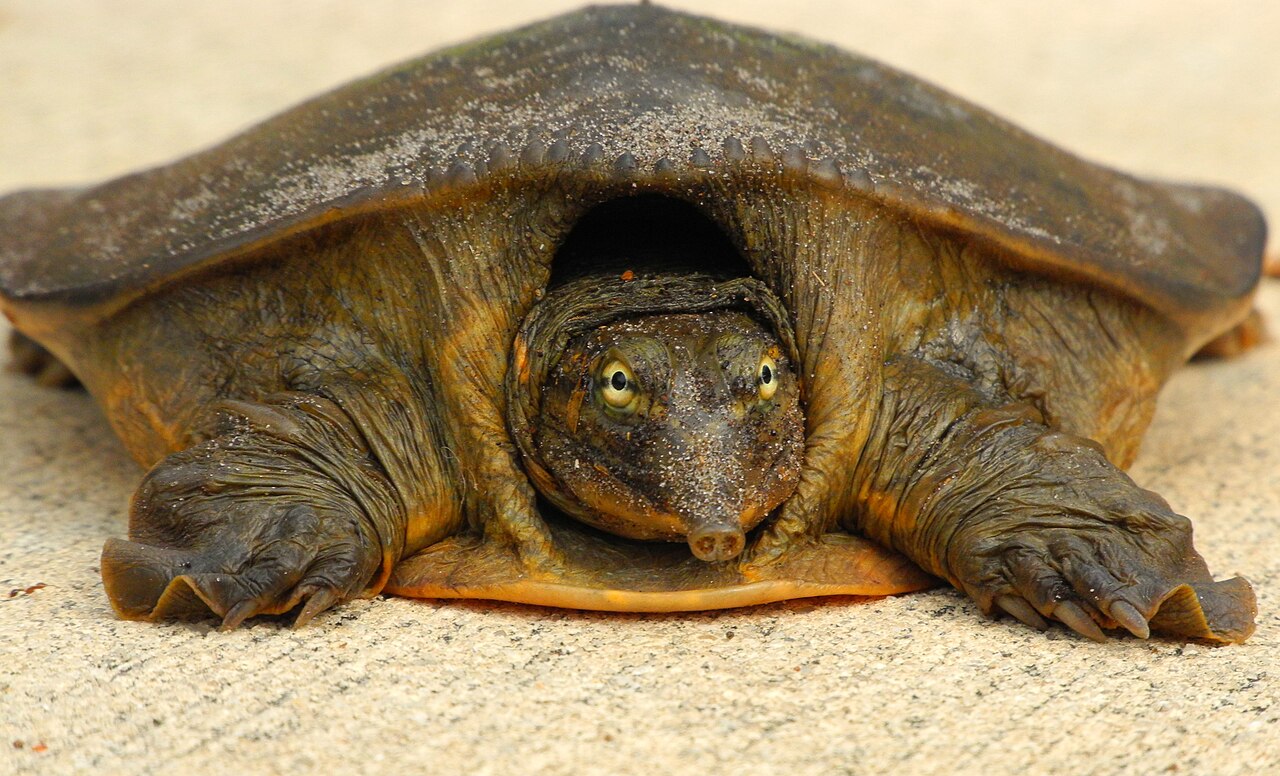
The Florida softshell turtle (Apalone ferox) is the large, flat, leathery turtle you see swimming like a pancake in Florida canals and retention ponds. It has no hard scutes, a long snorkel snout, and a neck that reaches much farther than it looks. Females are the giants of the family, topping 2 ft (60 cm) of shell length.
It is also the turtle most often picked up by people who assume a soft shell means a gentle animal. A large Florida softshell bites hard enough to need stitches, and it will strike sideways and backward over its own carapace. Knowing how to identify one and how to leave it alone is the practical part of this species.
The Florida softshell turtle is a large freshwater turtle of Florida and the southeastern coastal plain, with a leathery pancake shell up to 2 ft (60 cm) long in females. It is common, not rare, and not dangerous in the water, but it bites hard and should never be handled.
| Quick facts | Florida softshell turtle |
|---|---|
| Scientific name | Apalone ferox |
| Shell length | Females 11 to 24 in (28 to 60 cm), males 6 to 12 in (15 to 30 cm) |
| Weight | Up to 44 lb (20 kg) in large females |
| Range | All of Florida, south Georgia, south Alabama, southeast South Carolina |
| Habitat | Lakes, canals, marshes, ponds with soft mud bottoms |
| Diet | Snails, crayfish, fish, amphibians, insects, some plant matter |
| Lifespan | Around 20 years in the wild, more in captivity |
How to Identify a Florida Softshell Turtle
Look for a flat oval shell with a rubbery texture and no hard plates, dark olive to brown, with a distinctly bumpy or sandpapery front edge. The head narrows into a tube shaped snout with nostrils at the tip, which the turtle uses as a snorkel while the body stays buried. Juveniles show dark spots and a pale orange to yellow border on the shell that fades with age.
Feet are fully webbed with three claws each, and the hind feet look like paddles. The two features that separate it from any hard shelled turtle in Florida are the leathery carapace and the pig like snout. Compared with a Florida box turtle or the domed shell of a painted turtle, the difference is unmistakable at a glance.
Florida Softshell Versus Other Softshells
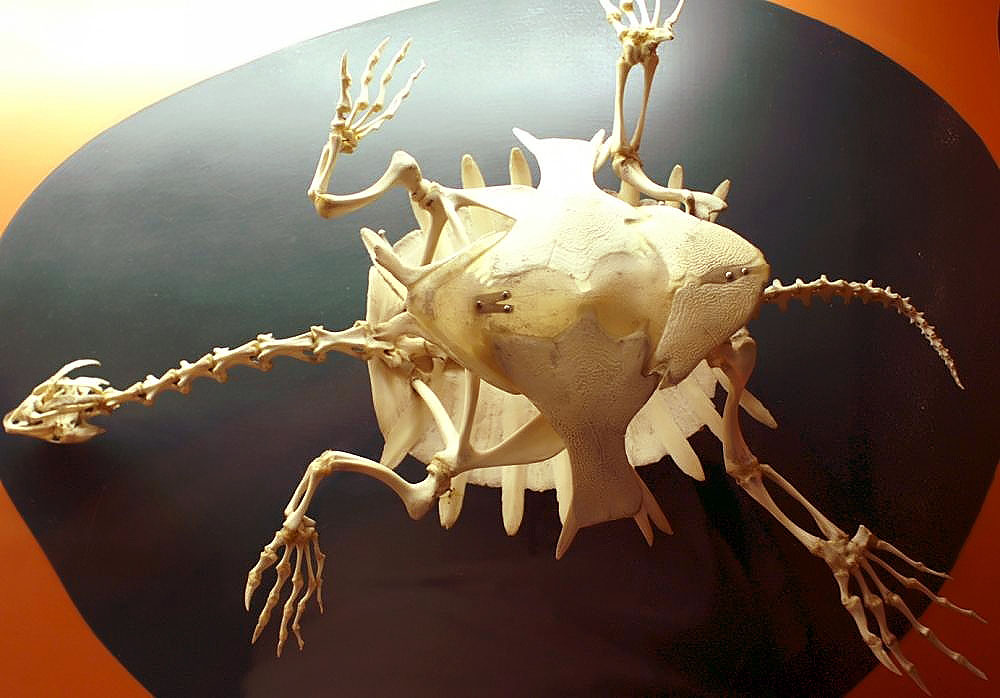
Florida has one native softshell, but the spiny softshell (Apalone spinifera) reaches the western panhandle and turns up as a released pet elsewhere. The spiny species has a flatter, rounder profile with small spines along the front of the shell and dark ocelli or circles on the carapace. A. ferox is bulkier, more domed in adults, and lacks the eye spots.
Size settles most cases too. A softshell over 15 in (38 cm) anywhere in peninsular Florida is almost certainly A. ferox, since spiny softshell females rarely pass 19 in and are not established that far south. Our broader guide to the softshell turtle family covers the smooth softshell and the Asian species sometimes sold in the pet trade.
Where Florida Softshell Turtles Live
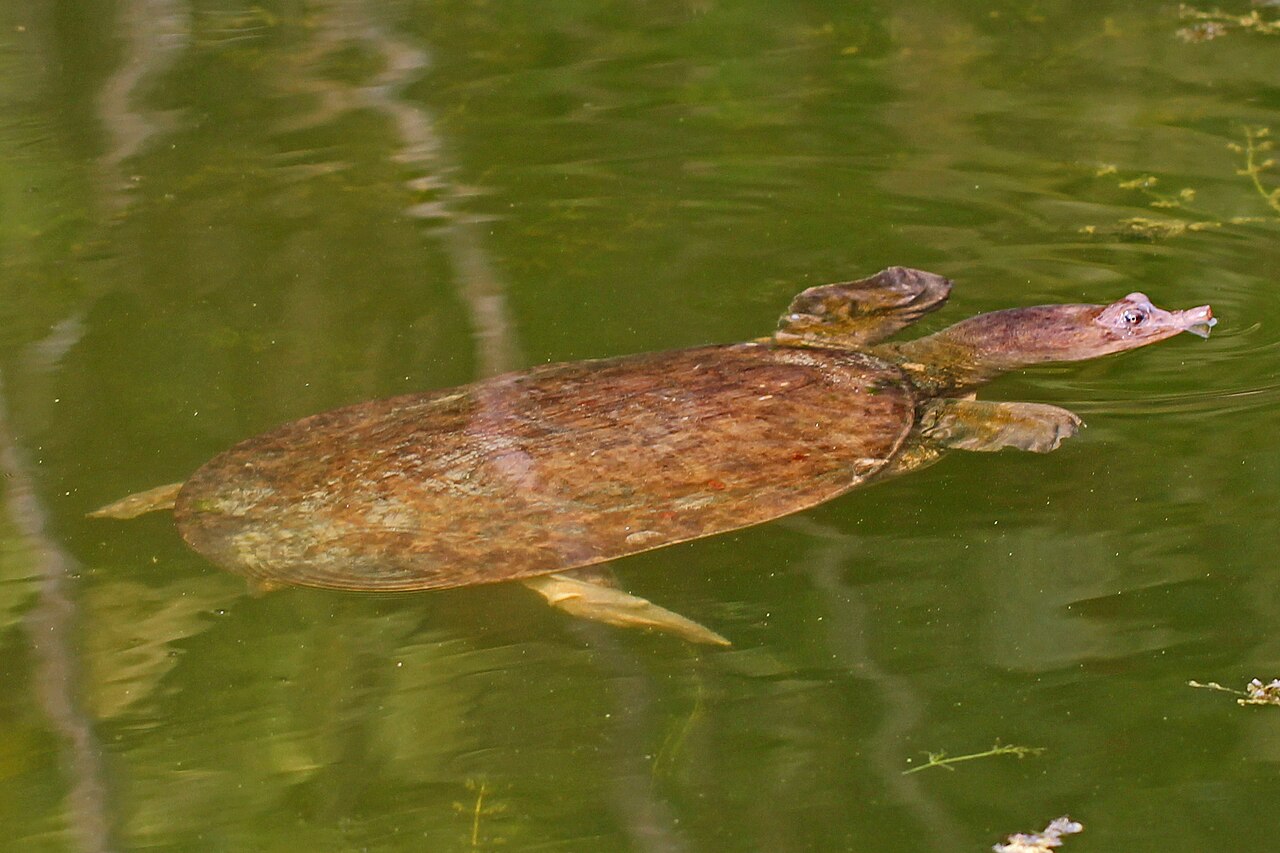
They occupy nearly any permanent water with a soft bottom: lakes, sloughs, marshes, roadside canals, golf course ponds and stormwater retention basins. Soft mud or sand matters more than water quality, because the turtle spends most of its day buried with only its head exposed, waiting for prey and breathing through its snorkel snout.
They tolerate brackish water at river mouths and cross land readily between ponds, which is why they show up in yards and on roads during the May to July nesting season. Unlike northern turtles they stay active most of the year in Florida’s climate, so questions about whether turtles hibernate have a different answer here than in Pennsylvania.
Can You Pick Up a Florida Softshell Turtle?
You should not. An adult has a long, muscular neck that can reach back past the middle of its own shell, powerful jaws with sharp cutting edges, and claws it uses freely. Bites from large females have caused deep lacerations and broken fingers, and the animal does not let go quickly. Wildlife officers move them with tools, not hands.
If a softshell must be moved off a road, herd it with a broom, a shovel or a car floor mat from behind, in the direction it was already heading. Never lift one by the sides of the shell: the carapace is flexible and offers no safe grip, and your fingers land inside the strike zone. Sick or injured animals are a job for a licensed rehabilitator.
Are Florida Softshell Turtles Friendly?
No, and that is normal for the species rather than a sign of aggression. In water a Florida softshell will flee or bury itself long before it confronts anything, and swimmers in Florida lakes share water with them constantly without incident. On land, cornered or restrained, the same turtle defends itself hard because it has no armor to retreat into.
Captive individuals stay nervous, which is one reason they make poor pets despite being sold as hatchlings. They need very large tanks, deep fine sand, immaculate water, and they still bite. A eastern mud turtle is a far more reasonable small species for anyone set on a native turtle.
Is It Legal to Keep Soft Shell Turtles in Florida?
Florida allows one softshell turtle per person to be kept as a personal pet, taken from the wild outside the May 1 to July 31 closed season, with no commercial take of wild individuals. Captive bred animals from licensed dealers are a separate category. Rules on take, transport and sale have tightened repeatedly, so check current Florida Fish and Wildlife regulations before collecting anything.
Releasing a pet softshell back into the wild is illegal and spreads disease into local populations. Federal protections apply to sea turtles rather than freshwater species, and detailed species accounts for A. ferox are published by the U.S. Fish and Wildlife Service. Marine species such as the green sea turtle carry penalties that do not apply here.
Related reading: Yangtze Giant Softshell Turtle.
Frequently Asked Questions
Are Florida softshell turtles rare?
No. Apalone ferox is one of the most abundant large turtles in Florida and is listed as least concern by the IUCN. Densities in canals and retention ponds can be high. Local declines come from road mortality, nest predation by raccoons, and past commercial harvest for export markets.
Can you eat a softshell turtle in Florida?
Legally, a limited personal take exists outside the closed nesting season, and softshell has a long history as food in the Southeast. Practically it is a bad idea. Florida freshwater turtles accumulate mercury and other contaminants in fat and organs, and state advisories warn against regular consumption.
Is it a felony to touch a turtle?
Not for a Florida softshell. That warning applies to sea turtles, which are federally protected: harassing, touching or disturbing them or their nests carries serious penalties. Handling a freshwater softshell is legal but unwise, and taking one during the May to July closed season is a wildlife violation.
Do turtles carry chlamydia?
Chlamydia is not a turtle to human concern. The real risk is Salmonella, which many healthy turtles shed in their feces without symptoms. Wash hands after any contact with a turtle, its water or its enclosure, and keep small children and immunocompromised people away from turtle water entirely.
How hard does a Florida softshell turtle bite?
Hard enough to require medical attention from a large female. The jaws have sharp keratin edges built for crushing snails and crayfish, and the strike is fast with a long reach. Most reported injuries are deep cuts to fingers and palms from people trying to lift the turtle by its shell.