Ladybug in the House: Spiritual Meaning, Omens and Colors
A ladybug inside your house is read almost everywhere as a good omen, and the traditional message is specific: luck is close, and something you have been hoping for is about to resolve. The ladybug in house spiritual meaning turns on the color of the beetle, where in the home it settled, and whether it came once or kept coming back. Folk belief also agrees on one prohibition, which is that killing it reverses the luck.
That symbolic reading sits next to a practical one: a ladybug indoors in October is also a beetle looking for a warm place to overwinter.
In most European and North American folk belief, a ladybug in the house is a sign of luck, protection and a wish that is about to be granted. Counting the spots is said to name the number of months until it arrives. Harming the beetle is traditionally held to cancel the blessing.
| Where you find it | Traditional reading |
|---|---|
| On an inside windowsill | News or a visitor on the way |
| Flying through the house | A delayed decision is ready |
| At night, near a lamp | Comfort during a hard stretch |
| Returning several days running | A message you have not acted on |
| Landed on your hand | Luck attached to you personally |
| Found dead indoors | An ending that clears space |
What does it mean when a ladybug appears inside your house?
The standard reading is arrival: a ladybug crossing your threshold carries luck in with it rather than taking anything out. Older European households treated it as a guest and not a pest, which is why the taboo on killing it is so consistent. Treat the sighting as a nudge toward something you have already been considering. The same logic applies when one lands on you directly, only more pointedly.
Ladybug symbolism across traditions
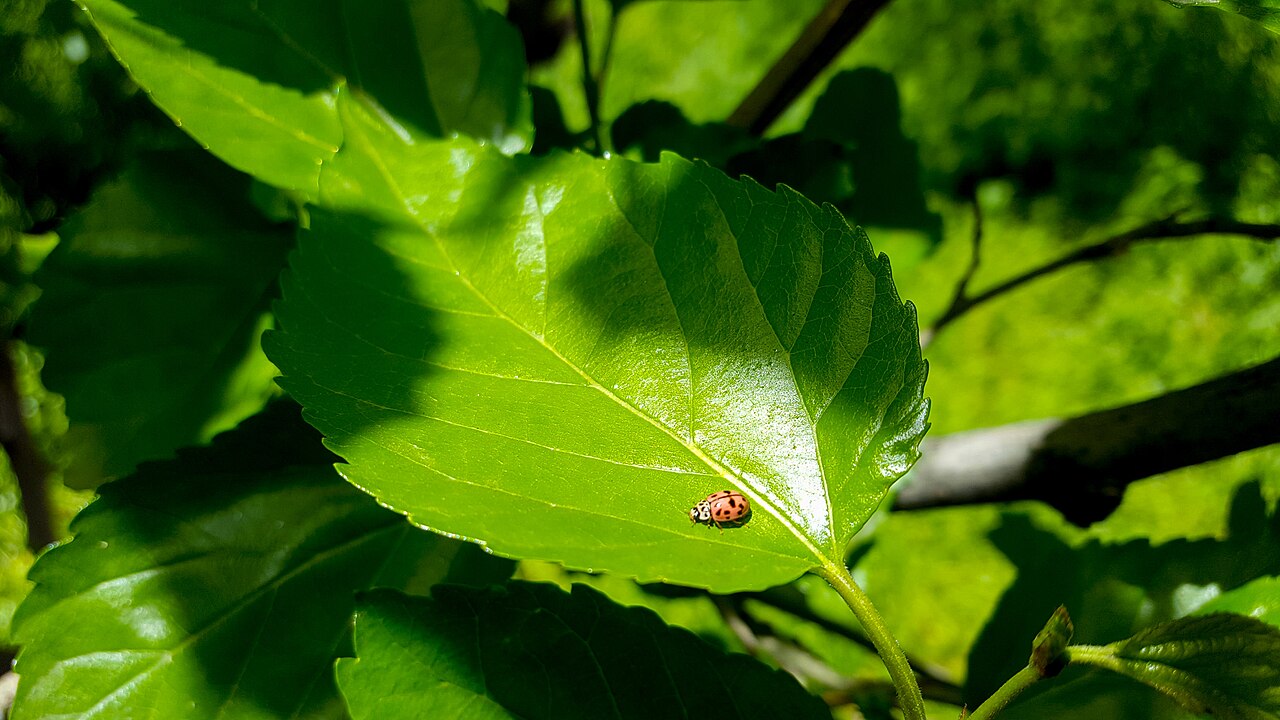
Christian and biblical. The beetle is linked to Mary, which is where the English name comes from, the “Lady” being Our Lady. Red stands for her cloak and the seven spots for the seven sorrows and seven joys. In that frame a ladybug indoors is often taken as a sign from heaven, a small reassurance after a loss.
Native American. Among several Plains and Eastern Woodlands peoples, beetles appearing at planting time are spoken of as signs of a good harvest and timely rain. Here the ladybug belongs to the garden, so one found indoors points you back outside to something growing.
Celtic and northern European. Celtic folklore casts the ladybug as a messenger between the living and the otherworld, and British weather lore has children recite rhymes to send it off with a wish. Scandinavian versions treat a beetle crawling across the hand as a measure of how long until that wish is answered.
East Asian. Chinese and Japanese folk readings tie the ladybug to the sun it flies toward and to news of a marriage or a reunion. As a spirit animal or totem in modern Western practice it carries the same qualities: lightness, protection, and progress that is small but not stopping.
Is a ladybug a good or bad omen?
A ladybug is a good omen in nearly every tradition, and the exceptions depend on color and condition. Red with black spots is the classic lucky form. An orange ladybug is read as luck tied to creativity or money, while a black ladybug in the house means protection and a closing chapter rather than misfortune. A beetle found dead indoors is an ending, not a warning. The one negative reading is killing one on purpose, which sends the luck back out the door. Compare the black butterfly, where the tradition is far more divided.
Why do ladybugs suddenly appear, and what attracts ladybugs to your house?
The practical answer is temperature and light. What attracts ladybugs to your house in autumn is a sun-warmed south or west wall, pale siding, and any gap around a window frame or soffit, because the beetles gather on warm surfaces and then work inward to overwinter in wall voids. Most indoor mass appearances in the United States involve the Asian lady beetle rather than a native species, and the difference between the two shows in the white marking behind the head. Entomologists at the University of Minnesota Extension recommend sealing entry points and vacuuming rather than spraying indoors. A house finch at the window or a blue jay in the yard works the same way, tradition and biology at once.
Frequently Asked Questions
What does an orange ladybug mean?
An orange ladybug is read as luck connected to creative work, new income or a project finally moving. Most orange beetles seen indoors in North America are Asian lady beetles, so the sighting usually also means that species is overwintering in the walls.
What does a black ladybug in the house mean?
Black ladybugs stand for protection and the clean end of something, not bad luck. Folk readings tie the dark shell to shelter and to privacy. The usual candidates are the twice-stabbed lady beetle and dark Asian lady beetle forms, both harmless.
Does a ladybug in the house mean a twin flame is near?
In contemporary spiritual practice the ladybug is sometimes taken as a twin flame sign, especially when two appear together or one arrives after you have been thinking about a specific person. This reading is modern rather than traditional, and nothing in the older folklore mentions it.
What does it mean when a ladybug lands on you and you kill it?
Folk tradition treats this as the one way to turn the omen around, canceling the luck the beetle brought. No tradition treats it as a lasting curse, and the accidental version is forgiven. To undo it symbolically, help the next one you find.