Animals That Look Like Ferrets: 8 Lookalikes and How to Tell Them Apart
Animals that look like a ferret are almost always members of the weasel family, Mustelidae, and in the United States that means one of eight wild species: the long-tailed weasel, the stoat, the least weasel, the American mink, the black-footed ferret, the American marten, the fisher, and the occasional escaped pet. They share the same body plan as a domestic ferret (Mustela putorius furo), a long tube of a body on short legs with a small flat head, so a two second glimpse rarely tells you which one you saw.
None of them is dangerous to a person who leaves them alone, and none of them is a legal pet in most states. What separates them is size, tail markings, throat color, and habitat, and those four features are enough to name every one. Start with size, because the range runs from a 4 in weasel to a fisher the length of a house cat with a tail attached.
The wild animals most often mistaken for ferrets are weasels, stoats, minks, martens, fishers, and the endangered black-footed ferret, all in the family Mustelidae. Tail markings separate them fastest: a black tail tip means a weasel or stoat, a uniformly dark tail means a mink, and a bushy tail means a marten or fisher.
| Animal | Total length | Key mark | Where |
|---|---|---|---|
| Domestic ferret | 13 to 20 in (33 to 51 cm) | Cream or sable coat, mask, tame | Homes, escapes in cities |
| Least weasel | 4.5 to 8 in (11 to 20 cm) | No black tail tip | Alaska, upper Midwest, Appalachians |
| Stoat | 7 to 13 in (18 to 33 cm) | Black tail tip, white in winter | Northern states, Canada |
| Long-tailed weasel | 11 to 22 in (28 to 56 cm) | Black tail tip, long tail | Most of the lower 48 |
| American mink | 18 to 27 in (46 to 69 cm) | Dark brown, white chin patch | Streams, lakes, marshes |
| Black-footed ferret | 19 to 24 in (48 to 61 cm) | Black mask and black feet | Prairie dog colonies, Great Plains |
| American marten | 20 to 27 in (50 to 68 cm) | Orange throat patch, bushy tail | Northern conifer forest |
| Fisher | 30 to 47 in (76 to 120 cm) | Large, dark, heavy tail | Northeast, Pacific Northwest |
What Is the Name of the Animal That Looks Like a Ferret?
If you want one word, it is a weasel. The long-tailed weasel is the most widespread ferret lookalike in North America and the animal behind most sightings in yards, barns, and woodpiles. If the animal was near water and looked almost black, it was a mink. If it was climbing a tree or crossing a logging road in the north woods, it was a marten or a fisher.
The word ferret itself causes half the confusion. A ferret is a domesticated animal, bred from the European polecat and kept as a pet for about 2,500 years. There is no wild ferret roaming the United States except the black-footed ferret, which survives in a few managed prairie populations. So a ferret-shaped animal in the wild is a weasel, a mink, a marten, or a fisher, not an escaped pet in most cases.
What Are the Defining Characteristics of the Mustelidae Family?
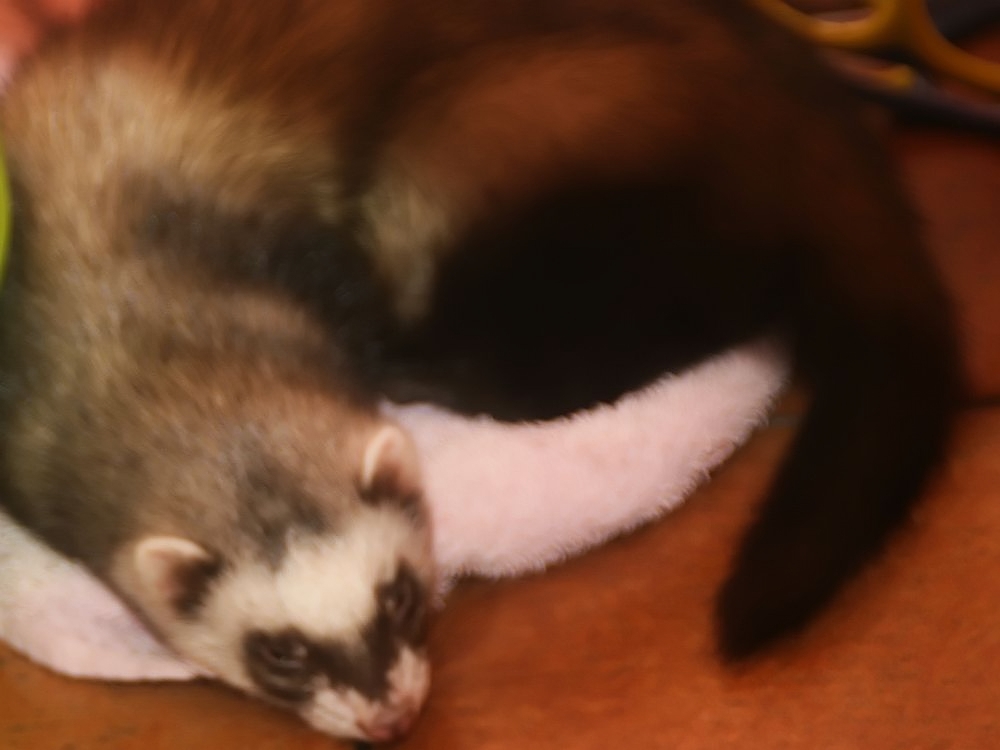
Mustelids share a long flexible spine, short legs, a small triangular head, short rounded ears, and anal scent glands that produce a strong musk. Nearly all of them are built to follow prey into tight spaces, which is why the body is narrow and the legs barely lift the chest off the ground.
They are obligate meat eaters with fast metabolisms, and most of them hunt rodents. The family also includes animals nobody mistakes for a ferret, such as badgers, wolverines, and otters, because those lineages traded the tube body for bulk or for swimming. The ferret resemblance belongs to the smaller genera: Mustela, Neogale, Martes, and Pekania.
Long-Tailed Weasel (Neogale frenata)
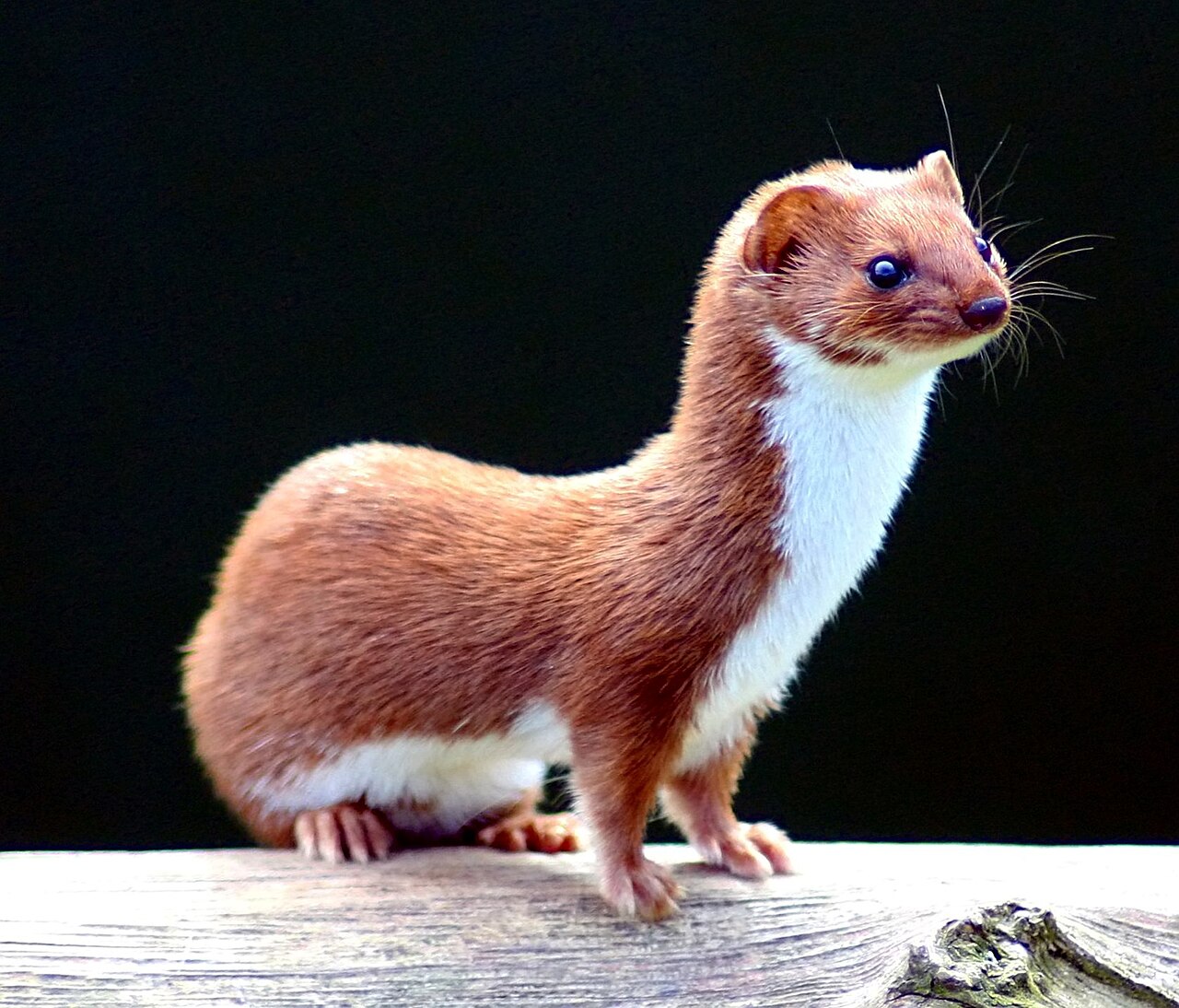
This is the default answer for a brown ferret-like animal seen anywhere in the lower 48. It runs 11 to 22 in long (28 to 56 cm) with a tail that is 40 to 70 percent of the head and body length, cinnamon brown above and creamy yellow below, with a distinct black tip on the tail.
Long-tailed weasels hunt day and night, bound rather than walk, and often stop to stand upright on their hind legs to look around. In the northern part of the range they molt to white in winter while keeping the black tail tip, which is the single most reliable field mark on the animal.
Stoat or Short-Tailed Weasel (Mustela erminea)
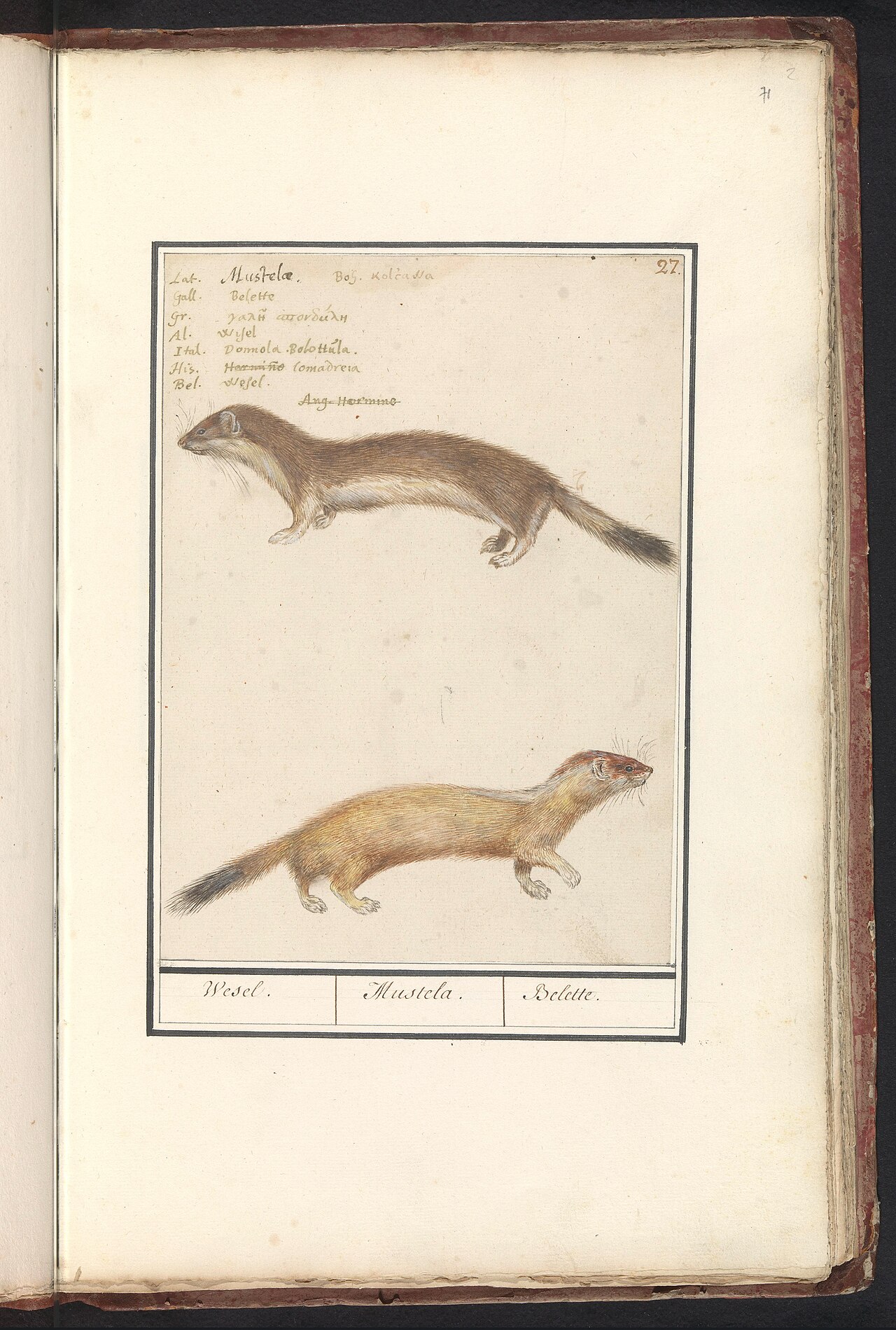
The stoat, called an ermine in its white winter coat, is the northern counterpart at 7 to 13 in (18 to 33 cm). It also carries a black tail tip, but the tail is short, roughly a third of the body length, and the animal looks stubbier overall.
Range helps as much as size. Stoats occupy Alaska, Canada, New England, the Great Lakes, and the western mountains, and in much of that area they overlap with long-tailed weasels. Side by side, the long-tailed weasel is larger with a noticeably longer tail and a more orange belly. For a closely related question, see our guide to bee looks like fly.
Least Weasel (Mustela nivalis)
The smallest carnivore in the world is also the one people least expect. An adult least weasel is 4.5 to 8 in long (11 to 20 cm) and weighs about as much as two slices of bread, roughly 1 to 3 oz (25 to 85 g). It looks like a ferret that has been shrunk to mouse proportions.
The diagnostic feature is what is missing: the tail is very short and has no black tip. In North America the species occurs in Alaska, across Canada, through the upper Midwest, and down the Appalachians, where it hunts voles inside their own runways.
American Mink (Neogale vison)
A mink looks like a dark ferret and shows up wherever there is permanent water. Length is 18 to 27 in (46 to 69 cm), the coat is glossy chocolate to near black, and most individuals carry an irregular white patch on the chin or throat. The tail is slightly bushy and the same dark color throughout, with no pale tip.
Mink swim well and leave tracks and slides along muddy banks, and they are the lookalike most often reported from docks, culverts, and fish ponds. A ferret-shaped animal that dives is a mink, since weasels will swim but rarely hunt in water.
Black-Footed Ferret (Mustela nigripes)
This is the only true wild ferret in North America, and it is unmistakable: a tan body 19 to 24 in long (48 to 61 cm) with a black bandit mask across the eyes, black feet, and a black tail tip. It lives in prairie dog colonies on the Great Plains and does nearly all of its hunting underground at night.
Seeing one is unlikely. The species was declared extinct, then rediscovered in Wyoming in 1981, and the entire living population descends from a handful of survivors brought into captive breeding. Recovery updates are published by the U.S. Fish and Wildlife Service. Reintroduced populations are scattered across a few western states and are monitored closely.
American Marten (Martes americana)
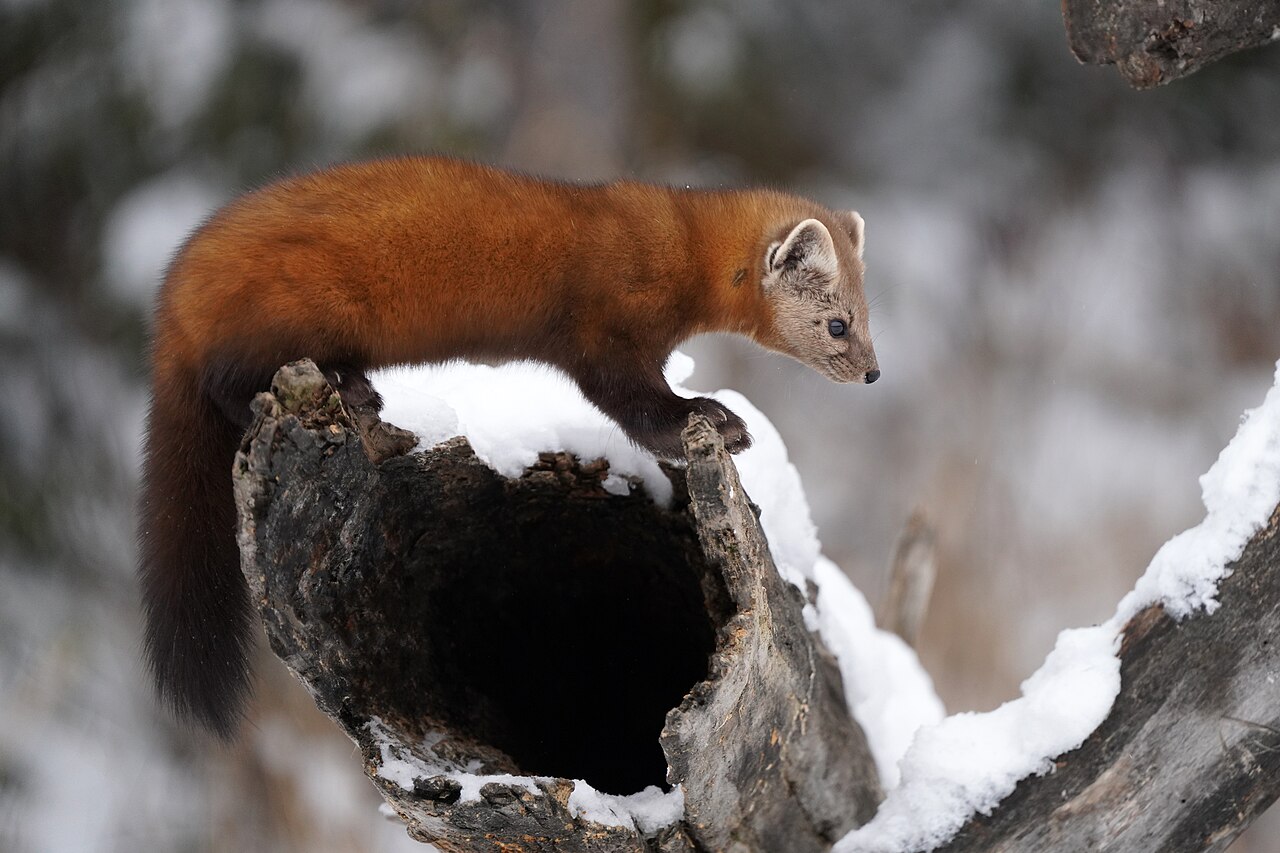
A marten is a ferret-shaped animal that climbs. It measures 20 to 27 in (50 to 68 cm), has a fluffy tail about a third of its total length, large rounded ears, and an orange to buff throat patch that no weasel or mink has.
Martens hold territory in mature spruce, fir, and hemlock forest from Alaska and Canada south into the Rockies, the Sierra Nevada, and northern New England. They hunt red squirrels and voles, travel through the canopy, and are curious enough to investigate cabins and campsites.
Fisher (Pekania pennanti)
The fisher answers the common question of what looks like a ferret but much bigger. Adults run 30 to 47 in long (76 to 120 cm) and weigh 4 to 13 lb (2 to 6 kg), with males roughly twice the size of females. The coat is dark brown to nearly black with a grizzled gold cast over the head and shoulders.
Despite the name a fisher does not fish. It is a forest hunter of snowshoe hares and porcupines, one of very few predators that routinely kills porcupines, and it has recolonized much of the Northeast and parts of the Pacific Northwest after decades of absence. The scream attributed to fishers in folklore usually belongs to another animal, the same way most night screams blamed on cats belong to bobcats or lynx.
European Polecat (Mustela putorius) and Escaped Pets
The European polecat is the wild ancestor of the domestic ferret and looks like a dark, heavy-set ferret with a black mask and pale guard hairs. It does not live wild in North America, so a polecat-looking animal in a US neighborhood is a lost pet ferret, often a sable colored one whose markings match the wild type closely.
Escaped ferrets behave very differently from wild mustelids. They approach people, move awkwardly in the open, show no fear of dogs, and are usually found within a few hundred feet of home. A ferret-shaped animal that lets you walk up to it is somebody’s pet, and local animal control or a ferret rescue is the right call.
What Is the Difference Between a Weasel and a Ferret?
A ferret is domesticated and a weasel is not, and that single fact drives every other difference. Ferrets sleep 14 to 18 hours a day, tolerate handling, come in coat colors that would be suicide in the wild, and cannot survive long outdoors. Weasels are wild, solitary, active hunters that kill several times their own weight in rodents each week.
Physically, ferrets are stockier with broader heads and shorter tails relative to the body, and the black tail tip of a weasel or stoat is absent. Weasels are also far faster and will not stay still long enough for a good look, which is why most clear photographs of ferret-shaped animals turn out to be pets.
Are Mustelids Aggressive, and Do They Make Good Pets?
Wild mustelids are not aggressive toward people. They are fearless for their size and will defend themselves hard if cornered or picked up, and a stoat chasing a rabbit five times its weight looks alarming, but unprovoked attacks on humans are essentially unknown. Keep a distance of 20 ft or more (6 m) and nothing happens.
As pets, only the domestic ferret qualifies, and even that comes with rules: ferrets are illegal in California, Hawaii, New York City, and Washington, D.C., need vaccinations and daily out-of-cage time, and live 5 to 9 years. Keeping a wild weasel, mink, or marten is both illegal in nearly every state and unworkable, because none of them has been bred for 2,500 years to tolerate a human hand.
Related reading: Animals That Look Like Raccoons.
Related reading: Bugs That Look Like Deer.
Related reading: Animals That Look Like Beavers.
Frequently Asked Questions
What are some animals similar to weasels?
Beyond the mustelids, the closest lookalikes in the United States are not closely related at all. Long-bodied rodents such as muskrats, and in the Southwest the ringtail, get reported as weasels regularly. Outside North America, ferret badgers, mongooses, and genets fill the same body shape on other continents.
What looks like a ferret but bigger?
A fisher, at 30 to 47 in (76 to 120 cm), is the largest animal that still reads as ferret shaped. Below that, an American marten or a large male mink both outsize a pet ferret. A wolverine is bigger again but looks more like a small bear than a ferret.
Are mustelids more like dogs or cats?
Taxonomically they sit on the dog side of the carnivore tree, in the suborder Caniformia alongside bears and raccoons. Behaviorally they act far more like cats: solitary ambush hunters with retractable-feeling agility, obligate meat diets, and long daily sleep. Ferrets are related to neither cats nor dogs closely.
What smell do weasels hate?
Evidence here is thin. Ammonia, predator urine, and strong mint are the repellents most often recommended, and none of them reliably clears a weasel from a barn or chicken coop. Hardware cloth with openings under 0.5 in (13 mm) over every gap works, because the animal cannot squeeze through what it cannot widen.
What is the most aggressive mustelid?
The wolverine has the reputation and the bite force to match, driving bears and wolves off carcasses in the far north. For its size, the honey badger of Africa and Asia is more combative still. Among US ferret lookalikes, a cornered mink is the one most likely to bite.
Why do so many identification questions come down to lookalikes?
Because convergent body shapes repeat across unrelated groups. The same problem shows up with birds that look like hawks, birds that look like crows, bugs that look like spiders, and bugs that look like cockroaches. Working from two or three fixed field marks beats working from overall impression.